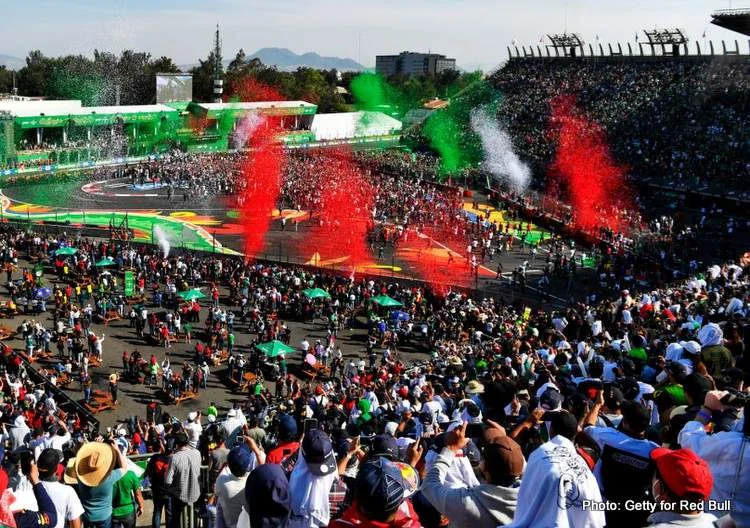
The 2026 Mexico City Grand Prix has an unusually useful disagreement before the cars even start practice. Pirelli sees conditions that could favor one stop. Williams starts from a two-stop expectation. Both leave room for the new asphalt to change the answer. Choosing a winner between those forecasts now would miss the technical story.
Much of the Autódromo Hermanos Rodríguez has been resurfaced, and the circuit's thin air changes how the car loads its tires and sheds heat. A softer hard compound adds another variable. The question is not simply whether fresh rubber is faster, but whether its advantage survives the stop, the warm-up and the traffic afterward.
This is a pre-practice assessment dated October 30, ahead of the November 1 race. Use the F1 weekend schedule alongside the following framework: surface behavior first, repeatable stint pace second, then the actual cost of giving up track position.
What changed at Mexico City for 2026
Pirelli identifies resurfacing between Turns 7 and 16 and from Turn 16 back to Turn 1, with the first sector largely unchanged. That creates a lap on which last year's setup knowledge is useful background, rather than a complete operating manual. A driver can feel confident in one section and still struggle to prepare the tires for another.
The sensible first question is how grip develops as cars run. An early sliding lap on a dirty surface does not establish that the same compound will struggle after the racing line cleans up. Equally, a quick lap late in a session does not prove the improvement came from setup. Track evolution and tire preparation can move together, making a single leaderboard an unreliable comparison.
The C3 hard resets the compound comparison
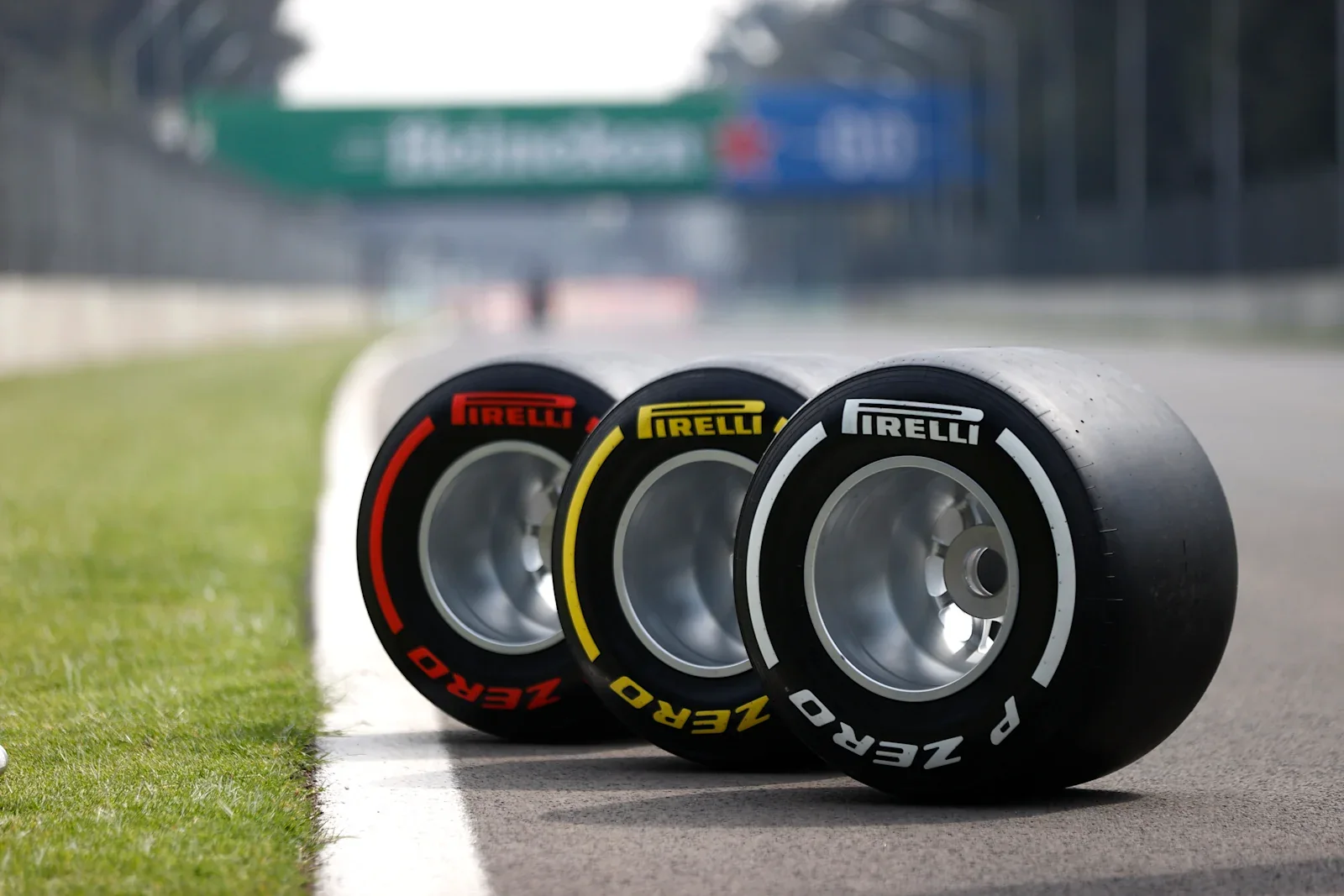
The allocation is C3 hard, C4 medium and C5 soft. Last year's hard was the C2, leaving a gap before the C4 medium. The white sidewall therefore describes the hardest choice available this weekend, rather than a permanently fixed tire. An unattractive C2 option in 2025 is not evidence that the C3 must also be slow to warm or unsuitable for a long stint.
Think about the three choices as overlapping tools. A compound may offer a more consistent balance for one car while another team finds enough initial grip on a softer set to preserve it through the stint. Those outcomes can differ even when the cars share a supplier and the same track. Which car controls slip, and how the driver requests traction, still matters.
In a dry race, drivers need to use two different slick specifications. That requirement supplies a minimum change of compound; it does not prescribe a two-stop race. The strategy discussion is about the additional stop beyond that baseline and the performance gained in exchange. Our practice-session guide explains why teams spend Friday comparing run programs rather than chasing a universally meaningful fastest time.
Why thin air makes a high-downforce circuit difficult
Alpine's official preview describes the fundamental contradiction: the circuit sits above 2,200 meters, so teams favor substantial downforce even though the main straight is long and speeds are high. Reduced air density weakens both aerodynamic load and resistance. A large wing can therefore be the sensible choice without producing the cornering authority it would deliver at a lower-altitude venue.
The consequence for strategy is indirect but important. Grip generated aerodynamically helps the driver ask more of the tires without sliding. When that assistance is reduced, adding steering or throttle demand can create slip instead of the desired acceleration. The operating target becomes a balanced lap, not simply the highest speed at the end of the straight.
Less air also means less cooling
Williams identifies brake and power-unit cooling as constraints, especially in traffic. That makes a car's position relative to another car part of its thermal environment. Fresh tires might provide the mechanical grip for an attack, but the driver still has to keep the machinery within its operating limits while following closely enough to use it.
For viewers, the useful distinction is between catching and completing a pass. A successful out-lap can shrink the interval; the next several laps determine whether the chasing driver can sustain the pressure. If the gap opens again, tire wear is only one possible explanation. Cooling management, available energy and the driver's approach can all interrupt an apparent charge.
Battery deployment adds another traffic constraint
Williams also expects high electrical deployment and difficult turbo boost response. That is a team forecast for this venue, not a published comparison of every manufacturer's output. It suggests that the strength of the run off a slow corner and the energy available later on the straight need to be considered together.
A tire plan therefore cannot be evaluated independently of the car's ability to exploit it. Two cars on equally old rubber can arrive at the braking zone with different opportunities because they began the straight differently. The 2026 energy-management explainer covers that broader mechanism. Mexico adds altitude and cooling pressure to the same strategic problem: pace on paper is useful only when it can be delivered repeatedly in the race.
Warm-up, graining and overheating are different problems
A tire can be difficult to prepare and still suffer an overheated tread surface once the driver pushes. That is not a contradiction. Temperature is distributed through a structure, and the working surface does not respond at the same rate as all the material underneath it. Williams specifically separates low bulk temperatures from rear-surface overheating in its Mexico assessment.
Graining adds another distinction. Pirelli describes a surface phenomenon in which rubber is torn and accumulates on the tread, reducing effective grip. It is more useful to think about the interaction of sliding, temperature and load than to equate every slow lap with a tire running out of rubber. Wear concerns how much material is consumed; a surface condition can harm performance before the tire reaches its wear limit.
The practical consequence is a feedback loop. Poor grip invites the driver to slide, sliding makes control of the tire harder, and the next corner begins with a less cooperative surface. Avoiding that loop can require restraint at precisely the moment a rival appears vulnerable. A radio request to protect the rear tires need not mean the team has abandoned the attack.
Read the tire surface and the stint separately
Imagine a driver who loses pace for three laps and then stabilizes. That sequence deserves a different interpretation from a driver whose deficit grows on every successive lap. The first could be consistent with a temporary surface problem or a period of management; the second could make an early replacement more attractive. These are diagnostic possibilities, not a claim to identify damage from television alone.
Watch whether the comparison survives clean laps, comparable traffic and an unchanged compound. A fast lap immediately after a slow one may be an energy or traffic effect. A slower lap late in a stint may include a pit-entry approach. The more of those interruptions you remove, the better the evidence for a real tire trend.
That is why an image of a marked tire is context rather than a complete diagnosis. The surface, the timing sequence and the driver's account need to agree. Until Friday provides that combination, any precise life estimate for the 2026 Mexican surface would be false confidence. Track the eventual session results, but preserve the distinction between where a car finished and what limited its performance.
Why Pirelli and Williams can disagree about one stop
The published forecasts are starting assumptions, not mutually exclusive verdicts. Pirelli sees the circuit's relatively low tire severity as a reason one stop could work. Williams anticipates two on medium and soft, while allowing that a small reduction in degradation would change the calculation. That conditional clause is the important part: this weekend may sit close to the point where a modest pace change reverses the preferred plan.
The one-stop case
One stop becomes attractive when a tire can maintain a usable pace across the required distance without excessive protection. The reward is avoiding another trip through the pits and keeping the car ahead of rivals who must catch and pass. The driver need not match a freshly shod opponent on each lap if the accumulated saving from staying out remains larger.
There is also a preparation advantage: fewer fresh sets have to be brought into their useful window during the race. That does not make one stop automatically safer. Stretch a stint beyond the car's manageable range and the saved stop can be overwhelmed by slow laps. The useful question is how much performance the driver sacrifices to make the distance, not whether the tire physically reaches it.
When a second stop pays for itself
A simple hypothetical makes the trade clear. Suppose an additional stop costs 22 seconds relative to staying on track and leaves 20 racing laps. Recovering that cost requires an average gain of 1.1 seconds per lap before allowing for warm-up, traffic or the pass itself. Those numbers illustrate the arithmetic; they are not a measured 2026 pit-loss model or a prediction of the fresh-tire advantage.
If the pursuing car gains that second only in clean air, rejoining behind a slow group can remove the benefit. If the old tires are deteriorating rapidly, however, the advantage may grow during the chase. An early stop buys more laps on fresh rubber but asks the next set to last longer. A later stop protects tire life but leaves fewer opportunities to recover position.
The hard compound becomes relevant if the softer choices develop an unacceptable surface problem or require too much restraint. It still needs competitive warm-up and stint pace. There is no rule that the hardest available tire must be the best long-run answer. For a title contender, the required result also shapes risk tolerance; follow the championship standings before treating an apparently cautious stop as a missed opportunity to win.
Qualifying and traffic can outweigh fresh-tire pace
Williams expects tire preparation to be particularly influential in qualifying, including aggressive out-laps and the possible need for an additional build lap. That creates a timing problem before the timed lap begins. A driver needs enough work in the tires while also finding space, reaching the line on time and avoiding a compromised opening sector.
Watch for a difference between a driver doing one preparation lap and another doing two. The second approach is not automatically wasted mileage or indecision. It may be how that car reaches its intended operating condition. The downside is exposure to a changing circuit and a queue of cars using different plans. A successful run combines the tire window with the track window.
The race rewards that work because qualifying determines who begins in cleaner air. A team choosing a theoretically slower race setup to secure a better grid position is weighing the cost of traffic against outright pace. Public lap times alone cannot tell us its private optimum, but they can show whether a car struggles much more when it follows than when it leads a group.
The same logic complicates the undercut. Stopping first offers an opportunity to use fresh tires while the rival continues on old ones. If the new set takes time to prepare, however, the expected gain can shrink. The rival may also have clear air for a strong in-lap. Calling the stop a failure before both cars complete the relevant laps skips the actual comparison.
Then check where each car emerges. A useful stop window is a place on the road, not merely a lap number. Staying out for an extra lap can be worthwhile if it avoids rejoining behind a train, even when that lap is slower in isolation. Mexico's cooling constraints make that trade particularly relevant. The best decision is the one that improves the remaining race, rather than the one that makes the first out-lap look most impressive on the timing screen.
What to watch before choosing a race strategy
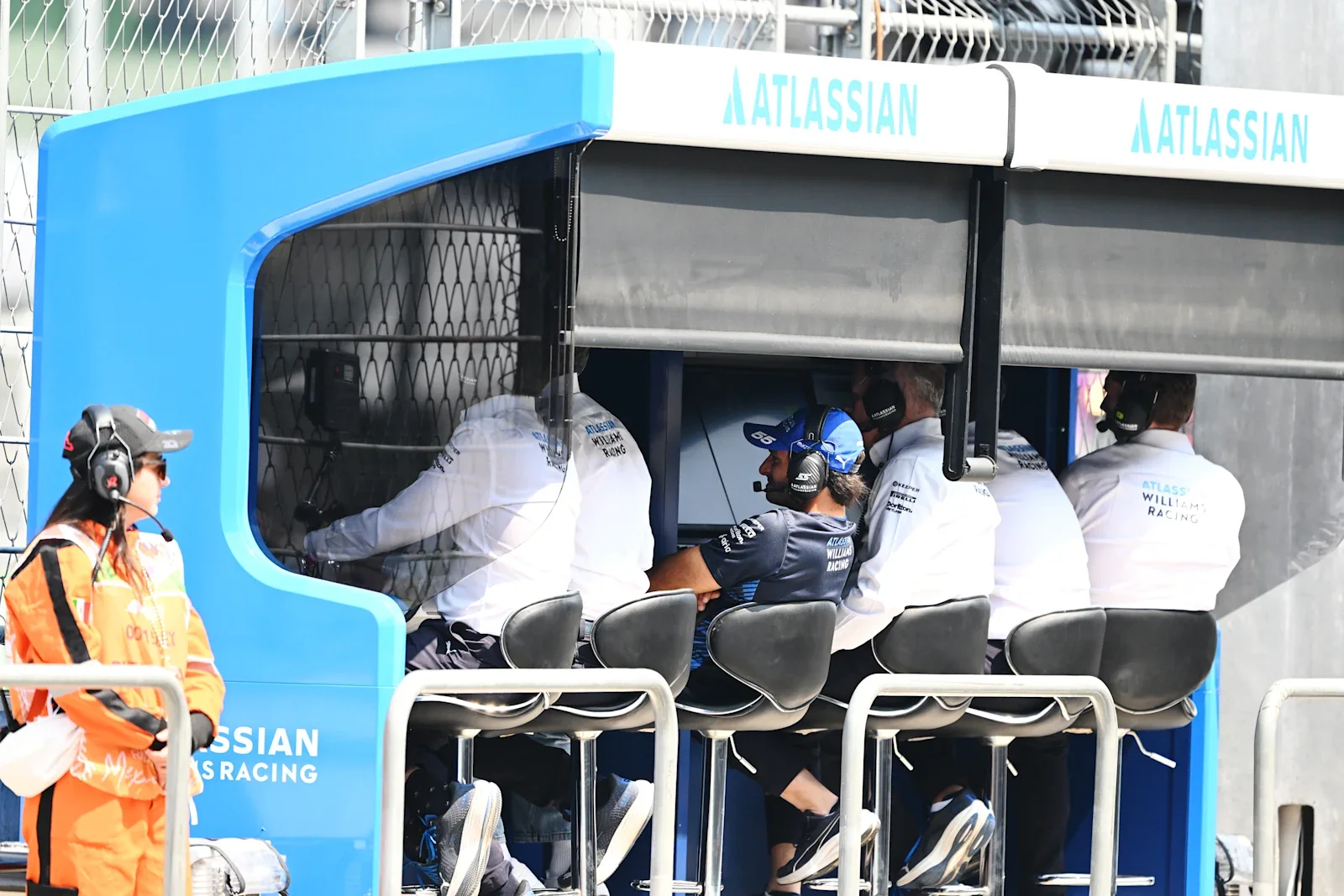
Williams strategy chief Charles-Antoine Florentin, speaking in Formula 1's pre-event strategy feature, warns against overreacting to Friday because the circuit improves substantially as it rubbers in. That is the right caution for a resurfaced venue. Practice supplies evidence, but the race takes place on a surface that has had more running and potentially different temperatures.
Friday evidence
Start with comparable long runs. Note the compound, the number of representative laps and whether the driver had traffic. Then look for the shape of the stint: stable, temporarily interrupted or progressively worsening. A car that starts slowly and improves may tell a different story about preparation from one that is immediately quick and fades.
Next compare the compounds within the same team's program. Cross-team comparisons add fuel-load and setup uncertainty. If the C3 warms reliably and stays close enough to the C4, it broadens the long-stint options. If the C5 can sustain a meaningful run without too much management, it offers more than a qualifying tool. Neither observation establishes a universal strategy without the rest of the race calculation.
Race-day triggers
On Sunday, the most important change may be outside the tire itself. An interruption can reduce the relative cost of stopping, but its value depends on the car's location, the gaps and which rivals react. Historical Safety Car activity supports preparing an alternative plan; it does not justify assuming a convenient neutralization will rescue a stretched stint.
Keep four questions in view: Is the old set still delivering manageable pace? Will a new set work immediately? Where will the car rejoin? How many useful laps remain to exploit it? When those answers change, the correct strategy can change even if the original forecast was sensible. The first car to stop has chosen a trade, rather than revealed the only viable plan.
For Mexico 2026, the revealing story will be the link between the new road, the tire window and the ability to race in traffic. The winner may stop once or twice. What matters is whether the chosen sequence turns the car's usable performance into position across the full distance.
Loading comments…