
Formula 1's proposed V8 return has become a headline that often sounds more final than the underlying process. As of October 30, 2026, the FIA president is publicly targeting 2030 and manufacturers are discussing the next engine framework. That is substantial news. It is still different from an approved, complete technical specification with a binding introduction date.
The distinction matters because “V8” answers only one question: the combustion engine's cylinder arrangement. It does not tell fans the displacement, whether it has a turbocharger, how much electrical assistance remains, what the car weighs or how it will race. Reports about those choices need to retain the word proposal.
Here is how to read the current debate, what the manufacturers have put on the record, and which evidence would turn a promising direction into a confirmed rule set. The current F1 schedule continues under the existing regulations while that future is negotiated.
Is F1 bringing back V8 engines in 2030?
The strongest accurate answer is that a V8-based future has become the publicly stated direction of the discussion, with 2030 the FIA president's target. The complete package remains under negotiation. In October reporting of his media roundtable, Mohammed Ben Sulayem acknowledged that agreement with the teams and power-unit manufacturers had not yet been reached.
That qualification does not make the project imaginary. A governing body can consult manufacturers, circulate documents and establish a preferred direction before every technical parameter is settled. It means that fans should attach the correct level of certainty to each claim. A serious proposal can still change substantially while retaining its headline cylinder count.
A public target is different from an approved specification
There are several steps between wanting a V8 and racing one. First comes the objective: what should the next formula improve? Then comes a framework identifying the architecture and broad constraints. Detailed regulations must turn those intentions into measurable limits, and the relevant formal approval must establish when they apply. Manufacturers subsequently have to design, validate and supply compliant hardware.
The FIA's own mid-year World Motor Sport Council communication illustrates the language difference. It discusses future concepts including V8s, while separately identifying regulatory changes that the council actually approved or ratified. The presence of both subjects in one release does not turn the future concept into an adopted engine formula.
For that reason, a quote expressing confidence that V8s will arrive should be reported as a statement of intent unless accompanied by the approved text. Likewise, “2030 at the earliest” is not interchangeable with a guaranteed 2030 start. The former leaves room for a later introduction; the latter implies the scheduling decision has already been settled.
The immediate effect on a race weekend is therefore limited. Current cars still compete under their applicable rules, and official results still reflect that competition. Future-engine negotiations can influence long-term spending and recruitment, but they do not grant a team permission to replace today's power unit with a different architecture.
What the manufacturers have actually said
The FIA's September 24 Azerbaijan press-conference transcript provides a clearer guide than a collection of anonymous specification rumors. Audi's Mattia Binotto called for major cost savings while preserving technological innovation. He welcomed a hybrid element and treated turbocharging as a possibility to discuss. Red Bull's Laurent Mekies emphasized the shared ambition of flat-out racing and qualifying.
Those positions expose the central negotiation. A manufacturer can support a different combustion architecture while wanting meaningful engineering freedom around it. Supporting the general direction does not mean accepting a standardized engine, an exact electrical output or every proposed restriction on materials and development. The details determine whether the project serves the company's sporting and commercial purposes.
Consider the difference between an objective and a design solution. Flat-out qualifying describes how the driver should be able to attack a lap. It does not by itself specify the size of the battery or the method used to generate an overtaking advantage. Several engineering approaches can pursue the same experience, each with different costs and weaknesses.
The same distinction applies to cost. Calling for a cheaper power unit leaves open where the savings should come from: fewer complex components, tighter development limits, longer component life, simpler manufacturing or some combination. A team buying engines and a manufacturer developing them can agree on affordability while caring about different parts of that bill.
Fans should therefore resist turning two public speakers into a private roll call of the entire industry. Their comments establish their stated priorities and show common ground. They do not reveal every manufacturer's preferred drawing or prove that every supplier has approved a final compromise.
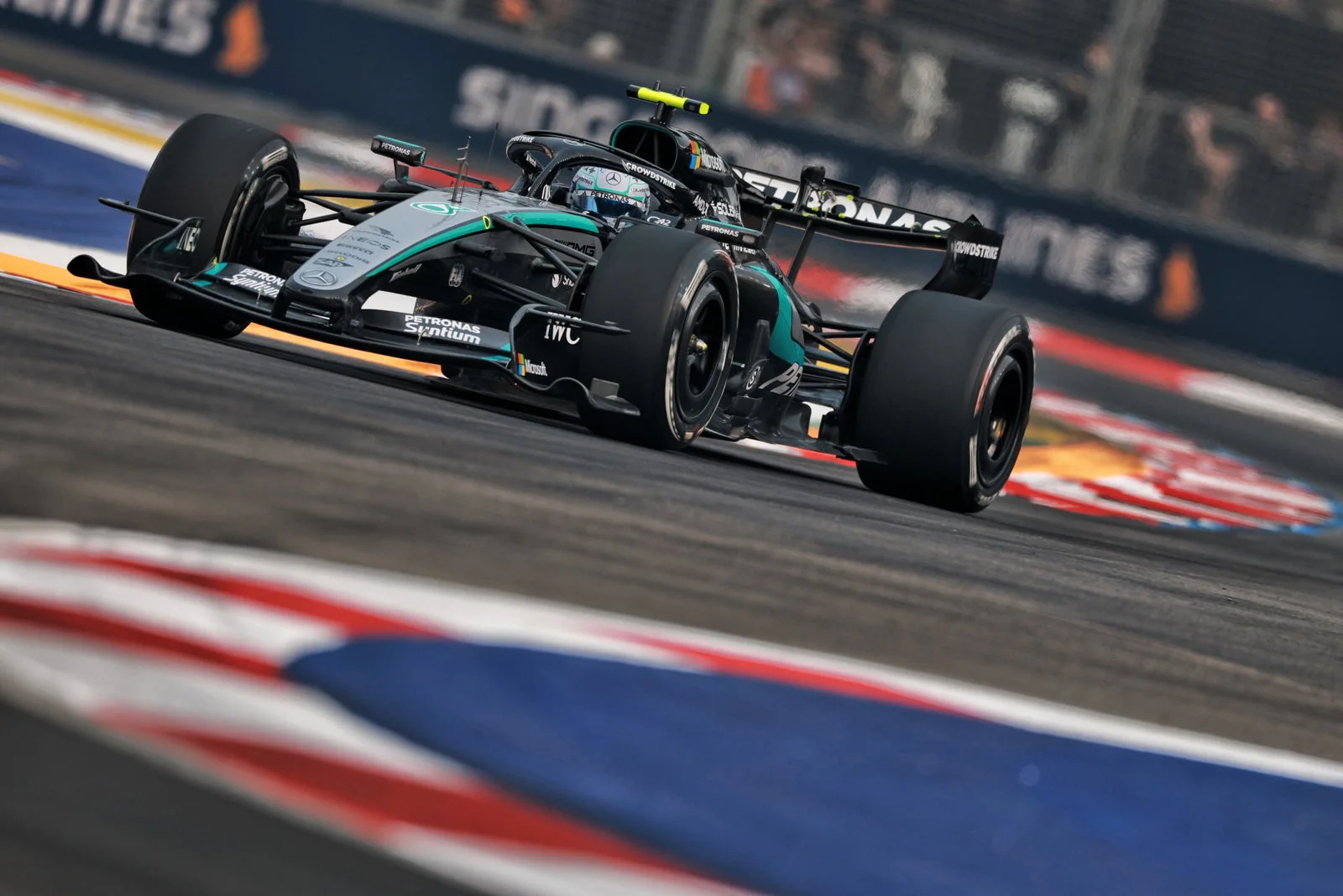
The current Mercedes W17 guide illustrates why an engine is integrated into a wider competitive package. Any future framework will also have consequences for cooling, packaging and how the chassis uses the available output. The debate is about that complete competitive system, even when the most memorable phrase is simply the return of a V8.
Why a V8 does not define the whole power unit
A V8 is an eight-cylinder engine with the cylinders arranged in two banks. The term describes a layout, not a complete performance prescription. Two V8 formulas could produce very different cars if their fuel limits, rev ranges, electrical systems and aerodynamic demands differ. That is why a return of the name should not be sold as a literal recreation of an earlier season.
Turbocharging, displacement and hybrid power remain separate choices
Displacement concerns the combustion engine's swept volume. Turbocharging concerns how intake air is compressed. Hybrid assistance adds another source of driving power and a means of recovering energy. Choosing eight cylinders does not logically determine any of those other decisions. A turbocharged hybrid V8 would retain the V8 label while operating very differently from a naturally aspirated predecessor.
For fans, the electrical question is especially important. Peak motor output and usable energy over a lap are separate constraints. A powerful motor can still have limited energy available, while a smaller motor may deliver its contribution more consistently. Quoting a proposed peak number without the recovery and deployment rules cannot establish how often a driver would need to manage the system.
Packaging also matters. A combustion engine, turbocharger, battery, electronics and cooling hardware occupy space and carry mass. Altering one element changes the task faced by the others. Until the complete framework is agreed, precise claims about a lighter finished car or an unchanged chassis concept remain promises to evaluate.
Sustainable fuel does not settle the energy balance
The current 2026 formula already combines advanced sustainable fuel with a turbocharged V6 and substantial hybrid assistance. Fuel sustainability and electrification are therefore not mutually exclusive choices. A future rule maker could preserve a sustainable-fuel requirement while changing how much propulsion comes from the combustion engine and how the electrical system is used.
Nor does the fuel label independently prove a whole championship's environmental outcome. Manufacturing, logistics and the fuel's certified supply chain address different questions. For this engine debate, the relevant point is narrower: sustainable fuel can be one requirement within several possible architectures.
Read any future specification as a connected set of limits. How much output can the car use, for how long, and where can it replenish the energy? Our energy-management guide shows why those questions shape racing today. A different cylinder count will only change that experience through the detailed rules written around it.
Will V8s fix the complaints about modern F1?
The October 27 Reddit discussion around the latest engine reports shows why the announcement attracts both excitement and skepticism. Some contributors welcome the V8 direction; others question what turbocharging or continued electrical assistance would mean for the promised experience. That thread demonstrates a real debate, rather than a representative vote of the entire fanbase.
Several complaints are being bundled together. One concerns the sound at the circuit. Another concerns the driver's ability to attack without disruptive energy management. A third concerns whether overtaking advantages feel understandable and earned. Changing a single component could help one objective while leaving another largely untouched.
Driver preferences also vary. The FIA's Singapore press-conference discussion includes enthusiasm for earlier engines' sound and drivability. Such testimony explains the emotional appeal, but it does not replace a technical specification or establish that every driver wants the same package. The sensible response is to identify the experience being sought before judging the proposed means.
Sound and racing quality need different tests
For sound, the finished engine's operating range, exhaust system and any turbocharging will matter alongside the cylinder count. A historic clip establishes what that historic car sounded like. It cannot guarantee that a different future V8, operating under different restrictions, will reproduce it. Comparisons recorded with different microphones and locations add another layer of uncertainty.
For racing, ask whether the driver can sustain an attack through the relevant parts of the lap. Does the energy system permit a meaningful choice about where to push? Can the following car remain close through the corners? Does the overtaking assistance create a contest at the braking zone or an advantage that the defender cannot realistically answer? These are separate questions from how pleasing the engine sounds.
A louder car could still struggle to follow another car. A lighter car could still be dominated by one manufacturer's superior interpretation. A simpler power unit could still need careful management. Those possibilities do not argue against change; they define the tests a proposed improvement should pass.
The most useful promise is therefore specific: better sound, lower mass, lower cost or more consistent attacking power, each supported by an appropriate rule. Fans can welcome the direction while asking for that evidence. Nostalgia provides a reason to care about the project, but the final package has to succeed in the conditions of its own era.
Why cost and timing may decide the outcome
Binotto's call for clarity before the end of 2026 is a development argument. A possible 2030 introduction sounds distant on a race calendar, yet a new power unit needs a concept, detailed design, prototype testing, reliability work and integration with the chassis. Delaying a major architectural choice can compress all the stages that follow.
A cheaper engine still needs a development program
Simpler hardware can reduce some costs while leaving substantial work elsewhere. A manufacturer still needs to understand combustion, lubrication, cooling, control systems and how the components survive repeated race use. Removing a sophisticated device does not remove the need to validate the complete machine. It changes where engineering effort is concentrated.
There is also a distinction between a development-cost target and the cost of supplying engines to teams. A regulation can limit what a manufacturer spends without automatically establishing the customer's final price. Conversely, an affordable supply agreement does not prove the underlying research program was cheap. A convincing affordability claim should identify which cost is being reduced and how the rule makes that reduction enforceable.
Timing affects fairness as well. If the final concept changes late, suppliers with more flexible infrastructure or a more compatible starting point may cope better. That is an analytical risk, not evidence that any named manufacturer has already gained an advantage. Clear, stable requirements give every participant a better-defined engineering problem.
Current investment does not disappear
The FIA's original supplier-registration announcement covered the 2026-2030 cycle. That historical commitment explains why a potential change before the end of the cycle requires serious consultation. The announcement is background to the investment horizon, not a current list of every active supplier and not proof of confidential contractual rights.
In practice, a manufacturer considering a future engine must also operate the present one. Engineers, test facilities and management attention are finite. The organization has to decide what can transfer, what must be rebuilt and how much current competitiveness to protect while preparing for the next formula.
That tension is relevant even to a fan primarily watching the championship table. A successful transition needs enough participants to remain committed and enough competitive uncertainty to make the new era worthwhile. The strongest proposal is the one that aligns the desired racing experience with an executable development timetable, rather than a date chosen only for its headline appeal.
What would count as real confirmation next
The latest October 27 reporting about a circulated FIA document describes a turbo-hybrid V8 proposal for 2030 or 2031, with reduced electrical assistance. That is more specific than an aspiration to bring back eight cylinders. It is still a framework for discussion, and reported capacity, power and weight targets should retain that status until they appear in approved regulations.
The differing numbers that have circulated during this debate are themselves a reason to date every specification claim. A proposal can evolve as manufacturers respond. Combining the cylinder count from one report, the displacement from another and the weight target from a third can create an engine that nobody has actually agreed to build.
For the next meaningful update, look for an FIA statement that identifies a decision, its effective date and the regulatory text it changes. Then check whether the published document contains the essential parameters and any transitional provisions. An announcement that discussions were constructive is useful progress, but it answers a different question from formal adoption.
The FIA's published council calendar lists a December 10 meeting in Shanghai. That makes the year-end process worth watching, especially given Binotto's request for clarity. It does not guarantee that a complete V8 package will be approved at that meeting. Negotiations can produce a framework, a partial decision or more work.
Finally, examine the manufacturer's response after any approval. Does it confirm participation under the new formula? Does the timetable support a credible development program? Are customer teams told how supply and integration will work? Those practical commitments help distinguish a settled competitive project from an attractive headline.
For now, fans can reasonably expect the V8 discussion to shape F1's next era while keeping the final details open. The cylinder layout is the recognizable part of the story. The rules governing energy, mass, cost and implementation will decide whether that story delivers the racing people are asking to see.
Loading comments…