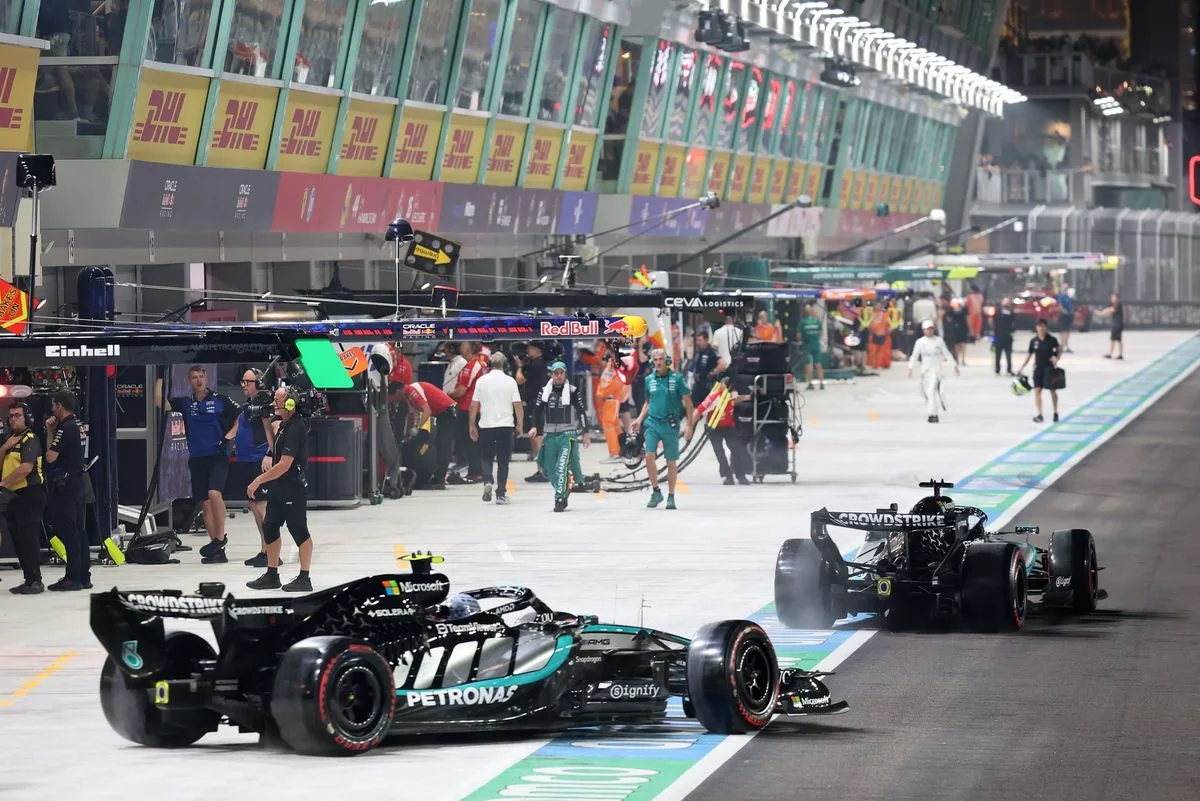
How can Mercedes lead Formula 1 and still qualify for extra engine-development help? Because ADUO does not rank complete cars or award assistance according to championship position. It assesses a defined part of the power unit, then creates development opportunities for manufacturers that meet the criteria.
The other common misunderstanding is about timing. Permission to introduce an upgrade is not a finished engine, a confirmed debut or a guaranteed improvement. Honda's staggered 2026 changes and reporting about Mercedes delaying its planned update show why those stages need to be separated.
This explainer uses the rules and public information checked October 30, 2026, including Technical Regulations Issue 21 dated October 19. It explains the published allowances, what remains confidential and what an announcement can actually tell you. Keep the championship standings alongside the technical discussion, but treat them as evidence about the whole car's results rather than a substitute for the FIA's engine assessment.
What ADUO measures, and what it leaves out
ADUO stands for Additional Development and Upgrade Opportunities. The FIA monitors internal combustion engine performance and compares an ICE Performance Index across manufacturers during defined review periods. The purpose is to provide a route for development when an engine falls sufficiently far behind the measured benchmark.
The FIA's explanation identifies inputs including engine speed, input-shaft torque, MGU-K power and a weighting for how sensitive lap time is to power across the measured laps. Those ingredients are used to assess the combustion engine. Their presence does not turn the result into a published ranking of complete hybrid systems.
The ICE Performance Index is not the championship table
A complete F1 car converts several capabilities into lap time. Aerodynamic efficiency affects how much speed the available power can produce. Tire behavior affects how early the driver can accelerate and how long a stint remains competitive. Electrical recovery and deployment influence where the car can use its output. Reliability and strategy then determine how much of that pace becomes a result.
The FIA explicitly says its ICE assessment is not representative of full power-unit performance because the energy-recovery system also matters. It follows that a leading car can contain an ICE below the assessment's benchmark while compensating elsewhere. There is no requirement for the car with the highest measured combustion performance to lead the championship.
For a viewer, that is a boundary problem. The race result measures the effectiveness of the whole sporting package on a particular day. The ADUO index evaluates a defined technical contribution over an assessment period. Expecting the two rankings to match would be like using pit-stop performance alone to predict the final order.
The distinction also protects against overreading straight-line speed. A speed-trap figure includes drag, exit speed, electrical deployment and the circumstances of the lap. It cannot independently reveal the FIA's confidential index. Our 2026 energy-management explainer shows how output available at one point on a straight can differ from the car's wider capability. ADUO addresses one part of that system, so claims about its fairness need to begin with what it is actually measuring.
Why Mercedes can qualify while winning races
Mercedes does not need to be a struggling constructor to meet an engine manufacturer's eligibility criterion. The question is whether its ICE falls into a qualifying performance band, not whether its works team has scored too many points. Once that boundary is understood, the apparent contradiction disappears, even though the policy can still be debated.
The published 2026 allowances
The FIA's August 26 release confirmed the first and second review outcomes. For the first period, Mercedes was in the 2-4% window. Audi, Ferrari and Honda were above 4%. No additional homologations were granted following the second period. These are dated findings, rather than a continuously updated public display of each manufacturer's present output.
| Published first-period band | 2026 extra homologations | 2027 extra homologations |
|---|---|---|
| Mercedes: 2-4% window | 1 | 1 |
| Audi, Ferrari, Honda: above 4% | 2 each | 2 each |
Under Appendix C5, Article 4.3 of Technical Issue 21, the first threshold is at least 2% but less than 4% below the benchmark; the next is at least 4%. The extra opportunities do not mean the FIA supplies the manufacturer with an improved design. They mean the rules allow a development route that would otherwise be more restricted.
Why the percentage is not a horsepower estimate
The FIA says the detailed performance-index measurements remain confidential. A band therefore does not tell us Mercedes's exact figure within that band, the precise output of the benchmark engine or how much a future upgrade will recover. Multiplying a rumored horsepower number by a percentage would add assumptions rather than reveal protected data.
It is also wrong to translate the band directly into a lap-time deficit. Power sensitivity varies around a circuit, and the car can gain or lose time through other capabilities. A particular percentage in a technical index is not a promise that the complete car will be the same percentage slower.
The legitimate fairness question is whether an ICE-only criterion provides the intended convergence when manufacturers have different strengths elsewhere. That is a question about the rule's design. It is distinct from alleging that a winning team must have misreported its performance. The W17 car guide provides the wider chassis and power-unit context needed to keep those arguments separate.
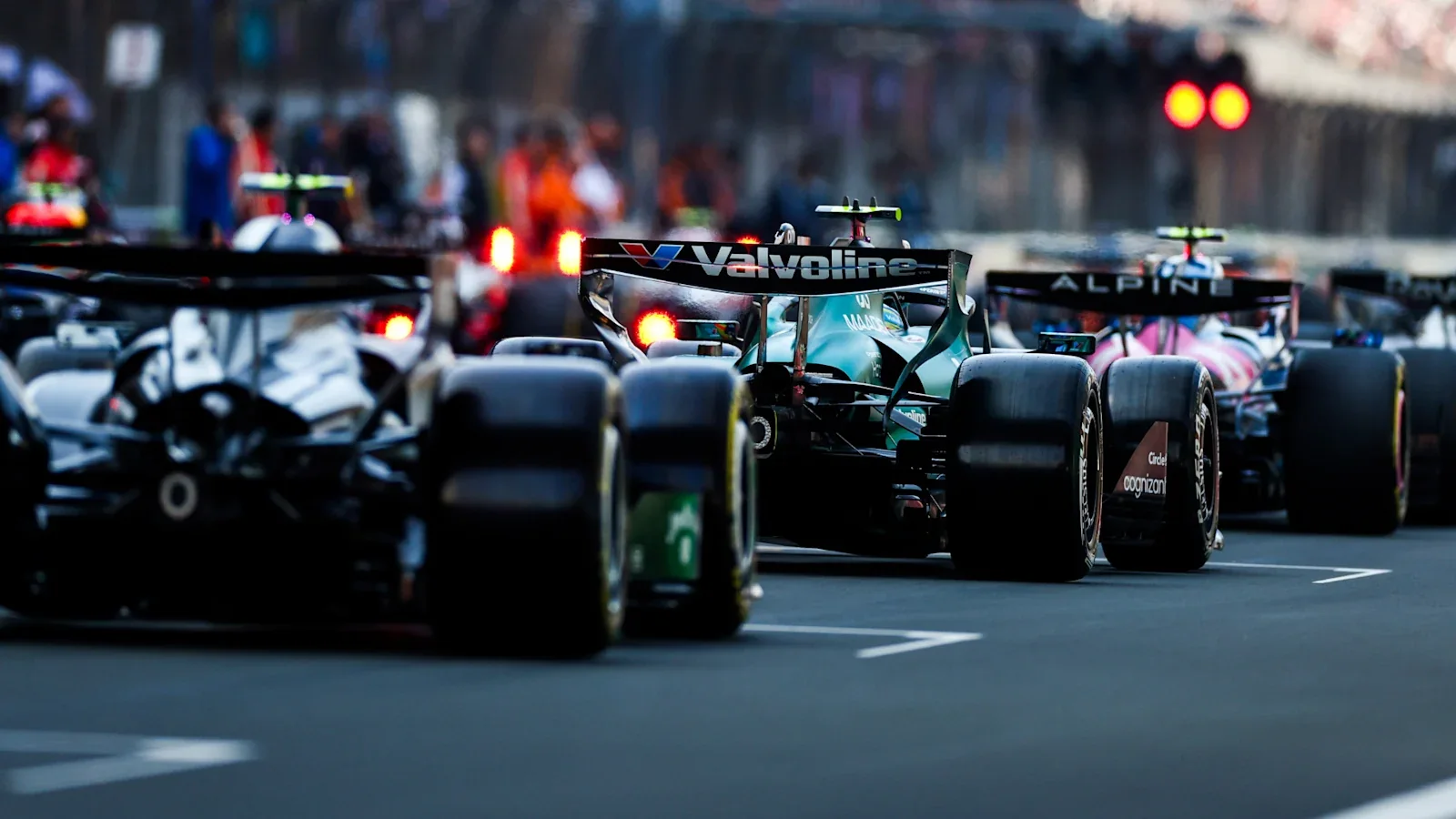
What an upgrade opportunity actually permits
An ADUO grant creates room to develop within a regulated system. It does not suspend the system. The eligible components, the homologation process, financial accounting, test-bench restrictions and sporting component limits remain relevant. A manufacturer has to satisfy the appropriate requirement at each stage.
Homologation, spending and dyno time are separate allowances
Homologation concerns the approved specification. The financial rules concern which development expenditure counts toward the power-unit manufacturer's cap. The operational allowance concerns permitted restricted testing on the manufacturer's test benches. They support the same development project but answer different compliance questions.
Section E Issue 07, Article E4.1.1.t, provides downward adjustments to Relevant Costs based on the index deficit. For example, its base amount in the 2% to below-4% band is $3 million, with indexation and allocation requirements applying. That is an accounting allowance supporting development, not a cash payment from the FIA to buy a guaranteed performance gain.
The specification opportunities also do not simply accumulate every time a review finds a deficit. The technical rules restrict their grant within a season, and an unused opportunity awarded for use in that same season is forfeited if it is not introduced by the final event. An allowance for the following year is a separate part of the grant.
For a manufacturer, the decision is therefore how to use a limited opportunity productively. A modest change that solves a clear weakness might be more valuable than a broader package that is not ready. The existence of development capacity does not dictate which engineering concept will succeed.
Extra specifications do not erase component penalties
A specification upgrade and a new physical component are different things. A driver can receive another component of an existing design, or a component incorporating an approved new design. The sporting count tracks the elements used, while homologation controls the specification they are allowed to contain.
Sporting Article B8.2.8 applies grid penalties when the permitted number of a relevant element is exceeded: ten places for the first additional element of each type and five for subsequent ones, with penalties cumulative. An ADUO entitlement is not a general exemption from that count. The actual consequence depends on the driver's available pool and the elements introduced.
This creates a real scheduling trade-off. Waiting can preserve usable mileage in existing hardware; introducing the improvement sooner can provide more races to benefit from it. Teams must compare those gains with reliability and any sporting cost. Check the official usage and penalty documents alongside the event results before assuming that a legal upgrade should automatically have been fitted immediately.
Why Honda introduced two different upgrades
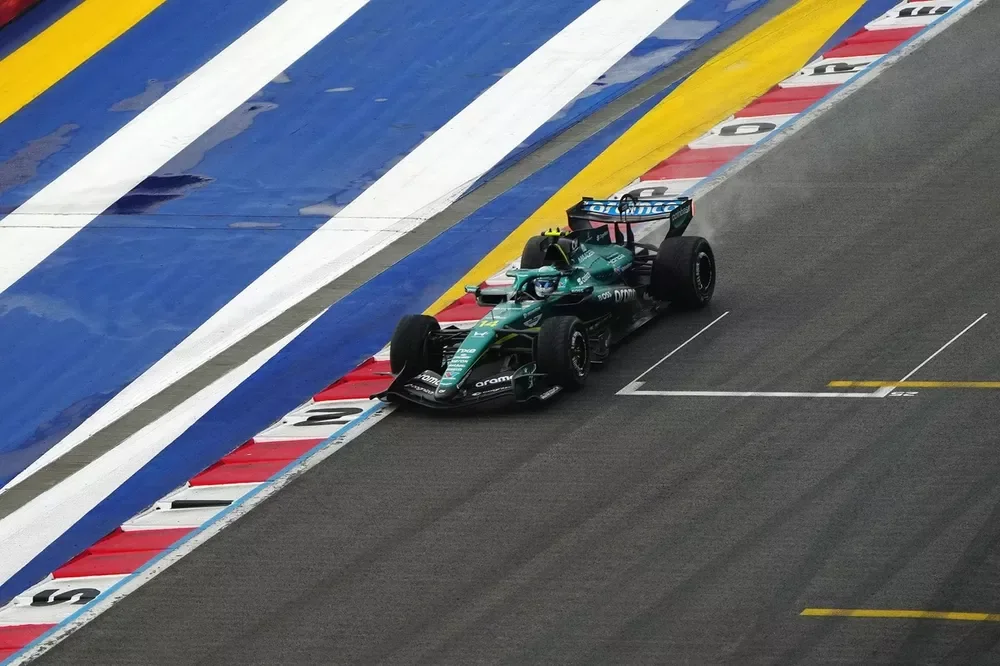
Honda's 2026 program illustrates why the opportunity and the finished hardware should be tracked separately. HRC president Koji Watanabe told Autosport that the first ADUO update arrived at Zandvoort, followed by an improved turbocharger on Lance Stroll's car at Madrid. Fernando Alonso received the turbo update at Baku. The changes were developed on overlapping schedules rather than delivered as one simultaneous package.
Honda engineer Shintaro Orihara, speaking to The Race, linked the revised turbocharger to improved response when the driver requests acceleration. If the combustion side responds more promptly, less electrical assistance may be needed to fill the torque gap. That can preserve energy for another part of the lap. The intended benefit is therefore broader than a headline peak-power increase.
Think about a slow corner exit. The driver needs predictable acceleration while balancing the car on the rear tires. A delay followed by a sudden response can make that task harder even if the power unit eventually reaches a strong output. Better response can help the driver use the available performance more consistently, but the amount depends on the whole operating situation.
Crucially, introducing the new turbo did not prove that the problem had disappeared. In an October 24 Autosport interview, Orihara said turbo-lag management still caused difficulty at Singapore. Honda had investigated the units without finding a specific hardware fault and was preparing operational countermeasures. That later account prevents the earlier upgrade announcement from becoming a false claim of a complete cure.
It also shows why an element-usage list is incomplete evidence of a specification change. The FIA record can identify another turbocharger entering a driver's pool. The manufacturer's explanation establishes what changed inside the approved specification and why it was introduced. Neither source alone supplies every part of the story.
For fans, the useful lesson is to follow the sequence: eligibility, declared change, driver-specific introduction and subsequent behavior. Honda had used both opportunities, yet further work on response and operation remained. That is development in progress, not proof that the allowance automatically delivers convergence or that an imperfect first outcome makes the entire effort pointless.
Why an eligible Mercedes upgrade can still be delayed
The Race reported on October 22 that Mercedes's planned Austin engine update was not ready and was also unlikely to appear in Mexico. Brazil was described as the likely earliest introduction, not a confirmed debut. As of this article's October 30 check, that reporting should remain a provisional timetable rather than a completed installation.
The report also distinguishes the engine project from the chassis upgrade. A driver running new aerodynamic parts has not thereby received the revised power unit. Both projects can influence the car's performance, but they have separate designs, validation work and introduction decisions.
Approval is only one step between a design and a race
There are several gates between a promising concept and a useful race component. Engineers need to establish that the idea works, validate its durability, manufacture the required hardware and prepare the operating calibration. The team then has to install and run it in conditions that allow the expected benefit to appear. An entitlement removes a regulatory obstacle to development; it does not perform those tasks.
Supply is part of the process too. Technical Appendix C5 includes an availability requirement for a minimum of one power unit of the new specification for each supplied team at first introduction, with a defined FIA exception process for genuine supply issues where a manufacturer supplies more than two teams. That is another reason to view an upgrade as a manufacturer-wide program, rather than a single bolt-on part for one headline driver.
None of those general requirements proves the private reason for Mercedes's particular delay. The public report says the unit was not ready and that Mercedes wanted a worthwhile step before using the opportunity. It does not disclose a failed test, a specific material issue or a guaranteed power gain, so those details should not be invented.
A late introduction can still matter beyond the remaining races. Running a changed specification provides operating experience and exposes the relationship between performance and reliability. That potential value is different from promising an immediate leap in the championship order. The useful question is what Mercedes confirms it has fitted, when it does so, and whether the observed behavior supports the claimed improvement.
How to judge the next ADUO announcement
The fairness debate is real. A September Reddit discussion asks whether measuring one part of the package can give extra development room to a manufacturer already strong overall. In the FIA's Azerbaijan press conference, Binotto likewise argued that the safety-net and convergence concept remained valid while needing refinement. Those are criticisms of the mechanism, rather than proof that an eligible manufacturer has broken it.
The difficulty is choosing a meaningful alternative measurement. Whole-car competitiveness includes chassis, tires, operation and driver performance. A manufacturer-specific technical measure is narrower, but also leaves out capabilities that matter in the race. Recognizing that trade-off makes the discussion more useful than assuming either a perfect system or an automatic scandal.
For the next announcement, start with its date and assessment period. A review result describes the data examined during that window; it is not necessarily the car's current specification. Calendar changes can also affect review boundaries. The technical rules permit adjusted periods, so old round-number lists should not be carried forward without checking the current FIA communication.
Then separate five claims: the manufacturer is eligible; it has designed a change; the change has the required approval; a particular driver has actually used it; and the performance has improved. Evidence for an earlier step does not prove a later one. An FIA allowance notice, a manufacturer declaration, a component-usage record and competitive lap times each answer a different question.
Finally, evaluate the outcome over appropriate conditions. One strong result can combine a favorable circuit, successful strategy and a better chassis with any power-unit gain. One disappointing weekend can expose a remaining weakness without erasing every benefit. Look for repeatable changes in the behavior the update was intended to address, while respecting the limits of public information.
ADUO gives manufacturers a chance to work on a deficit. It does not distribute identical engines or guarantee equal results. Understanding that distinction explains both why Mercedes can qualify while winning and why Honda can use its opportunities yet still have further problems to solve.
Loading comments…