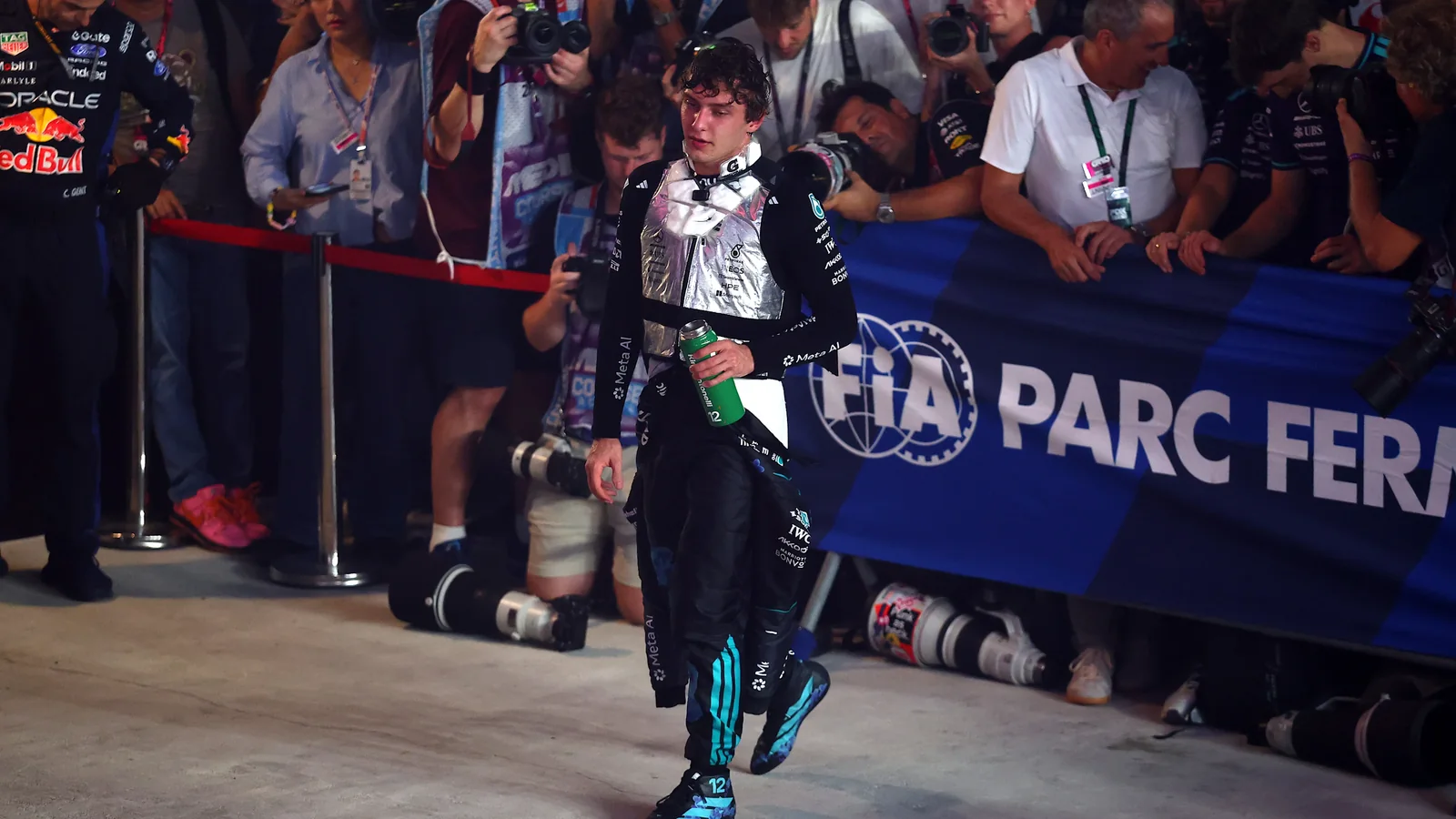
Four deleted entries did not automatically mean four penalty strikes for Kimi Antonelli at the 2026 Singapore Grand Prix. The official race deletion document includes his car four times, yet he kept third place without a track-limits time penalty. The explanation lies in the distinction between recording an invalid lap and deciding whether the incident counts toward escalation.
That distinction was easy to miss during the October 11 race. A further off-track moment appeared after earlier warnings, and fans reasonably expected the familiar five-second consequence. Subsequent reporting attributed the accepted exception to a braking problem. It did not establish a general right to cut corners with a faulty car, or a blanket exemption for out-laps.
This article checks the actual FIA record, the current sporting rule and the published driving guidelines as of October 30. It also separates what the public documents prove from what journalists reported about the stewards' reasoning. The official race outcome is the starting point; the useful question is how to understand the decisions behind it.
What the Singapore record actually shows
FIA Document 88, issued at 22:53 on October 11, is a race lap-deletion decision. It lists car 12 four times. That is important because some subsequent explanations described only three entries in the official record. The document itself is the better authority for what was recorded, and it includes the final Turn 7 incident with its lap-time field marked OUT LAP.
The four entries in FIA Document 88
| Entry | Turn | Recorded time of day | Lap-time field |
|---|---|---|---|
| 7 | 2 | 20:33:44 | 1:37.395 |
| 9 | 2 | 20:35:21 | 1:37.605 |
| 16 | 19 | 21:01:39 | 1:37.221 |
| 23 | 7 | 21:09:33 | OUT LAP |
The entry numbers are positions in the document's list, not Antonelli's race lap numbers. Likewise, the evening timestamps locate an event; they are not lap durations. These distinctions sound small, but they stop a document screenshot becoming a misleading race chronology. The fourth row also prevents the tidy but incorrect explanation that the FIA's published list simply never contained that incident.
What the decision does not supply is a separate, fully reasoned time-penalty ruling for Antonelli. Its stated sanction is deletion of the listed lap times. Reading it as a complete table of final penalty strikes asks it to answer a different question. A monitoring record can establish where a car crossed the boundary without telling the viewer every subsequent assessment of justification.
The final Singapore race result lists Antonelli third with 15 points, behind Max Verstappen and Charles Leclerc. No track-limits time addition changed that position. The apparent contradiction is therefore real at the level of a simple count: four recorded entries and no five-second sanction. Resolving it requires the enforcement framework and the reported exception, rather than removing an inconvenient row from the evidence.
That is a more useful starting point for debate, too. Fans can question how an exception was explained while agreeing on the underlying record. If the starting count changes from article to article, discussions about consistency quickly become arguments about different versions of what happened.

A deleted lap and a penalty strike are different decisions
Three questions sit behind a track-limits message. Did the car leave the defined circuit? Is the lap time invalid? Does the incident count toward a warning or time sanction? Those questions usually produce aligned answers during routine running, which encourages viewers to treat them as one operation. An exceptional incident exposes why they remain distinct.
The white line defines the boundary
The current sporting provision is Article B1.8.6. It requires reasonable efforts to stay on the circuit, recognizes a justifiable reason for leaving, and treats the white boundary line as part of the track while excluding the kerb. Rejoining must be safe and must not preserve a lasting advantage. The rule is therefore broader than whether a driver made an overtake or set a personal best.
Consider two illustrative exits. A driver runs wide while attacking a corner alone; another is displaced while avoiding contact. Both may appear beyond the same painted boundary in a still image. The sporting assessment needs the movement leading into the corner, not merely a photograph of the eventual position. That is why an accurate boundary test does not eliminate the need for judgment.
Warnings do not turn every excursion into a strike
The February driving guidelines describe normal escalation and explicit exceptions, including obvious loss of control, collision avoidance and being forced off. They also reserve discretion over strikes. These guidelines inform decisions under the regulations; their front page expressly distinguishes guidance from binding regulations. They should not be condensed into an unconditional instruction to penalize the fourth visible crossing.
Equally, the existence of discretion is not a promise of leniency. Deliberate or unsporting conduct can warrant a direct penalty, and an incident already punished on another basis need not accumulate an identical extra strike. The key is which conduct is being assessed and why. A black-and-white warning communicates a serious position, but it cannot make the circumstances of a later event irrelevant.
Our broader explanation of apparent F1 penalty inconsistencies covers evidence and judgment across different offenses. For this case, keep the narrower distinction in view: four deletion entries are evidence of four recorded incidents, while a time sanction depends on the treatment of the relevant incidents under the escalation system.
Why the braking incident was treated differently
Autosport reported that an FIA spokesperson accepted braking trouble as a justifiable explanation for the fourth excursion. The Race separately reported that Mercedes challenged an incident and the strike was revoked. These are attributed accounts of the decision-making, rather than a public transcript of the full evidence. Their common point is that the later event did not remain an ordinary additional strike.
Antonelli's own description concerned poor stopping power and a long pedal at the Virtual Safety Car restart after his stop. He also discussed a brake-sensor problem. That gives the incident a specific technical context, rather than a generic appeal to bad luck. It does not provide public measurements of brake pressure or temperature, and no exact value should be invented to make the explanation sound more scientific.
An explanation must fit the evidence
The relevant question is whether that excursion was justifiably caused by the problem, not whether the driver uttered the word brakes on the radio. A radio message can alert officials to a problem; it cannot, by itself, prove the entire sequence. Video, timing, the vehicle's behavior and information available to officials can support or undermine the account. Viewers have only part of that picture.
An unexpected failure that sends a car beyond the line is analytically different from repeatedly choosing a shortened route because a damaged car is difficult to drive. That distinction is an illustration of the evidence required, not a declaration that every future brake problem must receive the same result. A consistent process can reach different conclusions when control, warning, repetition or advantage differ.
There is also a separate safety question if a car's condition becomes dangerous. Accepting a reason for one off-track moment does not certify the car safe for unlimited further running. Equally, describing a frightening moment does not establish that the formal conditions for mandatory retirement were met. Those judgments need their own facts. Combining them into a choice between an automatic track-limits penalty and an automatic unsafe-car penalty oversimplifies both rules.
For Mercedes, the episode still carried sporting cost even without a sanction: earlier strikes reduced Antonelli's tolerance for another ordinary error. Managing that exposure while recovering race pace was part of the challenge. The exemption resolved one incident; it did not erase the pressure created by the preceding ones.
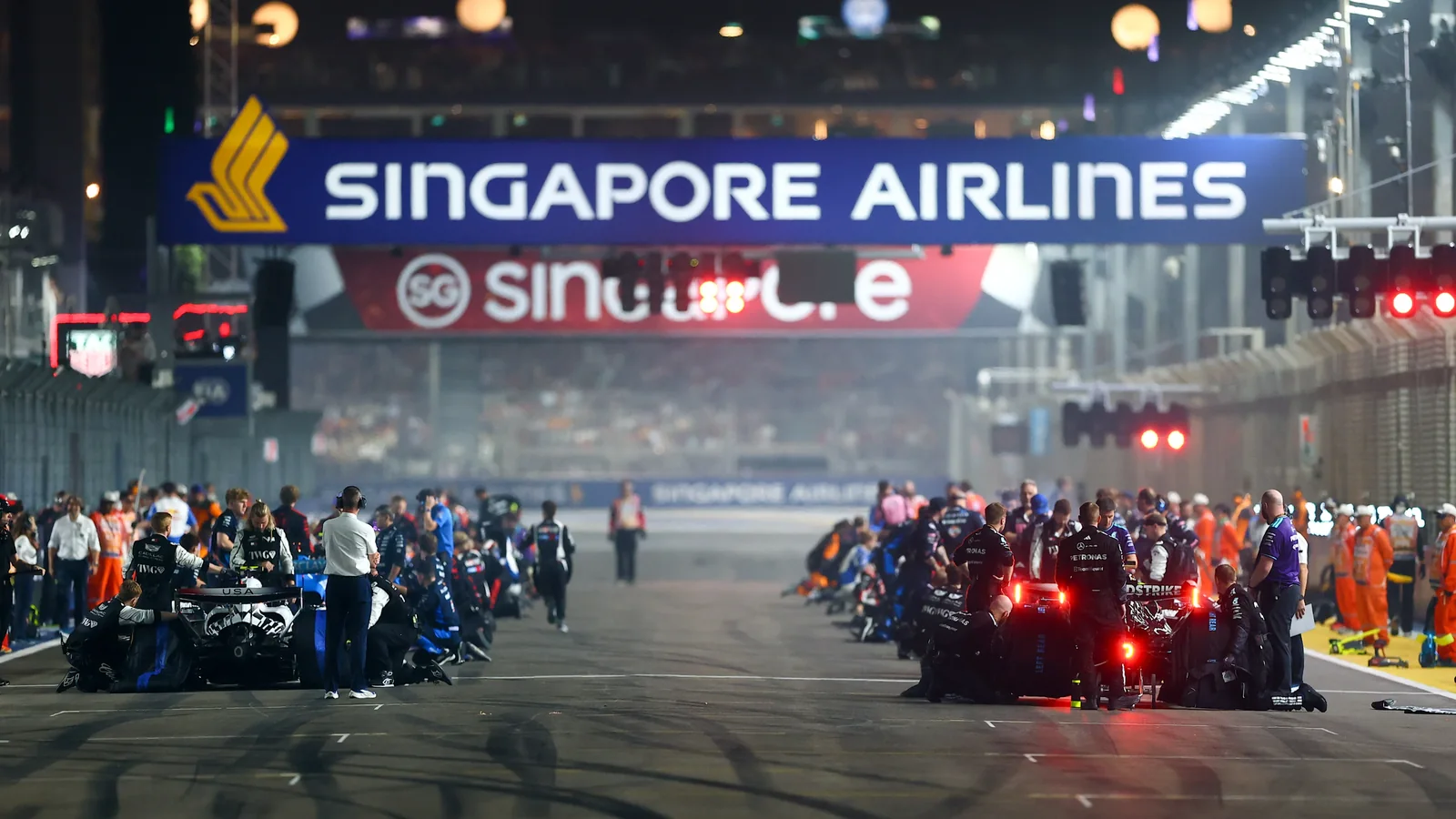
An out-lap is not a free pass to leave the track
The OUT LAP label in Document 88 tells us where Antonelli was in his pit-stop cycle. It does not state that such laps are exempt from track limits. Neither the current sporting provision nor the published list of strike exceptions grants that blanket permission. Treating the label itself as the reason for no time penalty would turn a useful detail into a rule the documents do not contain.
An out-lap lacks the same representative timing value as a clean flying lap, but it can still affect the race. A car leaving the pits may be defending against an undercut, trying to remain ahead of another car, or approaching a pack that determines its next stint. Its position and progress remain competitively meaningful. The absence of a conventional timed lap cannot remove the requirement to use the track and rejoin safely.
Imagine a driver knowingly cutting a corner immediately after a stop to emerge ahead of a rival. That hypothetical incident would require consideration of the resulting advantage, irrespective of whether the timing field said OUT LAP. Now imagine a different car unexpectedly losing braking capability at the same point and losing time while avoiding the wall. The lap label is identical, but the evidence and sporting questions differ. The cause and consequences explain the difference, not a special category of unregulated lap.
There is a similar misconception when qualifying logic is carried into a race. In qualifying, deleting a best effort can transform a driver's result because lap time determines the order. In a race, deleting a recorded time does not remove a completed lap from the car's distance or automatically send it to the back. Time penalties and classification are separate mechanisms. Our guide to F1 session programs helps explain why timing information has different purposes across the weekend.
The correct reading of Singapore is therefore specific: the document retained an out-lap entry, and reporting described an accepted justification that prevented ordinary escalation. It is reasonable to want the FIA to connect those two records more clearly. It is inaccurate to turn that communication gap into universal out-lap immunity.
What a fair consistency complaint should compare
The October 11 fan discussion included a reasonable demand for consistency, particularly comparisons with other races involving mechanical trouble. Some contributors asked whether a radio explanation had become enough to avoid sanction; others distinguished a single loss of braking from repeated corner cutting. Those are questions raised by a specific thread, not proof that all viewers reached one conclusion.
A useful comparison needs more than the same driver name or the word brakes. Was the car unexpectedly caught out, or did the driver know the problem would recur? Was there a loss of control? Did the car retain a place or shorten a route? Was the later incident punished separately? And did the officials have comparable evidence? Without those details, declaring two decisions identical can obscure the actual reason they differ.
Transparency remains a valid concern even if the final decision is defensible. A lap-deletion list, a selected radio broadcast and a spokesperson's explanation are not a single clear narrative. Publishing why a recorded incident did not count toward escalation would let fans evaluate the decision more accurately. The lack of that explanation should invite a request for detail, rather than an unsupported claim that the championship leader received protection.
The podium gap does not determine legality
The official result puts Antonelli 24.573 seconds behind the winner and Norris 40.506 behind. The gap between them was therefore 15.933 seconds. Adding the commonly discussed five seconds would still have left Antonelli 10.933 ahead of Norris, assuming nothing else changed. Claims that this particular sanction necessarily would have removed his podium are numerically wrong.
That observation does not decide whether a penalty should have been issued. Regulations apply even when the finishing order stays the same. Conversely, the significance of a podium does not justify inventing an infringement. Separate the legal assessment from its effect on the result, then discuss both. It is possible to criticize weak communication without claiming either that a harmless penalty must be skipped or that a non-penalty proves favoritism.
The stewarding consistency guide offers the wider framework. Singapore supplies a focused example of why comparing evidence, decisions and consequences in that order leads to a more productive argument than starting with which driver benefited.
How to follow the next track-limits controversy
Start by identifying the session, car and incident. A qualifying deletion, a race warning and a penalty for retaining an advantage are different developments even when the same corner appears in all three. Save the timestamp and corner from the message before drawing a conclusion from a running total. This small discipline prevents a Sprint incident or an earlier session from being folded into the wrong race count.
Then ask what the official message actually says. A notation that an incident is being reviewed is not a penalty. A deletion is not a complete explanation of escalation. A final decision can supersede an earlier interpretation. The broadcast may display these developments several minutes apart, so apparent silence immediately after a crossing does not establish that officials ignored it.
Next, look for the reason. If collision avoidance, a technical problem or another penalty is mentioned, compare it with the published framework. Identify what is known and what remains unavailable. A driver's account is relevant, a spokesperson's explanation has a different evidential role, and a reasoned steward decision is stronger for the legal finding. Avoid promoting an interpretation on social media into a newly discovered regulation.
Finally, calculate the consequence from the actual finishing gaps and any other confirmed sanctions. The results page supplies the classification; the championship table shows its wider effect. Keep a hypothetical penalty separate from the score that was actually awarded. In Singapore, the five-second discussion mattered to trust in enforcement even though that addition alone would not have changed the podium.
For the driver and pit wall, the practical lesson remains sharper than the online counting exercise. Accumulating ordinary strikes early reduces room for error when tires fade, traffic builds or a car develops a problem. A later accepted exception can protect the final result without making the earlier risk desirable. Antonelli's third place demonstrates successful damage limitation, while the official four-entry record explains why the public still wanted a clearer answer.
Loading comments…