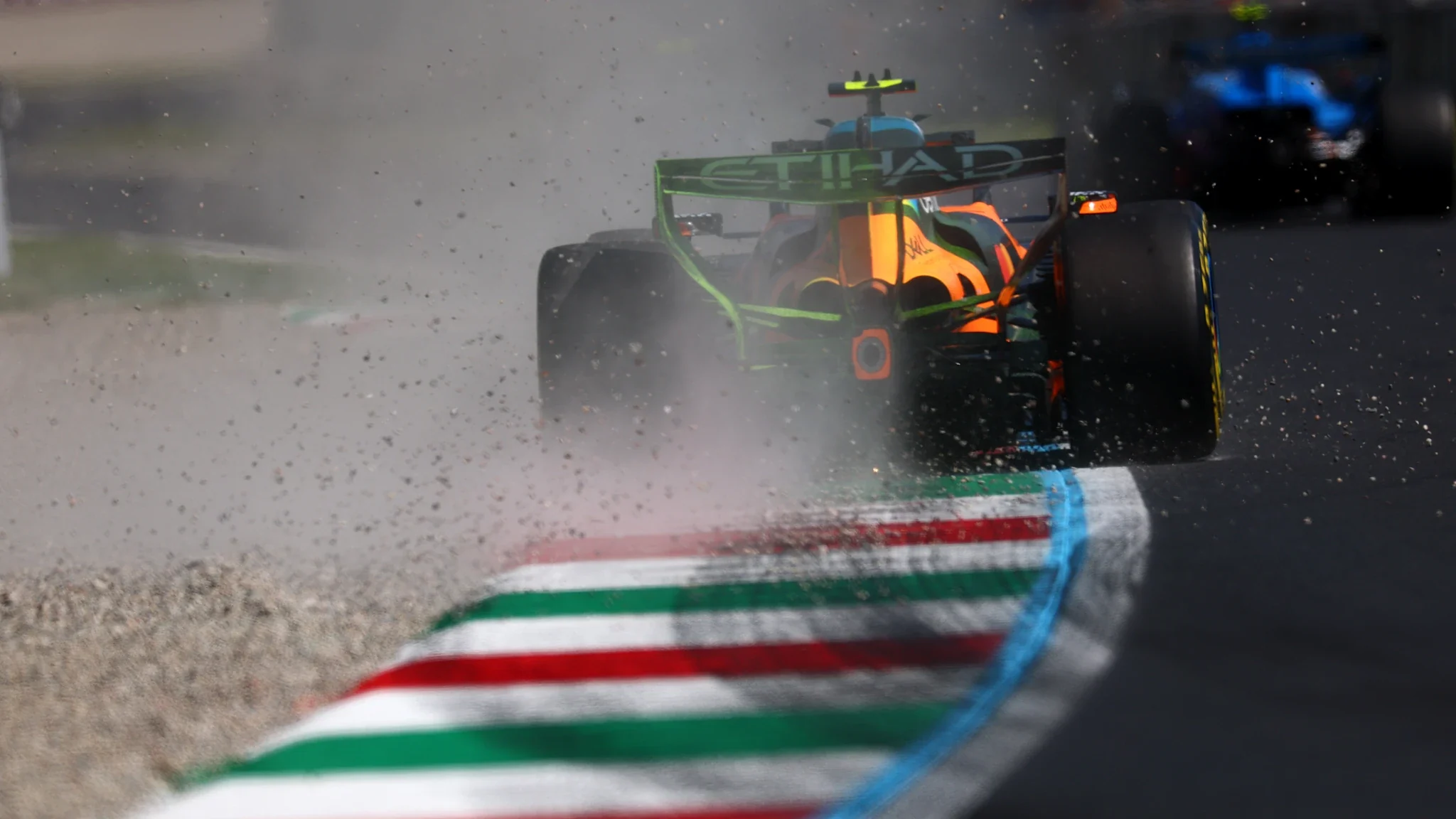
F1 practice is a live engineering program, not a rehearsal race and not a reliable pecking order. Every lap has a job: confirm the car is safe, correlate simulation with the real circuit, evaluate a setup change, prepare tyres, learn the surface or measure pace across a stint. Teams are solving several of those problems at once, often with their two cars running different specifications.
The familiar shorthand—FP1 for setup, FP2 for long runs and FP3 for qualifying—is directionally useful. It is not a rule. Weather, red flags, new parts, a rookie appearance or a Sprint weekend can compress and reorder the work. A driver at the bottom of the times may be carrying more fuel and producing the most valuable race data; a chart-topping lap may be a low-fuel soft-tyre run that says little about Sunday.
This guide follows the decision chain through FP1, FP2 and FP3, then explains how to read the timing screen without pretending to know hidden fuel loads or engine settings. Check this weekend’s F1 schedule first, because the number of practice sessions—and therefore the pressure on each lap—depends on the event format.
How F1 Practice Fits Into a Grand Prix Weekend
Practice only makes sense in relation to the competitive sessions that follow. Under the 2026 standard format, FP1 and FP2 take place on the first day of track running, with FP3 before qualifying on the next day. Each ordinary practice session lasts an hour. The timetable creates an engineering rhythm: measure on Friday, analyze between sessions and overnight, confirm the chosen direction in FP3, then commit for qualifying and the race.
Standard weekends offer three connected sessions
The sessions are not three isolated chances to chase the fastest lap. FP1 establishes whether the car and new components behave as expected. FP2 often provides the most useful blend of qualifying and race preparation because teams can schedule short low-fuel runs and longer fuel-heavy stints. FP3 tests the refined setup and rebuilds the driver’s rhythm before qualifying.
Information flows both ways. If an FP1 aero comparison rejects an upgrade, the team may revert the car before FP2. If Friday’s long run exposes rear-tyre overheating, engineers can trade some qualifying sharpness for a more stable race balance. FP3 then checks that compromise in the current track and weather conditions. The lap chart is therefore an output of development work, not the sole objective.
Sprint weekends force the whole plan into FP1
A current Sprint event removes FP2 and FP3: Sprint Qualifying follows the single FP1, and the Sprint occupies the Saturday slot that practice would otherwise use. Formula 1 describes the contrast plainly—about 60 minutes of practice instead of the usual 180. A team cannot spend half the session exploring an unproven direction and assume there will be two more hours to recover.
That compression moves work upstream. Simulator preparation, factory models and the initial setup arriving at the circuit carry more weight. Trackside engineers must combine system checks, driver familiarization, tyre learning, qualifying preparation and race information in one program. A red flag that costs 15 minutes is therefore not merely one quarter of a session; it can erase a particular fuel run or setup comparison with no later practice available to replace it.
FP1 Builds the Baseline
FP1 begins with trust. Before engineers chase balance or lap time, they need to know that a freshly assembled car’s systems work, the measured airflow resembles the model and the driver’s first comments agree with the sensors. A clean baseline lets the team interpret later setup changes. A faulty sensor or correlation mismatch can make every subsequent comparison ambiguous.
Installation laps confirm systems and safety
The first car leaving the garage may complete a lap and return without setting a representative time. Formula 1’s 2026 testing guide describes an installation lap as a check of throttle, brakes, electronics, hydraulics and calibrations such as clutch bite point and gearbox positions. Teams also work through power-unit, transmission and suspension checks. If the driver pits immediately, the “missing” lap is often the intended result, not evidence of trouble.
Once the system list is healthy, the driver builds speed while engineers watch temperatures, pressures and behavior. A new circuit, resurfacing or major upgrade increases the value of cautious progression. Discovering an abnormal reading at moderate load is preferable to finding it during a full qualifying simulation.
Aero tests compare track data with simulation
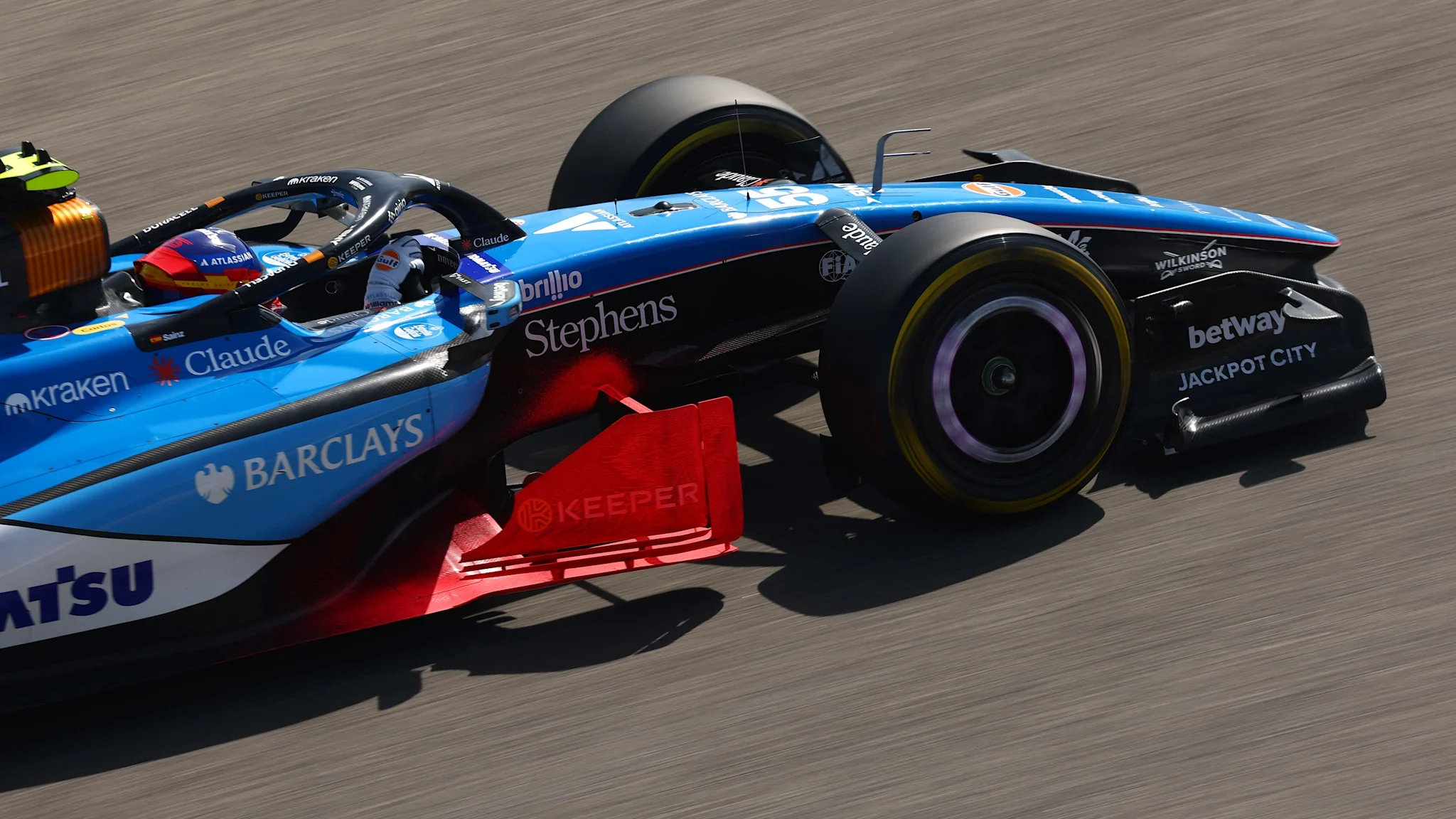
A metal grid attached behind a wheel or wing is an aero rake: an array of pitot tubes measuring airflow structures. Fluorescent flow-vis paint reveals how air moves across a surface. Both tools help correlation—the comparison between real track measurements and predictions from computational fluid dynamics or the wind tunnel. When the numbers match, the team can trust its development chain more confidently. When they do not, engineers must find whether the model, component, measurement or operating condition caused the mismatch.
That work may require constant-speed runs, unusual lines or repeated laps at a controlled condition. Two teammates can also run different floors, wings or setup values to create a back-to-back comparison. The slower car may be collecting the decisive evidence. Until specifications and run types align, the timing order cannot grade the upgrade.
Rookie runs change the division of work
The 2026 requirement makes every full-time driver step aside for a rookie in two practice sessions, with eligibility defined around having no more than two Grand Prix starts. These outings develop young drivers, but the car still has a race weekend to prepare. Teams give the rookie a disciplined program that can include systems work, component comparison and setup feedback while reducing risk.
For the race driver watching from the garage, the cost is direct experience: no personal reference for wind, bumps, grip and balance in that hour. The benefit is the teammate car’s data and a planned handover. When comparing FP1 pace, first check who drove each car and what work was assigned. A rookie’s lap time is not a clean proxy for the regular driver’s potential, and the regular driver may need FP2’s opening laps simply to catch up.
FP2 Connects Qualifying Pace to Race Pace
FP2 often produces Friday’s most recognizable performance work. Formula 1’s official guide says teams generally use it for longer race-preparation stints while reserving part of the hour for qualifying simulations when conditions allow. That mixture explains why the leaderboard can change abruptly: a field circulating on heavy fuel is interrupted by soft-tyre runs designed to access peak grip.
Short runs test peak performance
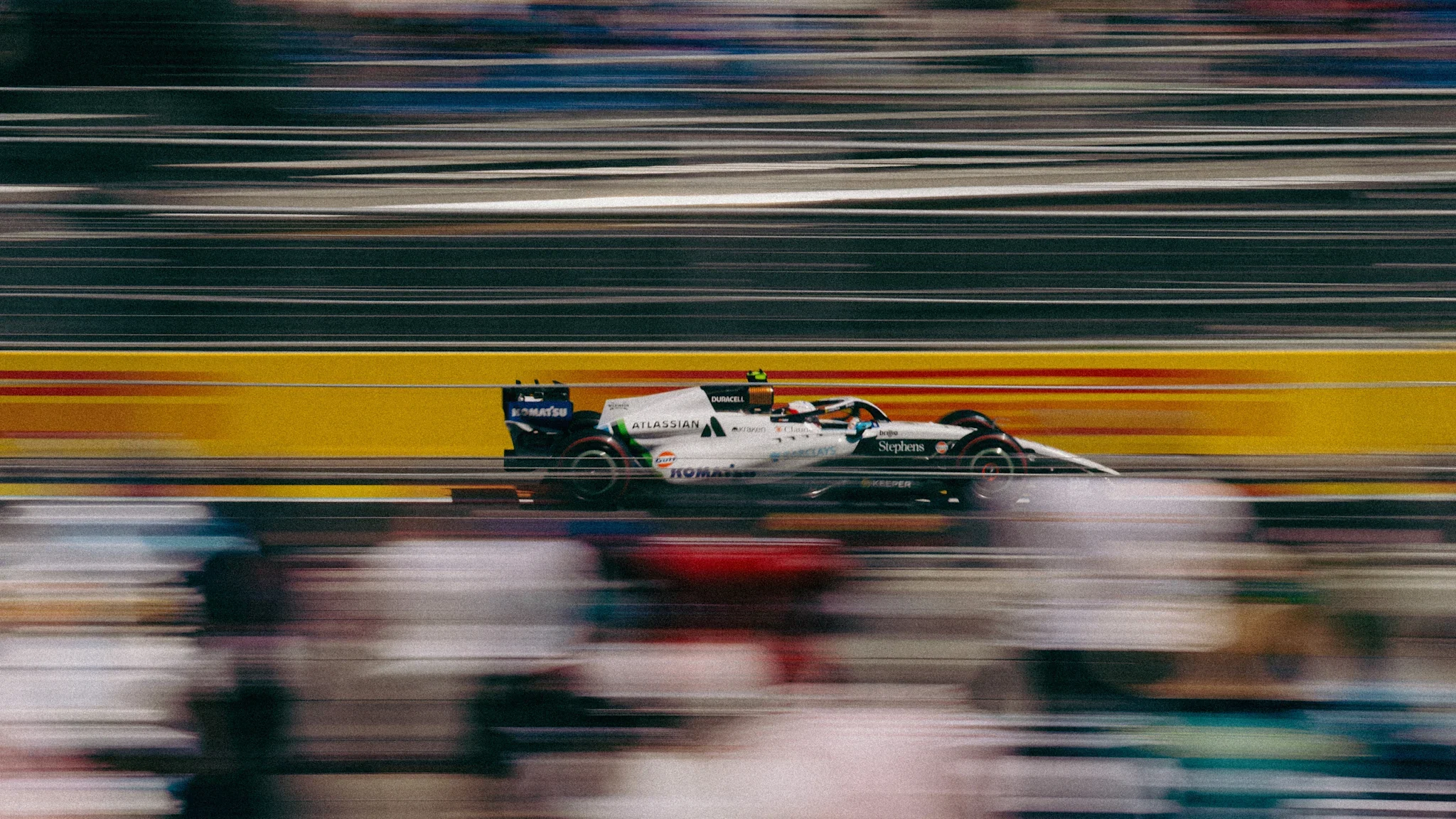
A qualifying simulation usually includes a preparation lap, one or more fast laps and recovery or cool-down running. The driver works on tyre preparation, braking references and the balance needed to attack rather than conserve. Engineers assess whether the car responds predictably at the limit and whether front and rear grip arrive together. Setup changes between runs may target a specific corner phase rather than the whole lap.
Comparison requires matching the moment. A late run can benefit from rubber laid down across the session, but it can also meet more traffic or lower track temperature. A driver may abort after an error, leaving a slow best time that hides strong earlier sectors. Different compounds and unseen fuel quantities widen the uncertainty. The useful evidence is the completed lap plus sector pattern, not position alone.
Long runs reveal stint behavior
For a long run, teams add fuel and string together laps on the same set. They are measuring consistency, balance migration and tyre behavior as fuel burns away. The driver may be assigned target lap times, lift-and-coast points or particular energy settings, so an apparently conservative opening is not automatically weak pace. Engineers care about whether the car remains driveable and how lap time changes under controlled work.
A clean sequence can expose a degradation curve: perhaps rear grip falls and lap time drifts, or the tyre stabilizes after an early thermal phase. Yet the raw slope combines decreasing fuel mass, tyre performance, traffic and instructions. If times remain flat, tyre loss may be roughly offsetting the car becoming lighter; it does not mean the tyre has zero degradation. Pirelli’s event analysis also shows why the same compound behaves differently with circuit load, surface grip and temperature.
Watch both cars. Teammates may split compounds or start with different fuel quantities to widen the team’s data set. One provides a shorter, faster stint while the other explores durability. Engineers can combine the programs overnight, but fans should resist averaging unlike work. The strongest Friday reading identifies repeatable pace among cars on similar tyres, similar stint age and reasonably clear laps—and still leaves room for fuel uncertainty.
FP3 Is the Final Setup and Driver-Confidence Check
FP3 is commonly described as the qualifying rehearsal because the official Formula 1 guide says teams tend to focus on shorter runs. That is accurate, but the hour is really the final confirmation loop. Engineers have processed Friday’s data and changed the setup; the driver now has to verify that the car behaves as predicted, the tyres can be prepared correctly and the balance remains trustworthy when pushed.
Early laps may check the overnight changes on a harder tyre before soft-compound runs dominate. Teams experiment with preparation-lap pace, spacing and tyre temperature, because the fastest theoretical setup is useless if the driver cannot deliver it in traffic at the end of qualifying. Confidence matters mechanically: a stable rear on corner entry may allow later braking, while predictable front grip helps the driver commit to a high-speed turn. Timing shows the result, but the purpose is repeatability near the limit.
Conditions can make FP3 misleading. A cool morning session may not resemble warmer qualifying; wind direction can shift the balance in exposed corners; support races can change surface grip. Teams must decide whether to optimize for the track they have or anticipate the track they expect. That is why a front-runner may finish FP3 lower than expected without panic—the program may have prioritized an alternate preparation method or stopped before a final attempt.
Friday disruption also changes the script. If rain, a red flag or a technical problem erased long running, FP3 may carry race-fuel work that would normally belong in FP2. If an upgrade still lacks correlation, the team may repeat measurements instead of chasing a headline. Session labels do not override unfinished engineering tasks.
The deadline nevertheless sharpens every decision. Qualifying brings parc fermé restrictions that limit major setup freedom, subject to the regulations’ defined allowances and exceptions. A team choosing wing level, ride behavior or cooling compromise is balancing one-lap performance against race stability. FP3 is its last controlled opportunity to discover that the chosen compromise does not work as intended.
How to Read F1 Practice Times Without Being Misled
A practice classification is accurate about the laps completed, but it is not a controlled experiment. Formula 1’s own guide warns that fuel loads, compounds and conditions differ. The useful task is therefore not predicting qualifying from P1 alone; it is reducing the largest sources of mismatch until a credible comparison remains.
Fuel load can outweigh the visible lap-time gap
Fuel adds mass, and mass affects acceleration, braking and cornering. Teams do not publish exact practice fuel quantities, so a precise fan correction would be false accuracy. Run length offers a clue: a car beginning a sustained sequence almost certainly carries more usable fuel than one sent for a short performance run. It does not reveal the starting number, energy strategy or target pace.
Compare like with like. Put short soft-tyre runs in one group and longer race-preparation stints in another. If two cars differ by a few tenths on single laps, fuel could be a major part of the explanation; if one remains consistently quicker across comparable long runs, the evidence is stronger. Still describe it as Friday pace, not a guaranteed race hierarchy.
Tyres, track evolution and traffic distort rankings
A soft, medium and hard set offer different peak performance and durability, while used and new sets of the same compound are not equivalent. Track temperature affects how quickly grip arrives and how the tyre survives a run. Pirelli’s event notes connect behavior to corner loads, grip level, surface and heat, so even compound comparisons require circuit context.
The circuit also evolves as rubber is laid down and dust clears. A late lap may enjoy more grip than an early one; later traffic may cancel that benefit. Check sector splits, yellow flags and whether the driver had to pass or yield. If a lap contains an obvious interruption, exclude it from the pace comparison rather than “correcting” it with a guessed number.
Look for run shapes instead of one fastest lap
For qualifying pace, look for a complete preparation-fast-cool sequence and compare the best clean attempt on the same compound at a similar session phase. For race pace, collect consecutive representative laps, mark tyre age, and observe whether time is stable, improves with fuel burn or falls as grip disappears. The pattern is more robust than an average contaminated by out-laps and traffic.
Five-question practice filter
- Was it a short run or a long run?
- Which compound, and how old was the set?
- Did the lap occur in clear track and stable flags?
- Were conditions similar for the comparison car?
- Does the pattern repeat across laps or teammates?
Use the finalized qualifying results to judge one-lap competition and the race results to judge the outcome. Practice is valuable because it explains how teams arrived there, not because Friday’s table secretly contains Sunday’s answer.
When the Program Breaks: Weather, Flags and Parc Fermé
A run plan assumes green-flag time and usable conditions. Formula 1 rarely owes teams either. Rain can make dry-tyre work irrelevant, a stopped car can trigger a red flag, and a component problem can leave one side of the garage with no representative baseline. The team then has to rank unanswered questions rather than simply move every task later.
Red flags create data debt
Call each lost comparison “data debt.” If a red flag interrupts a back-to-back floor test, the team may not know which specification to keep. If it erases the long run, race degradation becomes less certain. If it catches a driver before the soft-tyre lap, the public classification underrates that car while the engineers also lose limit-balance feedback.
Not every task has equal urgency. Safety and system checks come first. A setup decision that must be locked before qualifying outranks a curiosity that can wait for another event. Teams can use the other car’s data, simulation and historical information, but those substitutes may not reproduce the same driver, specification or conditions. On a Sprint weekend, the single practice hour makes the debt more severe because no FP2 or FP3 exists to repay it.
Rain creates a different choice. Running supplies wet-condition knowledge but consumes tyres and exposes the car to damage, while staying in the garage preserves equipment but leaves the driver unprepared if qualifying is wet. The correct program depends on the forecast, allocation and confidence already held; the timing table cannot grade a garage decision without that context.
Parc fermé turns practice choices into race consequences
Formula 1’s current weekend guide places FP3 immediately before qualifying and notes that parc fermé then prohibits most setup work. The detailed FIA rules contain permissions and exceptions, so the simple phrase “nothing can change” is wrong. The strategic reality remains: major performance choices become much harder to revisit once competition begins.
That deadline connects every practice compromise to the race. More wing may give qualifying confidence but cost straight-line speed and overtaking resilience. A sharper front end may help one lap but stress the rear tyres across a stint. Extra cooling can protect reliability while adding aerodynamic cost. Teams choose with the evidence they managed to collect, and disruption increases the share filled by models and judgment.
For viewers, the consequence is simple: watch what work was missed, not just who was slow. Before the next session, confirm timing on the F1 schedule and viewing details on the F1 TV schedule. In qualifying and the race, look for the exact weakness practice failed to resolve—warm-up, balance, tyre life or reliability. That is where an apparently quiet Friday becomes part of the competitive story.
Loading comments…