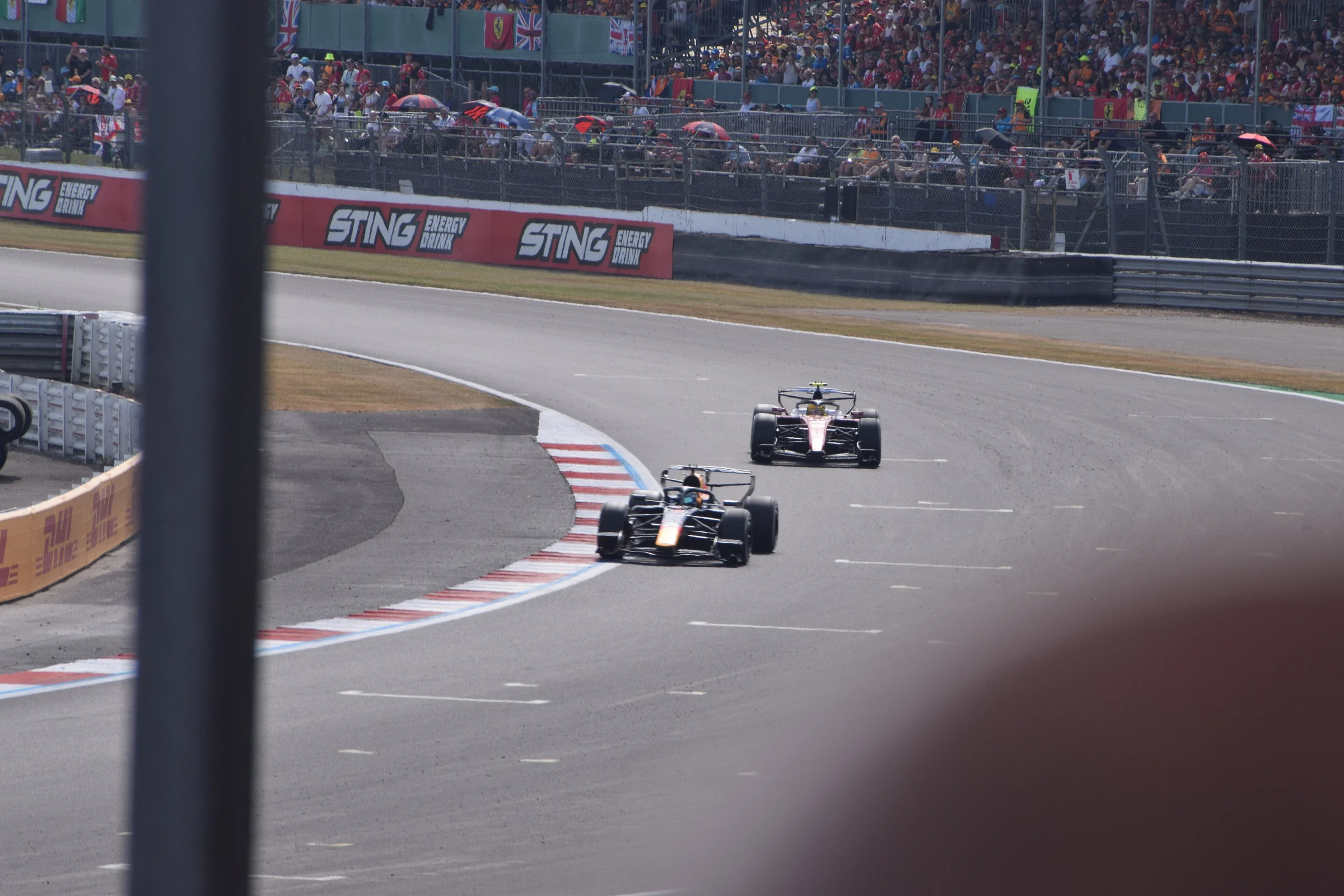
A 2026 Formula 1 battle can look bizarre: one car surges past near the end of a straight, becomes electrically depleted, then watches the same rival blast back on the next acceleration zone. Drivers and analysts have called it “yo-yo racing.” The label is informal, but the speed swing is real—and it comes from a power unit that asks drivers to budget a much larger electrical contribution across a lap.
The effect is not simply the replacement for DRS. Every car can use low-drag active aero in defined straight zones. The attacker may also qualify for Overtake Mode, while both drivers manage Boost, harvesting and finite battery energy. Spend aggressively now and the car may clip later; save now and the driver may surrender track position by design.
This guide explains the chain from battery state of charge to visible pass and repass. It uses a concrete Suzuka fight to show why circuit layout matters, distinguishes driver-controlled Boost from proximity-gated Overtake Mode, and asks whether the resulting racing rewards strategy or removes too much control from the cockpit.
What “Yo-Yo Racing” Looks Like
Traditional pass-and-repass racing usually reflects braking, tire grip, a crossover line or a deliberate switchback. The 2026 yo-yo can be different: the speed advantage moves between cars because their available electrical deployment moves. A driver may complete a pass exactly where the system makes him strongest, only to arrive at the next straight with less energy than the car just overtaken.
The Norris–Hamilton Suzuka example
The 2026 Japanese Grand Prix supplied a clean example. The Race reported that Lando Norris passed Lewis Hamilton into the final chicane on Lap 50. Hamilton then repassed along the start/finish run, before Norris completed a lasting move into the chicane one lap later. On television, it resembled an energetic exchange. Norris's account was less satisfying: he said the first pass was not the move he wanted to make.
Norris had Overtake Mode while chasing and used electrical power toward 130R. Closing rapidly forced him to lift rather than run into the Ferrari and to respect the flat-out corner's grip demand. The report explained that reapplying throttle then invoked a mandated deployment behavior, consuming energy he wanted to reserve for the chicane exit and the main straight. The pass happened, but it weakened the next phase.
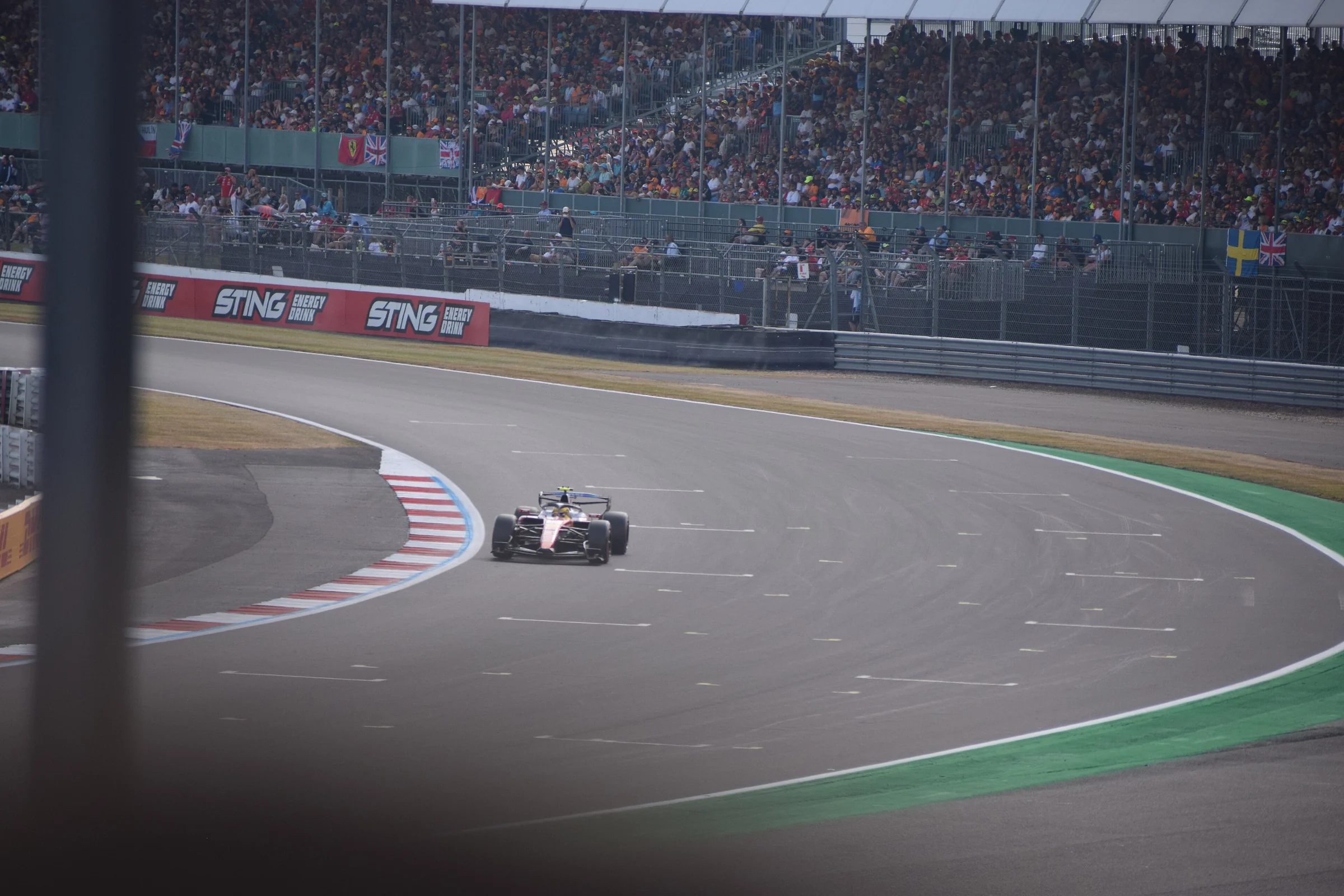
That sequence explains the label. Norris and Hamilton were not simply exchanging better corner exits; their relative power availability oscillated. It does not mean the drivers were passengers throughout. Positioning, lift timing, battery preparation and braking still mattered. It does mean the system sometimes delivered power at a moment the driver considered strategically wrong.
One case should not be generalized to every 2026 overtake. Tire offset, aerodynamic tow, setup, traffic and ordinary mistakes remain decisive. Use official F1 results for classification, then use onboard and technical reporting to explain how that order was produced.
The 2026 Energy Budget Behind Every Straight
The combustion engine can keep burning fuel, subject to the regulations, but the electrical side cannot provide maximum assistance everywhere. The battery stores a finite quantity and the MGU-K must both recover and deploy it. The strategic question is therefore not “do we have electric power?” It is “where is each joule worth the most?”
More electrical power, finite stored energy
Formula 1 describes the new power balance as approximately 50 percent electrical and 50 percent internal combustion. That shorthand captures the much larger role of the electric motor, but power and energy are different. High electrical power is the rate at which energy is delivered; the battery's stored energy determines how long that rate can be sustained.
A driver who spends aggressively out of one corner gains speed immediately and carries it down the straight. The same driver may then reach a later zone with insufficient state of charge to maintain the desired assistance. Conversely, a driver who lifts, harvests or accepts lower deployment can look slow now to build a stronger attack later. Team software automates much of the target, but driver choices and race position still shape the lap.
Deployment, clipping and state of charge
Deployment is electrical energy sent through the MGU-K to the wheels. When the allowed or available assistance reduces toward the end of a straight, viewers often call it clipping. The combustion engine continues, but acceleration changes and a following car with richer deployment can close dramatically. The Race's Suzuka analysis described Overtake Mode sustaining the full 350 kW output longer than the ordinary taper.
State of charge is the battery's current reserve, not a universal dashboard percentage visible to fans. Teams guard their detailed maps and optimize them for circuit length, braking zones, race phase and traffic. We can observe relative speed, lifting and engineer instructions; we cannot reverse-engineer an exact private energy trace from broadcast footage.
This is the central yo-yo mechanism: the leading car may clip while the pursuer deploys, producing a pass; after the pursuer spends that reserve, the original leader may possess the stronger next straight. The position changes, then the energy advantage changes too.
Recharge and Super Clipping Explained
Energy returns to the battery through several routes. Braking regeneration is intuitive: deceleration energy that would become heat can be recovered. The system can also harvest on part throttle, when the driver lifts, and during “super clipping” near the end of a straight. The last case explains a counterintuitive broadcast image—a driver can hold the pedal down while the car harvests and stops accelerating as strongly.
Formula 1 says selectable recharge maps and targets automate most braking, part-throttle and super-clipping behavior through the standard electronics. Direct driver control is clearest in lift-off regeneration. Lifting can add charge, but it also closes the active aerodynamic devices, increasing drag. Super clipping keeps full throttle and therefore allows Straight Mode to remain open, though some potential acceleration is exchanged for stored energy.
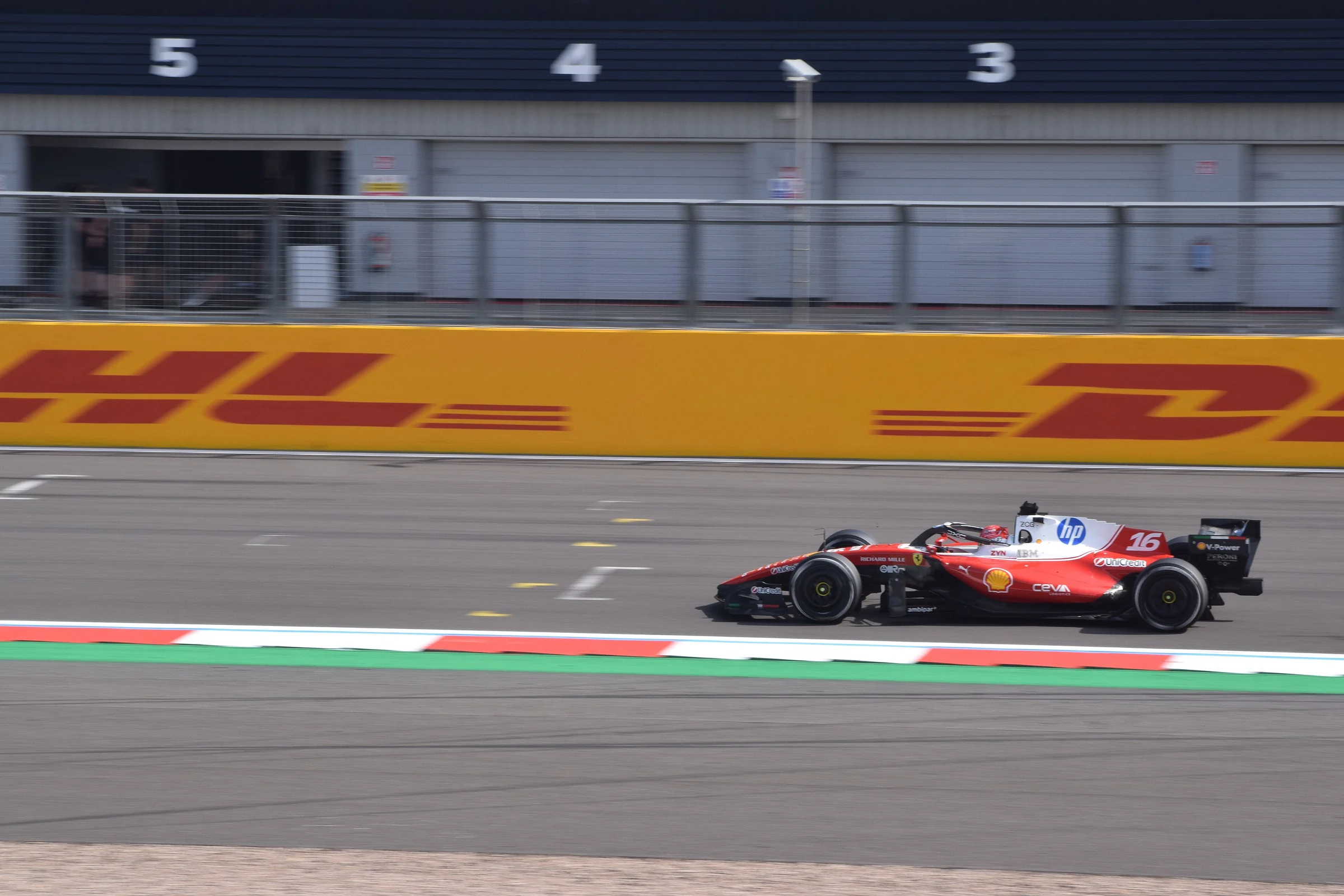
The trade explains why a car can appear to hit an invisible wall before braking. It may be harvesting according to its target, limited by available energy or transitioning to a reduced deployment profile. A rival with a different state of charge continues accelerating and makes the speed delta look larger than the aerodynamic tow alone.
Circuit layout decides whether recovery can repay expenditure. A track with several braking events between long straights offers repeated harvest opportunities. A layout that places one small chicane between two major full-throttle runs asks drivers to choose which straight to defend. Monza's sequence, explained in our Monza circuit guide, makes that budgeting especially visible.
Why Track Layout Creates the Pass–Repass Cycle
A battery plan is really a circuit map. Heavy braking creates recovery; long acceleration consumes energy; corners decide whether the driver can lift or must remain committed. Place two long straights around one short chicane and the budget becomes brutal: attack on straight one, then defend straight two with whatever remains.
Max Verstappen described that Suzuka problem after spending much of the race behind Pierre Gasly. With a long straight, a small chicane and another long straight, deploying to pass in one place can leave nothing for the next. There are too few corners between them to rebuild the battery efficiently. The attacker becomes the defender almost immediately.
Active Aero helps both cars reduce drag but does not solve the energy shortage. Straight Mode may raise top speed while simultaneously making relative electrical deployment more visible: with aerodynamic state broadly aligned, the car sustaining MGU-K assistance longer can surge. Tow and tire condition still layer onto that delta.
At a stop-start circuit, repeated braking can replenish more frequently, though acceleration events also demand more. At a flowing circuit, fewer hard stops can constrain recovery. Teams therefore optimize by venue, and the same power unit may look smooth one weekend and conspicuously clip the next. Check this weekend's F1 schedule, then map its two longest straights and the braking zones between them; that simple exercise predicts where yo-yo risk is highest.
Is Yo-Yo Racing Artificial—and Can F1 Improve It?
All modern F1 racing is shaped by regulated technology. Tire compounds, fuel flow, active aero and electrical deployment are no less “real” than wings or brakes. Energy strategy can reward intelligence: a driver who sacrifices one zone to create a decisive later attack has made a sporting choice. The criticism becomes stronger when mandatory control logic spends energy against the driver's intention and manufactures a pass that neither competitor expects to last.
Norris's Suzuka frustration targeted that loss of agency. McLaren team principal Andrea Stella argued that regulations could give engineers more freedom to choose sections where throttle reapplication after a lift does not automatically trigger electrical deployment. That would let a driver avoid a car or balance a high-speed corner without unintentionally draining the battery reserved for the next straight.
Any adjustment has trade-offs. More manual freedom can reward skill and tactical diversity, but it also increases workload and lets sophisticated teams optimize around another layer. Reducing Overtake Mode could eliminate awkward swaps while making passing harder. Increasing available energy could smooth deployment but alter performance, weight, cooling or the technology goals of the rules. The right test is not total overtake count; it is whether attacks feel intentional, defensible and comprehensible.
A useful evaluation needs four tests. Intentionality asks whether the driver chose where to spend energy. Predictability asks whether both cars can anticipate the likely power phase rather than discovering it halfway down the straight. Reciprocity asks whether the defending car has a meaningful tactical response, such as saving deployment or prioritizing exit speed. Legibility asks whether viewers can connect a visible speed change to an understandable decision. A battle does not need to be mechanically simple, but its decisive actions should be attributable to competitors rather than opaque control behavior.
Those tests also help separate possible remedies. Changing when deployment is triggered could improve agency without increasing the total energy available across a lap. Giving teams broader freedom to map sections might improve intentionality, though it could widen the advantage of the best simulation and software groups. A standardized display or broadcast graphic would not alter performance at all, but it could make depletion, clipping and Overtake Mode easier to read. Each option addresses a different complaint, so F1 should avoid treating every strange pass as proof that the entire power-unit concept has failed.
Fans can read 2026 battles more accurately by watching four clues: lift-and-coast instructions before an attack, an unusually large close at the end of a straight, clipping after the pass, and immediate vulnerability on the next straight. Compare onboard throttle sound, timing gaps and the next lap rather than judging only the moment positions change.
Official results tell us who finished ahead. Understanding Boost, Overtake Mode, Recharge and track layout explains why. Yo-yo racing is not one defect with one switch; it is an emergent result of finite energy, regulated control and circuit sequence. F1's task is to preserve that strategic depth while returning the decisive choice to the driver.
Loading comments…