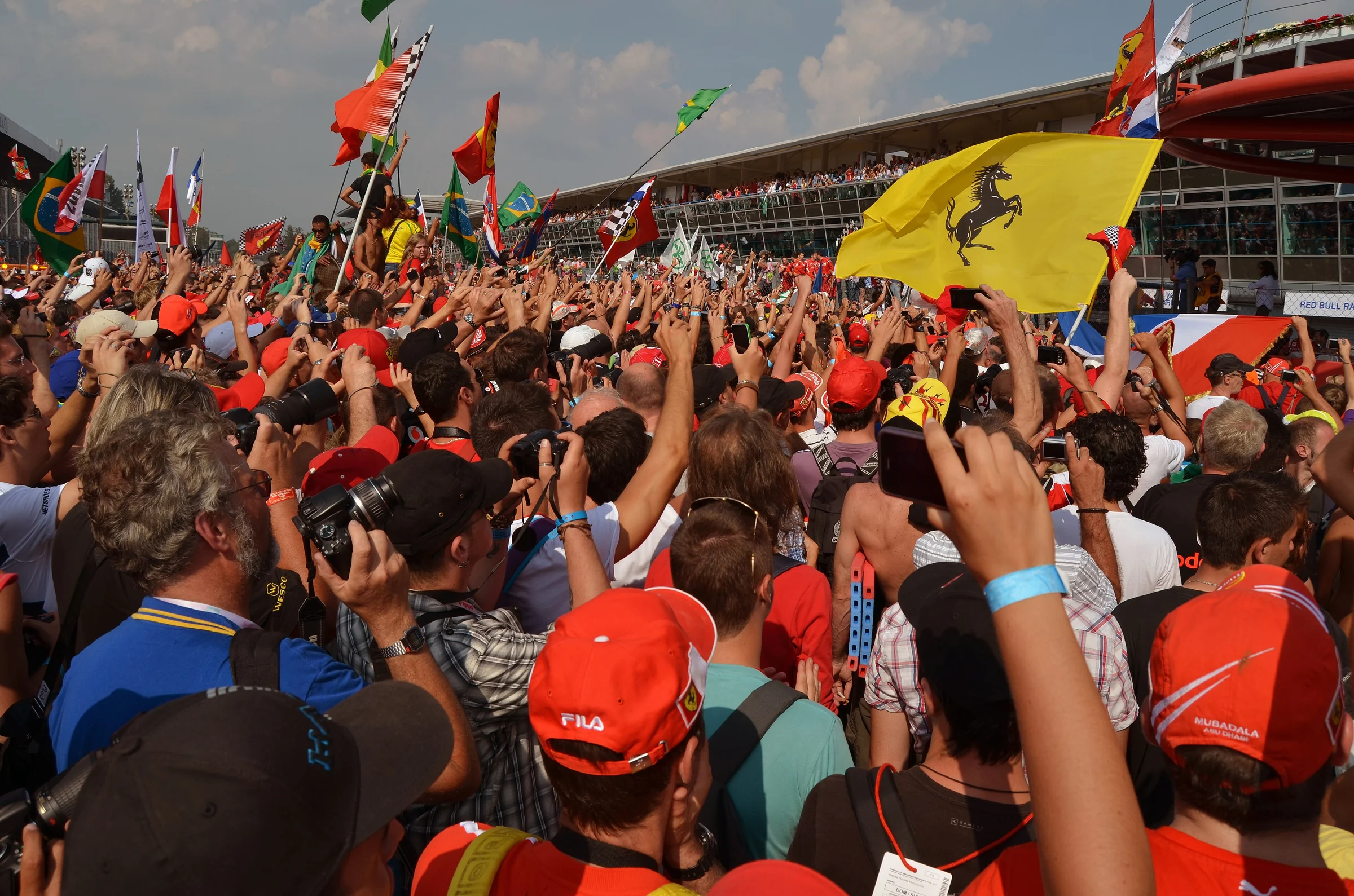
Ferrari began its 2026 home Grand Prix with both cars on the second row and ended the opening sequence with one driver in the gravel, one car out by Lap 2, and a preventable argument about how teammates should race. Charles Leclerc ran wide through Turn 2 while alongside Lewis Hamilton, forcing Hamilton off the road and costing him six positions. Leclerc then suffered a separate crash at Curva Alboreto on the next lap. Hamilton recovered to sixth; Ferrari lost the podium opportunity its grid positions had created.
The important point is not whether teammates should be forbidden from racing. They should race—especially when both retain championship ambitions. The problem was the absence of a shared definition of acceptable risk at the most compressed corner of the first lap. Hamilton later said Ferrari had no formal rules of engagement, while Leclerc accepted that he had gone too far and the pair cleared the air.
This analysis reconstructs what happened, separates verified fact from inference, and explains why Ferrari needs a concise operating framework before the next side-by-side fight. The goal is not to appoint a number one; it is to stop equal status from turning valuable track position into self-inflicted loss.
What Happened Between Hamilton and Leclerc at Monza?
The sequence began with opportunity. Leclerc started third and Hamilton fourth, placing Ferrari directly behind the front row at a circuit where the tow to Turn 1 can reshape the order immediately. It also placed both red cars in the same funnel: a high-speed launch into Monza's tight right-left opening chicane, with rivals outside and almost no room to improvise once braking began.
The second-row start and Turn 2 squeeze
Hamilton and Leclerc reached the chicane side-by-side. Leclerc was on the inside kerb but drifted through the second part rather than keeping the exit sufficiently tight. Hamilton ran onto the gravel and radioed that he had been pushed off. Contemporary reporting described a loss of six positions. Leclerc later said the fight had been too close and acknowledged that he had not behaved as a teammate should.
The available account does not justify declaring definite wheel-to-wheel contact: Leclerc himself said immediately after the race that he did not know whether the cars touched. The competitive fact is clearer than the physical one. Hamilton's usable racing surface disappeared, so avoiding a collision required him to abandon the corner. That is precisely where team rules matter: not to decide ownership of every centimeter, but to ensure the inside car leaves a survivable exit for the other Ferrari.
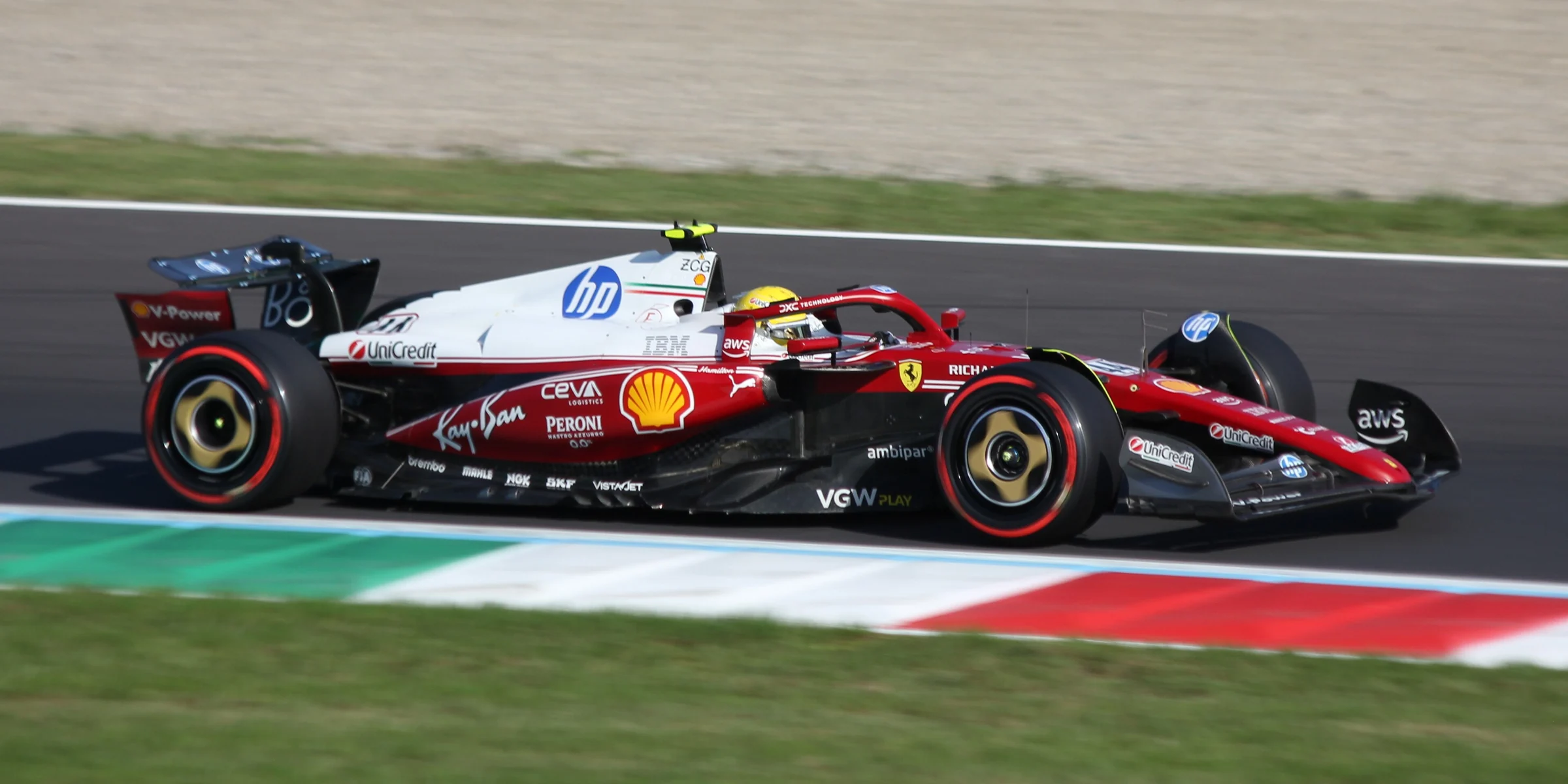
Hamilton’s recovery to sixth
Hamilton fought back to sixth, a result that demonstrated usable pace without recovering the strategic position lost at Turn 2. Once dropped into traffic, he had to overtake cars, manage tires in disturbed air and spend laps rebuilding the position Ferrari already owned on the grid. A sixth place after recovery is not equivalent to a clean sixth: the first carries evidence of unrealized upside.
The cost reached beyond one result. Formula1.com's Madrid follow-up put Hamilton 76 points behind championship leader Kimi Antonelli after Monza. One corner did not create that entire gap, and Leclerc's later retirement removed any direct Ferrari comparison, but a title outsider cannot afford teammate-created deficits when ten rounds remain. The 2026 Italian Grand Prix page preserves the weekend result, while Hamilton's season page shows how those points fit the broader campaign.
Leclerc’s Lap 2 Crash Was a Separate Incident
Less than two laps after the teammate fight, Leclerc ran off at the final corner—Curva Alboreto, still widely called Parabolica—and hit the barriers. The timing makes it tempting to turn both moments into one emotional narrative. The evidence does not establish that chain. The Turn 2 squeeze involved Hamilton; the later loss of control occurred at another corner after Leclerc had continued racing.
Leclerc said the throttle response had felt strange at the final corner on Lap 1, prompting him to lift and reapply it. On Lap 2 he attempted the same process, felt something unusual again and crashed. He said Ferrari would investigate. Without the team's data or a later confirmed diagnosis, it would be irresponsible to label the event a driver-only error, a technical failure or a consequence of the Hamilton battle.
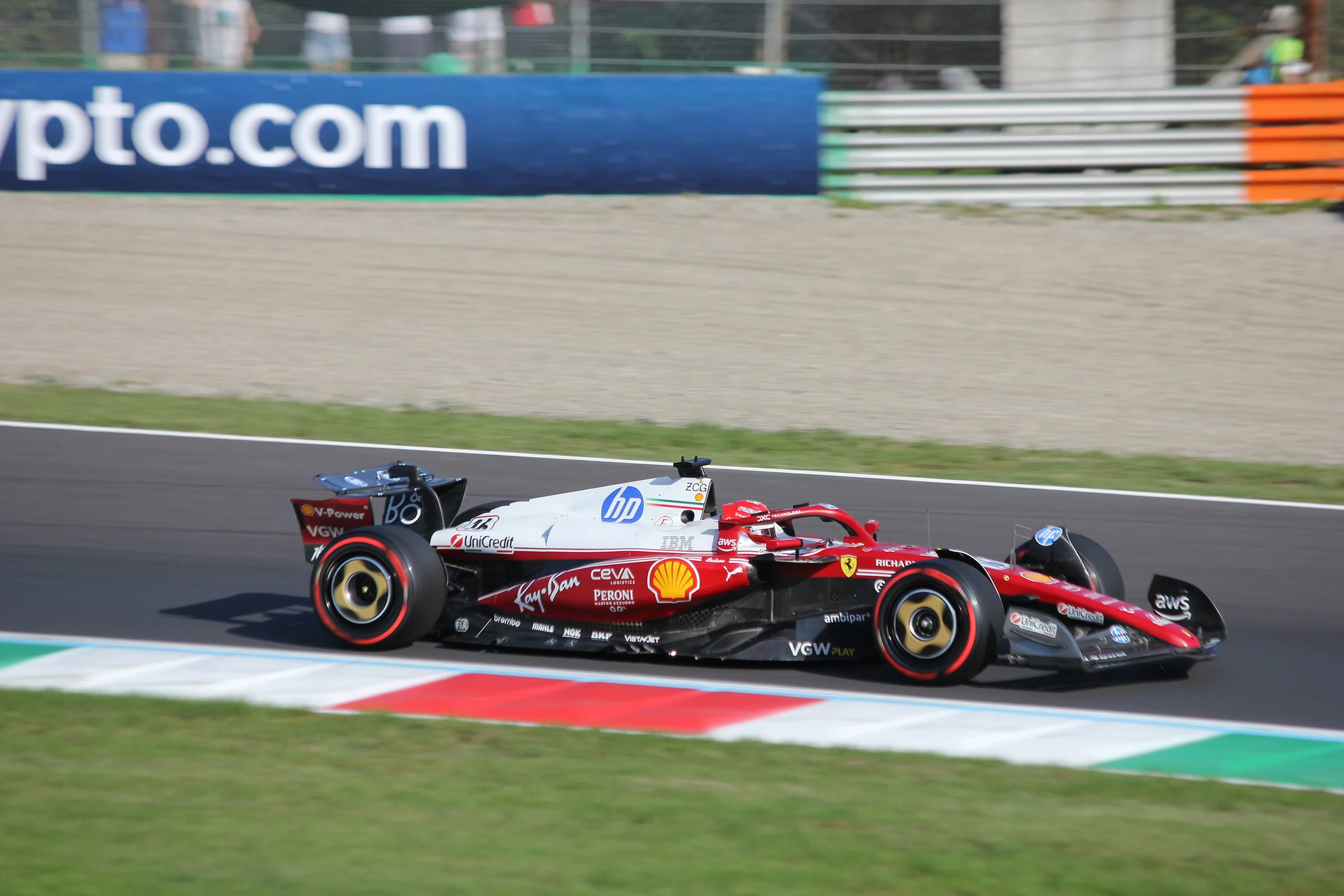
Curva Alboreto is especially sensitive to confidence on throttle because its long arc feeds the main straight. Tire temperature, fuel load, disturbed preparation and control-system behavior can all influence how a car responds early in a race, but none should be assigned as the cause here without evidence. The editorially sound conclusion is simply that Ferrari lost Leclerc before strategy could reshape the race.
Leclerc was initially reported unharmed. By the Madrid weekend he described brief blurred vision or dizziness after the impact and neck treatment, while confirming he had passed further checks and was fit to race. That health update matters more than using the crash to intensify teammate drama. His 2026 driver page should be used for the classified sporting record; the cause should remain open until Ferrari supplies a definitive account.
What Hamilton, Leclerc and Ferrari Said Afterwards
The immediate post-race tone was tense, but the Madrid follow-up was constructive. The drivers spoke privately and then with senior Ferrari leadership, including team principal Fred Vasseur. That sequence repaired the personal disagreement. It did not yet produce a written operating rule for the next battle.
Leclerc accepted responsibility
Leclerc moved beyond the uncertainty of his first post-race explanation. Before the Spanish Grand Prix he said he had gone too far at Turn 2 and had not behaved as a teammate should. He told Hamilton directly and said the approach would be adjusted so it did not happen again. That admission matters because it establishes a shared reading without requiring stewards or management to impose blame after the fact.
He also described how Ferrari incidents grow rapidly in public. That is true culturally, but visibility is not the core problem. A home-race clash between drivers starting third and fourth would matter at any team. Ferrari's scrutiny simply raises the cost of leaving the standard undefined: every subsequent close fight will be interpreted through Monza until a clean example replaces it.
Hamilton said the relationship survived
Hamilton praised Leclerc's willingness to meet face-to-face, called their racing relationship good and said nothing lingered. His account was not a public demand for punishment. He accepted that two closely matched, highly motivated drivers will meet again and framed open communication as evidence of maturity.
Yet Hamilton also contrasted Ferrari with his Mercedes experience, where written racing rules existed. Asked in Madrid whether Ferrari had agreed comparable rules, he said it had not; the turnaround was too short to change the system in two days. Vasseur had already indicated a discussion was needed. That leaves two statements simultaneously true: the teammates repaired trust, and the team still had process work to complete.
Ferrari should protect both truths. Overreaction—publicly restricting one driver after a single incident—would damage equal competition. Underreaction—assuming a handshake automatically defines the next braking-zone decision—would waste the lesson. The Ferrari team page shows why both cars remain essential to its campaign.
What “Rules of Engagement” Should Actually Do
Team rules are often mistaken for team orders. Orders determine an outcome—hold position, swap cars, do not attack. Rules of engagement define the process by which drivers may compete before an order becomes necessary. A good rule preserves racing while reducing ambiguous, asymmetric risk.
Permission to race is not permission to abandon margin
At Monza, Ferrari did not need to tell Leclerc and Hamilton to freeze P3 and P4 before Turn 1. It needed both drivers to understand that side-by-side entry creates an obligation to leave usable track through Turn 2. The inside driver can defend and brake late; the outside driver can challenge. Neither may resolve an overlap by making the other choose gravel or contact.
That standard is stricter than the minimum a driver might risk against another team because the downside is doubled. Contact can damage two cars, compromise both strategies and give points to the same rival. It should also be symmetric: Hamilton cannot demand room at Monza and then squeeze Leclerc in the next race. Predictability is the value. Each driver knows what move the other regards as legitimate before adrenaline takes over.
Rules also need context. Opening laps, pit-exit convergence, wet conditions and late-race tire offsets produce different risk. The pit wall cannot pre-write every geometry. It can define principles, a communication vocabulary and escalation triggers. For example: race freely while both cars remain within defined track limits; leave racing room with established overlap; avoid moves likely to force evasive action; obey a hold or swap call when strategic windows converge.
The objective is not politeness. Hard racing includes late braking, defensive positioning and occasional light contact. The objective is to keep a contest between teammates from imposing a negative expected value on Ferrari. Monza crossed that threshold the moment one red car's only safe exit was through gravel.
The Rules Ferrari Needs Before the Next Fight
Ferrari does not need a legal code thick enough to debate during braking. It needs a short hierarchy both drivers and race engineers can apply at speed. The following is an editorial framework—not a claim about Ferrari's private discussions—but it addresses the exact failure Monza exposed.
- 1. Guaranteed racing room with meaningful overlap. If a teammate is established alongside at turn-in, the outside edge cannot become the planned exit. Drivers may contest the apex, but not outsource collision avoidance to the other Ferrari.
- 2. Extra opening-lap margin. Tire and brake temperatures, fuel load and surrounding traffic make Lap 1 less predictable. The first two corners should carry a higher team-risk threshold than a controlled late-race duel.
- 3. A clear strategic override. Free racing ends when it threatens a pit window, exposes both cars to an undercut, overheats tires, or delays the faster car while a championship rival escapes. The call should specify duration and review point.
- 4. Consistent repair and consequence. If one driver gains by forcing the other off, the team should restore position when practical. Repeated breaches require an escalating response; otherwise the written standard becomes optional.
Race engineers must use the same language. “Race cleanly” is too vague. “Leave a car's width at exit when overlap exists” is observable. “Hold position until lap X, then review” tells both drivers when competition resumes. Precision reduces the temptation to interpret a message according to whichever outcome benefits the recipient.
Ferrari should also separate equality from simultaneity. Equal opportunity across a season does not mean both drivers may fight at every instant regardless of tire phase. If Hamilton is on fresh softs and Leclerc is extending on hards—or the reverse—a temporary pass can maximize both races without establishing permanent hierarchy. Position can be returned if the attacking car fails to use the advantage within a defined number of laps.
Finally, the team must rehearse edge cases before the race: safety-car restart, undercut crossover, wet tire split, damaged car, and final ten laps. The aim is not to eliminate judgment; it is to prevent the first discussion from happening after points have already disappeared. Monza supplied the case study. Ferrari's next close fight will reveal whether it converted the lesson into execution.
Why This Matters to Ferrari’s 2026 Championship
After Monza, Hamilton trailed championship leader Kimi Antonelli by 76 points with ten rounds remaining. That gap was large but not arithmetically terminal. It made clean execution more valuable: a driver chasing from behind needs podiums and wins, while Ferrari needs both cars taking points from Mercedes rather than compromising each other.
The constructors' contest magnifies the risk. A teammate battle can be acceptable if it changes only which Ferrari finishes ahead. It becomes destructive when one car loses six positions and the other fails to finish, leaving rivals to bank the points. Leclerc's crash was separate, but the final zero-and-sixth outcome illustrates how little recovery capacity remains once the team surrenders control of the opening lap.
Rules of engagement also protect development. Ferrari needs candid feedback from both drivers, and that depends on trust that strategic calls and post-race reviews use the same standard. If either believes the other receives tolerance for moves he would be punished for, engineering disagreement can become political. A symmetric rule keeps the argument on car behavior and race execution.
Hamilton said Ferrari had made a positive engine step and needed both cars to challenge Mercedes. That ambition is visible through the championship standings and the Ferrari team page. The next test is not whether Hamilton and Leclerc avoid each other completely. It is whether they can run side-by-side, preserve both cars, and emerge still able to attack the silver cars ahead.
Loading comments…