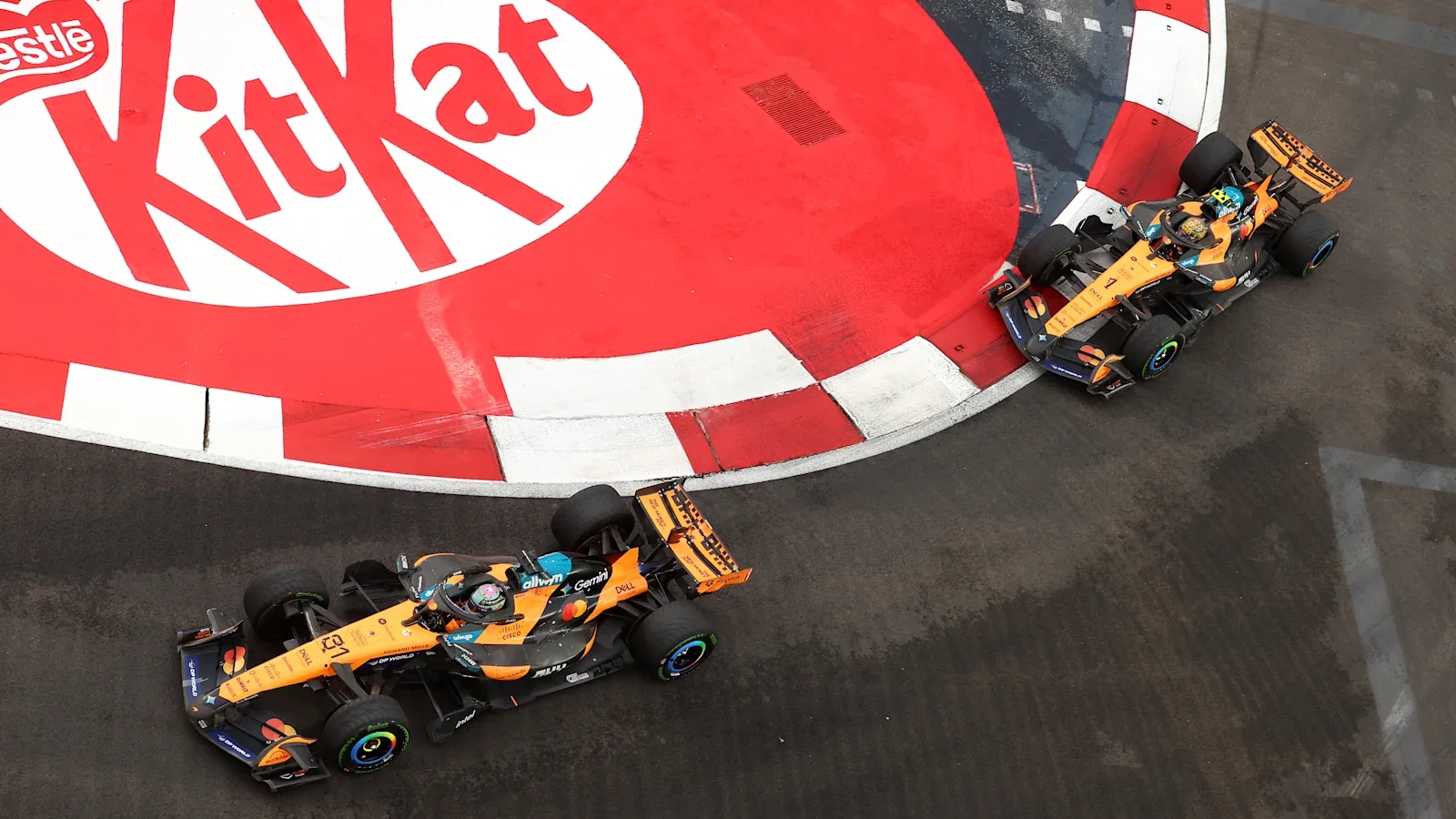
The FIA's Singapore Sprint decision and Andrea Stella's angry reaction answer different questions. The stewards decided that neither Lando Norris nor Oscar Piastri was predominantly responsible for their Turn 5 collision on October 10, 2026. McLaren still lost a strong combined result, damaged its cars and had to ask why its drivers had put the team's interests at risk.
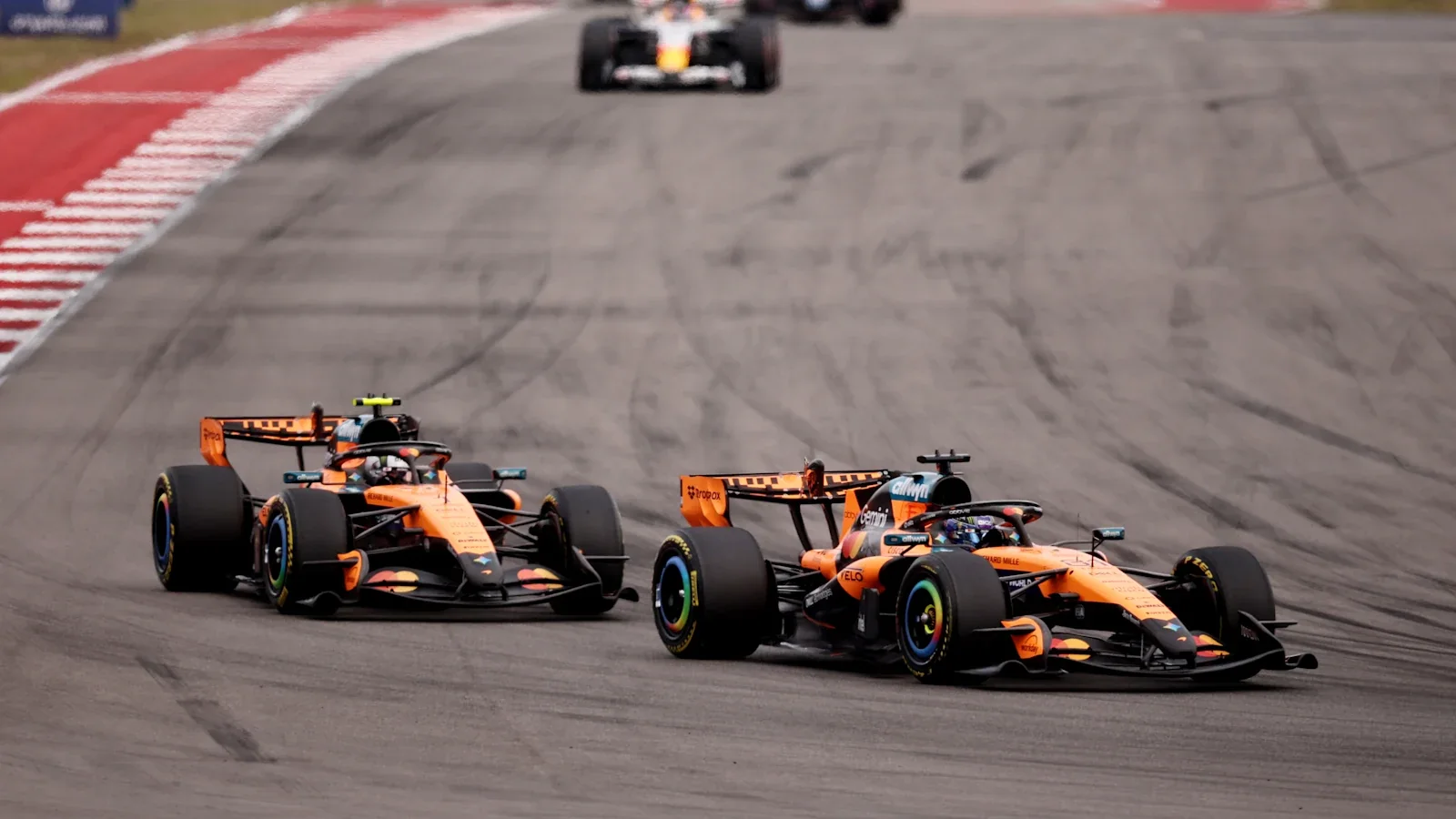
That distinction is the key to understanding what happened afterward. Norris said before Austin that the teammates were still allowed to race. During the United States Grand Prix, McLaren then swapped them on lap eight under a scenario the team says had been discussed in advance. A permitted fight and an instructed swap can coexist when the objective is to improve the team's total outcome.
As of October 30, before Mexico's track sessions, the evidence supports a specific sequence: a shared-responsibility FIA ruling, an internal demand to prevent contact, and a later pace-based cooperation decision. It does not support inventing a secret punishment or treating Austin's swap as proof that the FIA had blamed Norris.
What happened at Turn 5 in the Singapore Sprint
Norris attacked Piastri on the inside at Turn 5 on the last lap of a Sprint run in mixed conditions. The McLarens had been fourth and fifth behind Charles Leclerc. Contact at the apex sent both into a spin, with Piastri hitting the wall and Norris eventually continuing. The official classification records Norris eighth for one point and Piastri 14th with a DNF and no points.
The result cost McLaren eight points against the running order
Holding fourth and fifth to the finish would have produced five and four Sprint points respectively: nine for McLaren. The actual return was one. The eight-point difference is a clear comparison with the order before contact, not a claim that the remaining corners could never have changed anything.
Swapping the McLarens without changing those two positions would simply have transferred one point between the drivers. It would not have increased the team's nine-point total. That is why the maneuver looks different from the cockpit and from the pit wall. A driver can see an individual position worth contesting while the team sees an already valuable combined result exposed to additional risk.
There could be circumstances in which racing a teammate helps the team attack a car ahead. But that possibility needs evidence about the actual situation, not an assumption that every attempted pass creates an extra constructor benefit. Here, the collision's immediate effect was unmistakable: the combined return collapsed instead of improving.
The drivers saw different opportunities
The FIA decision records Piastri saying he had not expected the attack and tried to leave room after noticing Norris inside. Norris said he saw an opportunity, expected space, then found less than anticipated and used the inside kerb while braking. These are the drivers' accounts as recorded in the decision, not a ruling that one description settles every detail.
The important connection is expectation. If the leading driver anticipates a normal corner entry while the following driver anticipates room for an attack, the margin can disappear quickly. That explanation does not assign a percentage of blame. It identifies why a team might need a clearer shared response even when the stewards cannot identify a predominantly responsible driver.
The official session results establish what counted afterward. Replays explain the contact; the points comparison explains why McLaren's concern extended beyond whether the pass was theoretically available.
Why the FIA took no further action
Document 58 is the useful starting point because it separates what the stewards decided from what each driver said. After hearing both drivers and the team representative and reviewing video evidence, the stewards found that both had contributed and neither was wholly or predominantly responsible. The decision was no further action.
That conclusion fits Article B1.9.3 of the current Sporting Regulations: a collision penalty requires a clear finding of whole or predominant blame. The document does not assign a numerical split, declare Norris solely responsible or decide that Piastri alone should have avoided contact. Nor does the absence of a penalty mean that neither driver contributed.
No predominant blame is not a recommendation to repeat the move
There are two separate assessments. Race officials decide whether the evidence supports a sporting sanction under the applicable rules. Team management decides whether its drivers protected the organization's combined interests. A decision can fail the second assessment without meeting the threshold for a penalty under the first.
For example, two teammates might enter a disputed corner in circumstances where both make a contribution to contact. The stewards may be unable to identify one as predominantly responsible. Their employer can still conclude that the pair should have kept a larger margin because the potential benefit was small compared with the team's exposure. That conclusion does not require rewriting the official finding.
The reverse distinction matters too. A team defending its driver in public cannot overturn a penalty by saying the maneuver was useful to its strategy. Internal interests and external rules operate at different levels. Keeping those levels clear makes this incident easier to discuss without asking every statement to answer a question it was never intended to settle.
Calling Singapore a racing incident is therefore compatible with treating it as an avoidable team failure. It would be inaccurate to turn that phrase into an endorsement of every decision made on the approach to Turn 5. The shared-responsibility finding leaves McLaren with a practical task: improve the drivers' shared expectations before they arrive at a similar moment again.
The team's response should be judged on that task rather than on whether it matches a fan's preferred allocation of blame. Preventing the next collision may require both drivers to change their behavior, even if debate continues over who had the better case in the last one.
Why Stella still called the collision serious
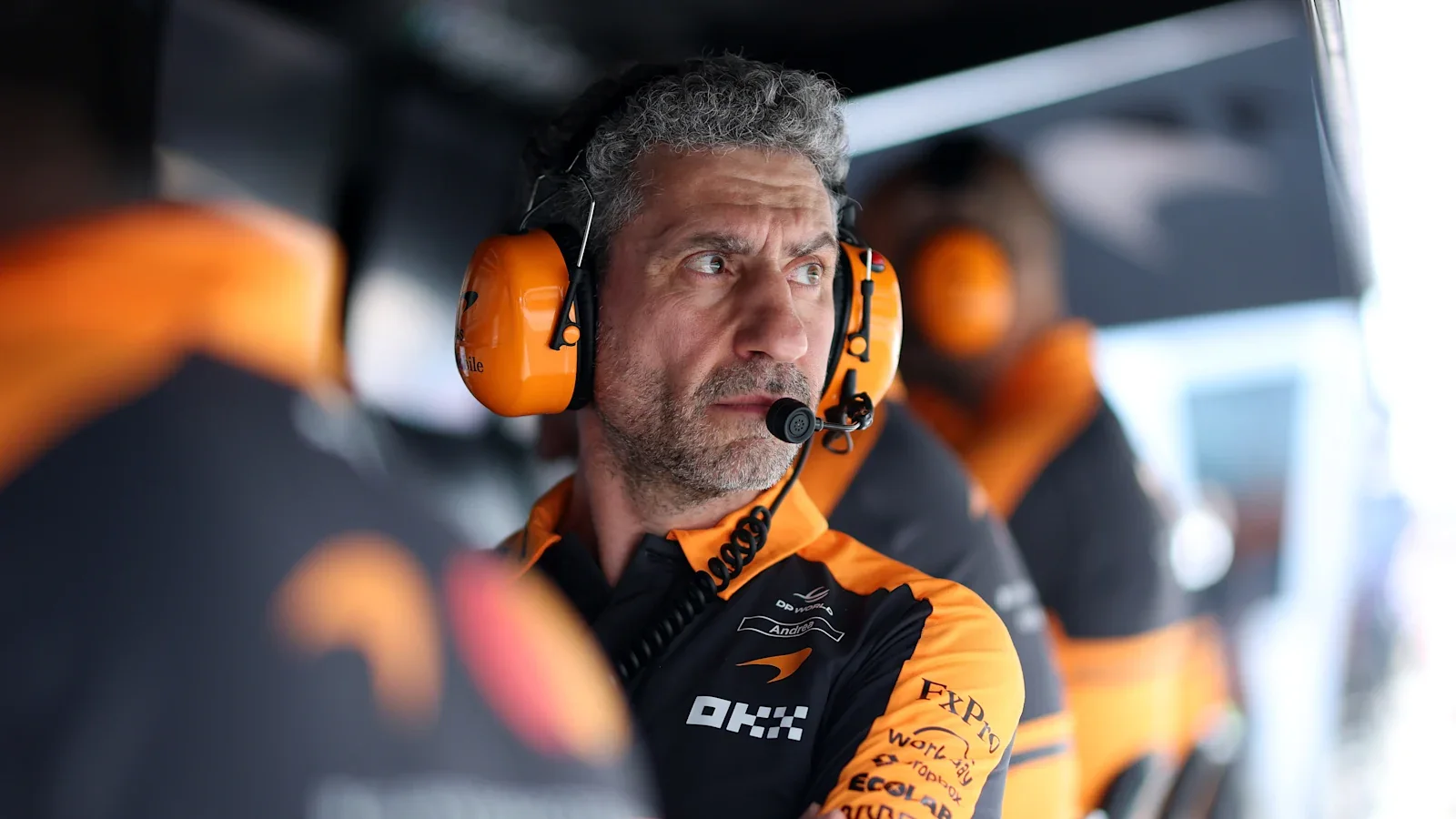
Stella's stated priority was the team's interest over either driver's personal interest. In his post-Sprint reaction, he described material damage and a serious problem for McLaren's fight with Ferrari and Red Bull. Those concerns did not depend on the FIA deciding that one driver deserved a penalty.
The first loss was sporting: points that were available to both cars disappeared. The second was operational: the mechanics had to repair damage before the same evening's Grand Prix qualifying. McLaren's own report specifically praised that work. Getting the cars back together prevented one problem from becoming a bigger one, but it did not make the original contact harmless.
That repair effort is part of why “only a Sprint” is an inadequate defense. The shorter race sits inside a weekend whose later sessions still matter. Damage can interrupt preparation and consume attention at a time when the garage should be refining the cars for qualifying. No published repair invoice is needed to understand that workload, and no invented financial total should be attached to it.
There is also a repeating-decision problem. An apology can acknowledge one incident while leaving the next decision unchanged. If the same two drivers reach a similar corner with the same conflicting expectations, the team remains exposed. Stella's emphasis on future cooperation asks for something more practical: a shared understanding that survives the pressure of a live battle.
That does not require treating ambition as a fault. McLaren employs drivers to compete, and a driver who never recognizes an opportunity can also cost the team results. The difficult management task is defining when an individual opportunity is worth the combined exposure. Vague permission to race is not enough if the drivers interpret the available margin differently.
The Ferrari teammates' Monza incident raises a comparable organizational question in a different setting. Each collision still needs its own evidence and official decision. The transferable issue is whether the team's expectations guide behavior before contact, rather than merely supply strong language afterward. For McLaren, the next useful evidence would be cooperation on track, not a more dramatic apology.
What changed before and during Austin
The drivers remained free to race
Before the United States Grand Prix, Norris said the pair were still permitted to race each other while stressing that another coming together had to be avoided. That is the clearest public correction to the assumption that Singapore automatically produced a blanket ban on competition between them.
Permission can be conditional without being meaningless. Drivers may contest positions while remaining responsible for leaving enough margin, responding to instructions and protecting the team when circumstances change. The difficulty is making those conditions specific enough that both understand the same situation in the same way. A slogan about racing freely cannot do all of that work.
The first evidence of cooperation also did not wait until Austin. F1's account of the Singapore Grand Prix reported Norris offering to help Piastri's race through his positioning relative to Lewis Hamilton. The offer and the Sprint collision were separate events. Together they show why a team evaluates choices throughout a weekend rather than reducing a driver's attitude to one moment.
The lap-eight swap was a pre-discussed pace decision
McLaren's Austin race report says it exchanged the drivers on lap eight once Norris had demonstrated better pace and a stronger chance to fight the cars ahead. It also says that the team and drivers had discussed that scenario beforehand. That published explanation is the appropriate basis for describing the call.
The sequence is compatible with the promise that the teammates could race. An early contest can establish relative pace, and the team can then decide that continued resistance would obstruct its wider race. In that situation, cooperation is a way of using the information the opening laps have produced. It does not require declaring either driver permanently subordinate for every subsequent event.
Norris finished fifth and Piastri seventh. Those results record the race's outcome, not the exact number of places caused by the swap alone. Strategy, traffic, tire behavior and the rivals' races also contributed. Claiming that the instruction single-handedly created the final result would overstate what the report proves.
Equally, there is no basis in that report for calling the swap a secret punishment for the Singapore collision. Its stated purpose was releasing the faster car under a previously discussed scenario. The broader connection is that McLaren wanted its drivers to pursue the team's interests. The narrower claim that Singapore caused a particular Austin sanction would require evidence that has not been published.
How to assess fairness without inventing a secret penalty
Team orders invite an understandable fairness question: would the same reasoning apply if the drivers' positions and pace were reversed? That is a more useful test than assuming every instruction reflects a permanent favorite. It asks whether the decision's stated criterion is consistent across comparable circumstances.
The same principle can produce different instructions
In Austin, McLaren's published criterion was relative pace and the chance to attack cars ahead. Applied consistently, that principle could benefit either driver on a different day. A hypothetical reverse situation would not need an identical lap number or the same finishing positions; it would need the same willingness to release the car with a better opportunity.
That is a framework for assessing future evidence, not proof that every private McLaren decision is fair. Outside observers do not hear every discussion or see every comparative calculation. They can still ask sensible questions: Was the reason explained? Did the visible running broadly support it? Was the instruction implemented cleanly? Did the team account for both drivers' opportunities rather than one driver's frustration alone?
It is also important to distinguish a cooperative job from a punishment. Piastri defending against Russell later in Austin was valuable racing work. It does not, merely because Norris was ahead, prove that Piastri was being penalized for Singapore. A driver can contribute strongly to the team's score while finishing behind a teammate. The sporting value of that contribution should not disappear inside a debate about status.
Fans are entitled to dislike managed exchanges or prefer uninterrupted competition. But a preference about how teams should race is different from a factual allegation that a secret sanction existed. The evidence here supports McLaren's stated pace decision and continued emphasis on avoiding contact. It does not disclose an internal fine, contract clause or unpublished disciplinary order.
Use the constructors' standings to understand what the team is trying to protect, then examine the actual situation behind each call. That combination allows criticism without manufacturing certainty. A team-interest policy earns credibility through repeated, understandable decisions; one favorable outcome for either driver cannot establish the entire pattern.
What to watch when the McLarens meet again
The next test is practical. When Norris and Piastri run together, watch whether their movements leave a predictable margin and whether any instruction produces a prompt, orderly response. A clean exchange is evidence of execution at that moment. It cannot prove that a relationship is permanently repaired, just as one frustrated radio message cannot prove that cooperation has collapsed.
Separate the team's behavior from its underlying pace. Norris's Austin comments emphasized that McLaren still needed more speed, while the team also identified qualifying and predictability as areas to improve. Better cooperation cannot create missing car performance. Conversely, a difficult result does not necessarily mean the drivers have ignored the team-interest message.
The useful comparison is between the available opportunity and what both cars actually deliver. If one McLaren has a stronger chance to attack, does the team make that opportunity usable? If the pair are protecting a valuable combined result, do they avoid exposing both cars for a marginal individual gain? Those questions can be asked without assuming which driver should always benefit.
Be careful with selected radio clips. They reveal a request or instruction, but not necessarily the complete discussion before the race or the conditions attached to it. The same applies to a timing gap: it can support a question about relative pace without disclosing every reason for the difference. The official results and the team's later explanation provide essential context.
For Mexico and the following rounds, the weekend timetable supplies the immediate next test. Singapore's official judgment remains shared contribution and no further action. McLaren's internal challenge remains preventing another damaging collision while allowing its drivers to compete. Austin supplied one documented example of cooperation; the remaining races will show how consistently the team can apply that approach.
Loading comments…