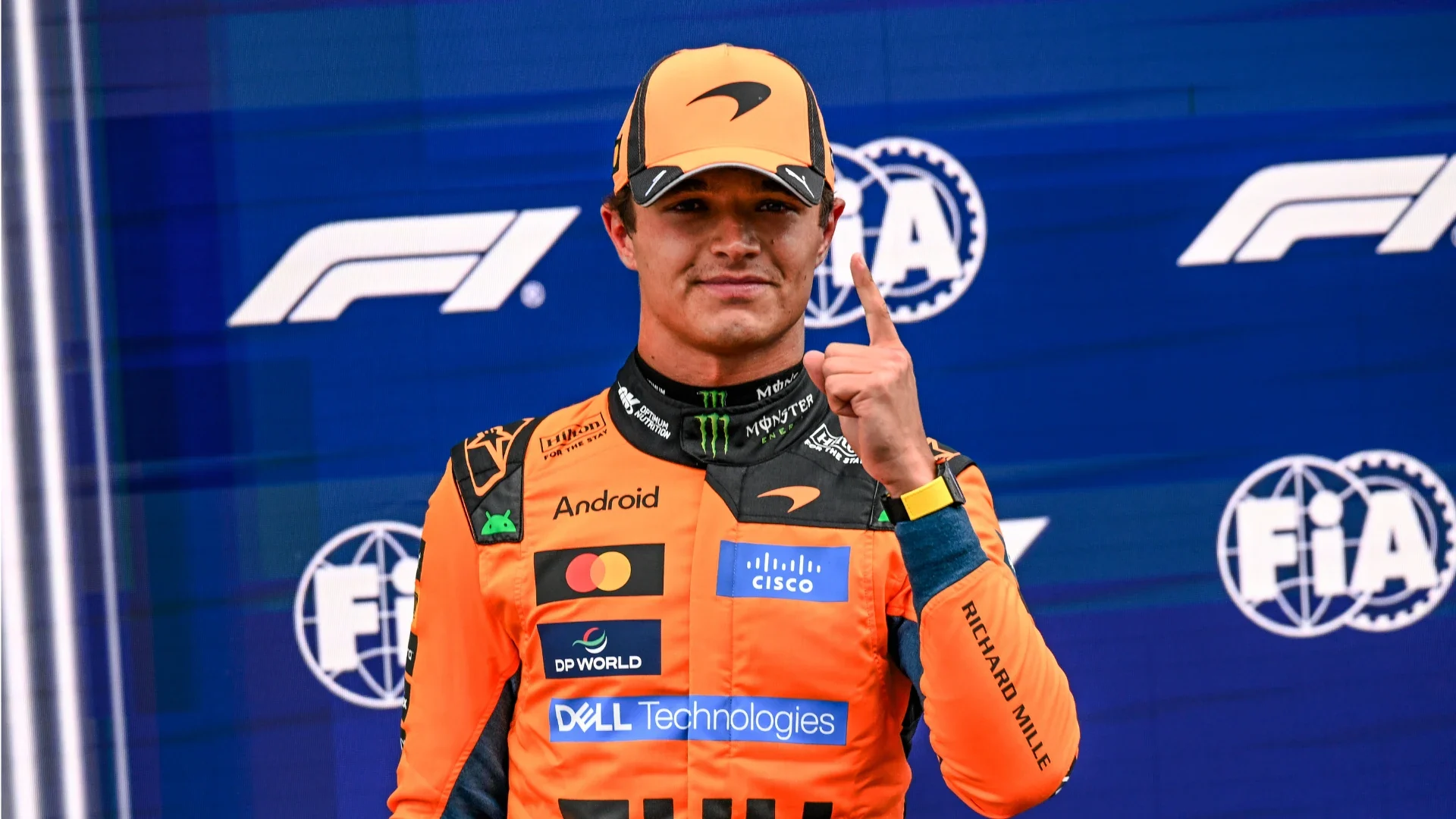
The 2027 F1 driver lineup is largely a story of teams keeping the people who are already developing their cars. Rafael Camara's move to Haas supplies a genuine new name, but much of the market has settled around existing partnerships. The remaining questions are narrower than a speculative 22-driver grid might suggest.
This guide reflects information checked on October 19, 2026. It separates an announced seat from a continuation supported by reporting, and both from an editorial prediction. That distinction matters: an undisclosed multi-year deal does not reveal every option, deadline or exit mechanism.
The table below gives the immediate picture across all 11 teams. The analysis then explains why the established pairings matter, where decisions are still outstanding, and which signals could change the assessment. Use the current championship standings alongside the market news: the same points total can conceal very different qualifying, reliability and race-execution stories.
The 2027 F1 grid at a glance
There are 22 race seats across 11 teams. The names below describe the position at the October 19 cutoff. An announced contract covering 2027 is the strongest label; a publicly supported continuation can still lack a separate team release or a disclosed final year. A blank announcement is also different from evidence that a driver has been rejected.
| Team | Drivers for 2027 | Public evidence and remaining caveat |
|---|---|---|
| McLaren | Lando Norris / Oscar Piastri | Both covered by extended deals; terms beyond 2027 differ. |
| Mercedes | George Russell / Kimi Antonelli | Continuation supported by current reporting; Russell has said he will stay, Antonelli is understood to be retained. |
| Red Bull | Max Verstappen / Isack Hadjar | Both announced for 2027; Verstappen's extension runs through 2030. |
| Ferrari | Charles Leclerc / Lewis Hamilton | Pair expected to continue under multi-year terms; not every endpoint is public. |
| Williams | Alex Albon / Carlos Sainz | Both renewed; Albon explicitly through 2027. |
| Alpine | Pierre Gasly / Franco Colapinto | Unchanged 2027 pairing announced. |
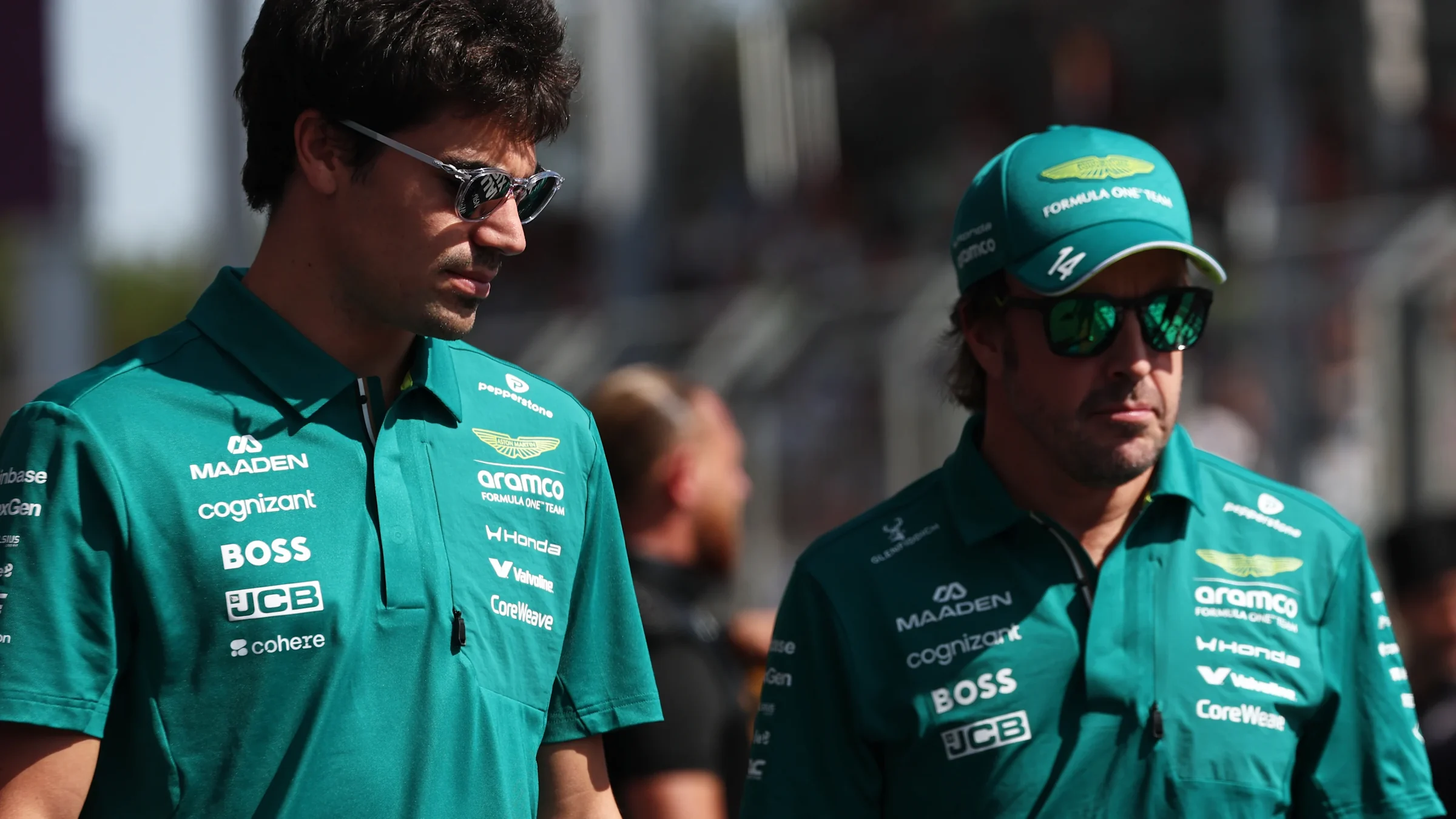
| Aston Martin | Fernando Alonso / Lance Stroll | Unchanged 2027 pairing announced September 29. |
| Audi | Nico Hulkenberg / Gabriel Bortoleto | Continuation confirmed publicly by management; individual final years undisclosed. |
| Cadillac | Sergio Perez / Valtteri Bottas | Multi-year debut contracts cover at least 2027. |
| Haas | Rafael Camara / second driver unannounced | Camara signed; Oliver Bearman favored to stay, pending confirmation. |
| Racing Bulls | Both seats unannounced | Liam Lawson and Arvid Lindblad race in 2026; neither is confirmed here for 2027. |
The practical distinction is between a decision still to be made and paperwork or communication still to appear. Mercedes and Audi do not belong in the same speculative category as an entirely unannounced Racing Bulls lineup. Equally, listing Bearman without a caveat would erase the one important unresolved detail at Haas.
For fans following driver movement, the table also narrows the useful questions. A rumor about a leading driver needs to explain which existing agreement would change and why the receiving team would make room. A report about a remaining Haas or Racing Bulls seat has a much more direct route to becoming relevant.
Why the leading teams are choosing continuity
The first season of a technical era changes the questions a team asks of its drivers. Engineers need repeatable descriptions of how the car behaves across qualifying fuel loads, longer stints and different circuit demands. Keeping the same pair offers a familiar comparison. That is an argument for continuity, rather than proof that continuity automatically produces the quickest car.
McLaren and Red Bull keep their reference points
Norris has committed to McLaren through at least the end of 2030. Piastri's extension was announced in March 2025 after an earlier agreement had already taken him through 2026. McLaren presented the newer deal as a long-term commitment without publishing every term. That securely places him in the 2027 picture without requiring a guessed final season.
For McLaren, retaining both drivers protects a two-sided benchmark. If one setup direction helps one driver but disadvantages the other, the team can judge that response against an established history. Strong teammates also make race management demanding: qualifying position, pit timing and a championship situation can pull their interests apart. A stable lineup preserves that competitive tension as well as the engineering benefits.
Red Bull has extended Verstappen through 2030 and announced Hadjar for 2027. Hadjar's renewal matters because Red Bull is choosing to continue the comparison rather than restart it with another newcomer. His interrupted 2026 campaign, including a wrist injury absence, also illustrates why a raw season total is an incomplete selection tool. Availability, the number of opportunities and how a driver executes those opportunities all require context.
Ferrari and Mercedes require different contract labels
Ferrari's Leclerc agreement is a further multi-year commitment. Hamilton, asked before the Canadian Grand Prix about the following season, said he remained under contract. Those are stronger foundations for the 2027 pairing than retirement speculation. They do not reveal every condition or justify assigning the same published expiry date to both drivers.
At Mercedes, Russell has publicly said he will be with the team next year. Formula1.com's October contract update describes Antonelli's retention as understood, while other current reports cite team confirmation of an unchanged pairing. The sensible description is a continuation supported by the public evidence, with the communication caveat kept visible. It would be misleading to manufacture either a new vacancy or an entirely disclosed contract.
The sporting implication is substantial. An experienced Russell and a developing Antonelli provide different reference points without requiring Mercedes to introduce a completely unfamiliar driver. Whether that combination is the best one for 2027 will depend on how each converts the car's performance into results. The current F1 results provide the race outcomes; reliability and session context still have to be read alongside them.

The rebuilding teams locking in their drivers
For a team trying to move forward, replacing a driver can be tempting because it produces an immediate visible change. Keeping a pairing is a different wager: the existing drivers are capable of more when the machinery and execution improve. Several 2027 decisions make that wager explicit.
Williams and Alpine have settled their pairings
Williams renewed Albon for 2027 and then announced another multi-year agreement with Sainz. The pair are committing to the project despite a more difficult 2026 campaign. That is meaningful continuity for a team with ambitions beyond isolated points finishes, but the signatures themselves do not establish that its next car will recover the lost ground.
The useful consequence is a cleaner comparison between successive cars. Albon and Sainz will both know which weaknesses repeatedly cost time and which appeared only at particular venues. If Williams changes a development direction, there is less uncertainty about whether a different response comes from the car or from a completely new driver's preferences. That is an editorial explanation of the benefit, rather than a claim about confidential development meetings.
Alpine has also announced its complete 2027 pairing: Colapinto stays alongside Gasly, whose longer agreement runs through 2028. The distinction between the two contract horizons matters. Alpine can offer Colapinto another year to convert his progress into repeatable performances without implying that both drivers have identical protection. Keeping the same pair also gives the team a familiar standard for judging qualifying execution and race consistency.
Aston Martin, Audi and Cadillac favor experience
Aston Martin confirmed Alonso and Stroll on September 29 for a fifth season together. That newer announcement takes precedence over contract summaries that still label their terms as 2026. The practical question has moved from whether Alonso will continue to whether the team can give its established pairing a more competitive platform.
Audi has a different balance: Hulkenberg supplies extensive F1 experience, while Bortoleto develops within the same project. In the FIA Azerbaijan press conference, management indicated that both were continuing and that a fresh announcement was unnecessary. Their individual final contract years remain undisclosed. A veteran and a developing driver can give a team both a stable reference and a longer-term investment, provided the performances support that structure.
Cadillac's Perez and Bottas partnership takes the experience argument further. Their multi-year debut agreements cover at least 2027, so a second season together is part of the project's existing structure. For a young operation, familiarity with procedures, race communication and how a car changes over a stint can be valuable. Experience cannot remove a technical deficit, but it can help the team describe one consistently and avoid confusing a developing operation's limitations with a single driver's form.
Haas and Racing Bulls hold the remaining decisions
The remaining market should be read seat by seat. Haas has committed to a newcomer and is widely expected to keep its other incumbent. Racing Bulls is choosing between established F1 evidence and a junior driver's potential. Those are different decisions with different consequences.
Rafael Camara arrives while Bearman awaits confirmation
Camara will make his F1 debut with Haas in 2027 under a multi-year agreement. His selection follows an evaluation process that included running previous machinery, rather than being based solely on a junior championship position. The test offers information about adaptation and communication, but it cannot reproduce every pressure of an F1 weekend.
He will have to connect single-lap speed with tire preparation, traffic management and consistent decisions over a race distance. A driver can be fast in a controlled test and still need time to manage those competing demands. Bearman is favored to be his teammate, but the distinction between that expectation and an announced 2027 seat remains in this guide.
Two Racing Bulls seats remain unannounced
Permane said in Singapore that Racing Bulls would decide in the coming weeks, with Lawson, Lindblad and Red Bull junior Nikola Tsolov forming the central choice. Both incumbents therefore belong in the discussion; neither should be erased from a predicted grid just because a junior is attracting attention.
This is an unusually difficult comparison. Lawson and Lindblad can be assessed against current F1 teammates, circuit demands and the car's realistic potential. Tsolov is being judged through a development pathway with different machinery and competition. Racing Bulls also has a role in preparing future Red Bull drivers. Its decision can therefore weigh longer-term potential alongside the immediate value of retaining a known performer. That does not make any candidate a guaranteed selection.
Where that leaves Ocon and other candidates
Ocon has confirmed that he will leave Haas at the end of 2026. At this cutoff, he has no confirmed replacement race seat in F1. His intention to continue his career should be reported as an intention, rather than converted into a signed destination. The small number of unannounced seats makes his position difficult without proving that every future route is closed.
Other drivers who appeared in evaluation discussions face the same distinction. A test, reserve role or management relationship can make someone a credible candidate, but it is not a race contract. The useful update will be an explicit team decision naming a driver and the season, supported by the relevant announcement. Until then, predicting an opening at a settled team simply to place every available name on the grid would give a false picture of the market.
What a multi-year F1 contract actually tells you
A public contract headline usually reveals less than the complete agreement. It may establish a guaranteed period, mention options, or simply describe a partnership as multi-year. Those statements should be preserved at their actual level of detail. Adding two seasons to an old published endpoint can produce a plausible number without proving it is the contractual end date.
Piastri is a useful example. McLaren said the previous extension ran through 2026, then announced another multi-year extension in March 2025. That establishes a long-term commitment beyond the old deal. It does not authorize a reader to reconstruct every guaranteed year, optional year and condition from that headline alone. The 2027 seat can be secure even when the ultimate endpoint is not fully public.
An option also needs context: who can exercise it, whether it has been exercised, and which deadline or condition applies. Unless those details are reported by the parties or a reliable source, they should remain unknown. The FIA Azerbaijan transcript provides a concrete distinction at Red Bull: management described activating options to secure Hadjar for 2027. That is a completed decision, rather than a theoretical right to continue.
The sport has also seen why rival claims cannot simply be resolved by reading the loudest announcement. In September 2022, the FIA's Contract Recognition Board recognized McLaren's agreement with Piastri for 2023 and 2024 in the Alpine dispute. That specific historical decision is not a forecast of a new dispute. It illustrates why the operative agreement and a team's public expectation are different things.
For following the current market, keep three questions separate: is the 2027 seat established, what final year has actually been disclosed, and are any later options confirmed or merely possible? A driver can answer the first question without answering the other two. That approach makes the lineup easier to update when a team clarifies its position.
Predictions for the remaining seats and what to watch
The following is editorial assessment, not confirmation or inside information. It starts with the options supported by current announcements and management comments. It can change when a team names its drivers, a contractual position changes, or new performance evidence materially alters the choice.
A continuity case at Haas
Bearman alongside Camara is the base-case prediction. The reason is specific: Haas has already chosen a rookie, current reporting favors Bearman's retention, and Komatsu has praised the progress of his existing young driver. Retaining him would preserve knowledge of the team's working methods while Camara learns them.
The uncertainty should stay attached to the prediction. Until the relevant announcement arrives, the remaining seat is unannounced. A later confirmation would change its label, rather than retrospectively turn every earlier expectation into an established fact. Fans should watch for a team statement naming Bearman for 2027 and giving whatever term Haas chooses to disclose.
Racing Bulls depends on the wider Red Bull ladder
For Racing Bulls, retaining Lawson and Lindblad is a plausible continuity outcome, while promoting Tsolov is a meaningful alternative. There is insufficient public evidence to present either combination as certain. Permane has explained the underlying tension: there are three credible candidates for two seats, and the team's development responsibility extends beyond the next points-scoring opportunity.
A useful assessment should compare representative qualifying pace, clean race conversion and avoidable mistakes across several weekends. It should also distinguish a genuine lack of performance from traffic, a compromised session or a mechanical problem. A spectacular result helps a driver's case; one difficult Sunday does not by itself settle it. Lawson's strong Singapore weekend, followed by continued uncertainty about his seat, is a practical demonstration.
The important next event in the market is therefore a decision, not another complete speculative grid. Haas needs to close its remaining announcement, and Racing Bulls needs to name its pair. Elsewhere, the central 2027 question is already shifting toward performance: which of these retained partnerships will turn familiarity into better qualifying, stronger race execution and a more competitive car? Follow the drivers' and constructors' standings for the championship position, while keeping the contract labels separate from the sporting predictions.
Loading comments…