
Cadillac has committed to Sergio Perez until at least 2029 before either the team or its Mexican driver has scored a point in its debut Formula 1 season. Announced on October 28, 2026, ahead of his home Grand Prix, the extension is a statement about how Cadillac intends to develop, not a reward that can be explained by the points table alone.
The timing gives the announcement an obvious celebration: Perez is due to make his 300th Grand Prix start in Mexico City on November 1. The more consequential detail is the commitment beyond that weekend. Cadillac is choosing a known driver relationship while building the organization around its first generation of cars and preparing for a longer manufacturer project.
This analysis reflects the position before Mexico's track sessions on October 30. The contract is confirmed; the milestone start and the weekend's result are still ahead. The useful questions are what continuity can improve, what experience cannot fix, and which evidence will show whether the partnership is turning patience into competitive progress.
What Cadillac and Perez have actually agreed
The team's public announcement confirms a multi-year extension keeping Perez with Cadillac until at least 2029. That is the new information. It is more specific than the original multi-year signing that brought him back to the grid for Cadillac's 2026 debut, and it changes the horizon for one side of the garage.
Cadillac CEO Dan Towriss presents the decision in terms of talent, leadership and continuity. Perez presents it as continuing a project he joined from the beginning. Those statements explain the parties' declared intention. They do not disclose every clause governing the relationship or provide an independent measure of how competitive a future car will be.
Why "at least 2029" is the useful wording
Use the announced phrase rather than quietly replacing it with a more elaborate contract theory. Salary, detailed performance conditions and the full option structure have not been made public in the announcement. The wording establishes a stated minimum horizon; it does not justify inventing a guaranteed retirement date or a promise that circumstances can never change.
Lawrence Barretto's F1 analysis reports that the initial arrangement included options from 2027 onward and that the parties chose to negotiate a new agreement rather than simply activate a second year. That context helps explain why this is substantive news even though Perez already had a multi-year relationship with Cadillac. The distinction belongs to the reported contract history, not to access to a private document.
For the sporting organization, the practical value is being able to plan with a familiar reference driver. Engineers can discuss a continuing development direction with someone who has lived through the first season's limitations. For Perez, a public commitment reduces the immediate uncertainty that can surround a returning veteran. Neither benefit requires the claim that every difficult engineering decision has been solved.
The existing 2027 lineup overview provides the wider grid context. This announcement deserves a narrower reading: Cadillac has strengthened and extended its Perez commitment. It has not, through the same statement, announced a complete new team strategy, a guaranteed finishing position or the identity of every future teammate.
Why a team without points can still renew its driver
Separating driver performance from car performance
Points measure the final competitive outcome. They do not isolate the driver's contribution from the car, reliability, preparation or race circumstances. In a package that rarely reaches the scoring positions, two strong drives can still produce zero points. A team must decide whether the driver is extracting useful performance before it has the comfort of a healthy championship total.
F1's analysis describes Perez's pace as difficult to judge from Cadillac's final classifications and reports that his work has impressed the organization. That assessment is relevant, but it should remain attributed. It is not a public release of matched fuel-corrected lap times, and it does not establish that every Perez performance has been flawless.
The distinction matters for both praise and criticism. A retirement caused by a technical issue should not automatically become a driving failure. Equally, a poor qualifying lap cannot be excused simply because the team is new. Renewing a driver while accepting those distinctions is possible: Cadillac can value the total contribution while still expecting specific weaknesses to improve.
Feedback has value only when the organization can use it
Cadillac's announcement credits Perez's technical feedback and race craft with helping chassis development and trackside operations. The important analytical question is how that input travels through the team. A driver describes the behavior; engineers identify a cause; designers and production staff produce a response; subsequent running tests whether the response works. The driver is one part of that chain, not an alternative to it.
For example, repeatedly reporting poor confidence on corner entry becomes useful when the garage can distinguish the circumstances in which it appears. Does it emerge on a particular tire, late in a stint, or when following another car? Those are illustrative questions, not disclosed Cadillac findings. A consistent reference driver can make the comparison easier across successive specifications because one major variable stays familiar.
Continuity also helps the organization learn its own procedures. A new team must make decisions across people, equipment and operating locations, not simply draw a fast floor. Feedback loses value if it arrives too late or cannot be reproduced. An experienced driver can contribute to the discussion, but the improvement has to survive the entire process before it becomes performance.
That is why the championship table remains essential but insufficient for assessing this renewal. The table shows Cadillac's competitive deficit honestly. The contract says management believes Perez is part of the solution. Future weekends must test that belief through better execution and a more capable car; the announcement itself cannot prove it.
What 300 Grand Prix starts bring to a new project
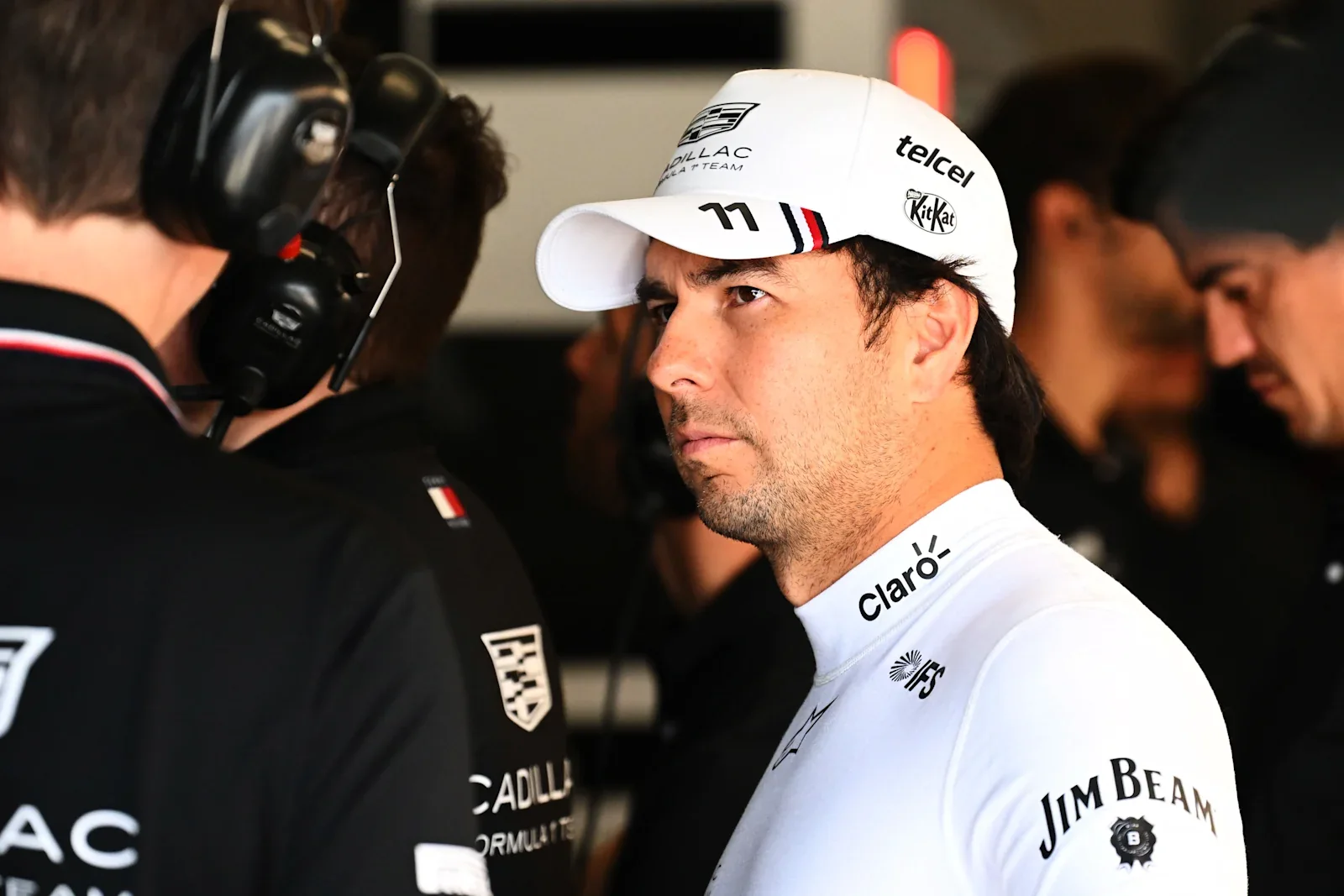
Three hundred starts are not a performance specification, but the milestone describes an unusually broad working history. Perez has raced for Sauber, McLaren, Force India, Racing Point and Red Bull before Cadillac. His six Grand Prix wins demonstrate experience of converting a competitive opportunity; his years outside winning machinery matter to this assignment too.
The relevance is comparison. A driver who has lived through several kinds of team can recognize that an uncomfortable weekend does not always have the same cause. A balance limitation, an unreliable system and a poorly executed run plan demand different conversations. Experience can help a driver ask a more useful question early, although it does not guarantee that the answer will be correct.
There is also the rhythm of a difficult race. When the podium is not a realistic target, concentration still has to survive long periods with little reward. Tyre management, clean traffic handling and readiness for an unexpected opening remain valuable. For a new organization, repeatedly executing the basic race can create the evidence needed to judge its next development step.
The risk is allowing that argument to become immunity from scrutiny. Past victories do not make a driver incapable of an error, and reaching a large career total does not establish that they remain the fastest available option. Cadillac must still judge present performance. Perez must still adapt to what this particular car requires rather than rely on what worked in a different technical era.
His scheduled 300th start at home makes the Mexico weekend emotionally distinctive, but the sporting assignment survives after the celebrations. A veteran contributes most when the team can turn experience into repeatable decisions, not when it simply displays the number on a commemorative graphic. That is the sensible standard for a driver signed to help build a project through several seasons.
The 2026 team and driver guide explains Cadillac's place as the additional entrant. Perez's career record helps explain its choice of reference driver; the first season's continuing difficulties explain why the team still needs to build far more than a driver lineup.
How the deal connects to Cadillac's longer engine timeline
The 2029 date also sits alongside a separate, confirmed milestone for the wider project. The FIA approved GM Performance Power Units as a Formula 1 power-unit supplier starting in 2029. Cadillac currently races with Ferrari power, as F1's team profile confirms. The driver extension reaches the period in which the organization intends to move into a different manufacturer phase.
Ferrari supply and GM development are different stages
Those stages should not be collapsed into one claim that Cadillac already has an established works engine operation competing on track. A supply relationship supports the current racing program; designing and preparing an in-house power unit is a distinct undertaking. Approval as a supplier establishes the permitted future entry point, not the lap time or reliability the finished package will deliver.
A continuing driver could provide a useful reference across that transition. The car's behavior must be understood as a whole: how it responds on corner exit, how the driver manages the available performance and whether its operating demands compromise a race. Familiar feedback may help engineers distinguish a new characteristic from an old limitation. That is a potential benefit of continuity, not evidence that Perez's contract was negotiated specifically to validate the GM engine.
There is a similar trap in blaming the present performance entirely on the supplied engine or assuming a different badge will remove every weakness. Chassis, aerodynamics, cooling, integration and trackside execution contribute to the result. Without public evidence separating those contributions, the honest conclusion is that the team has a complete package to improve. A future engine adds development responsibility rather than removing the need for it.
The driver's horizon and the manufacturer's horizon therefore overlap in a meaningful way, but they are not a promise of synchronized success. Perez can be under contract while the power-unit project still faces difficult engineering work. The engine can reach its intended debut while the team still needs to improve other areas. Fans should watch the stages actually completed rather than treat the shared year as a predicted breakthrough.
For the remaining 2026 races, the relevant machinery is still the current Cadillac-Ferrari. The race results should be assessed on that basis. Long-term ambition explains why the project values patience; it does not change which car must qualify and finish this weekend.
What the extension means for the other Cadillac seat
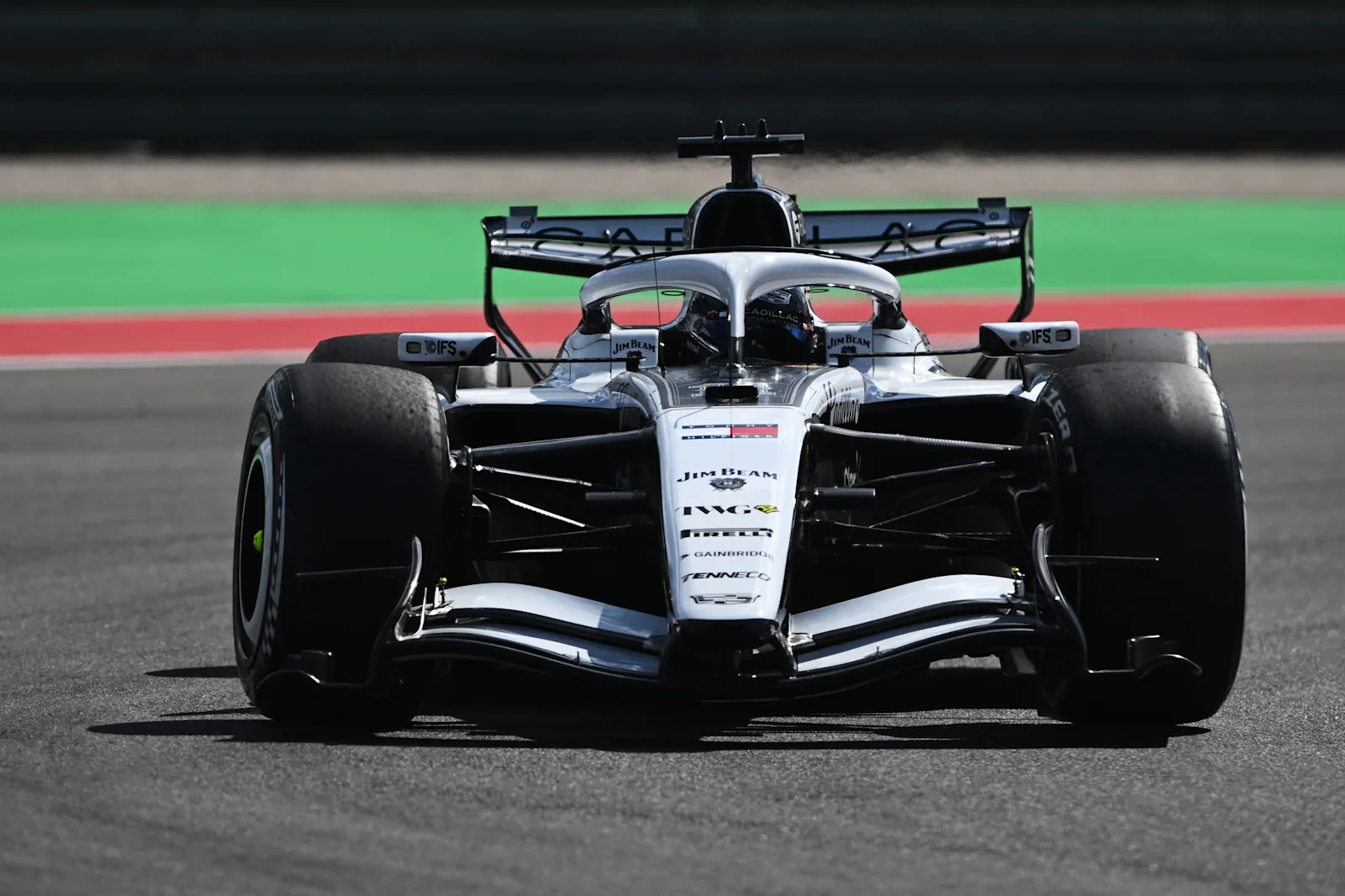
Perez's announcement settles Perez's publicly stated future. It does not automatically extend Valtteri Bottas through the same period, announce his departure or promote Colton Herta. Those are different decisions, and treating them as consequences already confirmed by the renewal would turn a clear piece of news into speculation.
F1's October 28 analysis reports an option relevant to Bottas staying for 2027 and describes Herta as a contender rather than an announced replacement. It also describes Bottas as the favorite to remain. That is useful reporting about the situation at the time; it is not a signed lineup announcement from Cadillac. The current race pairing remains Perez and Bottas.
The sporting tradeoff is understandable without predicting the outcome. Retaining two experienced drivers gives a developing team two established reference points. Pairing an experienced driver with someone less established could offer a different development path but would change the division of learning and responsibility. With Perez committed, Cadillac can assess that choice from a more stable starting point on one side of the garage.
Head-to-head numbers need context here as well. F1's report notes that Cadillac has used different approaches and strategies across its cars while accelerating its learning. Reliability has also affected opportunities to demonstrate pace. That does not make comparisons meaningless; it means a single finishing-order total is not the whole evaluation. A team should be expected to inspect more than the public scoreboard when choosing a development pairing.
For fans following the 2027 seat picture, the sensible next trigger is a fresh official announcement or a clearly attributed update on the second seat. Herta appearing in a practice session would be relevant experience, but it would still not be a race-contract confirmation. Perez's long extension increases certainty about one driver; it should not create false certainty about everybody else.
What fans should measure after the Mexico celebration
At Thursday's FIA press conference, Perez explained that he feels able to influence Cadillac beyond simply driving the car and wants to finish his career successfully with the project. That personal intention gives the extension added weight. It should still be distinguished from an announcement of a precise retirement date: the immediate public commitment remains the partnership through at least 2029.
The best way to judge that commitment is to watch whether Cadillac turns experience into a stronger organization. Its current position after 18 Grands Prix is still last in the teams' standings with no points. The renewal does not erase that deficit. It identifies a driver management wants involved while trying to close it.
A better weekend is more than one finishing position
Begin with useful running. A team that completes its intended practice work can compare changes, prepare its drivers and investigate limitations before qualifying. F1's half-season review identified overheating as one of Cadillac's earlier difficulties. That historical example shows why operational reliability matters, without establishing that exactly the same fault persists at every subsequent event.
Then examine execution: a clean qualifying opportunity, an orderly race start and the ability to carry a strategy through without avoidable losses. Finishing position still matters, but an isolated improvement can come from attrition ahead. Likewise, a worse finishing place can conceal a smaller competitive gap on a circuit where more rivals reach the flag. Several weekends provide a stronger test than one encouraging number.
Finally, watch conversion when a real opportunity appears. A developing team needs enough pace and dependable execution to use a favorable race situation, rather than requiring every weekend to become chaotic. Scoring the first point would be meaningful. Repeatedly reaching a level at which points become plausible would tell more about the direction of the car and organization.
Mexico provides a powerful setting for the beginning of this next contractual chapter. The home crowd and planned 300th start deserve their own appreciation. But the extension's lasting value will be established in the quieter work afterward: learning from the race classifications, preparing the next event and making the partnership more competitive. Follow the weekend schedule for the immediate test; assess the bigger commitment across seasons.
Loading comments…