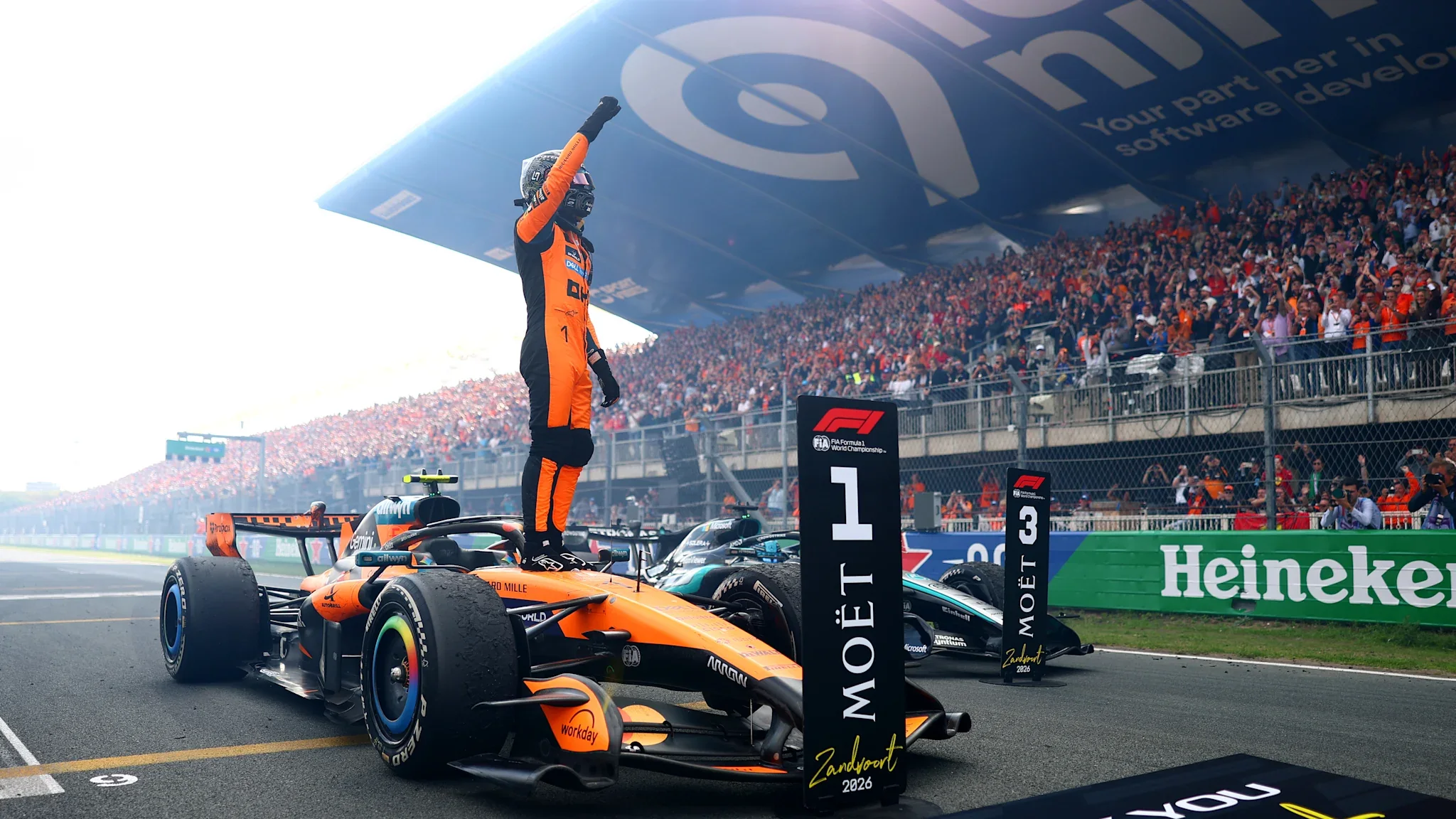
The 2026 Formula 1 grid contains 11 teams and 22 nominated race drivers. Cadillac creates two genuinely new seats, while Audi takes over the existing Sauber entry. That distinction explains why the team list looks dramatically different even though most established pairings stayed together.
Inside the existing 10-team structure, the decisive move was Isack Hadjar's promotion from Racing Bulls to Red Bull alongside Max Verstappen. Arvid Lindblad graduated into Hadjar's old seat and is the season's only true F1 rookie. Cadillac then brought Sergio Pérez and Valtteri Bottas back to race action after both spent 2025 outside the starting grid.
McLaren, Mercedes, Ferrari, Williams, Aston Martin and Haas all retained both drivers from the end of 2025. Alpine also kept the Gasly–Colapinto combination it had used after its mid-season switch, while Audi preserved Sauber's Hülkenberg–Bortoleto pairing. The regulation reset therefore changed the machinery and manufacturer map more than it changed the people in the cockpits.
11
Teams
22
Race seats
1
Rookie
This guide first gives the complete pairing, number and power-unit table, then separates four kinds of change that are often blurred together: a permanent driver move, a new entrant, a renamed works team and a new engine relationship. It also explains why an event-specific substitute does not automatically rewrite the season lineup. Use it alongside the live 2026 F1 schedule as the championship moves from weekend to weekend.
Grid reference
Complete 2026 F1 teams and drivers table
This is the season's nominated 11-team lineup, cross-checked against the FIA entry list for the Australian opener and Formula 1's current team index. The constructor column matters for this season because an entrant's commercial team name can hide its engine supplier.
| Team | Drivers and numbers | 2026 power unit | Change from end of 2025 |
|---|---|---|---|
| McLaren | Lando Norris #1 · Oscar Piastri #81 | Mercedes | Pairing unchanged; Norris takes #1 |
| Mercedes | George Russell #63 · Kimi Antonelli #12 | Mercedes | Pairing unchanged |
| Red Bull Racing | Max Verstappen #3 · Isack Hadjar #6 | Red Bull Ford | Hadjar promoted; Verstappen changes number |
| Ferrari | Charles Leclerc #16 · Lewis Hamilton #44 | Ferrari | Pairing unchanged |
| Williams | Alex Albon #23 · Carlos Sainz #55 | Mercedes | Pairing unchanged |
| Racing Bulls | Liam Lawson #30 · Arvid Lindblad #41 | Red Bull Ford | Rookie Lindblad replaces promoted Hadjar |
| Aston Martin | Fernando Alonso #14 · Lance Stroll #18 | Honda | Pairing unchanged; new works power |
| Haas | Esteban Ocon #31 · Oliver Bearman #87 | Ferrari | Pairing unchanged |
| Audi | Nico Hülkenberg #27 · Gabriel Bortoleto #5 | Audi | Same drivers; Audi replaces Sauber identity |
| Alpine | Pierre Gasly #10 · Franco Colapinto #43 | Mercedes | Same late-2025 pairing; new engine supplier |
| Cadillac | Sergio Pérez #11 · Valtteri Bottas #77 | Ferrari | New entrant; two returning race drivers |
What counts as the official lineup?
A season roster is the nominated pairing attached to each entrant. The FIA's Grand Prix entry list is the sharper tool for a particular weekend because it identifies exactly who may drive each car at that event. The opening Australian list supplies a clean baseline: all 22 nominated drivers appeared with the team and constructor combinations shown above.
This distinction prevents a common update error. If a reserve replaces an injured driver for one race, the weekend entry changes, but the underlying team pairing is not automatically a permanent transfer. The substitute section below shows how to read that status.
Which driver numbers changed?
Reigning champion Lando Norris chose number 1, replacing his usual 4 for 2026. Max Verstappen stopped using the champion's number and moved from 33 to 3. Lindblad selected 41 for his rookie season. Those are the three numbers most likely to make an older lineup graphic look wrong; Formula 1 and the FIA both show 41, not the number 17 carried by some pre-season third-party tables.
Why are there 11 teams and 22 seats?
Cadillac passed the FIA and Formula One Management sporting, technical and commercial assessments to join the existing 10 entrants. Its arrival therefore adds two cars and two race seats. Audi is different: it transforms the Sauber operation into a factory entry while retaining Hülkenberg and Bortoleto. Counting Audi as an addition would incorrectly create a 12-team grid.
Fast check
Cadillac expands the field. Audi changes the identity and power-unit status of an existing place. Together they create two new team names, but only one additional entrant.
Seat movement
The driver moves that changed the 2026 grid
The permanent reshuffle is easier to understand as one chain. Red Bull promoted Hadjar, Racing Bulls filled his seat with Lindblad, and Tsunoda moved into reserve duty. Cadillac's approval then created two extra seats, allowing Pérez and Bottas to return without displacing drivers at another team.
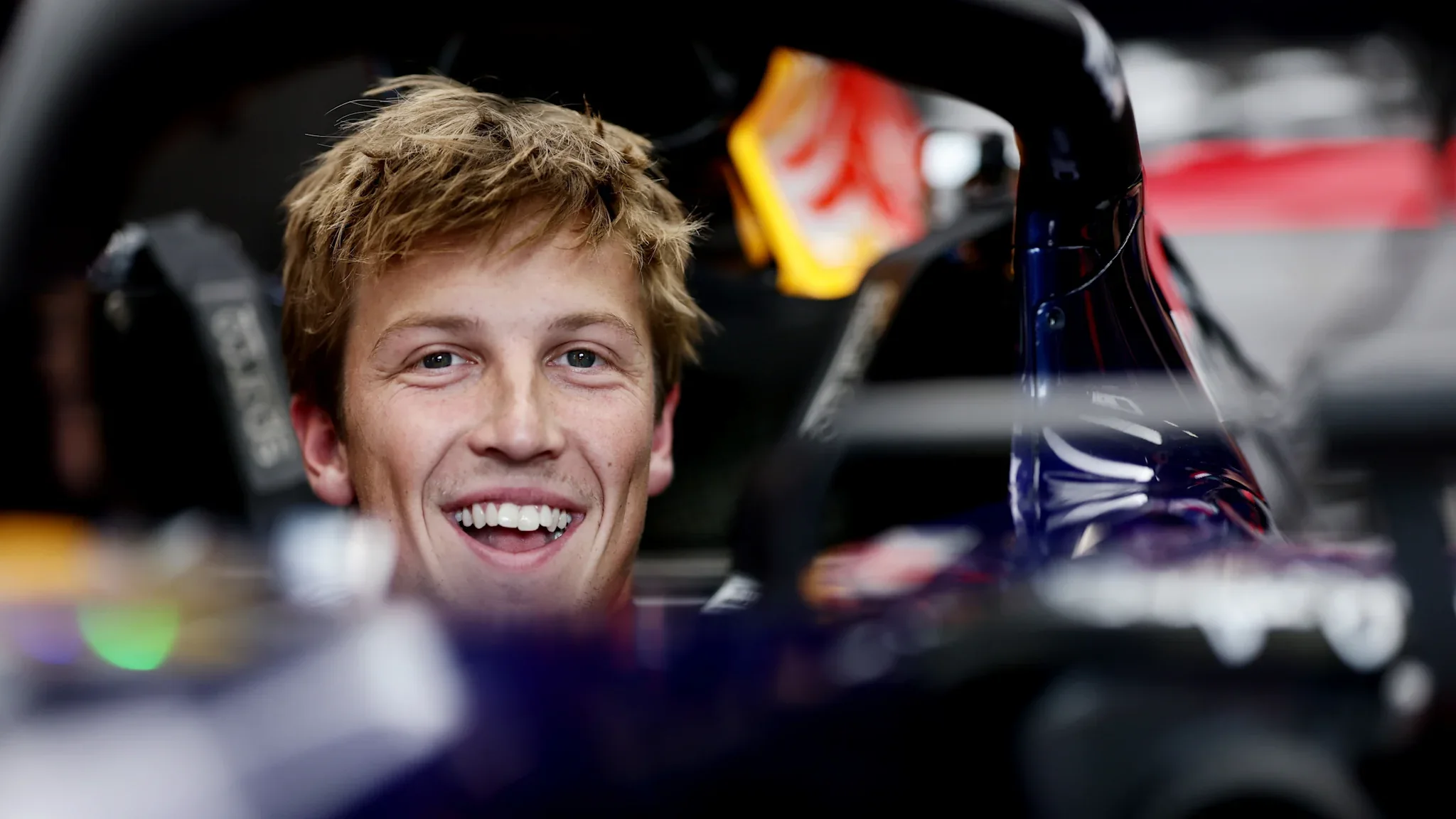
Hadjar steps up to Red Bull
Hadjar earned the seat beside Verstappen after a 2025 rookie season that included points in 10 Grands Prix and a podium at Zandvoort. The promotion followed Red Bull's established internal ladder, but the competitive context was severe: he became the latest driver asked to make the jump from the sister team into the second senior-team car.
The corresponding move was Yuki Tsunoda leaving the permanent race lineup. Red Bull kept him as reserve for both teams rather than ending the relationship. That detail matters later in the season: a reserve can return for a specific event without undoing the original Hadjar promotion.
Lindblad becomes the only 2026 rookie
Racing Bulls placed Lindblad, number 41, alongside Lawson after a rapid Red Bull junior progression. His final Formula 2 season produced three wins, two other podiums and sixth place on 134 points. A 139-lap post-season test gave the team another evaluation point, but a test lap time is not a reliable prediction of Grand Prix pace.
Lawson's continuity is as important as Lindblad's arrival. With Hadjar promoted, Lawson became the driver who already understood the team's working routines and recent car behavior. That does not make him a formal number one; it simply reduces the amount of shared experience lost during the change.
Pérez and Bottas return with Cadillac
Cadillac chose the opposite route from Racing Bulls. Instead of using its two new seats for rookies, it signed Bottas and Pérez—16 Grand Prix wins and more than 500 starts between them when announced. Both had last raced full-time in 2024 and spent 2025 outside the race grid, with Bottas serving as Mercedes reserve.
For a debut team, experienced drivers can standardize feedback, recognize operational problems and distinguish unfamiliar car behavior from unfamiliar F1 procedure. That is an engineering-development advantage, not a guarantee of points. Cadillac still had to build a new car, establish race-weekend systems and learn how its package behaved against 10 operations with existing data.
Net result
One promoted sophomore, one rookie, two veteran returnees and one established driver moving to reserve status account for nearly all the visible 2026 driver-market change.
Which driver pairings stayed together?
Most of the 2026 grid is more stable than the two new team names suggest. Eight organizations started the year with a pairing that had already raced together in 2025, although Alpine needs an important footnote. That continuity gives engineers familiar reference points while the cars, power units and operating procedures change around them. It also helps a reader distinguish a driver change from a constructor or engine change: the team column can look dramatically different even when both names in the cockpit column stay fixed.
| Continuity type | 2026 pairings | What the label means |
|---|---|---|
| Full 2025 pairing retained | Norris–Piastri, Leclerc–Hamilton, Russell–Antonelli, Albon–Sainz, Alonso–Stroll, Ocon–Bearman and Hulkenberg–Bortoleto | The same two drivers continued from the 2025 season. Audi changed the identity around Hulkenberg and Bortoleto, not the cockpit occupants. |
| End-of-2025 pairing retained | Gasly–Colapinto | Colapinto took Alpine's seat after six rounds in 2025, so this was continuity from late 2025 rather than from that season's opening race. |
Front-running pairings stay stable
McLaren's Lando Norris and Oscar Piastri entered a fourth consecutive season as team-mates. Ferrari continued with Charles Leclerc and Lewis Hamilton, while Mercedes retained George Russell and Kimi Antonelli. Each team could compare a radically different 2026 car through drivers whose working relationships and feedback vocabulary were already familiar. That is useful experimental continuity, not evidence that the competitive order must remain unchanged.
Other established pairings stay stable
Williams kept Alex Albon and Carlos Sainz; Aston Martin kept Fernando Alonso and Lance Stroll; and Haas kept Esteban Ocon and Oliver Bearman. Nico Hulkenberg and Gabriel Bortoleto also remained together as Sauber became Audi. The last case matters: a new badge and a factory power unit can create sweeping technical change without producing a driver-market move.
Colapinto's full-season context
Alpine confirmed Franco Colapinto alongside Pierre Gasly for 2026 after Colapinto had replaced Jack Doohan following the first six races of 2025. Calling Alpine “unchanged” is accurate only when comparing the end of 2025 with the start of 2026. It was Colapinto's first opportunity to begin an F1 season as a nominated race driver, while Gasly supplied the longer-running team reference.
Bottom line: Red Bull, Racing Bulls and Cadillac account for the obvious cockpit change. Elsewhere, the central story is continuity—valuable for interpreting a regulation reset, but never a guarantee of reliability, speed or equal treatment between team-mates. Treat the pairings as the stable baseline, then judge the new machines with event results rather than reputation.
Audi replaces Sauber; Cadillac expands the grid
Audi and Cadillac both appeared under new team names in 2026, but they arrived through fundamentally different routes. Audi acquired and transformed the existing Sauber organization. Cadillac passed the approval process as a separate entrant and added an eleventh team. That distinction explains why one project preserved two seats while the other created two new ones.
Replacement
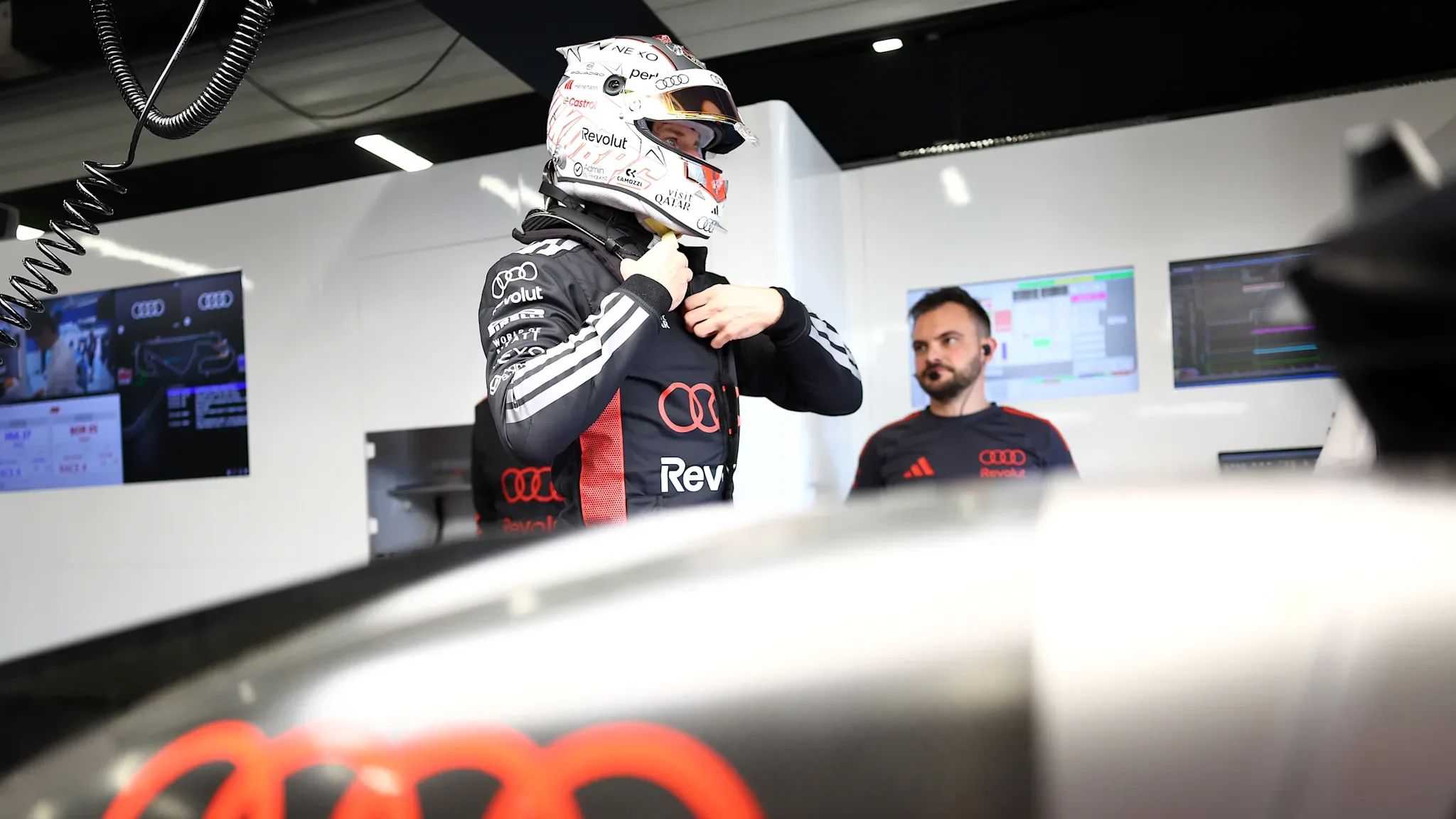
Audi's works team replaces Sauber
Audi completed a full takeover of the Sauber Group and turned the Swiss operation into its factory Formula 1 team. The badge, factory relationship and power-unit identity changed, but the race organization did not start with a blank sheet. Nico Hulkenberg and Gabriel Bortoleto had already spent 2025 together at Sauber and remained in place for Audi's first branded F1 season.
Calling Audi “new” is therefore correct at manufacturer level, yet misleading if it suggests a twelfth organization or two extra grid places. The entrant occupies Sauber's former position and combines the established Hinwil base with Audi's own power-unit program.
Addition
Cadillac is the eleventh team
Cadillac followed the full new-entry route. After the FIA and Formula 1 completed their sporting, technical and commercial assessments, the GM- and TWG-backed application received final approval in March 2025 for a 2026 debut. The team added Sergio Perez and Valtteri Bottas to the field, taking the normal grid from 20 cars to 22.
Cadillac began as a Ferrari engine and gearbox customer. General Motors' future works power unit is a separate project, so it would be wrong to list the 2026 Cadillac as GM-powered.
Different entry models produced different lineup choices
Audi inherited a functioning race team, a year of shared driver feedback and two racers already integrated into its engineering process. Cadillac had no previous-season car, event operation or team-mate baseline to inherit. Its answer was to sign two Grand Prix winners who had each spent 2025 away from a full-time seat.
That contrast is best read as roster construction, not a shortcut to predicting results. Audi's continuity can simplify comparisons during development; Perez and Bottas can give Cadillac experienced references for procedures, setup and race execution. One project could compare new hardware with familiar human inputs, while the other could ask established drivers to identify basic operational priorities quickly. Neither model removes the difficult work of making a new 2026 package reliable and competitive.
The simplest test: if a fan asks why there are 22 cars, Cadillac is the answer. Audi explains why the Sauber name disappeared, not why the field became larger.
The 2026 power-unit map behind the team names
Driver lineups make more sense when they are paired with the engine relationships underneath them. In F1 terminology, a power unit is the complete hybrid package rather than only the internal-combustion engine. Five programs powered the 11 teams in 2026, and three relationships were especially important: Alpine changed supplier, Honda began its Aston Martin partnership, and Red Bull launched its Ford-linked in-house program. The map also shows where a driver's experience carried into a completely different technical environment, even when his team-mate remained the same.
| Power-unit program | 2026 teams | Team count |
|---|---|---|
| Mercedes | Mercedes, McLaren, Williams, Alpine | 4 |
| Ferrari | Ferrari, Haas, Cadillac | 3 |
| Red Bull Ford | Red Bull Racing, Racing Bulls | 2 |
| Honda | Aston Martin | 1 |
| Audi | Audi | 1 |
Mercedes' network adds Alpine
Mercedes powered its factory team plus McLaren, Williams and Alpine. Alpine was the notable newcomer to that group after ending its own works engine program and agreeing to use Mercedes power units through at least 2030. Its 2026 agreement also included a Mercedes gearbox. Gasly and Colapinto therefore drove an Alpine-designed chassis with a Mercedes drivetrain—not a rebadged Mercedes car.
For readers tracking team changes, that is a larger technical break than Alpine's unchanged end-of-2025 driver pairing implies. The drivers supplied continuity, while the Enstone organization learned a new supplier interface and installation.
Honda and Red Bull Ford follow separate paths
Honda returned as Aston Martin's works partner, powering Alonso and Stroll exclusively. Red Bull Racing and Racing Bulls, meanwhile, used the new Red Bull Powertrains-Ford package. This ended the old habit of mentally linking Honda with Red Bull: by 2026, the former partners sat in different technical camps with different cars and drivers.
The naming matters here. “Red Bull Ford” describes a collaboration built around Red Bull's powertrain facility, not a conventional customer purchase from an existing Ford F1 engine program.
Ferrari supplies three; Audi stands alone
Ferrari powered its own cars, Haas and the new Cadillac team. Perez and Bottas were therefore Ferrari-powered in Cadillac's debut season even though General Motors is developing a future works unit. Audi supplied only its factory entrant, completing the change from customer-era Sauber to an integrated constructor and power-unit identity.
The two newcomers thus began at opposite ends of the supplier spectrum: Audi controlled both chassis and power-unit branding, while Cadillac deliberately entered as a customer before its planned works transition.
Official lineup vs substitutes and reserve drivers
A 22-seat lineup and a season standings page with more than 22 driver names can both be correct. The table above is the baseline pairing each entrant nominated for 2026. FIA event documents record the people who actually drive at a particular Grand Prix, including approved race substitutes and practice-only participants. The time scope matters: “lineup” describes the season plan, while an entry list and classification describe a single competition.
Level 1
Season baseline
The FIA season entry establishes the normal teams, cars and nominated drivers. A Grand Prix entry list can differ because the sporting rules allow a team to change a driver within defined deadlines and, in some cases, with the stewards' consent. A competitor may use a limited number of race drivers across the championship, so one substitute does not contradict the original nomination. Read the event list when the question is “who drove this weekend?”
Level 2
Temporary race substitute
The Dutch Grand Prix on August 23 is the clearest 2026 example. Isack Hadjar missed the event with a wrist injury, so Liam Lawson temporarily moved from Racing Bulls to Red Bull. Yuki Tsunoda, then a test and reserve driver, filled Lawson's Racing Bulls seat. Lawson qualified eighth and finished seventh; Tsunoda started 12th and finished 11th. Their official points and results rightly follow the teams they represented at Zandvoort.
Level 3
Practice-only or reserve role
The 2026 rules require every team to run a driver with no more than two career championship races on two occasions for each car. Those FP1 or FP2 appearances give prospects track time but do not change the race lineup. The nominated driver can return for the competitive sessions. A reserve designation is also a state of readiness, not evidence that the driver entered qualifying or a race.
How to read the records: use the season table for the intended pairing, the FIA event entry for a weekend's participants, and qualifying/race classifications for who actually competed. Lawson and Tsunoda legitimately appear under different teams in the Dutch result, but that dated result should not silently overwrite Hadjar–Verstappen or Lawson–Lindblad in a complete-season lineup guide.
What to watch across the rest of 2026
The lineup table is a baseline, not the end of the story. Driver comparisons change after every race, temporary replacements can add a name, and new teams need more revealing measures than a single points total. Use the August 31 snapshot below as context, then refresh it with current event records.
Compare team-mates with context
As of August 31, Antonelli led Russell 242–183, Hamilton led Leclerc 183–155, and Norris led Piastri 159–104 in points. Gasly led Colapinto 44–19, while Bortoleto led Hulkenberg 10–6. Those gaps are outcomes, not a clean ranking of driver speed: reliability, strategy, penalties and missed running all shape the totals. Pair points with qualifying and race finishes before drawing a conclusion. Also compare like periods: Colapinto's Alpine history and a substitute's one-off result are not equivalent to two drivers completing every round together.
Measure new-team progress in steps
Audi's August 11 review recorded five Q3 appearances in its first 11 rounds and points at each of the final three races before the break. Cadillac's August 9 review had no points or Q2 appearance and highlighted repeated reliability problems. For both, useful markers include cars reaching the finish, laps completed, qualifying phase reached and distance to the midfield—not only championship position. A clean two-car weekend can produce valuable development data even when it produces no points; repeated Q2 or Q3 appearances can show improving pace before the standings move.
Check the live grid in the right order
Start with this weekend's session times, then inspect the event entry list for substitutes. After qualifying and the race, use the site's race results and championship standings. That sequence separates a weekend lineup from the season baseline and keeps a dated article useful. It also prevents a practice appearance, grid penalty or post-race classification change from being mistaken for a lasting seat change.
Four-document check
- 1. Event entryWho is entered to drive?
- 2. QualifyingWho produced the one-lap result?
- 3. Race resultWho finished, retired or was penalized?
- 4. StandingsWhat is the dated cumulative picture?
Loading comments…