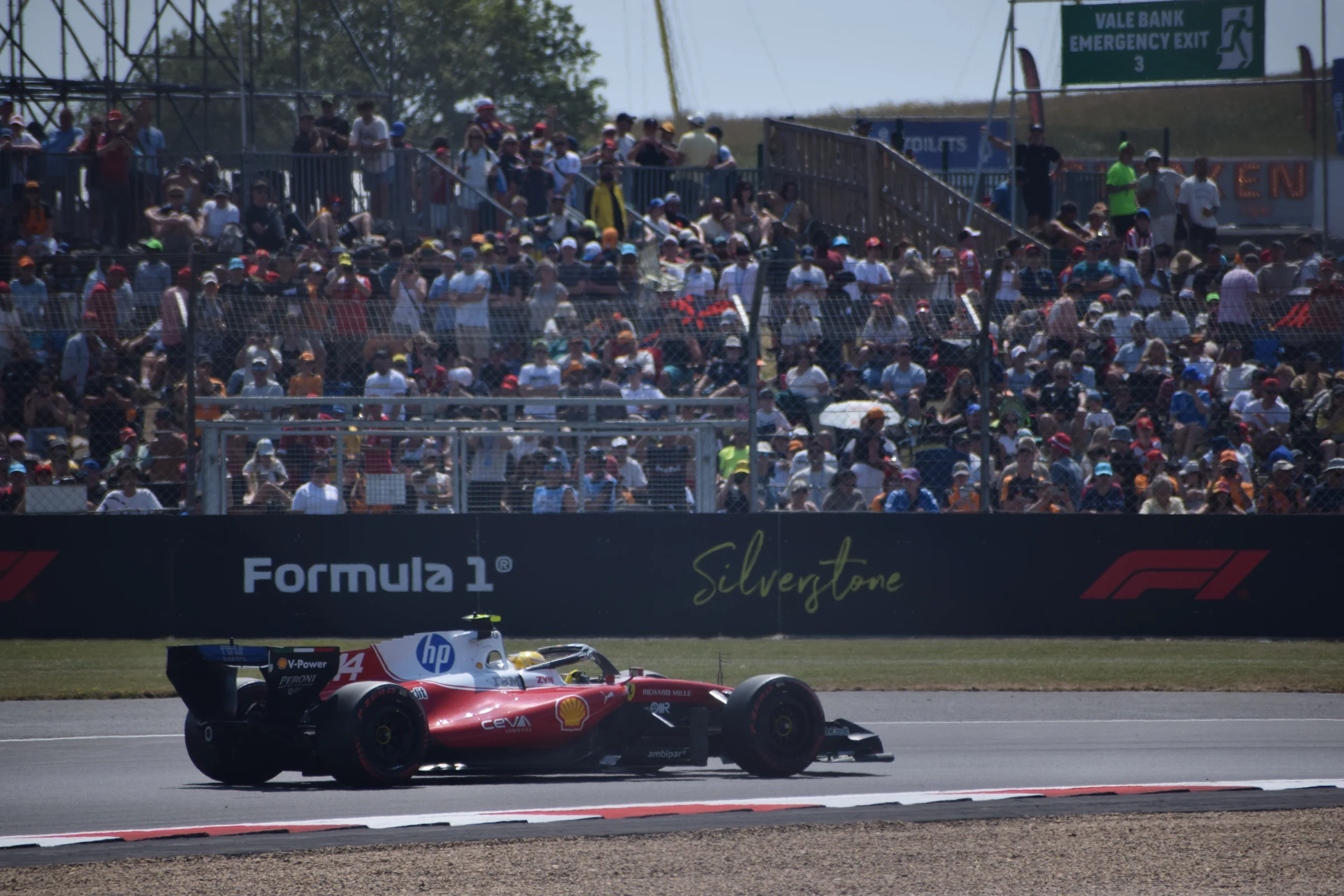
No—Lewis Hamilton has not announced that he will retire after the 2026 Formula 1 season. The strongest public evidence points the other way. In May 2026, Hamilton said he remained under contract, focused and motivated, and described retirement as absent from his thinking. Reporting from the same media session placed his Ferrari deal through at least the end of 2027.
That is the accurate answer as of September 13, 2026, but it is not a promise that can never change. A driver's stated plan, a private contract and an official entry are related evidence, not identical things. F1 careers can be altered by performance, health, team decisions or personal priorities. Responsible coverage therefore distinguishes “Hamilton says he plans to continue” from “Hamilton is guaranteed to start every race through a particular date.”
This fact-check explains what Hamilton actually said, why retirement stories return after difficult weekends, what his contract can and cannot prove, and which future signals deserve attention. It treats direct remarks and official announcements as evidence—and leaves anonymous prediction where it belongs: in the category of speculation.
The Short Answer: No Retirement Has Been Announced
As of this article's September 13, 2026 check, there is no retirement announcement from Hamilton or Ferrari saying he will leave Formula 1 after the season. The most relevant on-record comments came ahead of the Canadian Grand Prix in May. Hamilton explicitly rejected the idea that retirement was occupying his thoughts and said his contract made his position clear.
Confirmed
No retirement announcement; Hamilton said he remained motivated and under contract.
Strongly indicated
His plan was to continue racing beyond 2026, with contract coverage reported through at least 2027.
Still unknown
The precise end date of his F1 career and every private option or clause.
This distinction protects readers from two opposite errors. One is treating every frustrated radio message or poor result as a retirement clue. The other is treating an athlete's current intention as an irrevocable multi-year guarantee. Hamilton's own words are the best available evidence of his mindset; only future official entries and appearances can prove what ultimately happens.
The question also needs a sporting rather than biographical answer. At 41 during the 2026 season, Hamilton is older than most of the grid, but age alone does not announce retirement. His current performance, ability to adapt to Ferrari and the team's competitiveness matter more than a round-number birthday. Follow his verified race-by-race data on the Lewis Hamilton 2026 driver page, not through recycled social posts.
What Lewis Hamilton Actually Said About His Future
Hamilton's answer in Montreal combined three ideas: contractual status, present motivation and longer-term planning. They support a continuation beyond 2026, but each has a different evidentiary weight. Reading them together is more accurate than lifting the most dramatic phrase into a headline.
His contract and immediate plan
Asked about the following season, Hamilton said he was still under contract and that his situation was completely clear to him. Sky Sports reported that the deal runs through at least the end of 2027. Formula1.com was more cautious about unpublished detail, noting that the full terms were not public while interpreting his answer as a plan to remain.
The responsible conclusion is therefore narrow and strong: Hamilton was not describing 2026 as a farewell season. He was speaking as a Ferrari driver with a continuing contract and an immediate intention to honor it. We should not invent a termination date, option structure or performance clause that neither party has publicly documented.
Motivation and the “next five years” comment
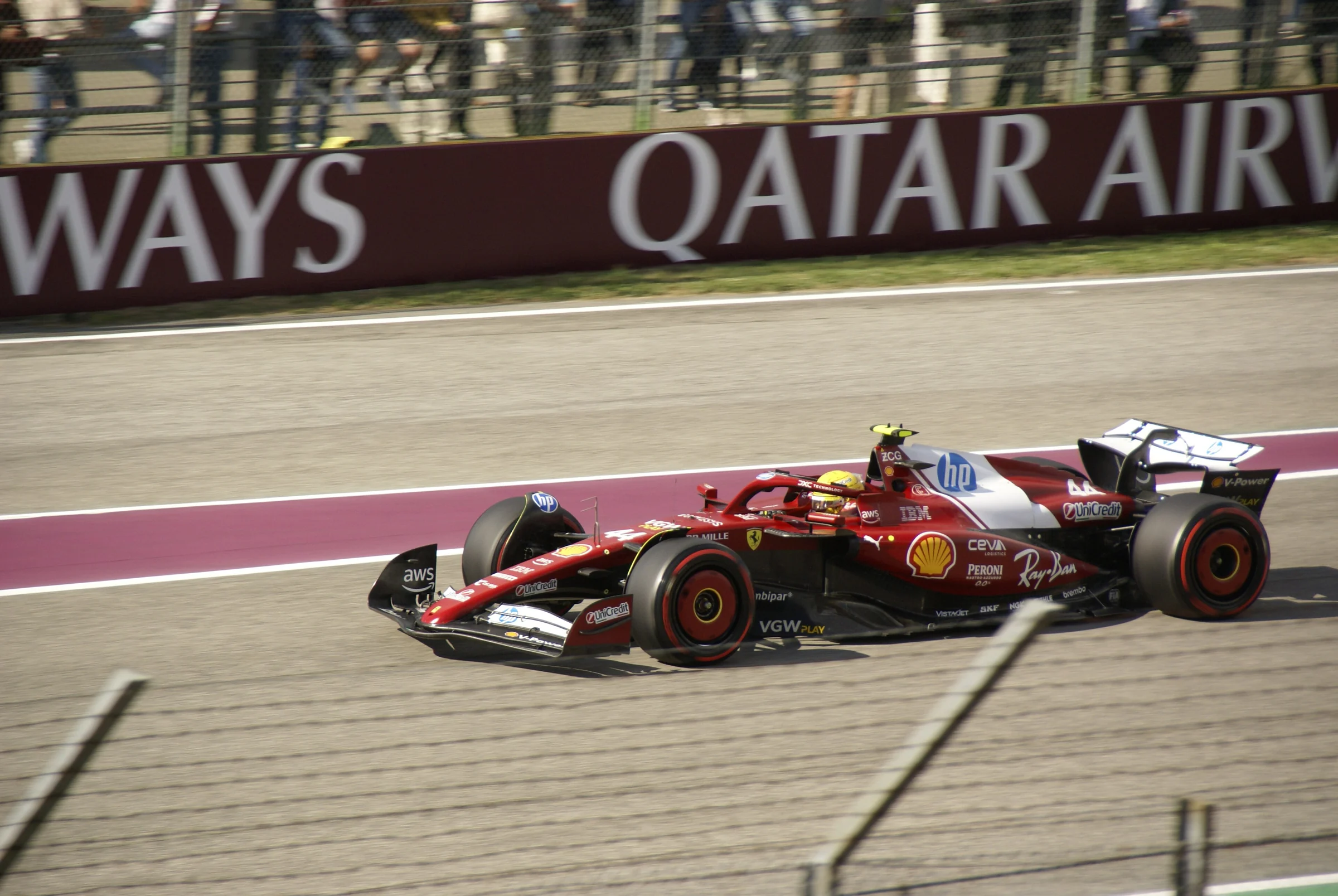
Hamilton also said he remained focused, motivated and deeply attached to the work, adding that people should “get used to” him being around. He described retirement as outside his thinking and referred to planning what comes next over roughly five years. The emotional message was unmistakable: he did not sound like a driver preparing to stop at the end of 2026.
The five-year reference needs restraint. Planning a five-year horizon can include racing, team work, business, philanthropy, fashion, film or projects not yet public. It is not the same as announcing a five-season driving contract. Hamilton's precise racing commitment should be inferred from verified contractual reporting and future announcements, not from the longest time span inside a broader answer.
His definition of success in the same media session also matters. Rather than focusing solely on records, Hamilton emphasized progress and personal evolution. That helps explain why a win total frozen below past expectations does not automatically remove his reason to continue. A veteran can judge a project by integration, development and movement toward competitiveness while public debate judges only the latest finishing position.
Why Retirement Rumors Keep Returning
Retirement speculation persists because Hamilton's situation contains irresistible headline ingredients: an all-time great in his forties, a high-profile Ferrari move and results that can be compared with a younger teammate. Those ingredients justify questions about career length. They do not answer them.
Age and record-based expectations
Hamilton was 41 in 2026 and entered the year with the burden of a career measured against 105 Grand Prix victories, 104 poles and seven championships. At that level, an ordinary points finish is framed as decline rather than the normal output of a closely matched field. Every mistake becomes evidence in a debate that younger drivers can escape after the next weekend.
Age is relevant because recovery, adaptation and personal priorities can change over time. It is not determinative. F1 performance depends on machinery, regulations, engineering communication, qualifying confidence and race execution. A driver's birth date cannot isolate those variables. The meaningful question is whether Hamilton and Ferrari believe the partnership can still improve—not whether he has crossed a media-friendly age threshold.
Ferrari adaptation and result swings
The first Ferrari season supplied fuel for speculation. Hamilton won the 2025 China Sprint but completed the Grand Prix campaign without a podium and finished sixth in the championship. In early 2026, he reached his first Ferrari Grand Prix podium in China, then endured more difficult weekends in Japan and Miami before the retirement question returned in Canada.
That sequence shows why isolated results mislead. One podium did not prove every adaptation problem solved; two difficult rounds did not prove a retirement decision made. Hamilton publicly discussed changing his simulator preparation, studying data, corner balance, brake balance and correlation with his engineers. Those are signs of a driver experimenting within a technical project. Whether the experiments deliver pace is a sporting question visible over multiple comparable weekends.
Ferrari's car performance must be part of the comparison. Use the Ferrari 2026 team page to compare both cars and the official F1 results for session context. Qualifying gaps, grid penalties, reliability and strategy can produce the same finishing position for different reasons. Retirement claims that ignore those causes are storytelling, not analysis.
A Contract Is Evidence, Not a Guarantee
A continuing Ferrari contract is the strongest structural reason to expect Hamilton beyond 2026. It means the relationship is not naturally scheduled to expire with the season, and Hamilton's own answer showed that he regarded his contractual position as clear. Sky Sports reported coverage through at least the end of 2027; Formula1.com noted that full details were not public.
Those formulations can coexist. One can know the minimum public duration without knowing every option, obligation, break mechanism or commercial provision. Contracts in elite sport also do not physically force a driver to start. Parties can renegotiate, separate by agreement or respond to circumstances. None of those generic possibilities is evidence that such a process is underway here.
How much confidence should each claim carry?
- High confidence: Hamilton had not announced retirement and publicly planned to continue.
- High but time-limited confidence: reporting and his remarks support a Ferrari seat beyond 2026.
- Low confidence: exact private clauses, options or a final retirement year not disclosed by the parties.
The same discipline applies to anonymous paddock reports. A named journalist can accurately report a contract horizon from informed sources, but a later claim about an option still needs corroboration. Direct remarks from Hamilton or Ferrari, an official team statement and the FIA entry list carry more weight than an aggregation that cites another aggregation.
So the contract does not make retirement mathematically impossible. It makes a confident “retiring after 2026” headline inconsistent with the best public evidence available in September 2026.
What Would Count as Real Retirement Evidence?
A genuine change would leave a clear evidence trail. The strongest signal is a direct statement from Hamilton, ideally published through his verified channels or a recorded media appearance with full context. A Ferrari announcement naming a replacement or describing the end of the partnership would be equally consequential. An official FIA entry list or confirmed team lineup would establish the competitive outcome, though it might arrive after the news itself.
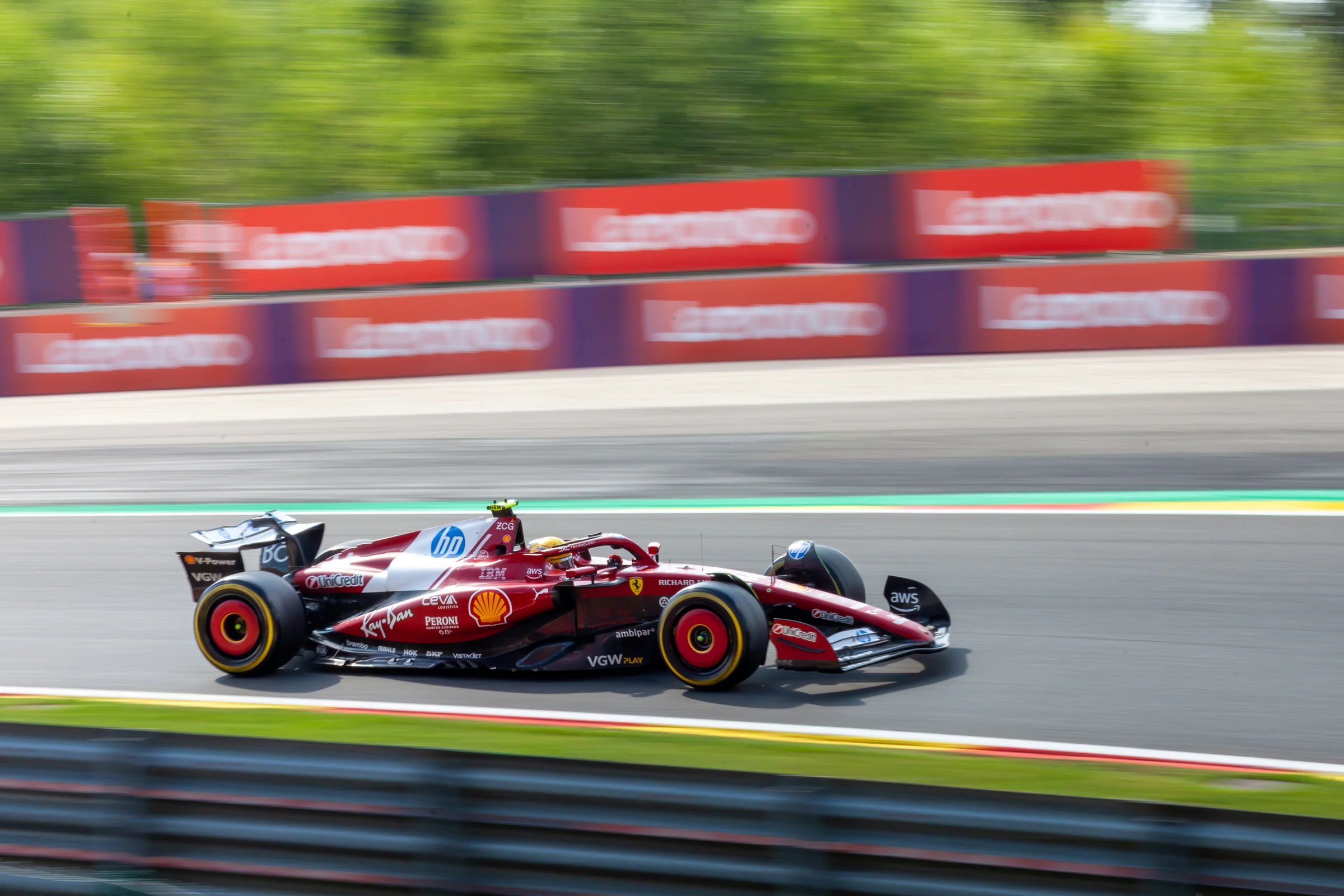
Reliable, named reporters may learn a decision before the formal release. In that case, look for multiple independent confirmations, precise attribution and a timeline. “Sources say” can be legitimate journalism, but a chain of websites repeating one unsourced claim does not become independent evidence through volume.
Several popular clues are weak on their own: a downbeat interview, a critical team-radio message, a deleted social post, poor qualifying or a former driver's prediction. Competitors speak immediately after high-adrenaline disappointment and often reassess with data. Results can influence a future decision without proving that the decision has already been made.
- 1. Find the original statement or document.
- 2. Check when the words were spoken, not only when an article was updated.
- 3. Separate “considering,” “contract ending” and “retiring.”
- 4. Confirm whether Ferrari and Hamilton agree on the described timeline.
Until evidence at that level appears, the accurate formulation remains that Hamilton plans to continue and has not announced a post-2026 retirement.
What Fans Should Watch Through 2027
The next useful evidence will come from sustained behavior, not a countdown based on age. Hamilton's results, engineering relationship and public language can show whether the Ferrari project is progressing. They still cannot reveal a private decision before he or the team communicates it.
Performance signals that matter
Start with qualifying, because repeated one-lap deficits can force compromised Sundays. Compare representative dry sessions, not a single grid position distorted by a penalty, red flag or reliability problem. Then examine race pace over comparable stints: tire compound, traffic, pit timing and damage all matter. A smaller gap to Charles Leclerc over several circuits would be stronger evidence of adaptation than one exceptional track.
Watch the technical themes Hamilton himself identified—brake confidence, corner balance, simulator correlation and integration with engineers. If his feedback produces a setup window he can access quickly, Friday experimentation should convert into more consistent qualifying and cleaner races. If the same limitations remain across different upgrades and circuit types, pressure on the project will grow. Neither outcome automatically determines retirement, but both shape the competitive case for continuing.
Use the Hamilton driver page, Ferrari team page and championship standings together. The driver page supplies his outcomes, the team page provides teammate/car context, and standings show how the season accumulates. None should be reduced to a single retirement indicator.
The decision belongs to Hamilton and Ferrari
Hamilton said in May that he felt in a good place with the team while acknowledging normal teething issues. That matters because a late-career project is sustained by more than raw lap time: the driver must believe development is moving somewhere, and the team must believe his pace, feedback and leadership justify the seat. Outsiders can evaluate evidence but cannot set either party's threshold.
Public language will become more important as the known contract horizon approaches. Clear talk about next year's car, regulation development and winter preparation supports continuity. Farewell framing, an announced successor or a joint team statement would change the assessment. Ambiguous emotion after a poor Sunday should not.
Loading comments…