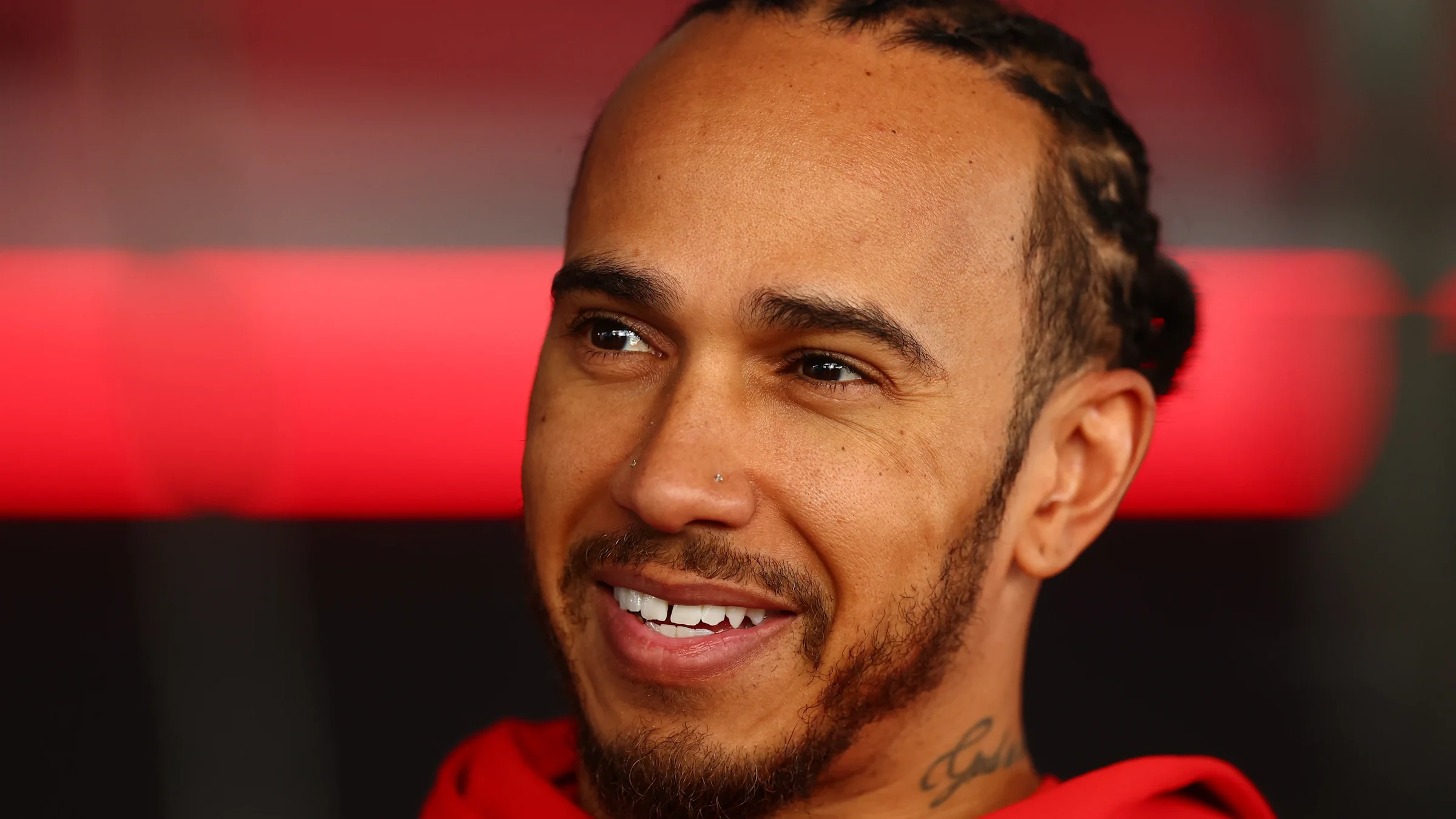
Lewis Hamilton was 22 years old when he started his first Formula 1 World Championship race. Born on January 7, 1985, he made his Grand Prix debut for McLaren in Australia on March 18, 2007—70 days after his 22nd birthday. Expressed precisely, he was 22 years, two months and 11 days old.
That answer needs a definition. Hamilton began karting at eight, joined McLaren’s development structure as a teenager, and first drove an F1 car before he became a Grand Prix driver. “Started F1” here means the moment he started a championship Grand Prix, not the first time he raced anything or tested Formula 1 machinery.
His age is memorable because the rookie performance was so complete. Hamilton finished on the podium in Melbourne, won four races, and reached the final round leading the championship. This timeline explains the preparation behind that impact, then follows the McLaren title, Mercedes era and Ferrari chapter. For changing 2026 results beside the historical account, use Hamilton’s current F1 driver profile.
The Exact Answer: Hamilton Was 22 at His F1 Debut
Hamilton’s official biography gives January 7, 1985 as his birth date. The 2007 Australian Grand Prix was held on March 18. Count the calendar interval and the answer is 70 days beyond his 22nd birthday. The cleanest short answer is “22”; the exact answer is 22 years, two months and 11 days.
The date and age calculation
Born
Jan. 7, 1985
F1 debut
Mar. 18, 2007
Age
22 years, 70 days
Other dates answer different questions. Receiving a kart began his racing life. McLaren’s backing began a formal development relationship. Driving an F1 car in a test was his first experience of the machinery. None counts as a World Championship debut because none placed him on an official Grand Prix starting grid.
His first Grand Prix immediately changed expectations
McLaren did not ease Hamilton into a lower-pressure environment. His teammate was Fernando Alonso, the reigning double world champion, and the car could fight at the front. Hamilton qualified fourth in Melbourne and attacked immediately, moving around Alonso in the opening-corner sequence before eventually finishing third behind Kimi Räikkönen and Alonso.
The podium mattered more than a spectacular isolated lap. A debut weekend tests starts, tyre management, traffic, pit procedure, communication and judgment across a full race distance. Hamilton handled that stack of tasks while competing against champions. His age became a headline because the performance looked experienced, not because 22 by itself was unprecedented.
From an Eight-Year-Old Karter to McLaren’s Junior Program
Hamilton’s debut was unusually polished because it rested on years of competition and structured development. The popular story jumps from a child approaching Ron Dennis to a McLaren race seat. The real chain is harder and more instructive: family sacrifice created track time, karting results attracted attention, backing opened better opportunities, and Hamilton repeatedly produced the results required to keep advancing.
Karting built the competitive foundation
Formula 1’s official biography traces Hamilton’s racing start to a used kart at eight. His father Anthony worked multiple jobs to fund the early campaign, and the family became a constant presence at kart meetings. Those years taught race starts, defensive positioning, changing grip and the discipline of extracting time from equal or near-equal equipment. They also provided the results needed to be noticed.
Karting did not make later Formula 1 success inevitable. It built a dense bank of competition before physical maturity, media pressure and high-powered cars entered the equation. Hamilton raced peers who would remain reference points, including future Mercedes teammate Nico Rosberg. By the time major backing arrived, evaluators had more than raw speed to judge.
Meeting Ron Dennis opened a door, not an F1 seat
At the 1995 Autosport Awards, the 10-year-old Hamilton approached McLaren leader Ron Dennis and declared that he wanted to race for the team. It is a perfect origin story because the ambition later became reality. But the encounter was an introduction, not a contract for a Grand Prix seat. Hamilton still had to keep winning while his family sustained the practical cost of racing.
Three years later the relationship became concrete. McLaren brought the 13-year-old into its development structure. That sequence matters: initiative created recognition, but performance converted recognition into support.
McLaren support raised both opportunity and pressure
Financial support and McLaren-Mercedes connections gave Hamilton a clearer route through European karting and into cars. Formula 1’s account notes that the agreement included an option should he graduate to F1—conditional language often lost in retellings. The program supplied opportunity; it did not remove the sporting tests between karting and a race seat.
Backing also changed expectations. A supported prospect is judged against the resources invested in him, and each promotion brings stronger fields. Hamilton had to demonstrate speed, feedback, consistency and the capacity to learn while carrying the label of a future McLaren driver. That pressure helps explain why arriving at 22 did not mean arriving inexperienced: he had spent much of adolescence being evaluated against an F1 destination.
The Junior Titles That Made Hamilton Ready
McLaren could provide machinery and advice, but the ladder still demanded results in progressively faster cars. Hamilton’s junior record supplied the evidence that karting skill could transfer to braking on slicks and wings, managing longer races, communicating with engineers and handling championship pressure.
Single-seater success converted promise into evidence
Hamilton won the 2003 Formula Renault UK title, then advanced through the Formula 3 Euro Series. After a rookie season learning the category, he won its championship before taking the 2006 GP2 title. Formula 1’s biography records five GP2 victories from 21 starts, but the season’s significance extended beyond totals: comeback drives and passing showed that he could solve races, not merely qualify quickly.
The back-to-back Formula 3 and GP2 championships arrived at the right moment. McLaren needed a 2007 teammate for reigning champion Alonso, and Hamilton had answered the usual promotion questions at the level directly below F1. He knew the team’s culture, had worked inside its development pathway and had proved he could absorb a new category rapidly.
His first F1 test was a milestone, not the final audition
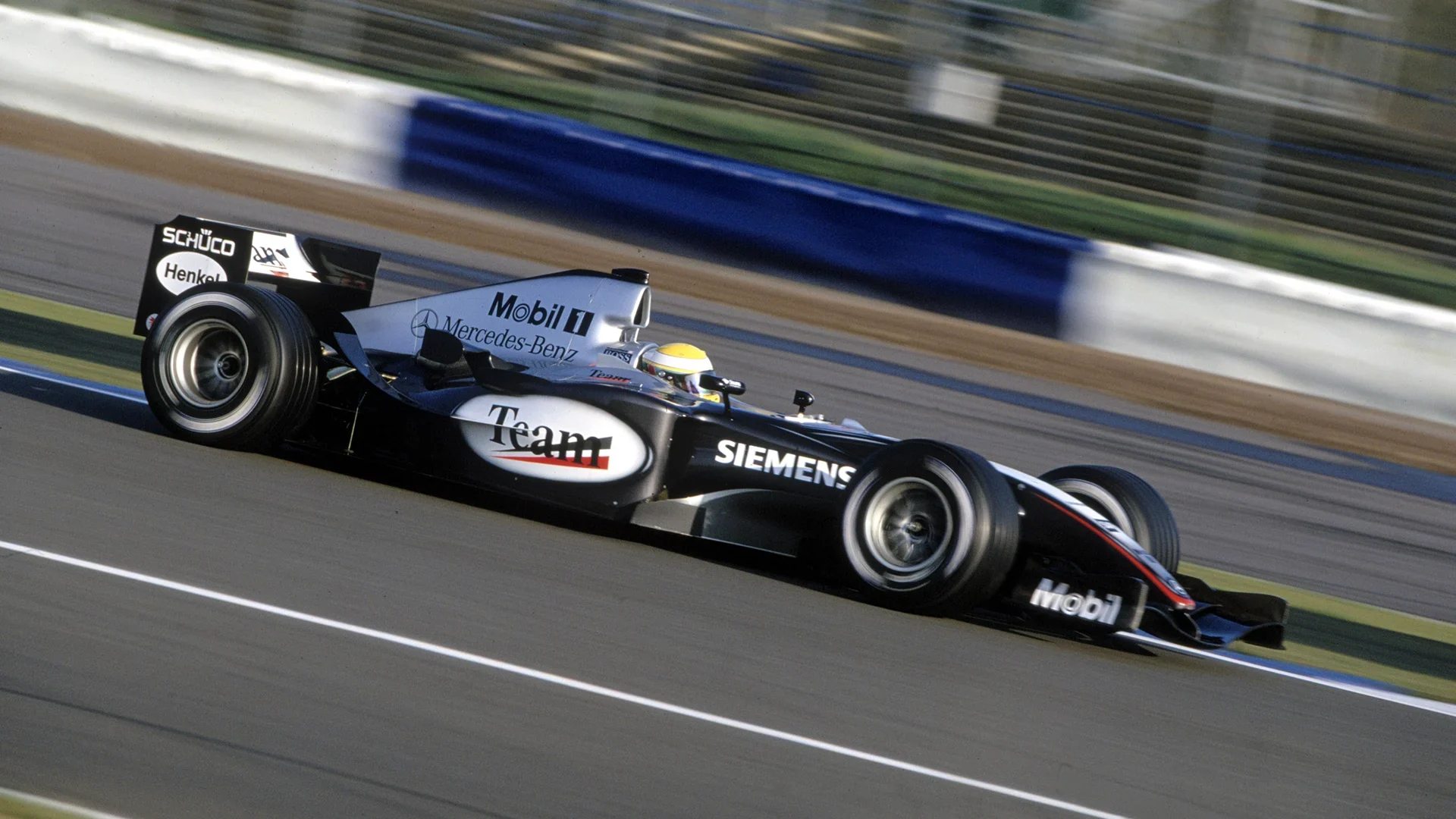
Hamilton first drove a Formula 1 car on December 1, 2004, at a cold Silverstone. McLaren placed him in the MP4-19 for two short solo runs alongside fellow young drivers Alex Lloyd and Jamie Green. The official retrospective says times were not released and recalls McLaren telling the drivers that a brief run was not a contest they could win.
That distinction corrects another age misconception. Hamilton was 19 for his first F1-car experience, but 22 for his first championship race. The test introduced the acceleration, carbon braking, steering response and downforce of top-level machinery. It did not award a Super Licence-quality career or settle the 2007 seat three years early.
His response was measured: build speed, understand the car and avoid turning a dream opportunity into an unnecessary accident. Then he returned to junior racing and produced the titles that made promotion defensible. The test was a reference point; the competitive campaigns completed the case.
The 2007 Rookie Season Was Historically Competitive
The Australian podium was not a one-weekend surprise. Hamilton finished on the podium in each of his first nine Grands Prix, won four times and arrived at the finale leading the championship. The season combined an exceptional competitive level with the errors and conflict of a title fight that became increasingly volatile.
A podium in Australia answered the age question with performance
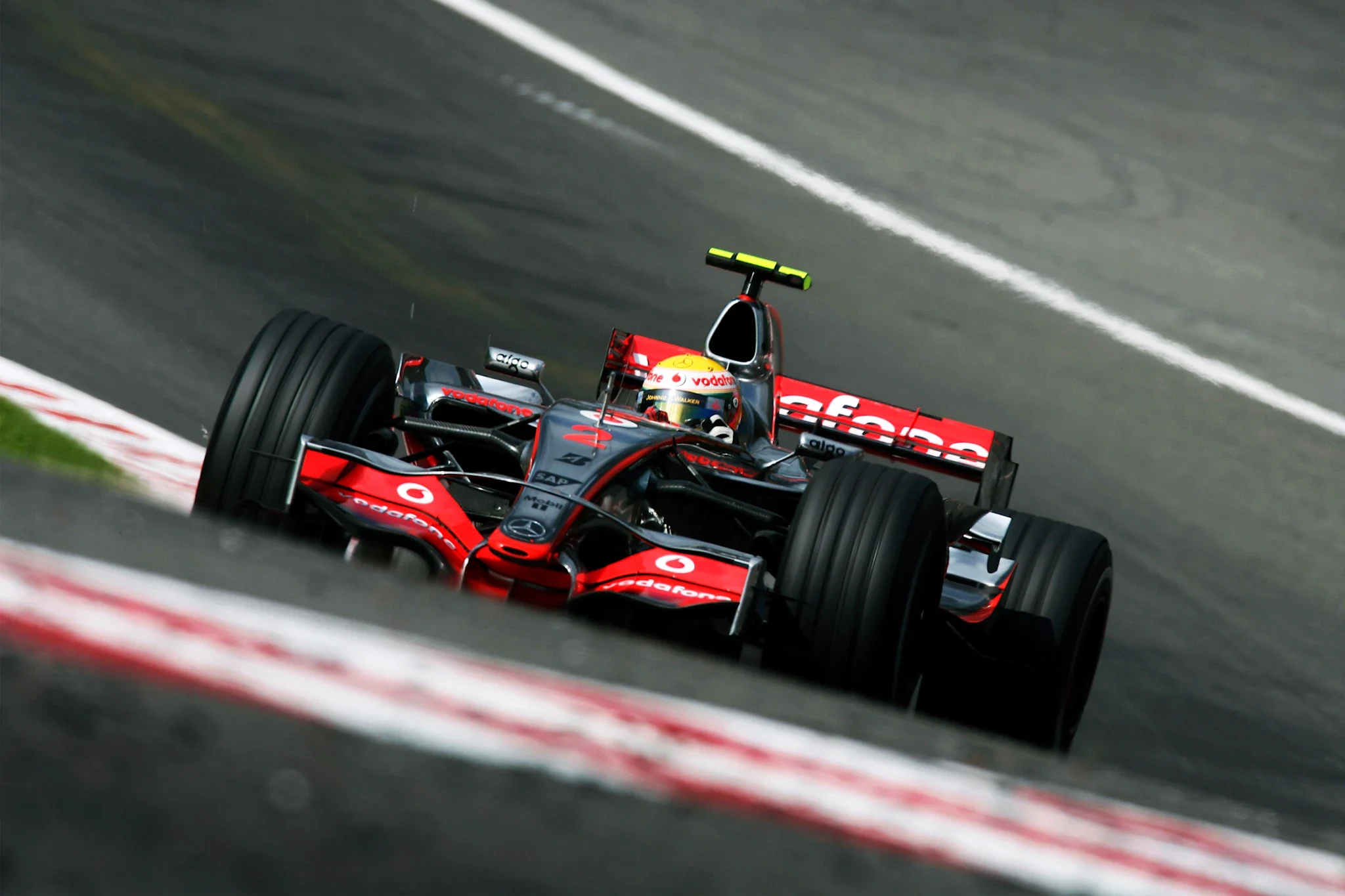
Starting fourth in Melbourne placed Hamilton directly among established winners. His first-lap move around Alonso was bold, but the deeper signal was completing the race in third after leading during pit cycles. The Australian promoter’s retrospective identifies it as the first podium on debut since Jacques Villeneuve at the same event in 1996.
The result reset expectations. McLaren no longer had a conventional apprentice learning behind its champion; it had two drivers capable of influencing the title immediately. Every strategy call and qualifying comparison acquired intra-team consequences.
Canada delivered the first pole and victory
At the sixth round in Canada, Hamilton claimed his first pole and converted it into his first Grand Prix victory. The breakthrough established that the podium streak was not just consistency in a strong car. He could control a weekend from the front and capitalize when a chaotic race demanded repeated concentration.
A second victory followed at Indianapolis, and later wins in Hungary and Japan kept him at the center of the championship. The pattern—qualifying speed plus race execution—would remain a defining strength across three teams.
The title loss did not diminish the rookie benchmark
Hamilton entered the final race in Brazil leading but suffered a gearbox problem and finished the year one point behind Ferrari’s Kimi Räikkönen. He and Alonso ended level on points, with Hamilton classified second on countback. Across 17 races, Hamilton recorded four wins and eight additional podiums.
The defeat prevents the season from becoming a frictionless legend. China’s gravel-trap retirement and Brazil’s problems showed how small the margin was; the deteriorating McLaren relationship added pressure. Yet losing the title by one point against Räikkönen and a reigning double champion does not make the campaign less remarkable. It defines the standard Hamilton set at 22: championship contention was immediate, while championship completion still had to be learned.
From McLaren Champion to the Mercedes Dynasty
Hamilton’s career after 2007 was not a straight line of dominant cars. He won the championship with McLaren, spent seasons fighting machinery and his own inconsistency, then made a Mercedes move widely viewed as a gamble. That decision placed him inside the defining team of the turbo-hybrid era and expanded a brilliant opening chapter into a record-scale career.
The 2008 title completed the first chapter
The 2008 Brazilian Grand Prix supplied the finish 2007 had denied him. Felipe Massa won his home race and briefly appeared to have the championship, but Hamilton recovered the fifth place he needed near the end of the final lap. He took the title by one point at 23 years and 300 days.
Winning so soon confirmed that the rookie challenge had been sustainable. It also created a misleading expectation that titles would arrive annually. McLaren won races afterward, but shifting competitive order, reliability and uneven weekends left Hamilton without another championship through 2012. Those seasons added recovery drives and racecraft, yet also exposed the cost of small errors in less dominant circumstances.
Moving to Mercedes changed the scale of the career
Hamilton announced during 2012 that he would leave the organization that had backed him since childhood and join Mercedes in 2013. The team had history and factory resources but was not then the automatic championship choice. A first Mercedes victory arrived in Hungary during that debut season, evidence that the partnership could win before the major 2014 regulation change.
Mercedes mastered the new turbo-hybrid era. Hamilton beat Nico Rosberg to the 2014 and 2015 titles, lost their intense 2016 fight, then won four championships in succession from 2017 through 2020 against changing opposition. The team supplied extraordinary cars and operations; Hamilton converted that platform with qualifying speed, tyre management, wet-weather judgment and season-long consistency. A serious history needs both halves of that explanation.
Seven titles became the headline, adaptability the deeper record
The 2020 championship equaled Michael Schumacher’s record of seven. Hamilton also moved beyond Schumacher’s win record and established the all-time pole benchmark. On September 13, 2026, Formula 1’s live profile listed 106 Grand Prix wins, 104 poles, 207 podiums and 393 entries. Those totals are a dated snapshot, not permanent copy.
The deeper career marker is adaptation. Hamilton won in V8-era McLarens, mastered energy management and evolving tyres in Mercedes hybrids, worked with different engineers and teammates, and remained competitive through multiple aerodynamic rule sets. No driver creates a dynasty alone, but elite machinery does not automatically produce seven titles either. The record is the intersection of organization, car, decision-making and sustained execution.
Ferrari Is the Current Chapter, Not a Footnote
Hamilton’s move to Ferrari in 2025 ended 12 seasons with Mercedes and demanded another cultural and technical reset. It was not a ceremonial final contract. Ferrari signed him on a multi-year agreement, paired him with Charles Leclerc and asked a driver shaped by British-based McLaren and Mercedes systems to learn Maranello’s people, processes and car language.
The 2025 move demanded another reinvention
The first year was difficult. Hamilton won the China Sprint, but Formula 1’s official biography records that he completed a season without a Grand Prix podium for the first time in his career. Adapting was not simply learning where the switches sat. Driver and engineers had to build shared vocabulary around balance, braking and setup while competing against a teammate already embedded in the team.
That season belongs in the timeline because it resists a highlights-only account. Great careers contain periods when experience does not produce immediate results. The Ferrari project tested whether Hamilton and the team could turn diagnosis into a more competitive second season.
Hamilton’s 2026 record must be dated, not frozen forever
The answer began arriving at Barcelona-Catalunya in June 2026. Hamilton qualified second and Ferrari’s three-stop strategy, helped by the timing of a Virtual Safety Car, put him in position to take his first Grand Prix win for the Scuderia. It was career victory 106 and his first Sunday win since 2024.
As of September 13, Formula 1 listed Hamilton third in the 2026 championship with 191 points, one Grand Prix victory and five Grand Prix podiums after 13 races. Those numbers will change as the season continues, so this article dates them deliberately. The live F1 standings and Ferrari team profile should control any later comparison.
At 41, Hamilton is no longer interesting because he was young on debut. He is interesting because a career that began with instant adaptation is still being tested by new machinery, regulations and organizational relationships. Ferrari is evidence in progress, not an epilogue whose ending can already be written.
What Hamilton’s Debut Age Really Tells Us
The factual answer remains simple: Lewis Hamilton was 22 years and 70 days old when he started the 2007 Australian Grand Prix. The useful historical answer is that age alone explains very little. By then he had raced for roughly 14 years, lived inside McLaren’s development system since 13, won major single-seater championships and experienced Formula 1 machinery.
That preparation does not make the debut ordinary. Many successful junior drivers receive support and tests without qualifying fourth beside a reigning champion, finishing third immediately, winning by round six and taking a title fight to the final race. Hamilton converted preparation into performance at an exceptional rate.
It also makes simplistic comparisons with later teenage debutants weak. Super Licence rules, private testing, junior categories, calendar length and team competitiveness change across eras. One driver may arrive younger with more simulator work; another may arrive older with deeper race experience. The better question is whether the driver had proved the skills needed for the particular seat.
Hamilton’s timeline answers that decisively. Karting built race instincts. Family effort kept the path open. McLaren backing supplied structure and access. Formula Renault, Formula 3 and GP2 titles tested progression. The first McLaren test introduced the machinery. The 2007 season showed readiness, 2008 completed a championship, Mercedes multiplied the opportunity, and Ferrari demanded reinvention again.
So remember 22, but do not mistake it for the beginning of the work. It marks the day a long development process reached the World Championship grid—and the first public proof that Hamilton could turn that preparation into one of Formula 1’s defining careers.
Loading comments…