An F1 race can have action without the main broadcast making it easy to follow. That is the frustration behind an October fan discussion complaining that recoveries by George Russell and Isack Hadjar, and battles further down the order, were receiving less attention than cars near the front. The complaint is about understanding the race, as much as seeing a spectacular pass.
It also raises a fair question: who actually decides what appears on screen? The international pictures, a broadcaster's commentary, an app's interface and an optional onboard feed are connected, but they are not the same production layer. Changing one does not necessarily change the others.
This guide explains those responsibilities, the limits of live direction and the practical ways to keep track of a battle when the main picture moves elsewhere. It is based on information checked October 30, 2026. Use the F1 TV schedule to find your session, then choose the views that answer your particular racing questions.
What the latest missed-overtake complaint is really about
The October 11 discussion on Reddit identifies a specific frustration: a viewer can see position changes on the timing tower while the large picture remains with the front of the field. Contributors mention Russell and Hadjar recovering positions and a Haas battle confined to a small window. Those are reported viewer reactions, rather than a complete independent audit of that broadcast.
A separate July analysis by Motor Sport Magazine offers a more concrete example. It describes Franco Colapinto passing Pierre Gasly and Liam Lawson together at Spa with 15 laps remaining, taking the final points position, while the move appeared in picture-in-picture. The publication argues that the main image gave greater attention to front-running cars holding position.
That example matters because the pass changes a sporting outcome. It is not merely a demand to replace every shot of a leader with whichever car happens to be closest to another. Viewers want the program to identify where something meaningful is developing and give it enough space to become intelligible.
Picture-in-picture can help when two things genuinely require attention. It becomes frustrating when the viewer cannot judge the smaller battle's braking, car placement or outcome. A position swap shown at postage-stamp scale may technically have been broadcast while still failing to communicate the racing.
The most defensible criticism therefore concerns prioritization and continuity. Was there an imminent contest in the main picture? Did the smaller image contain the more consequential action? Was the missed story explained afterward? Those questions can be tested against footage without guessing what a director secretly intended.
Claims that a particular sponsor or driver must have caused the choice need additional evidence. An angry thread does not establish a contractual instruction or deliberate favoritism. Equally, the absence of that evidence does not make the underlying viewing problem disappear. A race can look uneventful when its active contests are hard to find. The final classification records what happened; the broadcast's job is to make the path to that result understandable while it unfolds.
Who controls the pictures, commentary and app
Begin with the difference between capturing material and selecting a program. Cameras, microphones and timing systems create many possible inputs. A production team turns selected inputs into the sequence a viewer sees. A broadcaster then presents that coverage through its own service, with commentary, studio output and platform features that can vary by market.
The international feed is one production layer
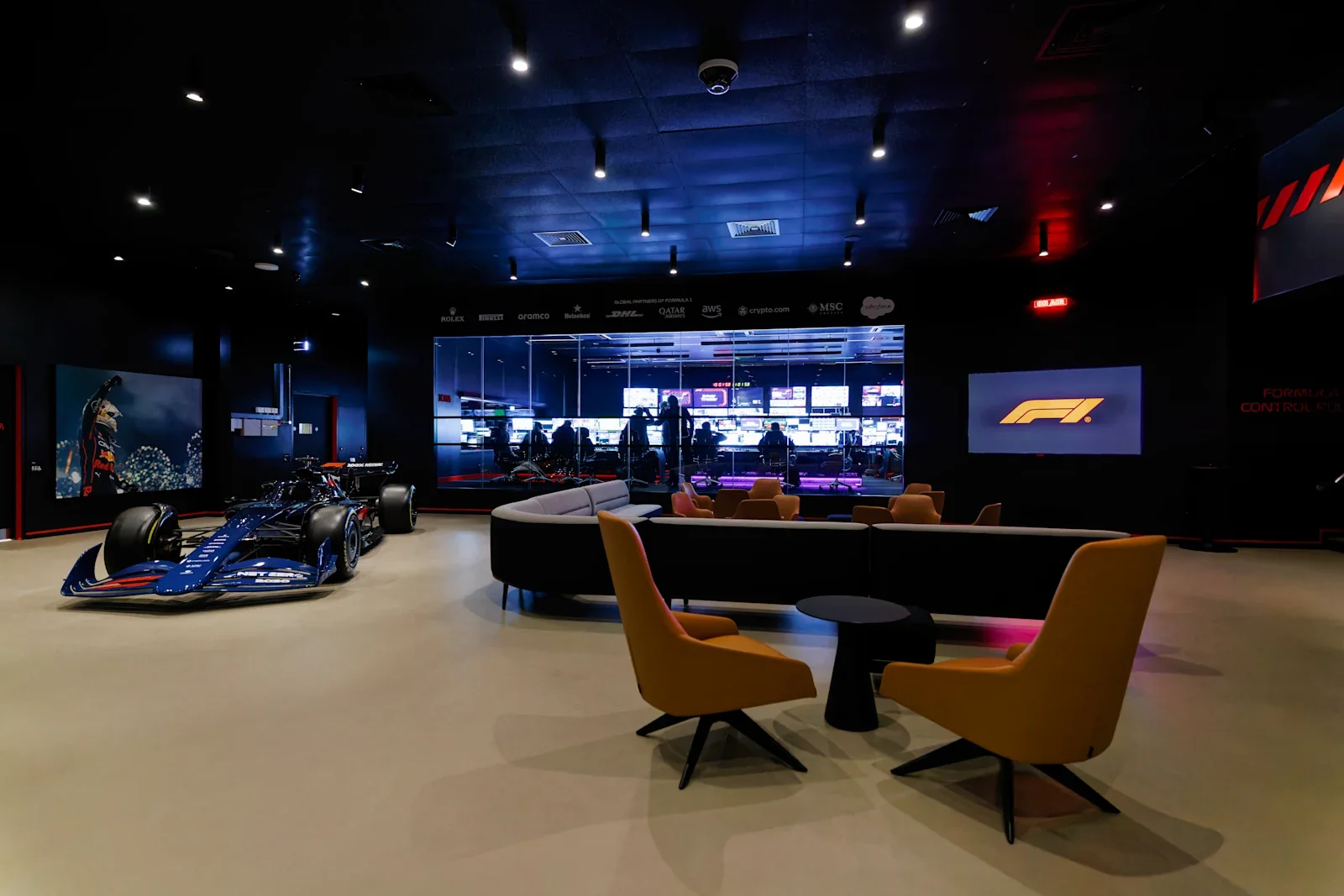
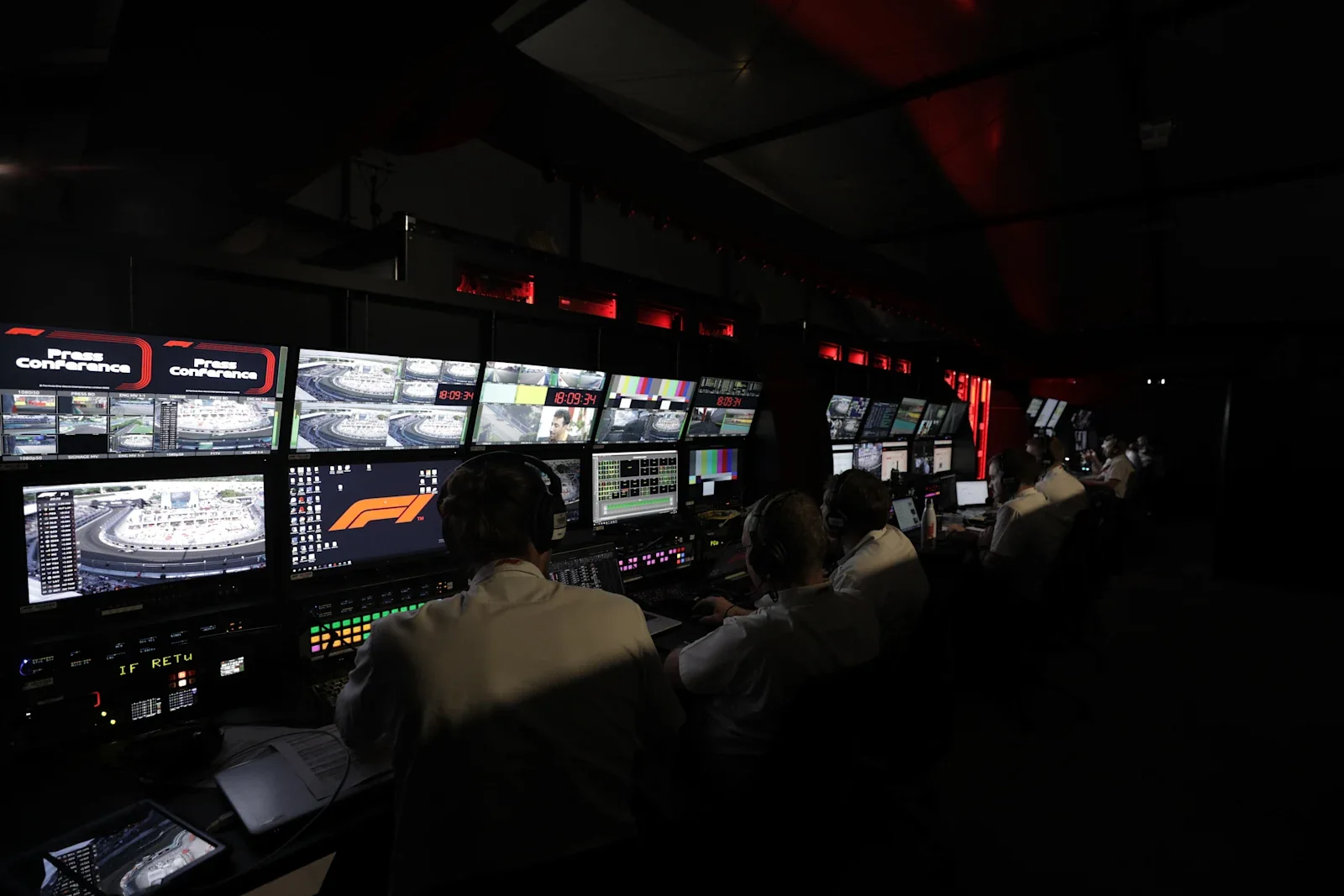
Formula 1's official behind-the-scenes account describes the International Feed and F1 TV production operating from Biggin Hill, connected to the circuit's Event Technical Centre. Tata Communications' June 2026 explanation describes the video, audio and data traveling from the track to that remote production operation. The production is a coordinated system, rather than a commentator personally switching every camera.
The international race pictures provide a common foundation for coverage across broadcasters. F1 TV also produces its own presentation and analysis around the racing. These are related operations with different tasks. An optional car camera is another view again: it follows that car instead of continuously choosing the most relevant contest for the whole field.
That is why changing an app does not automatically solve a complaint about the main race picture. If both services are carrying the same underlying sequence at that moment, the missing battle will remain missing from that sequence. A genuinely alternative view can help, but it must actually show something different.
A commentary change is not a new camera director
Commentary adds interpretation, identification and anticipation. A team may notice a closing gap and tell viewers to watch it before the director switches pictures. Another commentary team may emphasize a different strategic story while working with much of the same race imagery. The words can change the viewer's understanding without changing the camera angle.
Formula 1's March 2026 announcement confirms regional commentary developments and says its F1 TV team primarily fronts Apple TV's English-language coverage. That is information about presentation. It should not be read as a promise that every commentary choice has an entirely independent live camera selection.
When something disappoints, identify the layer. A frozen stream suggests delivery trouble. A confusing explanation concerns presentation. A missed live pass concerns picture selection or availability. These problems can overlap, but the remedy depends on which one occurred. The existing Apple TV and F1 TV guide covers access and platform differences; the camera-direction issue remains a separate editorial question.
Why the director cannot show every battle live
A Grand Prix spreads its participants around an entire circuit. Several drivers can attack, defend, pit or encounter trouble at once. The director's task is to choose a coherent sequence from simultaneous possibilities. More cameras improve the available evidence; they do not give the main full-screen picture unlimited time.
That constraint explains some missed moments, but it should not become an excuse for every choice. There is a difference between two significant events happening together and a developing contest losing the screen to a car with no immediate threat. The first requires a trade-off. The second invites a question about how the program anticipates action.
Anticipation involves uncertainty. A narrowing gap may produce a pass, a feint or several laps of stalemate. A pit stop may become routine or suddenly decide the race. Television has to make the choice before knowing the outcome. Judging that choice fairly means considering what was reasonably visible at the time, while still examining repeated failures to recognize the same kind of contest.
Replays can recover an incident but lose its build-up
A replay can show that two cars exchanged places. It may be less successful at restoring the tension of the preceding laps: the gap shrinking, the defender changing lines and the attacker deciding where to commit. Those are parts of the sporting story, rather than decoration around the final move.
There is also an opportunity cost. While a replay occupies the main picture, the race continues. A long sequence of angles can explain one incident while creating a second blind spot elsewhere. An effective program needs to return viewers to the live state clearly, rather than leaving them to work out whether the position tower and pictures describe the same moment.
The useful distinction is between missing the live image and failing to tell the story at all. The first can be unavoidable. The second can often be improved with a prompt replay, a clear account of the consequence and an update on the battle afterward. The live-timing guide helps viewers follow those changes, but the main program still has responsibility for connecting them.
Why a midfield battle needs more than the passing moment
A fight for tenth can decide whether a team scores at all. A fight for fourteenth can influence which car reaches a pit window in clear air. The championship leaders deserve attention because their decisions matter, but that does not make every contest behind them interchangeable. The broadcast needs to show why a particular battle has become relevant now.
Consider a hypothetical car in eleventh closing on tenth. If both have stopped and their tires are of similar age, the immediate points fight is easy to understand. If the leading car still owes a stop, the position on the tower may exaggerate the significance of the pass. If the pursuer has much fresher tires, the question becomes how quickly it can exploit that advantage before the next group.
That information changes the emotional meaning of the same image. An attacker spending five laps behind a rival might be failing to use a tire advantage, or deliberately preserving a set for a later opportunity. Viewers should not have to invent the explanation. A concise update can establish the possibilities without pretending to know a private strategy call.
Timing and tire context turn a move into a story
Start with the interval to the car ahead, rather than only the gap to the leader. Then compare recent representative laps and tire usage. An isolated improvement can come from traffic or an interrupted lap; a sustained trend gives a stronger reason to anticipate a contest. Official viewing tools provide timing and tire information, but interpreting it still requires context.
Radio can help when its timing and purpose are clear. A selected message is evidence of what was said, not a complete transcript of every option the team considered. It may describe a moment that preceded the current picture. The program should connect the message to the relevant phase instead of implying that every instruction was issued at the instant viewers hear it.
A good midfield sequence therefore begins before the overtake and finishes after it. Establish the stakes, show the approach, explain the decision and update the consequence. That turns an apparently minor position change into a race story. Extra cameras are useful, but editorial continuity is what makes their pictures meaningful.
How to follow the action when the main feed cuts away
The most useful response is to add a view that answers a missing question. You do not need to watch every available feed. If the main coverage already tells you what the leaders are doing, a second view of the same leaders may add less than the onboard of a recovering driver or the timing data for a close midfield group.
Use one alternative view with a clear purpose
Keep the main program as the overview and choose one supplementary task. An individual onboard can show the attacker's approach, braking and traffic. A driver tracker can locate the next group or a useful gap after a stop. Timing can show whether the chase is progressing when the cars are not in the main picture.
The feed name matters. Apple's October 22 U.S. coverage announcement lists a mixed onboard feed that switches between cars and a Podium feed following the drivers in the first three positions. Neither description promises a dedicated midfield program. If you want to follow a particular recovery, an automatically selected view may still move away from it.
During a developing battle, glance at the interval, watch the relevant approach and return to the main program when the situation changes. Leaving an onboard running indefinitely can make you miss a pit stop or an incident elsewhere. The purpose of the extra view is to restore a particular piece of the story, not to replace every editorial decision yourself.
Check the region, device and stream timing
Features depend on the service, territory and device. Apple's U.S. announcement describes up to 30 additional feeds and Multiview with up to four simultaneous views on supported hardware, including an expansion to supported smart TVs. That is a dated U.S. feature description, rather than a promise for every television, browser or country.
Before the session, check the actual feed selector on the device you will use. App availability alone does not guarantee every multiview function. If you need the access details, the existing platform comparison covers them without turning this camera-direction discussion into another subscription guide.
Finally, make sure your pictures and timing describe the same moment. Different streams or a paused screen can put one device ahead of another. Compare a visible lap transition or a clearly identifiable event before drawing conclusions. A position change arriving first on a timing screen can spoil the pass rather than explain it if you assume both displays are perfectly synchronized.
What a better broadcast should deliver
The reasonable standard is not that every pass must appear live in the largest possible picture. It is that the main program should reliably identify the important developing stories and explain the ones it cannot show immediately. That standard recognizes simultaneous action while preserving the viewer's right to expect a coherent race.
First, prioritize a contest because of its sporting stakes and likelihood of changing, rather than its position alone. A lead fight is often the central story. A midfield battle can become the more urgent one when it decides points, exposes a strategic gamble or brings a recovering driver into contention. The broadcast should move with that change.
Second, make split-screen decisions legible. If two events are important enough to share the picture, provide enough scale and explanation for both to be understood. A tiny image without context may satisfy the technical definition of showing an event while leaving the audience unable to follow it.
Third, close the loop. When the director leaves a battle, return to its outcome. If a position changes during a replay, identify the change and explain whether it came from a pass, a stop or an incident. A viewer should not need to reverse-engineer the last five laps from the tower.
Fans can make their criticism more useful by recording the session, lap, feed and missed event. That separates a repeatable editorial issue from a delivery fault or a difference between commentary services. It also avoids turning an unsupported theory about sponsorship into the explanation for every frustrating cut.
Alternative feeds are valuable for people who enjoy building their own view of the race. They should expand that experience rather than become a requirement for understanding ordinary on-track action. The best main broadcast gives a casual viewer a clear narrative and an experienced fan enough evidence to assess it. When the racing is happening further down the field, the pictures and explanation should help everyone find it.
Loading comments…