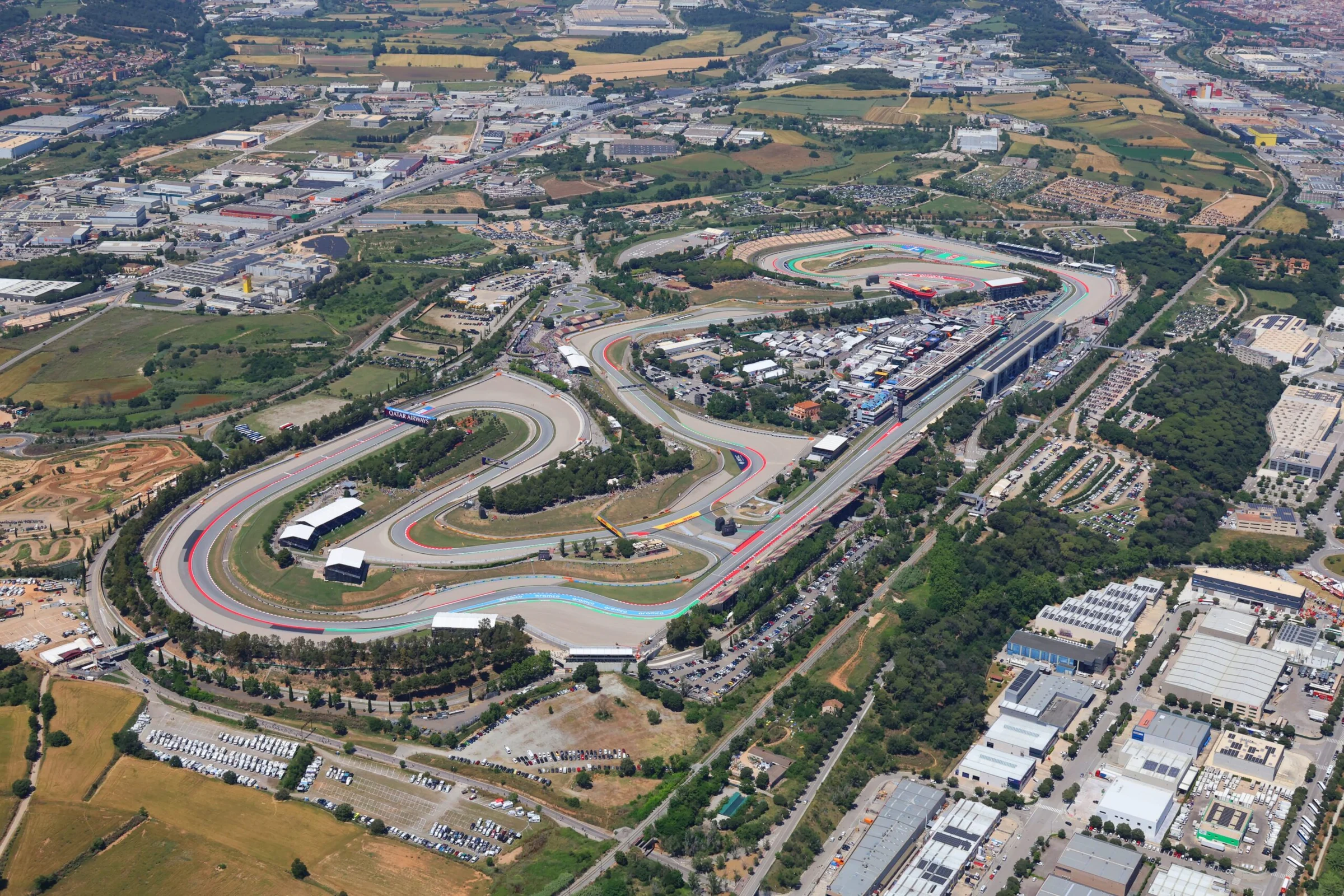
The clearest confirmed change for the 2028 F1 calendar is Barcelona-Catalunya's return under its rotation agreement with Spa-Francorchamps. Portugal also has an agreement explicitly covering 2028, while Turkey's new multiyear deal includes that season. These are meaningful commitments, but they do not supply a complete dated championship schedule.
As checked on October 19, 2026, we have not verified a full official 2028 calendar with all race weekends, their order and session times. The FIA has published the 2027 calendar; simply changing the year on that list would create a misleading 2028 schedule.
This guide separates specific season commitments, longer contracts and decisions still awaiting announcement. It also explains why swapping circuits changes the sporting test, even when a season's total length looks similar. Use our current F1 schedule for active-season race times, and use the confirmed agreements below to understand which destinations belong on a provisional 2028 shortlist.
Is the 2028 F1 calendar confirmed?
Some individual venues have official agreements covering the season. A complete list of dated 2028 weekends has not been verified in the official announcements checked for this article. The distinction is practical: knowing a circuit is contracted helps you select a destination; knowing its actual race weekend lets you request leave, arrange travel and avoid clashes.
Use three separate questions when reading a calendar claim. Does the announcement name 2028 specifically? Does it merely state a contract end year that includes 2028? Or does it publish the sanctioned weekend dates? Each answers something different. The Barcelona agreement is especially useful because it names individual seasons, showing why the final year of a contract cannot always be interpreted as annual participation.
| Evidence | What it establishes | What it does not establish |
|---|---|---|
| Explicit 2028 hosting agreement | A named commitment for that season | The final race date or weekend timetable |
| Contract lasting beyond 2028 | A longer commercial relationship | Annual participation if rotation applies |
| Official dated calendar | The announced order and race weekends | Every later session-time or operational detail |
The latest neighboring-season reference is the FIA's September 16, 2026 announcement of the 2027 calendar, approved by the World Motor Sport Council. It lists 24 Grands Prix across 22 countries and ten Sprint events. Those numbers describe 2027; they should not be copied into a 2028 calendar as though the next announcement were a formality.
There is also no verified exact 2028 calendar release day in the material checked here. Watch for a season-specific FIA and Formula 1 announcement rather than a retailer's year filter or an automatically generated app page. A clean-looking list can still consist entirely of contracts without one confirmed date.
Barcelona returns in 2028 while Spa rotates out
The most consequential year-specific agreement is the Barcelona-Catalunya and Spa-Francorchamps rotation. It preserves a place for both venues over several seasons while giving them different years. For a fan choosing a 2028 trip, this is more useful than a headline saying a circuit has renewed until the early 2030s.
The exact years in the rotation agreement
Formula 1's February 16, 2026 announcement names Barcelona-Catalunya for 2028, 2030 and 2032, in addition to 2026. The official half-year review identifies Spa's alternating seasons as 2027, 2029 and 2031. Under that announced arrangement, 2028 is Barcelona's year.
Spa's absence in 2028 therefore has a specific contractual explanation. It should not be described as a permanent cancellation of the Belgian Grand Prix. Equally, Barcelona's agreement does not establish a continuous annual place through 2032. If your priority is attending Spa, select one of its named seasons and then wait for that season's date; do not reserve a familiar July weekend in 2028 merely because it used to be a regular fixture.
Why the circuit swap matters to the racing
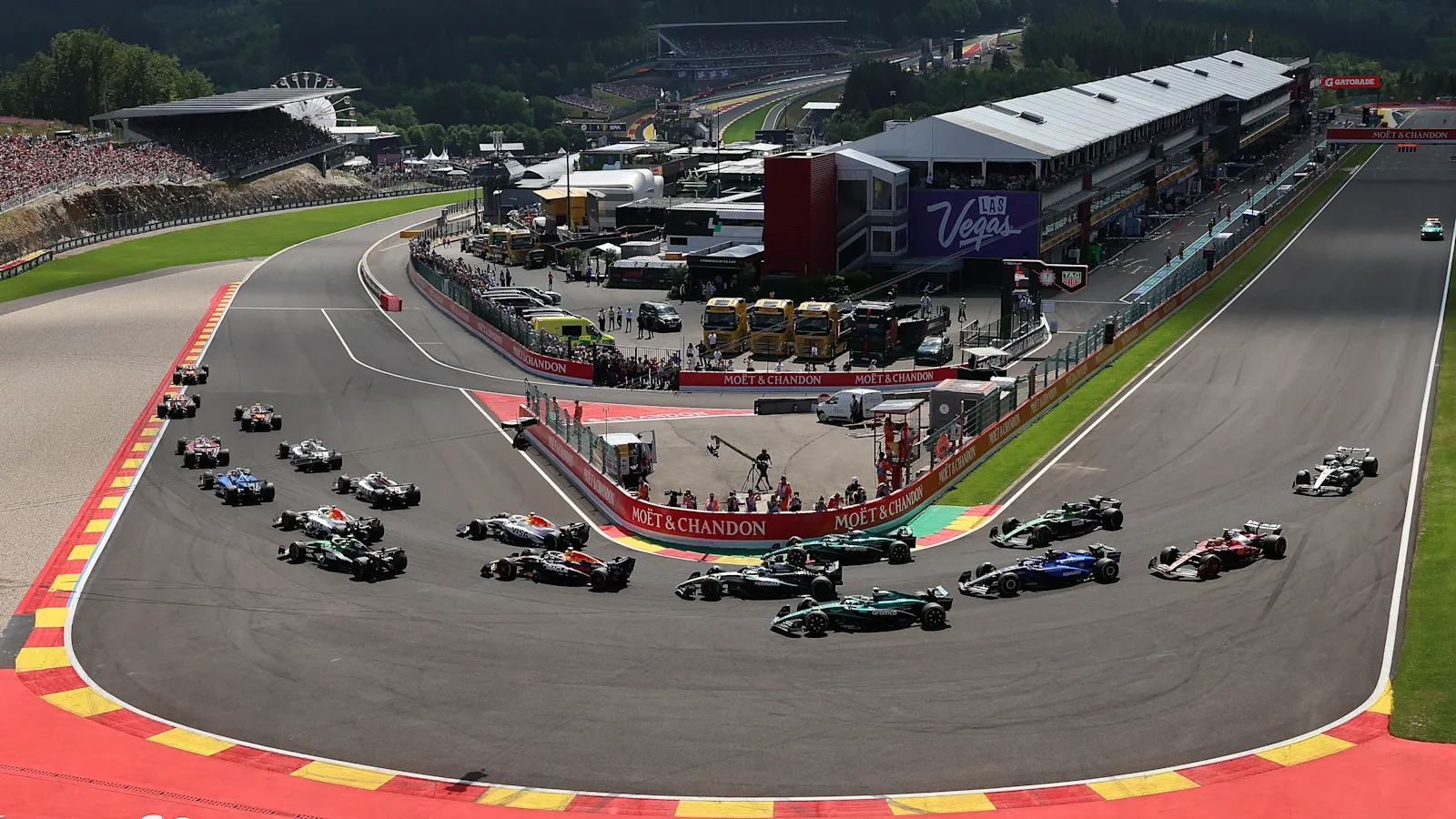
The change alters the mix of challenges a championship must cover. Barcelona combines fast and slow corners, with the sustained Turn 3 right-hander an obvious place to judge a car's balance. Spa blends long straights with demanding fast corners and can present different weather conditions around the lap. These are different ways of testing a car even though both are established European venues.
The sporting implication is a shift in the opportunities available to each team. A car that handles one type of compromise well cannot simply transfer that advantage to a different circuit. Engineers must balance the speed they want in corners against the speed they need on straights, while drivers must turn that compromise into consistent laps. That is a reason to care about the venue list before the precise dates arrive.
It is not enough evidence to predict a particular team's 2028 points gain. The cars, tires, surface conditions and competitive order still have to be assessed closer to the event. Treat the rotation as a change to the championship's examination paper, rather than an answer key telling us who will win. Barcelona-Catalunya's name also matters when buying tickets: a Spanish destination alone does not identify the circuit on your booking.
Portugal and Turkey have agreements covering 2028
Two returning venues supply firmer evidence than a speculative list of prospective hosts. Both Portugal and Turkey have announced agreements beginning in 2027 and covering 2028. That means neither should be presented as a brand-new 2028 debut, even though the return of each remains an important part of the calendar's evolution.
Portugal: a second year at Portimao
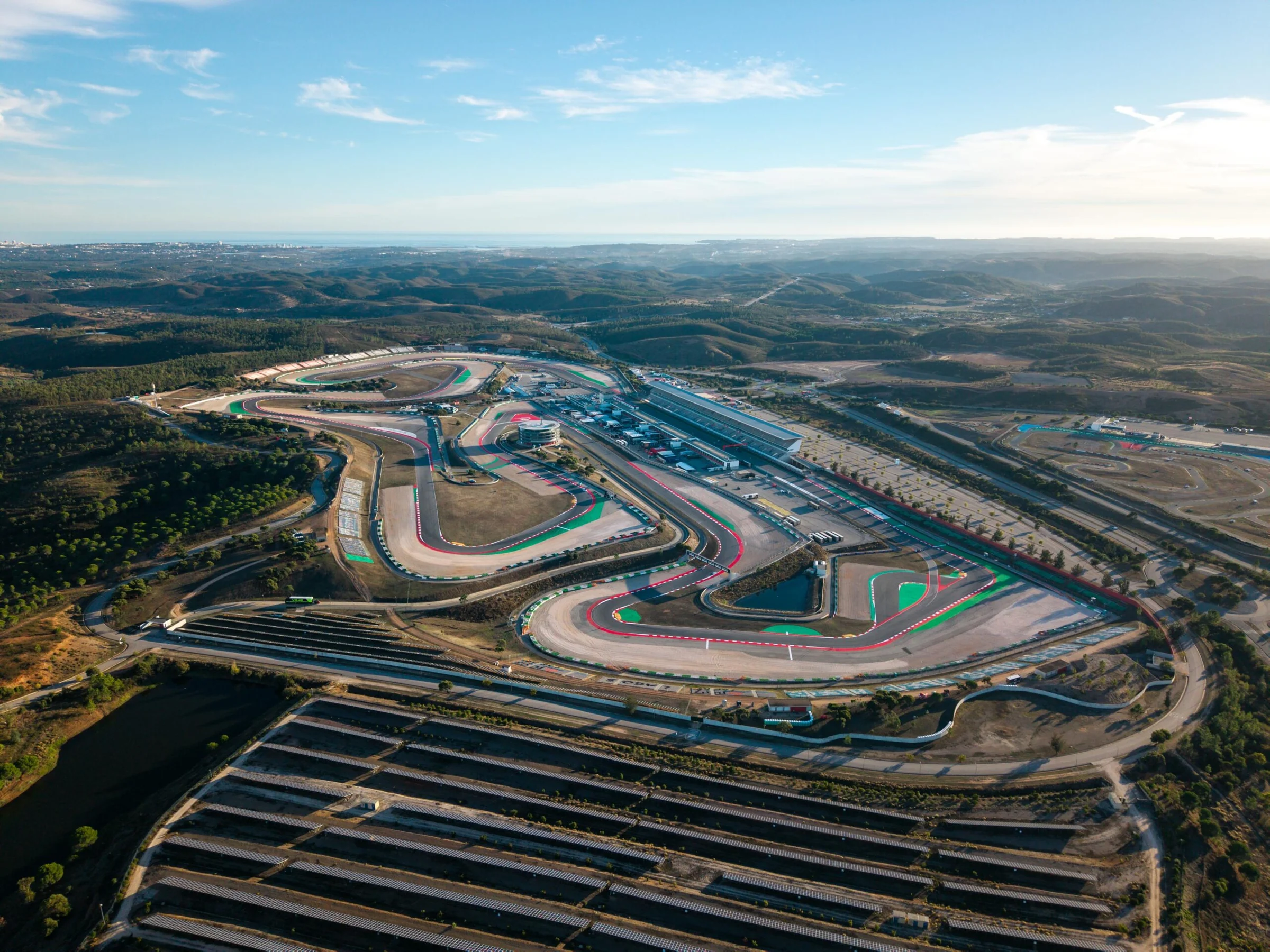
Formula 1's December 16, 2025 agreement explicitly covers 2027 and 2028 at the Autodromo Internacional do Algarve, commonly called Portimao. It is a two-year commitment with the Portuguese government, Turismo de Portugal and promoter Parkalgar. The venue is in the Algarve; it is not a return to Estoril simply because the event is called the Portuguese Grand Prix.
Portimao hosted F1 in 2020 and 2021, with Lewis Hamilton winning both races. Its elevation changes and descent toward the final right-hander give it a recognizable character. For a spectator, a rise and fall can reveal how a car settles as the driver commits to a line, while also making the view from one part of a grandstand quite different from another.
The competitive question for a return is how the current generation of cars handles that layout, not whether an old result can be repeated. By 2028, teams will have the returning 2027 event as a more relevant reference than the pandemic-era races. Even that comparison must account for the actual conditions and any intervening changes; it cannot justify publishing a likely winner today.
Turkey: Istanbul Park is back on a multiyear deal
The FIA's April 24, 2026 announcement confirms Istanbul Park from 2027 through 2031, with TOSFED acting as delivery partner. The five-season agreement includes 2028. Istanbul Park first joined the championship in 2005 and most recently staged F1 races in 2020 and 2021.
Its famous Turn 8 and elevation changes give fans another substantial permanent-circuit challenge to anticipate. A long loaded corner asks for a car that remains stable through a sustained sequence, while changes in height alter what the driver can see ahead. These characteristics make Istanbul's return worth following on sporting grounds, beyond the appeal of a different travel destination.
Keep the circuit's identity separate from old race conditions. The unusual grip or weather of a particular past Turkish Grand Prix does not establish what drivers will encounter in 2028. The official agreement confirms the hosting window; the race date, event arrangements and contemporary performance picture require their own updates.
Other official race agreements that extend into 2028
The calendar also has a substantial foundation of longer race agreements. The selected examples below come from Formula 1's official renewal announcements and season reviews. They establish contractual windows that reach 2028; this is not a complete 2028 entry list or race-date table.
| Event or venue | Published agreement runs through | Useful distinction |
|---|---|---|
| Mexico City | 2028 | An agreement ending in 2028 still covers that season. |
| Miami | 2041 | Its own US event, separate from Austin and Las Vegas. |
| Austria | 2041 | A long-term agreement does not identify a 2028 weekend. |
| Canada | 2035 | The contract window and annual calendar slot are different details. |
| Monaco | 2035 | Use the newer renewal rather than an older end year. |
| Azerbaijan | 2030 | Do not copy an earlier season's date onto the Baku event. |
| United States, COTA | 2034 | The Austin race is a specific destination. |
| Las Vegas | 2037 | The 2026 extension supersedes the previous shorter window. |
| Madrid | 2035 | Distinct from Barcelona-Catalunya's alternating agreement. |
Formula 1's 2025 season review summarizes the first seven of these renewals. The Las Vegas extension was announced in June 2026, while Madrid's original agreement runs from 2026 through 2035. Keeping the announcement year beside a contract matters because search results can continue displaying an earlier deal long after a renewal.
Country names are also an unreliable shortcut. A traveler who writes only United States has not chosen between Miami, Austin and Las Vegas. A Spanish trip to Madrid is not interchangeable with a Barcelona-Catalunya ticket. Use the event and circuit together whenever you compare travel, and confirm that a ticket seller's event name matches the venue you intend to visit.
A contract's last listed year should not be interpreted as an announced farewell. Mexico City's current window ending in 2028 does not itself announce what happens in 2029; that requires another agreement or calendar decision. Conversely, a long end date cannot erase an explicit rotation clause. Read the participation terms first, then use the sanctioned calendar to settle the dates.
What is still unknown about the 2028 schedule
The remaining decisions affect much more than which Sunday appears beside a race name. They determine the rhythm of the championship, how teams move between events and which sessions a fan needs to attend. A useful update should resolve these details separately.
Race dates, order and the total number of rounds
A hosting agreement does not fix the opening round, finale, breaks or sequence of back-to-back weekends. Geography can actively change that sequence. For example, Formula 1 explained that Canada's move to May in 2026 placed it after Miami so freight could travel directly between the events instead of making another transatlantic crossing. That is a documented scheduling reason, not evidence that every later season will retain identical dates.
The 2028 race count also needs its own confirmation. Adding a returning circuit to an earlier calendar without accounting for rotation and other changes can produce a convincing-looking but incorrect total. Count the rounds on the actual season announcement when it arrives, then check the circuit named for each event.
Sprint venues and session start times
The ten Sprints announced for 2027 do not settle the 2028 allocation. A race's presence and its weekend format are separate facts. For someone deciding which days to attend, that distinction is consequential: competitive sessions on Friday and Saturday can make a multi-day ticket more valuable than a plan based only on the Grand Prix.
Start times require another check, including the circuit's local time and your own time zone. A weekend date is enough to identify the trip window, but not enough to book a flight that arrives just before qualifying or leaves immediately after the finish. Television listings and support-race schedules also need to be associated with the correct season.
New-race bids and venues without a confirmed place
Do not promote every future project into 2028. The FIA's October 13, 2026 Rwanda announcement describes a ten-year agreement starting in the early 2030s, after completion of the new Bugesera circuit. That is a significant future commitment, but its published window does not place Rwanda on the 2028 calendar.
Similarly, a familiar venue is not guaranteed to continue just because it appeared recently. Zandvoort's 2026 race was described by Formula 1 as the final Dutch Grand Prix. It should not be restored to a speculative 2028 list by copying a past season. Treat a bid, a signed hosting agreement, an announced exit and an allocated race date as distinct pieces of information; each changes the list in a different way.
How to plan for 2028 before the full calendar arrives
Choose what you want from the event before choosing a weekend that has not been announced. Barcelona belongs on a 2028 shortlist because its rotation names that year. Portimao offers a venue explicitly included in a two-year return agreement. Istanbul Park has a longer hosting window. A Spa-centered trip points toward one of its alternating seasons instead. These distinctions narrow the search without inventing a single date.
Build a destination budget that separates admission, accommodation and transport. Then decide which arrangements you are willing to make before the calendar is published. Any reservation described as flexible should be checked for its own cancellation deadline, currency and payment conditions. A general promise that a booking is refundable is less useful than knowing exactly when it stops being refundable.
Do not assume a ticket seller also protects separate travel purchases. The current official ticket-platform terms distinguish ticket sales from third-party accommodation and transport, and say schedules can change. Read the terms attached to your actual product. A ticket refund, where applicable, would not by itself answer what happens to an independently purchased flight or hotel.
What a useful calendar update should confirm
- The correct season, event name and circuit, including whether a rotation applies in that year.
- The actual weekend dates and round order, with any provisional conditions clearly visible.
- The Sprint designation where announced, followed by session times labeled with the relevant time zone.
- The date of the update and whether it reflects the latest FIA and Formula 1 announcement.
For a calendar download or subscription, inspect the season and a sample event before importing it. A 2027 file copied into a 2028 article will not become valid because its filename changes. Once confirmed session times are available, check them against your device's local display and your travel itinerary, especially when crossing time zones.
Our F1 ticket-buying guide explains how sales channels and waitlists differ; its 2027 inventory examples are not 2028 offers. The next decisive calendar update is the official dated season announcement. Until then, the productive choices are the circuit you want to experience, the viewing style you prefer and the budget you are willing to commit once a genuine 2028 product appears.
Loading comments…