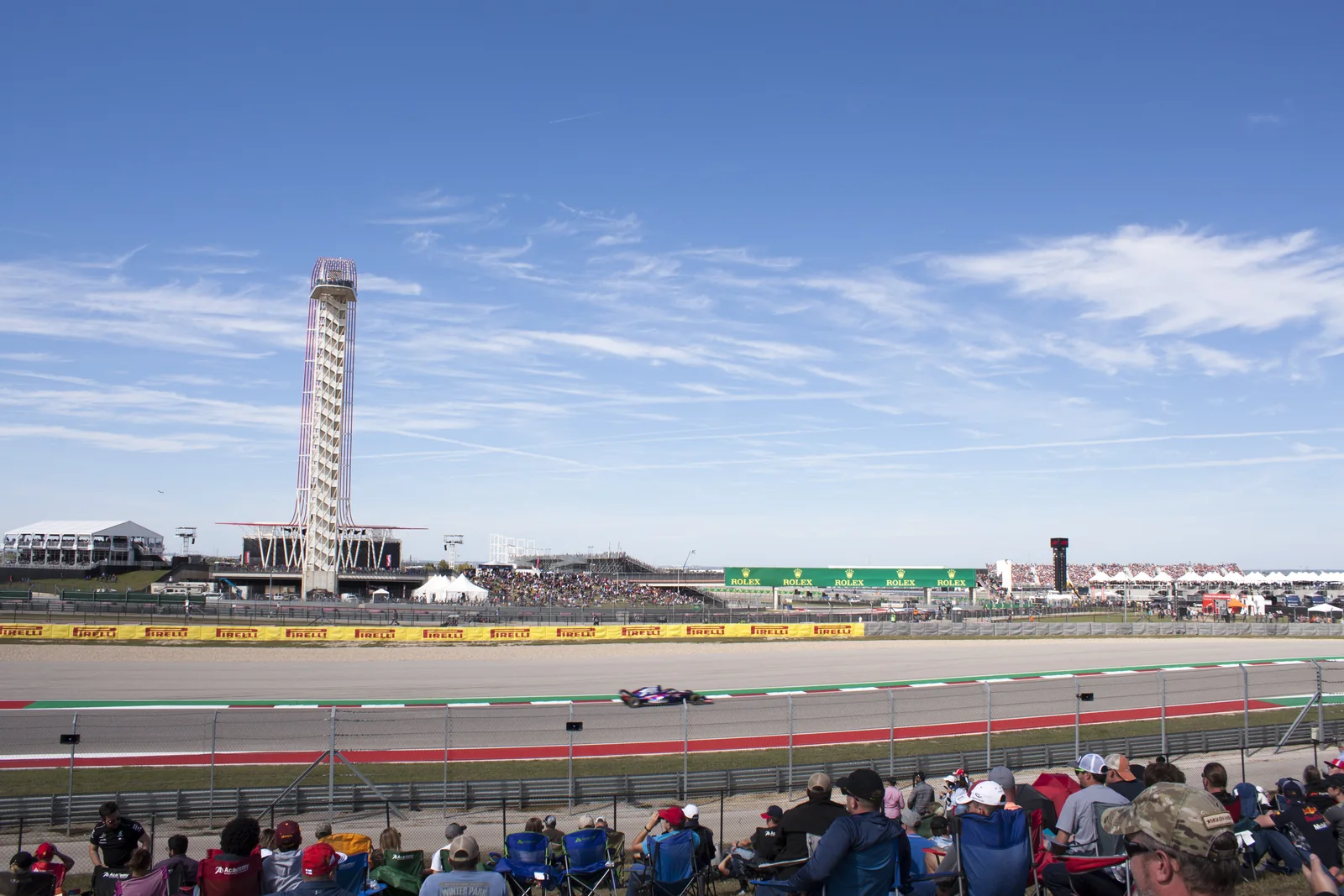
Formula 1 visits the United States three times in 2026, but “the U.S. race” no longer describes one kind of weekend. Miami is a stadium-centered Sprint event, Austin is the established permanent-circuit Grand Prix, and Las Vegas puts a Saturday night race on city streets beside the Strip.
The dates are Miami, 1–3 May; Austin, 23–25 October; and Las Vegas, 19–21 November. This guide was checked on 31 August 2026, which creates an important distinction: the 2026 Miami Grand Prix has already taken place, while the United States Grand Prix at COTA and Las Vegas Grand Prix remain ahead. Miami ticket information is therefore useful as a record and future planning reference, not as a promise that a 2026 product can still be bought.
Choosing among the three requires more than comparing a “from” price. A campus pass in Miami, a general-admission hillside at Circuit of The Americas and a zone-specific Las Vegas ticket can include very different views, entertainment, walking and transport obligations. Session format matters too: Miami carried a Sprint, whereas Austin and Las Vegas use conventional Grand Prix weekends in 2026.
The sections below first lock down the schedule, then examine each venue’s ticket model and logistics. A final comparison turns those facts into a choice by fan type, so the most expensive event does not automatically become the “best” one.
Calendar overview
2026 F1 USA schedule at a glance
The three events are separated by months, not grouped into one American swing. Miami came early in the season; Austin and Las Vegas sit in the final phase. The round numbers below follow Formula 1’s live calendar checked on 31 August 2026, after changes from the originally announced calendar.
Three USA race dates
| Event | Local dates | Venue | Current calendar position | Status on Aug. 31 |
|---|---|---|---|---|
| Miami Grand Prix | May 1–3 | Miami International Autodrome | Round 4 | Completed |
| United States Grand Prix | Oct. 23–25 | Circuit of The Americas, Austin | Round 18 | Upcoming |
| Las Vegas Grand Prix | Nov. 19–21 | Las Vegas Strip Circuit | Round 21 | Upcoming |
Las Vegas dates are event-local. A time-zone-aware race hub may show sessions on the following UTC date.
Different weekend formats change the value of each day
Miami was the Sprint weekend. Friday carried practice and Sprint Qualifying; Saturday combined the Sprint with Grand Prix qualifying; Sunday held the race. That compressed format gave Friday and Saturday more competitive meaning, but it also left teams less conventional practice time before parc fermé decisions.
Austin uses the conventional format in 2026: two Friday practices, Saturday practice and qualifying, then Sunday’s race. Fans who enjoy watching teams build through setup work get three practice sessions, while a Saturday-only buyer receives qualifying but no Sprint.
Las Vegas is also non-Sprint, but its local week runs Thursday through Saturday. Practice begins Thursday night, qualifying follows Friday night, and the Grand Prix takes place Saturday night. A traveler who assumes every race ends Sunday could book the wrong arrival or departure dates.
May 1–3 · Completed
Miami: the stadium-campus Sprint weekend
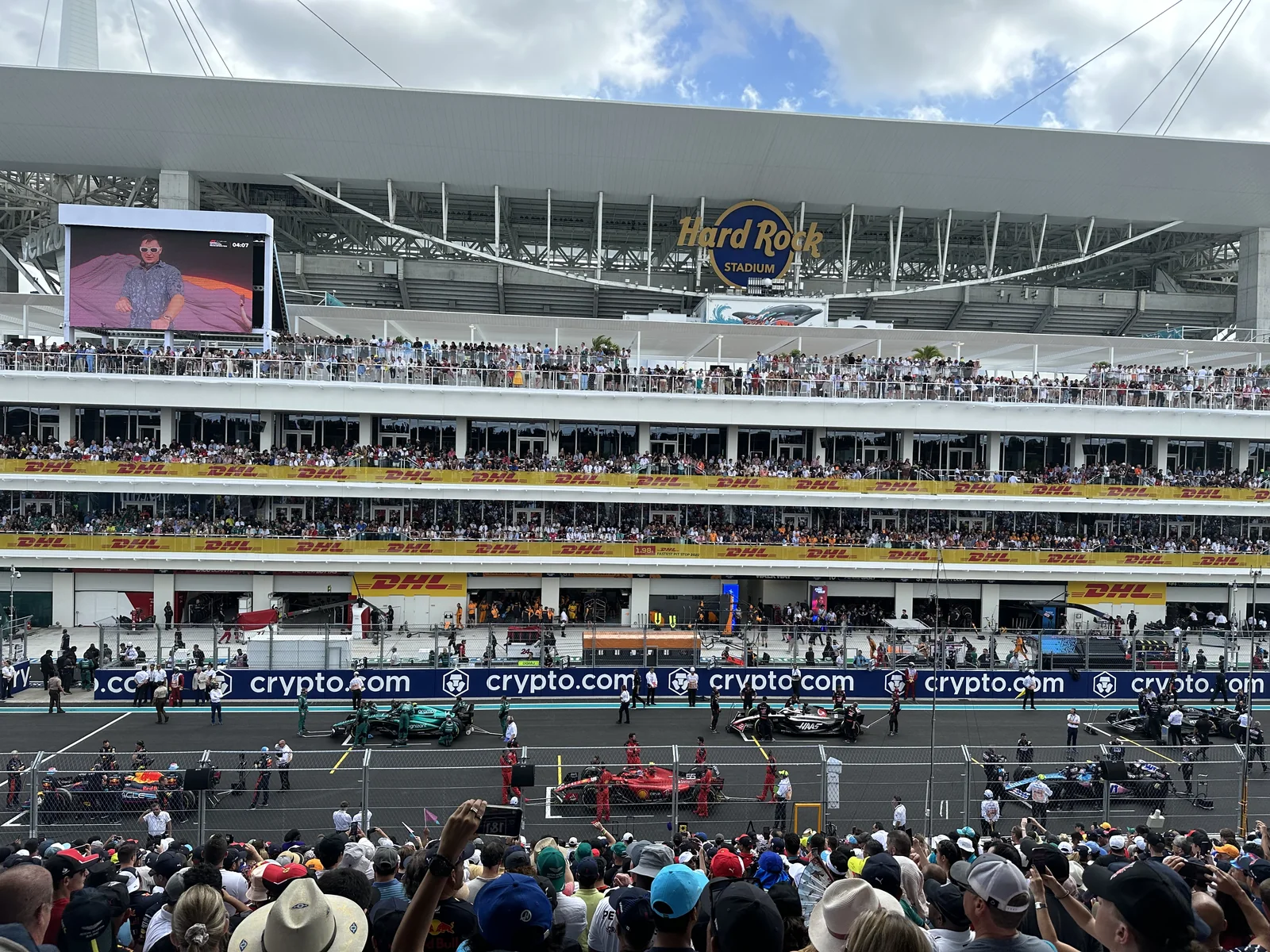
Miami is the most campus-like of the three American events. The temporary circuit wraps around Hard Rock Stadium in Miami Gardens, so the spectator product combines grandstands, roaming areas, food, music and stadium infrastructure inside one event footprint rather than placing fans on a remote permanent road course.
Track and 2026 result context
The Miami International Autodrome is a 5.412 km, 19-corner temporary layout with three long straights and a 57-lap Grand Prix distance. Its stadium setting is unusual: Formula 1 notes that spectators can move around the Hard Rock Stadium’s upper deck and see the complete circuit, while seats near Turns 1, 11 and 17 target major braking zones.
The 2026 weekend is now part of the record. Lando Norris won the 19-lap Sprint, then Kimi Antonelli won Sunday’s Grand Prix from Norris and Oscar Piastri. That matters to a ticket comparison because Miami supplied competitive track action on all three days: Sprint Qualifying Friday, a Sprint and Grand Prix qualifying Saturday, and the race Sunday. A three-day ticket was not merely paying for two practice days before the main event.
For session details and completed results, use the 2026 Miami Grand Prix guide. Any sales page now belongs to archival review or future-year planning.
Ticket types: campus freedom or a fixed view
Miami’s official structure centered on three families: a multi-day Campus Pass for general-admission areas, reserved grandstands, and hospitality or experience products. Campus access suited fans who wanted to move, sample different areas and treat the event as a festival. It did not guarantee the same rail position or a numbered chair when a headline session began.
Grandstands traded that mobility for certainty. Start/Finish prioritizes the grid, pits and finish; Turn 1 targets the opening braking zone; Turn 18 sits near another major stop at the end of a long straight. Marina and Beach locations mix a recognizable campus environment with their track angle. The useful question is not “Which name sounds premium?” but “Which one recurring moment would I pay to see from the same place?”
The promoter now labels 2026 sold out and has moved to 2027 sales. This guide therefore does not borrow a 2027 deposit, benefit or checkout price and present it as a 2026 ticket fact. Buyers researching a future Miami visit should rebuild the comparison from the new year’s exact product page.
Transport and weather belong in the ticket decision
Hard Rock Stadium is in Miami Gardens, not beside South Beach or downtown Miami. The 2026 plan included remote-hub shuttles from locations such as Golden Glades, Hard Rock Casino and Broward College South Campus, with Brightline/Aventura connections also relevant. Operations change by year, so a future hotel should be judged by its route to an official shuttle or parking product—not by the word “Miami” in the address.
Heat and rain are practical costs. National Weather Service data for May 2026 recorded an average high of 89.4°F and average low of 75.5°F; race day also recorded meaningful rainfall. Shade breaks, permitted water, breathable clothing and a compliant rain layer can determine how much of a roaming pass a spectator can actually use.

October 23–25 · Upcoming
Austin: the traditional U.S. Grand Prix at COTA
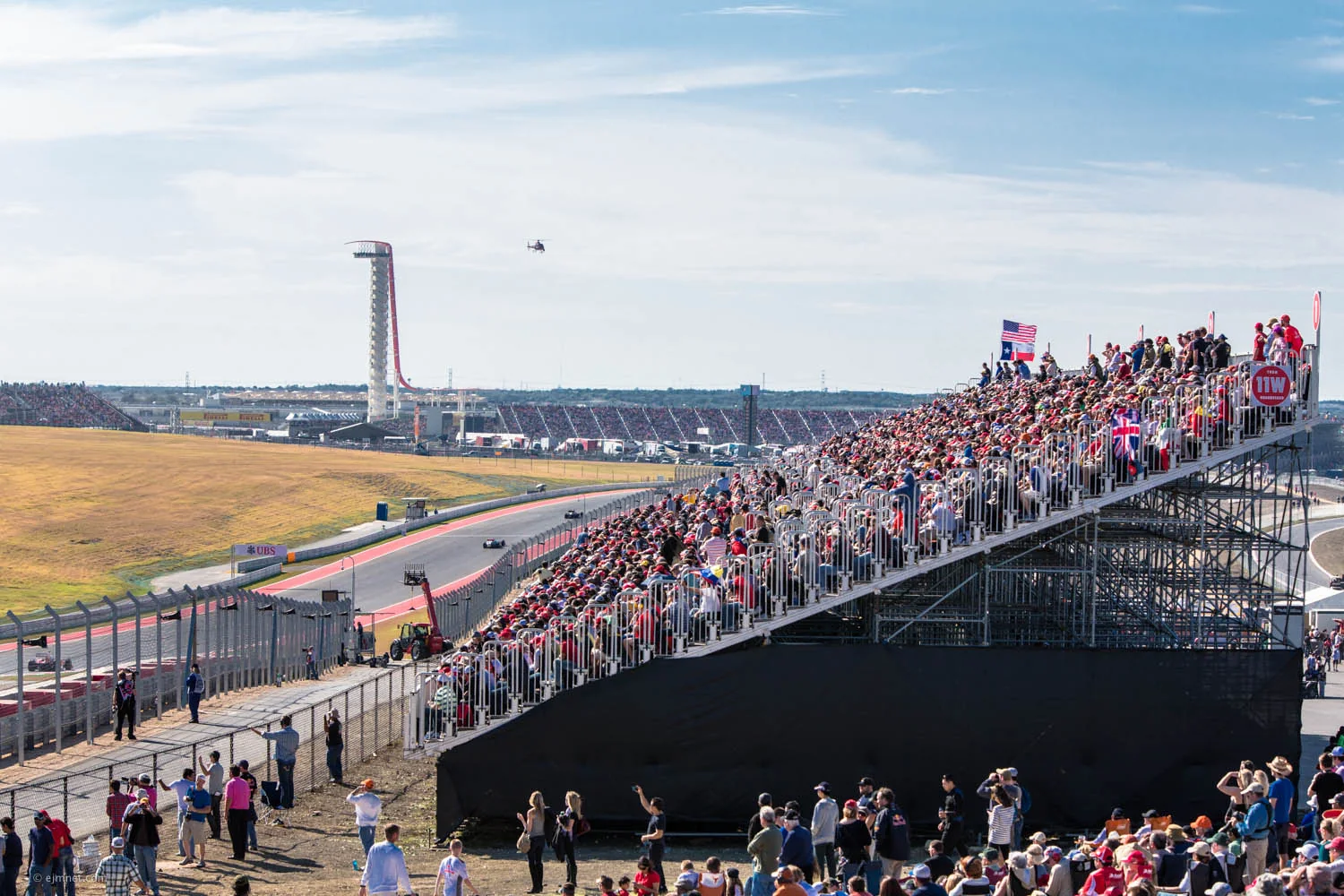
Austin is the choice that feels most like a classic full-day circuit visit. Circuit of The Americas is a large permanent venue southeast of the city, with elevation, open hillsides, distant parking fields and multiple viewing zones. The race and the downtown trip are connected by the event, but they are not walkable parts of one city-center campus.
Track and weekend: elevation creates real viewing choices
COTA is 5.513 km with 20 turns, and Sunday’s Grand Prix runs 56 laps. Cars climb sharply into the wide Turn 1 hairpin, change direction rapidly through Turns 3–6, reach high speed on the back straight and brake hard for Turn 12 before the linked stadium section. Those features spread the most interesting moments around the site.
The 2026 event uses FP1 and FP2 Friday, FP3 and qualifying Saturday, and the race Sunday. Compared with Miami, Austin buyers give up a Sprint but gain two additional practice sessions. That is valuable for a technically minded fan watching setup development; it is less valuable to a single-day buyer who wants only competitive sessions.
The live 2026 United States Grand Prix schedule should decide flight timing, because concert programming extends Friday and Saturday beyond the track timetable.
Tickets and views: GA value versus corner certainty
The current three-day Grounds Pass is US$450 including fees. It unlocks general-admission areas and the ability to roam, not a numbered seat. COTA’s elevation can make GA rewarding, but the best experience requires walking, weather tolerance and early positioning for major sessions.
Reserved starting prices show the step-up: Turn 9 lower at US$604.50+, Turn 12 lower at US$661.50+, Turn 4 lower at US$712.50+, Turn 15 lower at US$1,001.50+, Turn 1 lower at US$1,206.50+, and Main Grandstand trackside at US$1,309.50+. These were checked on 31 August and can move with inventory.
Turn 1
Start, steep braking and broad elevation view.
Turn 4
High-speed direction changes and car placement.
Turn 12
Heavy braking after the back straight.
Turn 15
Several linked stadium-sector corners.
Main
Grid, pits, finish and race ceremony.
GA
Lowest three-day entry, flexible but position-dependent.
Friday, Saturday and Sunday starting prices also exist for single-day buyers. Compare the session and included concert lawn access rather than assuming Sunday must cost more than Saturday; current listed starting points are US$109.13+ Friday, US$271.60+ Saturday and US$249+ Sunday.
Shuttles, parking and the city are a second purchase
A downtown hotel does not solve COTA access by itself. Current round-trip shuttle starting prices are US$49+ from Waterloo Park and US$34+ from Travis County Expo Center. On-site vehicles need a pre-purchased COTA parking pass, while rideshare uses the McAngus area because COTA Boulevard is restricted during race weekend.
Match transport to the seat. A Turn 1 buyer and a Turn 12 buyer may prefer different lots, and saving a few dollars on parking can create a long post-race walk across the campus. If nightlife is important, a downtown shuttle can be worth more than a cheaper remote hotel plus uncertain rideshare.

Race 3 · November 19–21
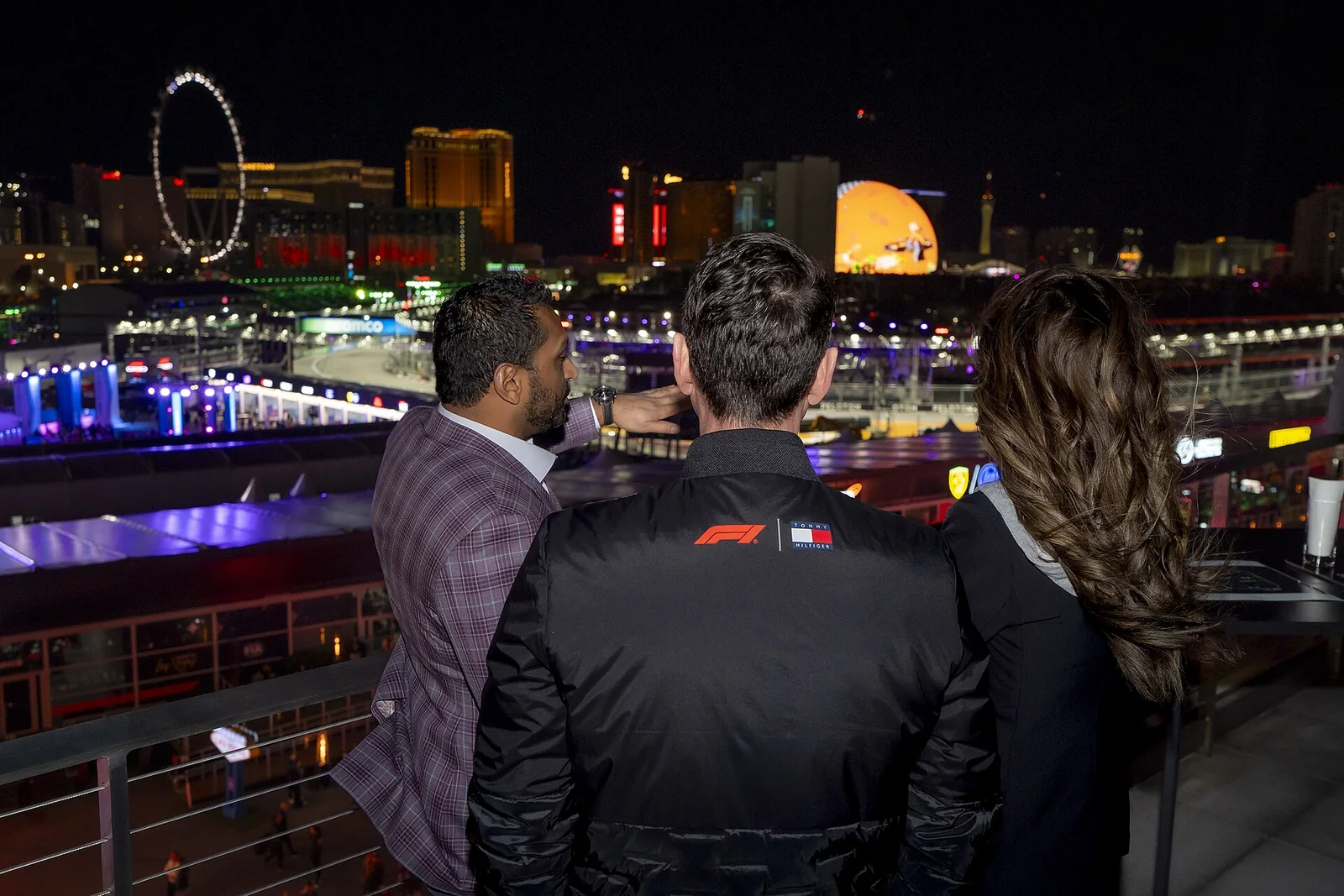
Las Vegas: a Saturday night race on the Strip
Las Vegas is the outlier even before a car leaves the garage. The event operates on a local Thursday-to-Saturday timetable, the circuit occupies public roads around the Strip, and the race starts under the lights on Saturday night. That makes it attractive for a short city break, but it also makes the ticket zone and hotel location unusually important. Check the live 2026 Las Vegas Grand Prix page before travel, because session times displayed online can be converted to the viewer's time zone.
Las Vegas schedule and circuit
In event-local terms, Formula 1 plans practice one and practice two for Thursday, practice three and qualifying for Friday, and the Grand Prix for Saturday, November 21. It is a conventional race weekend rather than a Sprint: the unusual part is the day pattern, not the sporting format. International viewers can see Formula 1 pages label the race as Sunday after time-zone conversion, so use “track time” when booking a Saturday-night activity or flight.
Circuit
6.201 km
17-turn street layout
Race
50 laps
309.958 km total
Main event
Saturday
Night race, local time
The current Strip circuit joined the championship in 2023. Its long, fast sections place the cars beside landmarks including the Bellagio, Caesars Palace and the Venetian, but the spectator experience is not one continuous public promenade. Barriers, bridges, controlled gates and ticketed fan zones shape what a holder can reach. Buy for the view and zone you actually want, not simply for the shortest map distance from the Strip.
Las Vegas tickets, zones and packages
As checked on August 31, the promoter lists T-Mobile General Admission single-day tickets from US$81 including taxes and fees. GA is standing room, with first-come viewing platforms and food and drink sold separately. The earlier US$50 Flamingo single-day allocation is marked sold out, so it is not a realistic current baseline. Single-day assigned grandstands begin at US$102 and selected hospitality begins at US$382, also including taxes and fees.
Read the date attached to every “from” price
The published entry prices above are Thursday starting points. In the promoter's single-day release, Thursday grandstands ranged from US$102 for West Harmon or Heineken seating to US$206 for Heineken Silver Main, while premium products climbed sharply.
A Saturday race ticket is not equivalent to a Thursday practice ticket. Compare the same day, exact seat or standing zone, access rights, food-and-drink inclusion, and taxes before deciding one Las Vegas listing is cheaper than another.
Zone design changed for 2026: West Harmon, East Harmon and the Koval Zone by Heineken are connected, and the Turn 3 Grandstand moved to the west side of Turn 3. Other products remain experience-specific. A three-day Lewis Hamilton Grandstand Package was introduced from US$1,012 including taxes and fees, while hospitality can bundle a seat or elevated view with inclusive catering. Read the product page carefully; a famous venue name does not by itself define the sightline or inclusions.
Walking, hotels and November weather
Walking is often the simplest last-mile option, yet a hotel that looks close on a normal map can sit on the wrong side of a closure or far from the assigned entrance. The promoter's currently available A–Z guide still describes the previous event, so treat its Monorail and walking advice as the operating model, not a guaranteed 2026 route. Once the 2026 event map is released, load the ticket into the official Las Vegas GP app and plan from the named zone, gate and pedestrian bridge.
Las Vegas suits a fan who wants racing woven into a nightlife trip and is willing to plan around a specific zone. Its urban setting can reduce the need for a long circuit shuttle, but it does not eliminate walking, controlled crossings or late-night crowds. Choose the ticket first, match the hotel and transport plan to that zone second, and leave the Saturday night after-race schedule flexible.
.jpg)
Decision guide
Miami vs Austin vs Las Vegas: which race fits you?
There is no single best U.S. Formula 1 race. Each event sells a different kind of weekend: Miami is a stadium-campus festival with a Sprint, Austin is a full-size circuit experience with open hillsides and concerts, and Las Vegas is a night event divided into urban fan zones. The right choice starts with how you want to spend the hours between sessions, not with the cheapest advertised number.
| Race | Editorial best fit | Main trade-off | Plan first |
|---|---|---|---|
| Miami | Sprint fans who like roaming a polished stadium campus | Heat, showers and remote-event transport | Campus area versus a reserved grandstand |
| Austin | Traditional circuit fans, GA explorers and concert-goers | Long outdoor days and travel from central Austin | Sightline plus shuttle or parking |
| Las Vegas | Night-race fans combining Formula 1 with a Strip trip | Zone restrictions, closures and large day-price swings | Exact zone, gate and hotel relationship |
Best race by fan type
Choose Miami if the extra competitive Sprint session and a compact entertainment campus matter more than wandering a permanent circuit. The Campus Pass model rewards movement, while a reserved seat is better for a predictable view. Remember that the May 2026 race has already happened; this is useful comparison context, not a claim that 2026 Miami inventory remains available.
Choose Austin if you picture a classic race-day landscape: elevation, grass viewing banks, multiple corner choices and a purpose-built track outside the city. Its three-day GA pass rewards fans willing to arrive early and walk for a sightline; reserved seating rewards certainty. Choose Las Vegas if the Saturday-night race and city entertainment are central to the trip. It offers the shortest conceptual distance between hotel nightlife and F1, but a ticket's assigned zone can matter more than straight-line hotel distance.
Ticket value is not face value
Austin's current US$450 three-day GA price includes fees and its weekend ticket includes concert-lawn access, but transport remains a separate cost: official shuttles currently start at US$34+ or US$49+ depending on origin. Las Vegas advertises T-Mobile single-day GA from US$81 inclusive of taxes and fees, yet that is a day-specific standing product, not a three-day reserved seat. Miami's promoter now displays 2027 sales after the completed 2026 race, so a clean archived 2026 checkout comparison is not available.
Use a trip-total comparison
Put every option on the same row: number of days, assigned seat or standing access, fees, transport, likely hotel rate, food inclusion and refund counterparty. A cheap practice-day ticket can be excellent value, but it does not answer the same question as a Sunday race seat or a three-day pass.
One trip or multiple races?
The calendar rules out one neat three-race U.S. tour. Miami ran May 1–3, nearly six months before Austin on October 23–25. Las Vegas follows on November 19–21, four weekends after Austin, with Mexico City and São Paulo Grands Prix between them. A fan attending Austin and Las Vegas will normally plan two separate trips; staying throughout would mean a long, expensive itinerary rather than a domestic double-header.
No official cross-event pass links these races. Buy each event from its own authorized route and protect each booking independently. If you can attend only one of the two remaining 2026 U.S. races, prioritize the experience you cannot recreate at home: COTA's circuit-and-concert weekend or Las Vegas's zone-based Saturday night spectacle.
Buyer protection
How to buy 2026 U.S. F1 tickets safely
Start from the event promoter or Formula 1, not from a search ad, social-media message or screenshot of a ticket. A copied logo proves nothing, and a mobile-ticket screenshot may not transfer admission. Formula 1 says genuine tickets and hospitality are sold through Formula1.com, race promoters and their appointed agents. Follow the checkout path from one of those known domains, then keep the order confirmation and the terms that applied when you paid.
Use the official ticket route for each race
Miami
The official promoter now marks 2026 complete and directs attention to 2027. A fresh “primary 2026 Miami ticket” offer after May 3 is a date mismatch, not late inventory.
Austin
Begin at COTA's 2026 ticket hub. Its terms identify Circuit of The Americas LLC as promoter and define whether the license is for a seat or standing location.
Las Vegas
Begin at the Las Vegas GP ticket hub and follow its product checkout. Additional product terms may govern even when the promoter website starts the transaction.
Formula 1's own ticket store is another official starting point, but “official” does not mean every seller has identical inventory, customer service or cancellation terms. Identify the company named on the final checkout and receipt. That company—not a search engine, influencer or this guide—is the buyer's contractual counterparty.
Compare like for like before checkout
Read the cart line by line. Confirm the event year, local date, day count, ticket class, and exact grandstand section/row/seat or GA zone. Then check fan-zone access, included concerts or catering, fees, currency, mobile-delivery method, parking or shuttle needs, accessibility rules and the policy for a postponed or changed event. Save the terms because inventory pages and starting prices can change after purchase.
Stop if the seller asks you to leave the documented checkout
Do not send a password, one-time code or account login through direct messages. Treat pressure to pay by an irreversible method, an unexplained hostname change, or a price detached from a named day and zone as a reason to pause and independently reopen the promoter site.
General admission and grandstand tickets are not interchangeable. Las Vegas GA uses first-come standing areas; its grandstands provide assigned seating. At COTA, a GA grounds pass lets the holder choose among eligible viewing areas, while a reserved ticket fixes the primary seat. Likewise, “from” and “+” figures are starting points. Only the last checkout screen reveals the exact amount and seller for the selected inventory.
Final U.S. race checklist
- 1.Confirm the race and local dates against the current 2026 F1 schedule.
- 2.Open the promoter route from a typed or saved official domain; do not trust a sponsored result by appearance alone.
- 3.Match the checkout to the exact day, seat or standing zone and included benefits you priced.
- 4.Budget transport and hotel logistics before the cancellation deadline, not after the ticket arrives.
- 5.Store the receipt, terms and support contact; load the ticket only into the recommended account or app.
- 6.Recheck session times and the event map during race week through the live weekend schedule and promoter app.
For 2026, the actionable U.S. choices remaining as of August 31 are Austin and Las Vegas. Miami is a completed result, not an open ticket sale. That simple status check is the first and strongest protection against buying the wrong year.
Loading comments…