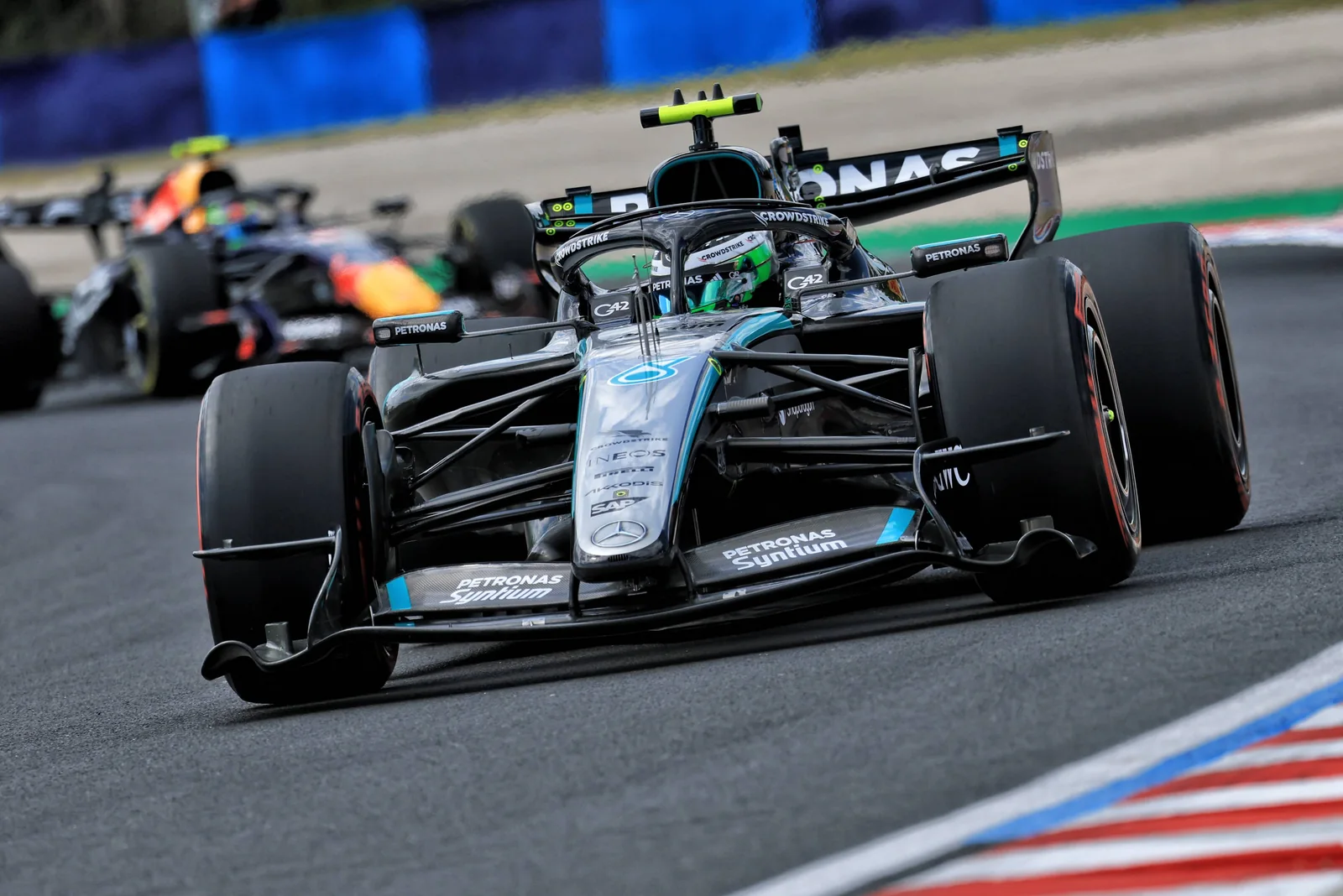
Ten unfamiliar names are expected on the Mexico City Grand Prix's opening-practice timing screen on October 30, 2026. Max Verstappen, Lando Norris and George Russell are among the regular drivers handing over their cars. The explanation is the season's mandatory inexperienced-driver running, combined with teams choosing the same practical opportunity to complete it.
These are announced FP1 substitutions, not ten changes to Sunday's race lineup. Ferrari is the only team scheduled to keep both regular drivers in the opening session. The replacement list below reflects the announcements available before FP1; a late medical, operational or administrative change would still need checking against the session entry and official classification.
The latest FIA wording also makes the familiar phrase “rookie FP1 rule” slightly misleading. The current requirement permits FP1 or FP2, and eligibility depends on Formula 1 race experience rather than age or a driver's junior-series label. Knowing those details makes the unusual session much easier to follow. Check the Mexico weekend schedule alongside the names, then judge each driver against the work their team actually needs.
The 10 announced Mexico FP1 replacements
The announced pairings are collected below. Read the final column as the regular driver sitting out this particular session. It does not mean the substitute has taken over that driver's contract, race entry or championship points. Sky Sports' October 28 list matches the ten-team pattern described in the subsequent reports, with Alpine and Audi separately confirming their own debutants.
| Team | FP1 driver | Regular driver replaced |
|---|---|---|
| Mercedes | Frederik Vesti | George Russell |
| Red Bull | Ayumu Iwasa | Max Verstappen |
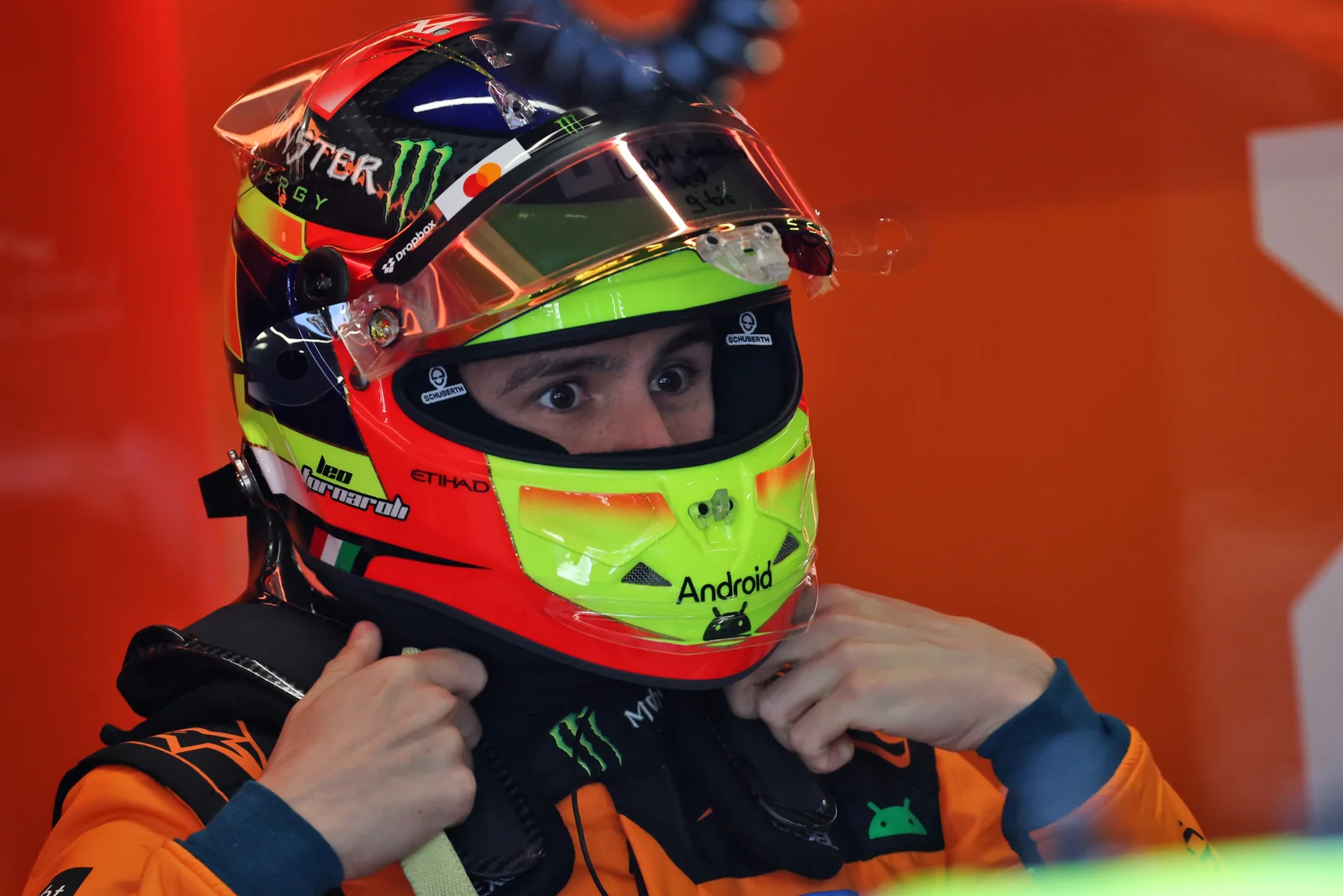
| McLaren | Leonardo Fornaroli | Lando Norris |
| Racing Bulls | Nikola Tsolov | Liam Lawson |
| Alpine | Gabriele Minì | Franco Colapinto |
| Haas | Ryo Hirakawa | Esteban Ocon |
| Audi | Freddie Slater | Gabriel Bortoleto |
| Williams | Luke Browning | Alex Albon |
| Aston Martin | Jak Crawford | Lance Stroll |
| Cadillac | Colton Herta | Valtteri Bottas |
For viewers, the important habit is to match the name to the team before interpreting a lap time. A different name beside a familiar car is expected here. Watching a reserve driver complete an installation lap while the other car starts a longer run does not, by itself, identify a problem. The two sides of a garage can divide their work even when both regular drivers are present; this session makes that difference more visible.
Ferrari keeps both regular drivers
Ferrari is the exception in the announced list, retaining both regular drivers while each of the other ten teams substitutes one. With 11 teams and 22 cars, ten replacements are a large share of the field, but not an entirely separate rookie session. Experienced race drivers and development drivers share the same track, flags and traffic.
That gives Ferrari a different Friday starting point, not a guaranteed advantage on Saturday. Its drivers can provide their own immediate feedback from FP1, whereas a returning rival must absorb someone else's work before driving. Whether that matters depends on useful running, changes in conditions and the quality of the handover. A clean, representative program is more valuable than simply having the usual name in the car.
Nor does Ferrari's choice establish the state of its full-season obligation. The Mexico list is a session announcement, not a complete compliance ledger. The broader guide to F1 practice programs explains why collecting the right evidence can matter more than leading the classification.
What the latest FIA rookie rule actually requires
Article B1.7.3 in the FIA's 2026 Sporting Regulations, Issue 09 dated October 1, requires an eligible driver in FP1 or FP2 at two competitions for each entered car. The popular FP1 shorthand describes the session teams commonly choose, including Mexico, but it is narrower than the current text.
Two sessions belong to each car
The requirement attaches to each car. For a two-car team, that means four required appearances across the two sides of the garage, rather than four outings that can all be assigned to one side. Across 22 entered cars, the arithmetic produces 44 required appearances. That is a minimum allocation, not a limit on how often a team may develop a driver.
Imagine a team has used the same junior three times in its first car and once in its second. The total reaches four, but that does not automatically settle the obligation: the second car still needs its second qualifying occasion. Conversely, seeing a particular reserve return repeatedly is not evidence that the team has forgotten the rule. A recognizable driver can work through several assignments while the car-by-car record tells the compliance story.
The nominated driver must take that car out of the pit lane at least once in the nominated session, and no other driver may drive it out during that session. The rule also specifies advance notification and use of the replaced driver's allocated power unit and tires. A token name on an announcement is therefore different from actually taking part.
Rookie eligibility is based on race experience
The relevant experience threshold is participation in no more than two Formula 1 Championship races. It is not an age cutoff, nor does a championship won in another category automatically remove eligibility. The driver must hold a Super Licence or a Free Practice Super Licence. Practice eligibility and permission to enter a Grand Prix remain separate questions.
This distinction changes how to read the field. A reserve with years of simulator work can qualify for the requirement, while a young driver with sufficient Grand Prix experience may not. "Rookie" here is a regulatory category; it is not a complete assessment of ability. That is why the range of backgrounds on the Mexico list is wider than the phrase "ten youngsters" suggests, and why a practice announcement alone cannot establish readiness for a full race seat.
Why Mexico is the preferred weekend
Mexico offers a conventional weekend: two practice sessions on Friday and another before qualifying on Saturday. A race driver handing over FP1 therefore still has FP2 and FP3 available. On a Sprint weekend, surrendering the only practice session creates a much sharper preparation compromise. The regulation does not force ten teams to make the same Mexico choice; their announcements produce that concentration.
There is also a difference between learning a car and learning a temporary circuit condition. F1's official Mexico preview notes that the track is often dirty initially and gains grip as running accumulates. That makes an opening-session benchmark less representative of the eventual qualifying surface. A team can still gather useful operational information while allowing its regular driver to begin personal preparation after some of that early evolution.
However, calling Mexico FP1 expendable goes too far, particularly this year. Williams identifies the resurfaced sections' roughness and grip as major unknowns. New asphalt can change what a driver feels through braking and traction, and it makes historical assumptions less secure. The decision to use a rookie is a tradeoff between satisfying the requirement, creating development experience and preserving enough time to understand those changes.
Altitude adds another reason to value disciplined execution. At roughly 2,200 meters, the circuit gives teams unusual aerodynamic and cooling conditions. A newcomer must work inside the program rather than chase a headline lap before the systems and tires are ready. Learning where a warning appears or how the car responds through a sequence can be more useful to the garage than a purple sector assembled under different conditions from everyone else.
The practical interpretation is that Mexico is a manageable opportunity, not a low-risk driving school. The stadium section still requires precision, traffic still complicates preparation, and a stoppage can remove the very running that made a standard weekend attractive. Ten teams choosing the same session also means the public cannot judge the quality of each choice solely from its position on Friday's leaderboard. Check the remaining practice and qualifying times to see how much recovery time is actually available.
What the returning race drivers lose
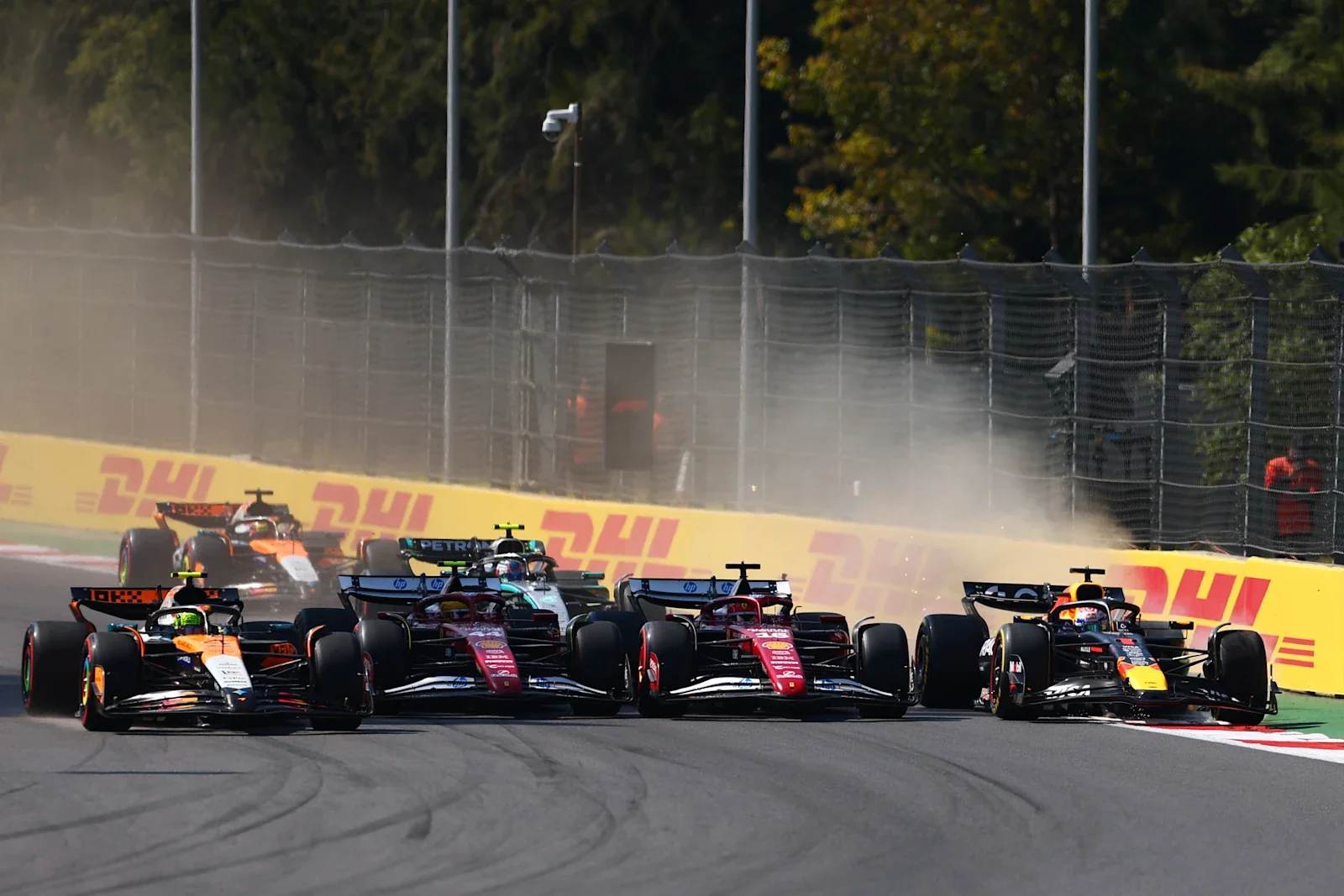
A regular driver loses personal laps, not every piece of information produced by the car. The engineers still receive information from the rookie's program, and the other team car remains available as another reference. The missing ingredient is the race driver's own experience of how those conditions feel and how confidently they can exploit them.
Consider a braking problem reported by the replacement driver. A useful handover distinguishes inconsistent grip, a car-balance complaint and an operating limitation. Those possibilities do not demand the same response. The returning driver needs enough context to avoid spending FP2 solving a problem that has already changed with the surface, or dismissing a warning that will recur with race fuel. That is an analytical example, not a claim about a problem any particular Mexico entrant has encountered.
Colapinto's comments in Alpine's preview make the intended sequence clear: Minì drives the opening session and he returns on Friday afternoon. Minì, meanwhile, describes providing data and feedback for the team's weekend as his objective. The assignment has a practical purpose beyond giving a young driver's name some television exposure.
The FP2 handover matters more than the headline
The first meaningful question in FP2 is whether the returning driver can move promptly into useful running. An orderly transition suggests the garage has translated the opening session into a workable baseline. Repeated setup changes, missed runs or unresolved operational issues would deserve attention, although television pictures alone cannot establish their cause.
It is tempting to describe the missing hour as a fixed lap-time penalty. There is no honest conversion. Some drivers may regain confidence quickly; others may value extra laps more when the circuit is unfamiliar or the car behaves unexpectedly. A later red flag can also magnify the cost by reducing their remaining opportunity. Judge the actual preparation they complete rather than assigning a universal disadvantage before they leave the garage.
For the rookie, returning an undamaged, understood car with clear feedback can therefore be a strong session even without an eye-catching position. For the regular driver, the objective is to turn that work into qualifying and race preparation efficiently. Those two tasks are connected, but they are not identical.
How to judge the rookies without trusting the leaderboard
Separate a debut from a repeat appearance
The same regulatory label covers different starting points. Audi confirms Slater's first Grand Prix weekend appearance ahead of his planned move to Formula 2 in 2027. Alpine confirms Minì's weekend debut while noting that he has already driven older F1 machinery in its Testing Previous Cars program. Vesti, Iwasa and Fornaroli appeared in F1's official Barcelona rookie-practice preview months earlier.
A debut therefore does not necessarily mean a driver's first time in any Formula 1 car, and a repeat appearance does not mean the driver has stopped learning. Older-car testing, simulator work and a current-car practice session answer different questions. The weekend environment adds live traffic, race-control instructions and a fixed timetable that cannot simply restart when an exercise goes wrong.
For a debutant, watch whether the session becomes progressively more orderly: clean preparation laps, prompt responses to instructions and sensible use of track space. For a returning driver, look for how efficiently they resume the job. These are useful public observations, not a claim to know the team's private grading system.
Read the run before the fastest lap
Start with the tire compound and the shape of the run. A single quick lap following several preparation laps belongs to a different exercise from a longer sequence that gradually slows. Traffic or a yellow flag can spoil the visible result without erasing everything the engineers learned. A pit visit may be a planned adjustment rather than a response to poor driving.
Fuel load and deployment settings are not fully exposed on the television timing screen. Do not invent them to excuse a favored rookie or dismiss another one. Instead, acknowledge the uncertainty and compare what is visible: when the lap occurred, whether the driver had a clear track, how much running was completed and whether the car returned to the garage normally.
The session results will establish the official order and recorded participation. They will not, by themselves, tell you who delivered the best development assignment. A strong Friday evaluation combines those results with the team's explanation and the rookie's feedback. It also leaves room for an unglamorous outcome: a useful session can finish with a modest time and very little drama.
What this does—and does not—say about future seats
Practice running is evidence of an opportunity to work with a team. It can strengthen a relationship and give engineers a better basis for assessing a driver. It is not equivalent to an announced race contract. Audi's program is a useful example: Slater's Mexico and Brazil appearances are confirmed development steps, while his announced next racing category is Formula 2 with Invicta in 2027.
Mattia Binotto has publicly discussed wanting Slater in an F1 seat in the future. That ambition should be read alongside the concrete next steps, not substituted for them. A team can believe strongly in a junior while still wanting more racing experience before considering a permanent promotion. The practice session contributes evidence to that process; it does not complete it.
Three separate questions are often compressed into one headline. Does the driver have the required permission to participate in this session? Have they shown the relevant performance and working qualities? Has a team actually offered and announced a race seat? A positive answer to the first question does not settle the other two. Nor would an impressive Friday automatically tell an outside viewer which contractual options are available.
That is particularly important with ten replacements appearing together. The unusual number creates an easy "next generation" story, but the entrants are not all competing for the same vacancy, arriving with the same experience or following the same career plan. The sensible approach is to appreciate a specific assignment before turning it into a grid prediction. Use the dated 2027 driver-lineup guide to distinguish confirmed announcements from open questions.
After FP1, look for the official participation record, each team's account of its completed work and the regular driver's FP2 transition. Then watch whether the next scheduled outing builds on the same objectives. Those observations will say more about Mexico's rookie session than declaring a winner from ten fastest laps recorded in ten different cars. The session matters because it is real F1 work under a live weekend timetable, with development value on one side of the garage and immediate race preparation on the other.
Loading comments…