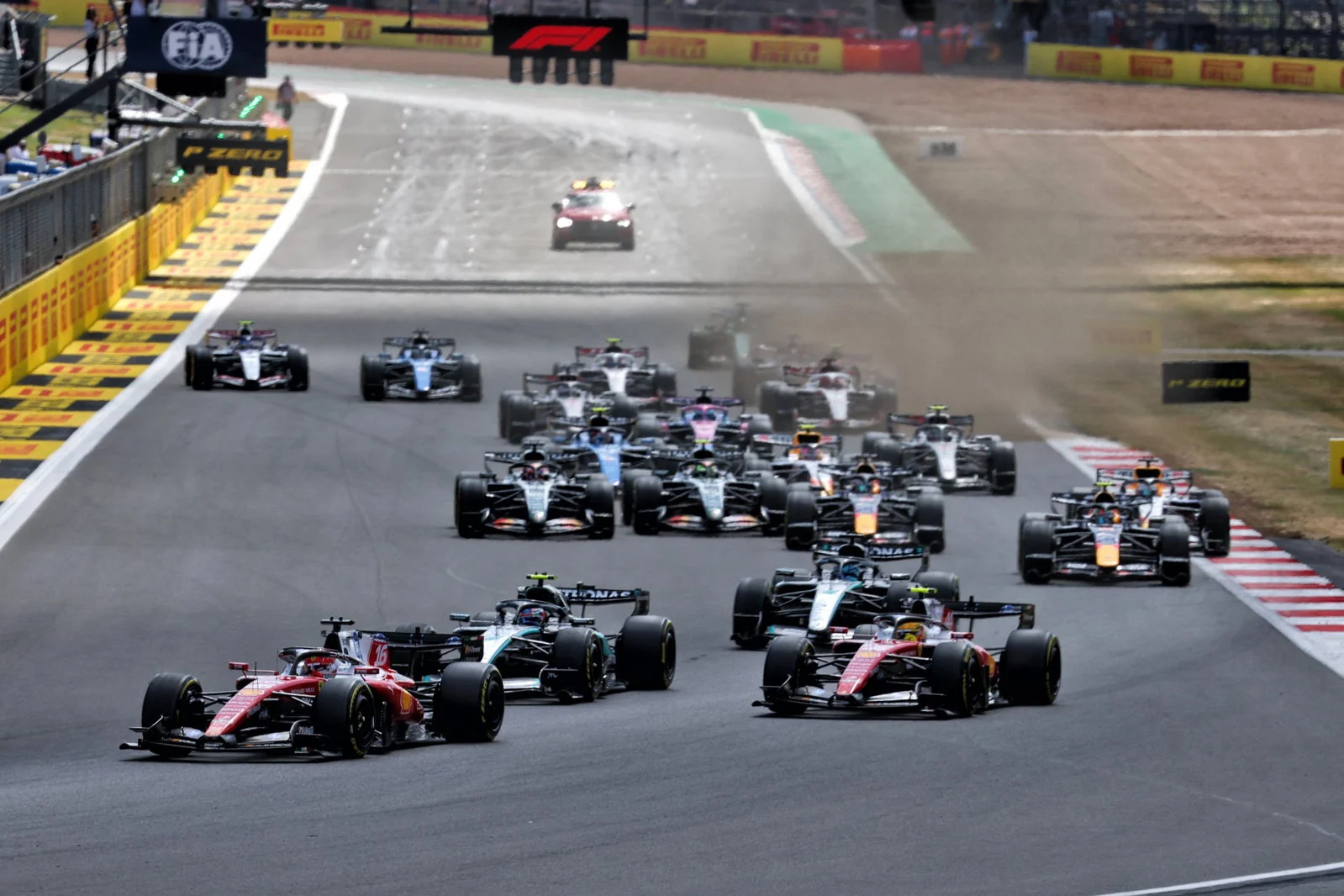
Formula 1's standard Grand Prix distance could fall from 305 kilometers to 290 kilometers in 2027. The Formula 1 Commission agreed to the change on September 21, 2026, and the FIA says that would remove roughly two or three laps from a typical race. The adjustment is connected to planned power-unit fuel-flow refinements. Crucially, it is not a final rule yet: the FIA says all regulatory changes still require World Motor Sport Council approval.
A 15-kilometer headline also needs context. F1 races are set in whole laps, so the actual distance removed varies by circuit, and Monaco already runs under a separate shorter-distance exception. Here is what the Commission agreed, why the fuel question matters, how to calculate plausible lap effects without inventing an official 2027 lap chart, and what a shorter race might change for strategy, viewing and ticket holders.
What the Formula 1 Commission actually approved
At its September 21, 2026 meeting in London, the Formula 1 Commission agreed to reduce the standard Grand Prix distance target from 305 km to 290 km for 2027. The FIA's statement describes the change as approximately two or three laps and links it to refinements in the power-unit regulations governing fuel flow. Formula 1's own summary repeats those numbers. That is the substantive decision behind headlines saying races are getting shorter.
Current standard
305 km
Commission proposal
290 km
Final rule status
WMSC approval pending
There is an important governance step between a Commission agreement and a binding regulation. The FIA explicitly says that all the regulatory changes remain subject to approval by the World Motor Sport Council. As of this article's September 30 check, the Commission's statement is the public basis for the distance figure; it is not a reason to print an unqualified 2027 lap count on every circuit page. The 2027 race calendar is a separate matter: its dates were approved earlier. Calendar approval does not itself ratify a later change to the sporting distance rule.
Even if the WMSC adopts the proposal as described, “15 km shorter” is shorthand for the movement of the standard distance threshold. An F1 Grand Prix is run in whole laps, not stopped exactly when an odometer reaches 290.000 km. The actual scheduled distance at a circuit will be a multiple of its measured lap length, and the number of laps removed can therefore vary. Monaco requires another qualification: it already has a special shorter Grand Prix distance under the current rules. The FIA statement does not publish a definitive 2027 Monaco lap count, so applying the general 305-to-290 arithmetic directly to Monaco would be misleading.
This matters for the race schedule because fans often see a number of laps beside a start time and treat it as fixed. A precise 2027 race guide should use the official event's final lap count after the regulations and circuit-specific documents are published. Until then, the honest description is a Commission-approved plan, a standard distance reduction of 15 km, and an expected cut of roughly two or three laps at typical venues.
Why the fuel-flow changes are tied to distance
The FIA did not present the distance proposal as a free-standing entertainment experiment. Its September 21 statement says the reduction is “in line with” refinements to the 2027 power-unit rules on fuel flow. That connection is the key to understanding the plan. A Grand Prix distance is part of the energy budget every car must manage. Change the rate at which the combustion side can use fuel, and the amount of distance covered on the same available fuel becomes a design and race-management question.
The 2027 power-unit refinement
The 2026 power-unit formula increased the role of electrical power, making deployment and harvesting visible parts of the racing conversation. Reporting by Motorsport.com says the planned 2027 adjustment would rebalance output toward the internal-combustion engine and raise permitted fuel flow. More combustion contribution can change the fuel required to complete a given racing distance. The FIA's official announcement confirms the fuel-flow link, but its short public statement does not supply a complete team-by-team fuel calculation or a final ratified regulation. For that reason, a claim that every car will use a specific extra number of kilograms would go beyond the evidence.
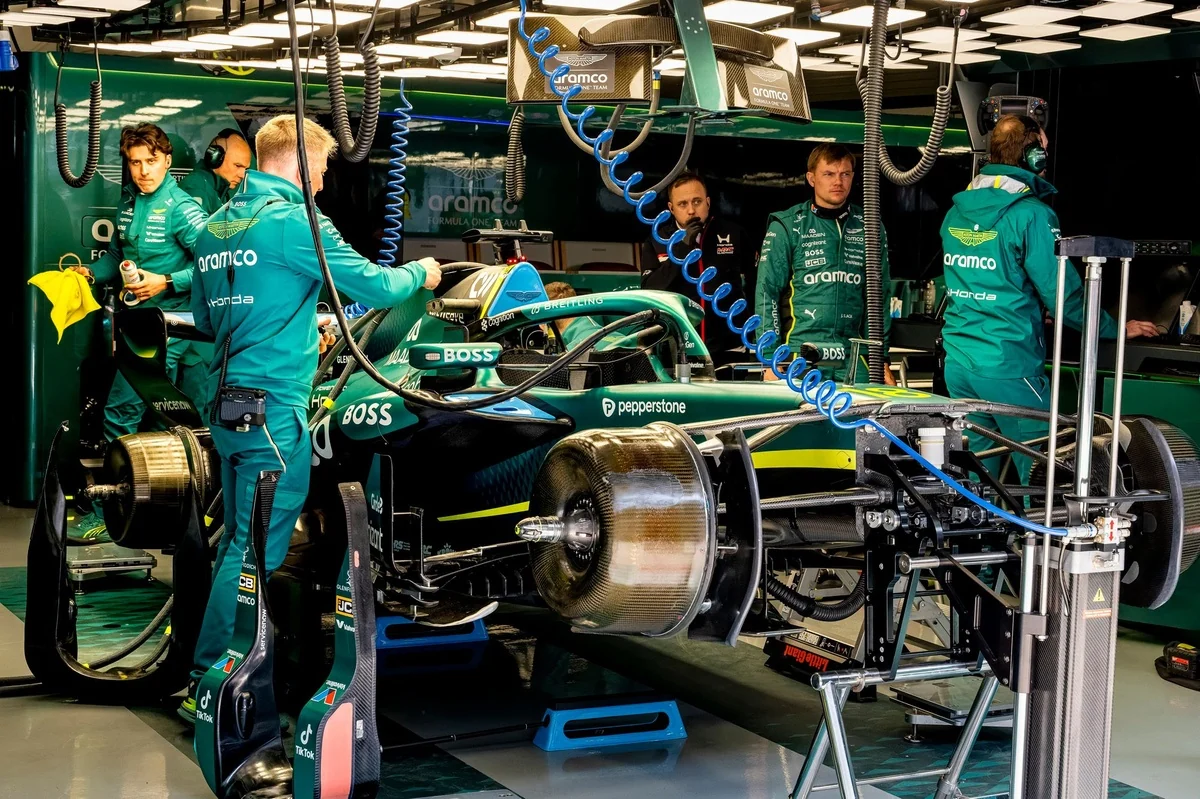
The interaction is not mysterious, even if the detailed engineering is. A car starts with a finite quantity of fuel under a set of rules and then spends it across the race distance. Race pace, weather, traffic, safety cars and how the driver uses the power unit influence that spend. If regulations permit more fuel flow in some operating conditions, one response is to increase capacity; another is to ask the car to cover less distance. Motorsport.com's account says the shorter-distance plan was preferred for 2027 in part to avoid larger fuel tanks and associated chassis changes. That is an explanation of the proposed package, not proof that every team faced the same packaging cost.
Shortening a race versus managing fuel differently
Without a distance adjustment, teams could theoretically compensate through more conservative fuel management, but that may ask drivers to back off earlier or more often. Reducing the target by 15 km can ease the requirement while preserving the intended power-unit behavior. This is the basic trade-off behind the Commission proposal. It should not be overstated: a 290 km rule would not abolish lift-and-coast, nor would it guarantee flat-out running at every venue. Each race has different opportunities to save fuel, and the teams' actual consumption maps are not public.
For fans, the on-track question is whether the revised combination produces more natural attacks or merely removes racing laps. That cannot be answered from a meeting statement. Drivers may still manage electrical deployment, tires and fuel while defending or overtaking. The first races under an approved final rule would provide evidence: compare lap-time patterns, radio messages, overtaking phases and late-race fuel-saving behavior with the prior season, while allowing for changes in car performance and weather. Until then, the FIA's confirmed rationale is fuel flow; any precise claim about the quality of the racing is a forecast.
How many laps would a shorter Grand Prix lose?
The FIA's broad estimate is two or three laps. That is plausible because most current circuits measure several kilometers per lap. Yet the exact number is a circuit calculation, not a uniform subtraction from every event. Under the present standard, Formula 1 says a Grand Prix runs the fewest complete laps needed to exceed 305 km. If the proposed threshold is approved at 290 km, the same whole-lap principle is expected to apply, subject to the final text and any special-case rule. Rounding up to a whole lap explains why the actual race distance can be a little more than either target.
The whole-lap calculation
Take the official published circuit lengths as a simple illustration. Bahrain is listed at 5.412 km per lap and its current standard race is 57 laps, or 308.238 km. At a threshold above 290 km, 53 laps would cover only 286.836 km, while 54 laps would cover 292.248 km. That makes 54 laps, three fewer, the arithmetic result if the layout, lap measurement and proposed rule all remain as assumed. Silverstone is listed at 5.891 km; its current 52-lap distance is 306.198 km. Forty-nine laps would cover 288.659 km, below 290, while 50 would cover 294.550 km. That would be 50 laps, two fewer under the same assumptions.
| Illustrative circuit | Published lap length | Current count | If >290 km applies |
|---|---|---|---|
| Bahrain | 5.412 km | 57 laps | 54 laps, conditional |
| Silverstone | 5.891 km | 52 laps | 50 laps, conditional |
These are transparent worked examples, not official 2027 race distances. The final sporting regulation, circuit homologation and event documents control the published lap count. They are also useful examples of why a nominal 15 km threshold change can remove 16.236 km at Bahrain or 11.782 km at Silverstone when translated into complete laps. A headline that every Grand Prix loses exactly 15.000 km would hide that mathematical step.
Monaco is already a special case
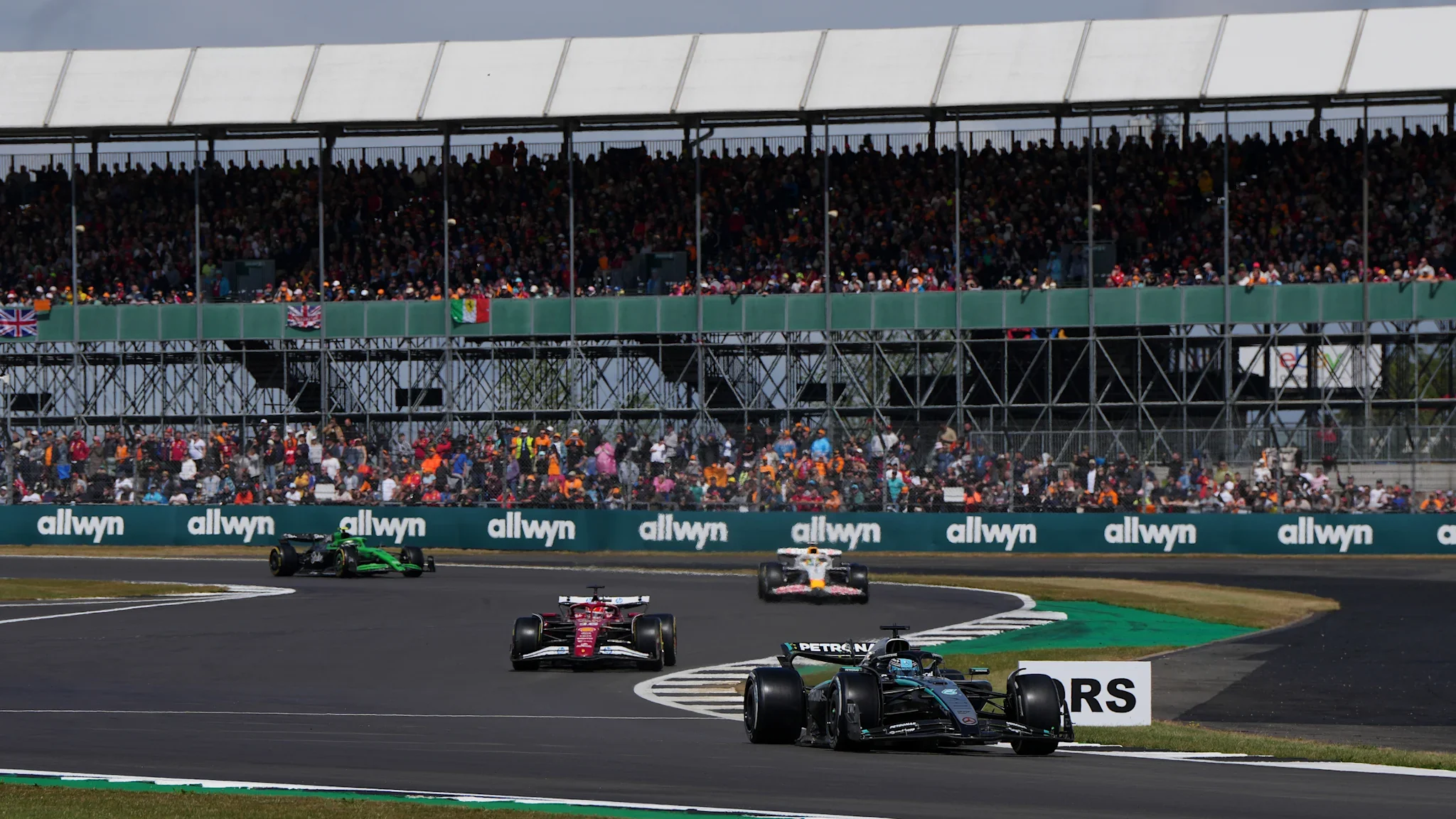
Monaco is the essential exception. Formula 1's own weekend guide says its Grand Prix uses the fewest laps needed to exceed 260 km, because the low-speed street circuit would produce a notably long race under the 305 km standard. The Monaco promoter's provisional 2027 program still lists 78 laps, but it also warns that its schedule can change. The September 21 FIA statement does not specify a replacement Monaco minimum or an approved 2027 lap total.
For that reason, subtracting 15 from Monaco's 260 km threshold and announcing a 245 km race would be an unsupported extrapolation. So would treating its provisional 78-lap entry as immune to a later regulation. The correct fan-facing answer today is that the standard proposal concerns 305 to 290 km, Monaco already differs, and the final Monaco race distance needs a separate official confirmation. That is a meaningful distinction for spectators comparing the total racing they expect at different venues.
What fewer laps might change in a race
Two or three fewer laps sound minor across a full Grand Prix, but strategy is often decided at the margin. A tire that is just short of lasting to the finish under one distance may be more comfortable under another. A driver who delays a stop has a shorter period in which to recover the lost time. A late Safety Car can leave fewer racing laps than teams expected. Those are mechanisms to watch, not promises that every 2027 race will need fewer stops or produce less overtaking. The actual answer depends on tire compounds, surface, weather, car behavior and the order in which drivers reach traffic.
Tire life, pit windows and track position
Formula 1's own strategy analysis defines an undercut as pitting first and using a faster lap on fresh tires to jump a rival who remains out. An overcut works in the opposite direction: stay out while the rival's new tire is slow to warm, then gain enough time before stopping. The 2021 Monaco example shows why the label alone is insufficient. Low degradation and difficult warmup altered the balance, and a driver's ability to rejoin in clear air mattered as much as nominal tire age. Shorter scheduled distance would alter the number of laps available to execute either move, but it would not change the fundamental dependence on pit-loss and traffic.
Consider a purely illustrative final stint. If a team believes a set of tires can maintain acceptable pace for 26 laps, a change from a 28-lap requirement to 25 could make that stint feasible. Yet a different compound or hotter race day could erase the apparent margin, and a slower out-lap could still make an undercut fail. Track position is especially valuable on circuits where passing is difficult. At others, fresher tires may be worth more because the driver can use them to overtake. No published 2027 tire data lets us forecast a specific circuit's optimal number of stops today.
The risks behind a late safety car
A shorter lap count could make a late interruption more consequential simply because there is less scheduled racing left afterward. The 2026 British Grand Prix offers a concrete example of the arithmetic: a Safety Car followed an incident on lap 48 of a 52-lap race; teams considered tire changes for a short finish, but the race ultimately ended under the Safety Car. That event says nothing about what a 2027 Silverstone incident would do. It demonstrates why teams must decide on tires before knowing whether they will get another green-flag lap.
Remove two laps from the starting distance and a Safety Car deployed at the same relative late stage may still leave a similar strategic dilemma. Remove two laps while holding the accident at the same absolute lap number and it might occur even closer to the finish. Those are different scenarios. A serious analysis should compare the intervention's timing as a share of scheduled distance, the number of remaining laps and the restart rules in force. Simply saying shorter races mean more Safety Car finishes would be unsupported.
Would the TV window or a disrupted race change?
A shorter nominal race distance does not translate into a fixed number of minutes removed from every telecast. Fifteen kilometers at a high-speed circuit take a different amount of time than fifteen at a slow street circuit. The full race clock also includes pit stops, traffic and any Safety Car, Virtual Safety Car, red flag or weather delay. A clean race under unchanged conditions may finish somewhat sooner if it has two or three fewer laps. That is a reasonable expectation, not an FIA-published broadcast-duration estimate.
Distance is not the same as elapsed time
Suppose a race loses two scheduled laps, but the field spends several minutes behind a Safety Car that did not appear in the comparison race. The shorter race could still take longer on a viewer's clock. Conversely, a fast, uninterrupted event might save more time than a slow race with the same nominal distance reduction. The average lap time is only part of the story because the last laps can be slower or faster than the opening stint as fuel burns off, tires change and drivers manage their position.
A fan buying a Sunday ticket should also distinguish the Grand Prix from the rest of the event program. Driver parade, support races, ceremonies and venue access do not automatically shrink when the F1 race distance changes. A viewer should continue to follow the published start time rather than infer an earlier start or a different television channel. The site's F1 TV schedule helps with current listings, while 2027 broadcasters and exact session times need checking closer to each event.
The proposed hard stop and two-hour race limit
The Commission addressed a second, separate timing issue for races interrupted by rain or other factors. Under its proposal, the current limit of three hours from race start to race end, including interruptions, would be removed and a fixed hard stop time introduced for the end of racing activity. The limit of two hours of actual racing would remain. The FIA says this is intended to give spectators the best possible chance of seeing a full race when disruption occurs.
The meeting statement does not give one universal hard-stop clock time, so it would be wrong to tell viewers that every delayed event could run until a particular hour. An event-specific limit would have to account for its published rules and local conditions. Nor does the hard-stop idea mean a 290 km race is guaranteed to complete all laps in rain. Safety and operational decisions still govern whether cars can race. Both timing changes, like the distance change itself, remain subject to WMSC approval.
What fans and ticket holders should watch next
The proposal has already created a real sporting disagreement. Asked about it around the Azerbaijan Grand Prix, Lewis Hamilton argued that longer races better test drivers' physical and mental endurance. Others see a shorter distance as a practical way to accommodate the planned fuel-flow change without asking for a larger tank or more extreme conservation. These are different assessments of what makes a Grand Prix worthwhile. One driver's preference, however experienced, is not a rule, and a social-media thread cannot establish what all fans want.
For a spectator buying a 2027 ticket, the useful question is more specific than “Are races 15 km shorter?” The official plan suggests roughly two or three fewer laps at standard venues if adopted, while Monaco's special distance remains unresolved in the public statement. Most event-day time is not defined by the F1 race lap count alone: support categories, qualifying, fan activities and the ability to see the cars from a chosen seat vary by promoter and ticket type. Compare the actual event program and ticket conditions rather than assume a fixed percentage loss of value from a provisional rule.
The next evidence should arrive in a clear order. First, look for the World Motor Sport Council's approval or revision of the Commission package. Second, read the final FIA 2027 Sporting Regulations for the normal distance, Monaco exception and disrupted-race timing language. Third, use each event's official lap count and session schedule once published. Fourth, judge the racing after actual 2027 Grands Prix: tire life, overtaking windows, fuel management and safety-car behavior will give a better answer than a simple kilometer comparison.
Until those steps occur, the most accurate one-line description is this: the Formula 1 Commission has agreed to a 305-to-290 km standard race-distance change for 2027, linked to fuel-flow revisions, but WMSC approval is still required. That statement preserves both the scale of the proposed change and its legal status. It also leaves room for the circuit-specific details fans will need before drawing conclusions about how long a Sunday Grand Prix will feel or how a title battle might unfold.
Loading comments…