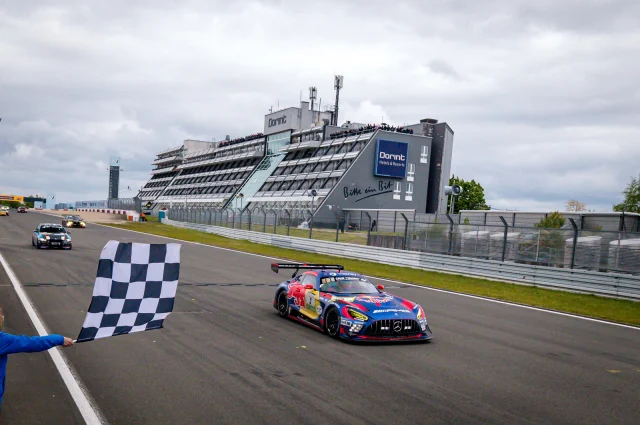
Max Verstappen’s official 2026 GT3 record through September 14 contains no race win and no podium finish. That answer sounds surprising because his number 3 Mercedes-AMG GT3 crossed the line first in NLS2 by roughly 59 seconds. Post-race scrutineering found the team had used seven tyre sets when six were permitted, turning the apparent victory into a disqualification.
The rest of the Nürburgring campaign followed the same frustrating pattern: speed without a representative trophy. Verstappen led the second 24h Qualifiers race before splitter damage contributed to a P38 finish, then the car fought for the Nürburgring 24 Hours lead until a driveshaft failure forced retirement after 133 laps. Meanwhile, Verstappen Racing later won in GT World Challenge Europe at Magny-Cours, but Jules Gounon and Dani Juncadella—not Max—drove that race.
This results guide separates the driver, car and team records so “Max Verstappen GT3 wins” does not become a misleading statistic. It also explains why the programme still mattered despite the official tally. For his Formula 1 record, use our Max Verstappen 2026 profile and latest F1 results; the GT3 ledger below is deliberately kept separate.
Max Verstappen’s 2026 GT3 Results at a Glance
Verstappen's personal GT3 programme centered on the Nürburgring Nordschleife and the Mercedes-AMG GT3 operated with Winward Racing. The simple results column understates the pace because two potential headline finishes disappeared through a rules breach and a mechanical retirement.
| Date | Event | Co-drivers | Official outcome | Key context |
|---|---|---|---|---|
| Mar. 21 | NLS2 | Dani Juncadella, Jules Gounon | DSQ | Finished first on road by about 59 seconds; seven tyre sets used against six permitted. |
| Apr. 18 | 24h Qualifiers Race 1 | Lucas Auer | Race stopped early | Fatal multi-car accident ended meaningful running; Verstappen was not involved. |
| Apr. 19 | 24h Qualifiers Race 2 | Lucas Auer | P38 | Verstappen led before front-splitter damage required lengthy repairs. |
| May 16–17 | Nürburgring 24 Hours | Juncadella, Gounon, Auer | DNF, 133 laps | Led deep into the race; driveshaft failure forced retirement. |
On that official ledger, Max had no 2026 GT3 victory or podium by the cutoff date. The NLS2 chequered flag cannot be counted after disqualification, and leading an endurance race does not create a classified podium when the car retires.
The table also excludes events entered only by other Verstappen Racing drivers. That boundary matters because a team can win without its owner driving, just as a driver's result can be shared across a crew in an endurance entry.
The NLS2 Win That Became a Disqualification
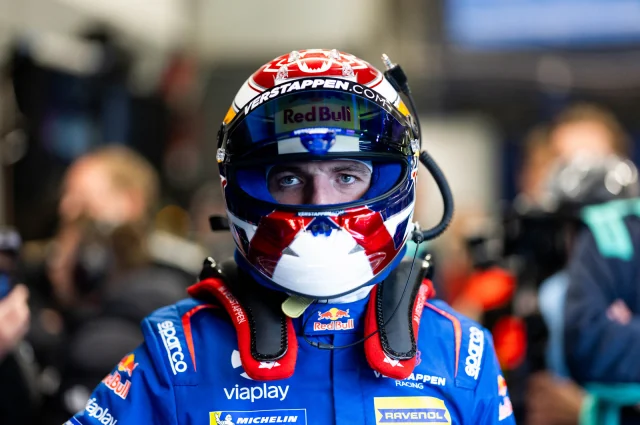
NLS2 created the central contradiction in Verstappen's 2026 GT3 record. The #3 Mercedes delivered a winning performance on track, and the initial team report celebrated victory. The official result later removed the car entirely.
Verstappen Racing Finished First by 59 Seconds
Verstappen shared the Mercedes-AMG GT3 with Juncadella and Gounon. Starting from pole, the crew established control over four hours of Nordschleife traffic and changing gaps. It crossed the line roughly 59 seconds ahead, a large margin in a race where navigating slower classes is part of every lap.
The performance looked like an ideal preparation result for the Nürburgring 24 Hours. It showed that Max could manage GT3 systems, traffic and stint rhythm rather than merely produce one quick lap. Those observations remain valid as analysis of the driving, even though the trophy did not.
Seven Tyre Sets Broke the Six-Set Limit
Post-race checks found that the team had used seven sets of tyres while the event limit was six. Reporting traced the extra use to pit-stop practice during qualifying. The distinction between an innocent calculation error and deliberate performance seeking did not preserve the result: compliance is measured against the number permitted.
The rule breach was operational rather than a verdict that Verstappen lacked pace. It nevertheless affected sporting fairness because tyre allocations are controlled resources. A car cannot keep an official finish earned outside the same constraints applied to rivals.
Why the Official Result Is a DSQ, Not a Win
Disqualification removes the crew from the classified result. The Rowe Racing BMW shared by Dan Harper and Jordan Pepper inherited victory. For statistics, “first on road” is valuable context but not an additional category of win.
This explains conflicting search pages. A team story published at the chequered flag was accurate to the provisional situation, while later coverage captured the final decision. A current results guide must prioritize the amended classification. Max's official 2026 win count therefore stayed at zero, even though the NLS2 driving performance was convincing enough to shape expectations for May.
What Happened in the Nürburgring 24h Qualifiers
The April qualifying weekend was meant to give Verstappen and the Winward-run crew more race mileage before the 24 Hours. Instead, one race was overshadowed by tragedy and the other produced another strong opening stint without a useful finish.
Race 1 Ended Early After a Fatal Multi-Car Accident
A seven-car accident occurred early in the Saturday race. Veteran driver Juha Miettinen died from injuries sustained in the crash. Race control stopped the event, and the sporting result became secondary to the loss. Verstappen was not involved in the collision.
It would be misleading to treat the shortened running as evidence for or against the #3 car's competitive level. The relevant record is simply that the planned endurance preparation could not unfold, and the paddock's focus correctly moved to the people affected.
Verstappen Led Race 2 Before Splitter Damage Led to P38
Sunday offered a fresh four-hour race. The Mercedes started fifth, and Verstappen moved into the lead during his opening work. After ten laps he handed the car to Auer. The performance again showed that the NLS2 pace could transfer into traffic against a deep GT3 field.
The result turned when front-splitter damage became apparent. Repairs kept the car in the garage for roughly half an hour, eliminating any realistic chance of a high finish. The crew ultimately placed P38. Max said he had not made contact and the team needed to investigate the cause.
P38 looks poor without context, yet classifying it as a podium-quality result would be equally wrong. The accurate conclusion sits between those extremes: Verstappen produced a lead-running stint, the shared car suffered damage, and the final classification recorded the time lost by the complete entry. Endurance results belong to the car and crew, not just the fastest driver segment.
The Nürburgring 24 Hours: From Victory Contender to DNF
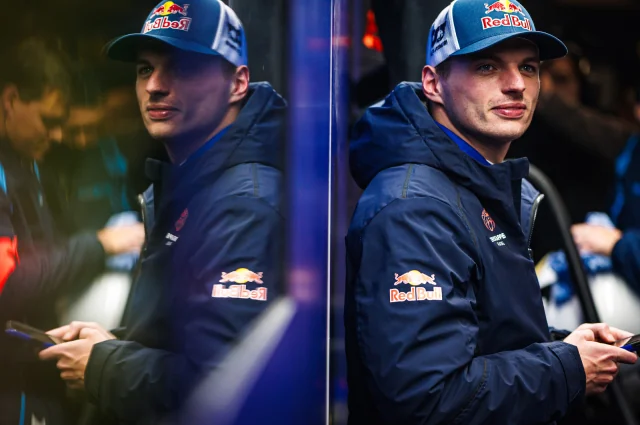
The May centerpiece supplied the strongest evidence of the programme's potential and its most painful result. Verstappen, Juncadella, Gounon and Auer started the #3 Mercedes fourth. For much of the race they were not merely surviving the Nordschleife—they were contesting overall victory.
The Number 3 Mercedes Fought for the Lead
The entry first moved into the lead after roughly three hours. Through the evening and night it traded position with the #80 Mercedes-AMG Team Ravenol car. Traffic, localized rain, incidents and pit cycles changed the displayed order, but the two Mercedes crews repeatedly returned to the front.
That matters more than an isolated fastest lap. A Nürburgring 24 contender must preserve pace through different drivers, fuel cycles and thousands of overtakes. The #3 remained in the victory contest across all those variables until late Sunday morning.
Verstappen’s Stints Built and Protected the Advantage
During his first race stint, Verstappen took over around tenth and worked through traffic. At the end of that early running he handed the car over with a reported 23-second lead. Later, a night double stint increased the margin over the rival Mercedes to more than 27 seconds before another driver change.
His Sunday morning double stint was equally important. In light rain that was not sufficient for wet tyres, Max balanced safety against maintaining competitive pace and stretched the lead to 33 seconds. These were team-reported snapshots at different pit-cycle moments, not a claim that he held an uninterrupted advantage for the entire race.
A Driveshaft Failure Ended the Campaign After 133 Laps
Verstappen handed the car to Juncadella at around 130 laps. A few laps later, Juncadella returned to the pits after a sudden loss of speed. The crew diagnosed a driveshaft problem. Repairs could not preserve a meaningful result, and the car retired after 133 laps with about three hours remaining.
The #80 Mercedes inherited the lead and ultimately won. Officially, the #3 recorded a DNF rather than a podium. Analytically, it had proved capable of leading through night and morning conditions. Both statements belong in a complete assessment: reliability erased the result, but it did not erase the competitive evidence produced before failure.
Max’s Results Versus Verstappen Racing’s Team Results
The name above the garage creates an easy statistical trap. Verstappen Racing can win a race without Max Verstappen driving the winning car. That distinction matters in 2026 because the team collected a major GT World Challenge Europe victory after Max’s Nürburgring appearances had ended. A search for “Verstappen GT3 results” can therefore produce a real victory that does not belong in Max’s personal win column.
The Magny-Cours Win Did Not Have Max in the Car
Mercedes-AMG Team Verstappen Racing won the opening Magny-Cours race on 1 August 2026. The official GT World Challenge Europe classification lists Jules Gounon and Daniel Juncadella in the No. 3 Mercedes-AMG GT3. They completed 33 laps and beat the AF Corse Ferrari by 2.597 seconds. It was the programme’s breakthrough overall victory in the series and an important result for the operation Max owns and supports.
It was not, however, a race start, win or podium for Max. He was neither member of that two-driver crew. Describing it as “Verstappen Racing’s first GT World Challenge win” is accurate; calling it “Max Verstappen’s first 2026 GT3 win” is not. This is why the personal summary remains zero official wins and zero podiums through 14 September, even though the wider team has a victory.
How to Read Driver, Car and Team-Level GT3 Results
Endurance racing publishes several overlapping stories. The classification gives a finish to an entered car and every named driver in its crew. The entrant or team also gains that result, while championship points can be tabulated for drivers and teams under separate regulations. A team may use different drivers in different championships, and the same-looking car number can appear in more than one programme.
For a clean Max-only record, ask three questions: was he on the official entry list, did he actually participate, and what was that car’s final classification after penalties? At NLS2 and the Nürburgring events, the answer to the first two questions was yes. At Magny-Cours, it was no. Ownership and branding explain why the result is relevant to his GT3 project, but they do not make him one of the classified drivers.
What the 2026 GT3 Campaign Actually Proved
Results answer who was officially classified where; they do not always describe how competitive a car was before a penalty or mechanical retirement. Max Verstappen’s 2026 campaign is an unusually clear example. Its official line is modest—no wins and no podiums—but the race chronology repeatedly placed him and the No. 3 Mercedes at the front of deep Nürburgring fields.
Performance Was Stronger Than the Trophy Count
At NLS2, the Mercedes crossed the line roughly 59 seconds ahead before the tyre-set infringement erased the result. In the 24h Qualifiers, Max moved from fifth to the lead before splitter damage forced repairs. In the main 24-hour race, he and his teammates led through substantial phases, with his handovers reported at advantages of 23 seconds, more than 27 seconds and 33 seconds at different points. The car was still contesting the lead battle before the driveshaft failed.
Taken together, those facts support a narrow conclusion: Max adapted quickly enough to deliver front-running GT3 pace in traffic, changing conditions and multi-class endurance racing. They do not support awarding him an unofficial victory or assuming where the car would have finished. The NLS result was disqualified under the rules, and the 24-hour result was a retirement. Pace is an assessment; classification is the record.
That separation also makes the season more informative. A driver can prove competitive without collecting a trophy, just as a team can win later with another lineup. For readers comparing Max’s sports-car project with his Formula 1 career, the useful takeaway is not a manufactured win total. It is that the experiment progressed from a serious entry to a credible overall-victory challenge.
What to Watch for in Verstappen’s Next Endurance Start
After the Nürburgring 24 Hours, Max indicated that he would try to return the following year if the calendar allowed it. That is meaningful intent, but it is not a confirmed entry. Through 14 September 2026, the official material reviewed for this guide did not identify another personal GT3 start, so a date, circuit or driver lineup should not be treated as settled.
The next reliable signal will be a formal team announcement or official entry list. Check which championship is involved, who shares the car, the tyre supplier and allocation, and whether the event clashes with his Formula 1 commitments. Those details matter because the 2026 record was shaped as much by sporting rules and endurance reliability as by outright speed.
Until then, the most accurate summary is simple. Verstappen’s first full-scale 2026 Nürburgring campaign did not produce an official podium, yet it supplied multiple demonstrations that his programme could fight at the front. Any future start begins with that performance benchmark—not with a win that the classification never awarded.
Loading comments…