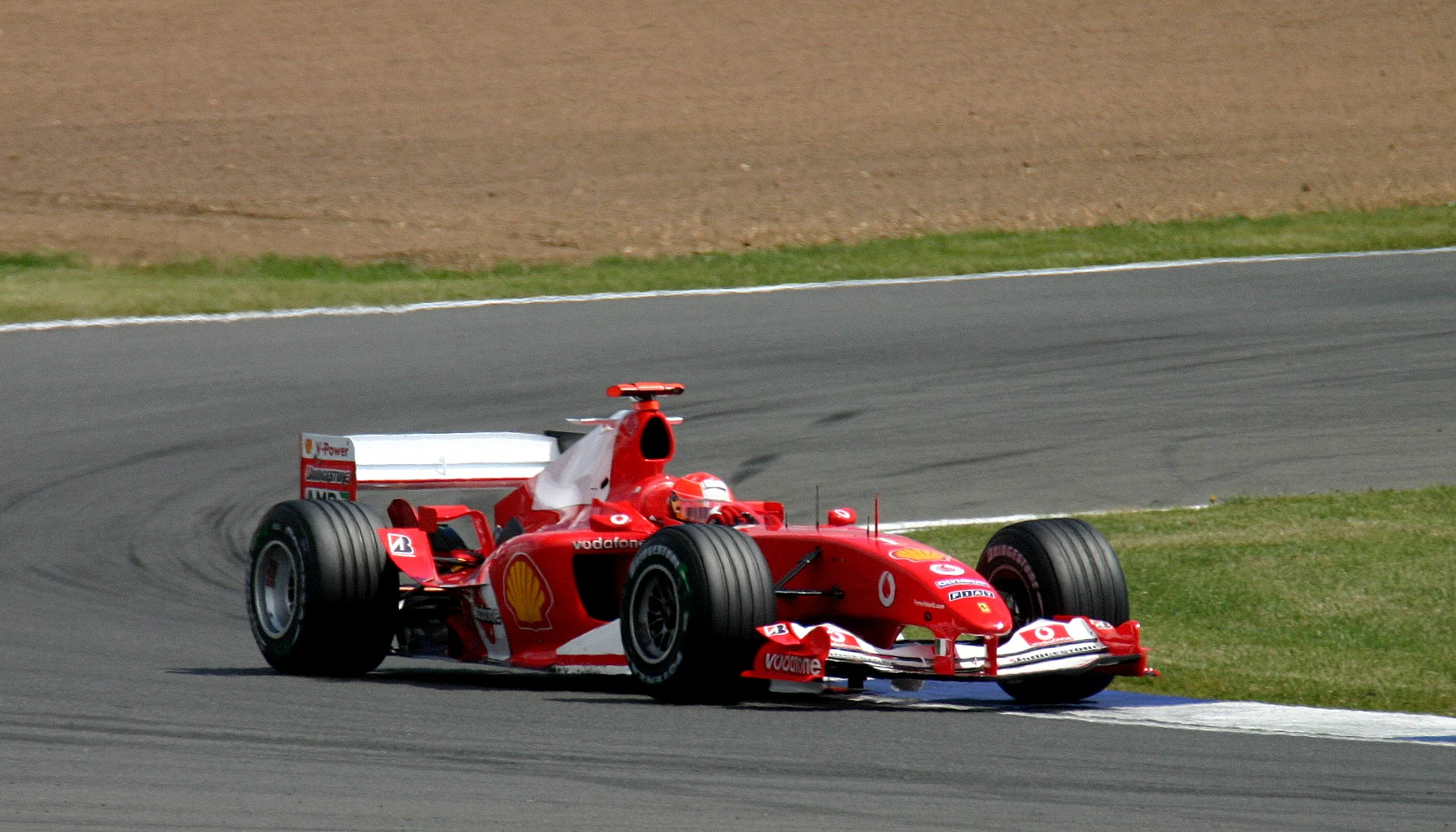
Formula 1 has two world titles to keep straight. The Drivers' Championship belongs to an individual across a season; the Constructors' Championship belongs to the team that accumulates the most team points. The same operation often wins both, but a driver can become world champion while a rival team takes the constructors' trophy. Any all-time list that merges the awards loses an important part of F1 history.
This guide counts championships through the completed 2025 season. Lando Norris joined the Drivers' Champions in 2025, while McLaren added another Constructors' title. The tables give every champion by number of crowns, then explain how the early record books, split-title seasons and scoring changes affect the comparison. The 2026 championship is still active; our live F1 standings carry its current totals.
Every F1 Drivers' Champion ranked by titles
The Drivers' Championship began with Giuseppe “Nino” Farina in 1950. By the end of 2025, 35 different drivers had won it. Lewis Hamilton and Michael Schumacher share the record at seven titles apiece; Juan Manuel Fangio follows with five. The full list below is sorted by championship count, with names within each count arranged for easy scanning. Each crown belongs to a completed season, so there are 76 driver titles from 1950 through 2025, including Lando Norris's first in 2025.
| Driver | Titles |
|---|---|
| Lewis Hamilton | 7 |
| Michael Schumacher | 7 |
| Juan Manuel Fangio | 5 |
| Alain Prost | 4 |
| Max Verstappen | 4 |
| Sebastian Vettel | 4 |
| Jack Brabham | 3 |
| Niki Lauda | 3 |
| Nelson Piquet | 3 |
| Ayrton Senna | 3 |
| Jackie Stewart | 3 |
| Fernando Alonso | 2 |
| Alberto Ascari | 2 |
| Jim Clark | 2 |
| Emerson Fittipaldi | 2 |
| Mika Häkkinen | 2 |
| Graham Hill | 2 |
| Mario Andretti | 1 |
| Jenson Button | 1 |
| Damon Hill | 1 |
| Phil Hill | 1 |
| Denny Hulme | 1 |
| James Hunt | 1 |
| Alan Jones | 1 |
| Nino Farina | 1 |
| Kimi Räikkönen | 1 |
| Nigel Mansell | 1 |
| Lando Norris | 1 |
| Jochen Rindt | 1 |
| Nico Rosberg | 1 |
| Keke Rosberg | 1 |
| Jody Scheckter | 1 |
| John Surtees | 1 |
| Jacques Villeneuve | 1 |
| Mike Hawthorn | 1 |
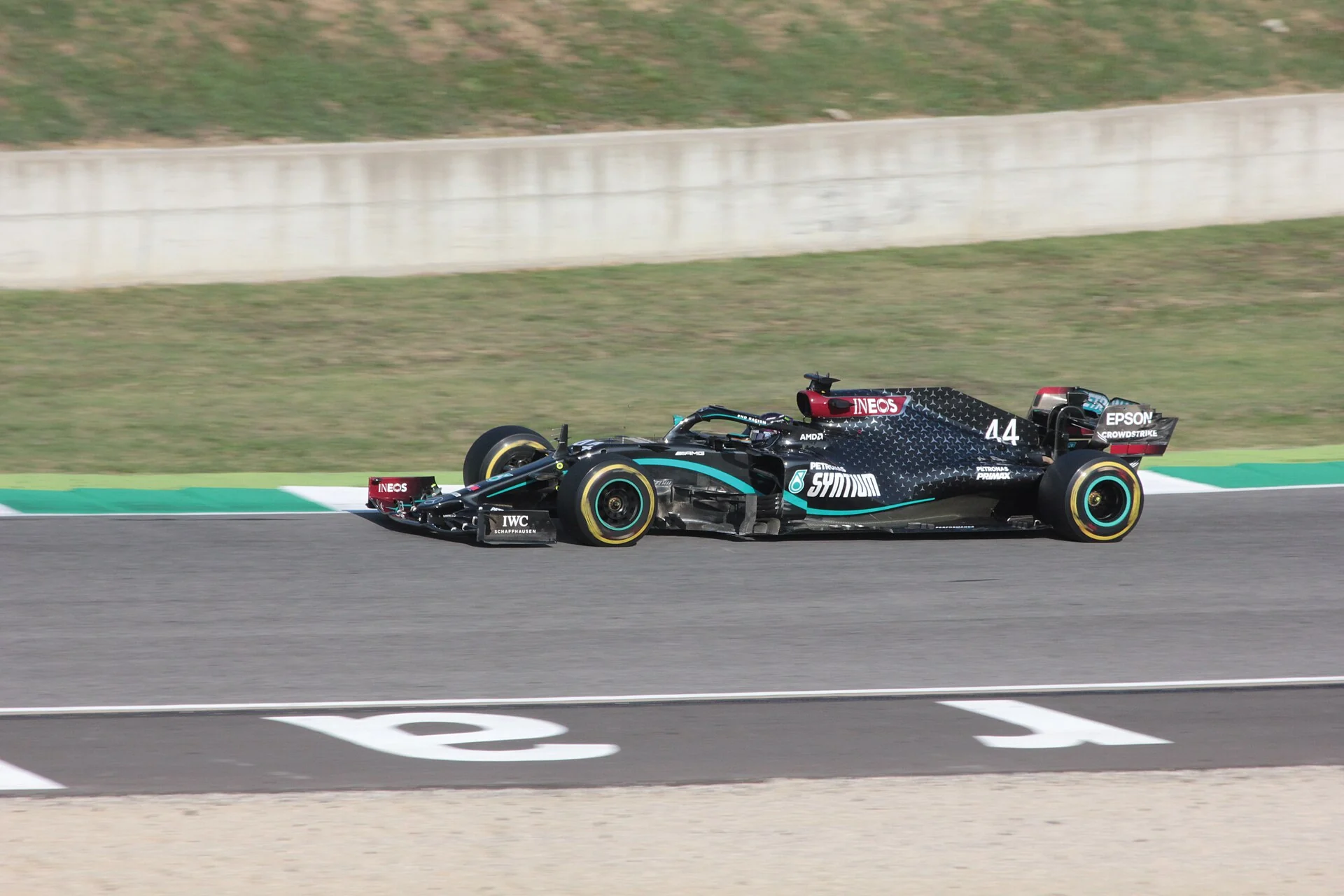
A title count is a clean record of who finished a season first, but it is not a complete measurement of a driver's ability. Fangio's five championships came in a calendar far shorter than Hamilton's; Schumacher raced in an era with different reliability, qualifying and points rules from Verstappen's. Nor do the totals measure how narrowly a driver missed another title. They are best read as championship achievements, followed by the races and competitive circumstances that produced them.
The distribution also says something about repeat success. Seventeen of the 35 champions won more than once, while 18 hold a single crown. A one-title driver is not a footnote: Button's 2009 campaign with Brawn, Räikkönen's 2007 Ferrari title and Norris's 2025 McLaren win each belongs to a different competitive story. Norris's addition is recent enough that older lists may still show only 34 champions. The official Formula 1 Hall of Fame now includes him, and the 2025 classification confirms the title.
Notice, too, that the driver record is personal. Hamilton's first championship came with McLaren, with six more at Mercedes. Schumacher's two Benetton crowns preceded five with Ferrari. Adding those personal titles is straightforward; assigning them to a single team in an “all-time by team” chart is not. That chart needs its own definition, and it should never be mistaken for the separate Constructors' Championship.
Every Constructors' Champion ranked by titles
The team championship has been awarded since 1958, so its list contains 68 completed titles through 2025, rather than the drivers' 76. Fifteen constructors have won at least one. Ferrari leads with 16, a record that still stands despite its most recent team crown coming in 2008. McLaren's 2024 and 2025 wins brought it to ten, ahead of Williams' nine. Mercedes has eight, Lotus seven and Red Bull six. These are championships won by the constructor, not a count of titles won by drivers who happened to race for it.
| Constructor | Titles | Title seasons |
|---|---|---|
| Ferrari | 16 | 1961, 1964, 1975–77, 1979, 1982–83, 1999–2004, 2007–08 |
| McLaren | 10 | 1974, 1984–85, 1988–91, 1998, 2024–25 |
| Williams | 9 | 1980–81, 1986–87, 1992–94, 1996–97 |
| Mercedes | 8 | 2014–21 |
| Lotus | 7 | 1963, 1965, 1968, 1970, 1972–73, 1978 |
| Red Bull Racing | 6 | 2010–13, 2022–23 |
| Brabham | 2 | 1966–67 |
| Cooper | 2 | 1959–60 |
| Renault | 2 | 2005–06 |
| Benetton | 1 | 1995 |
| Brawn | 1 | 2009 |
| BRM | 1 | 1962 |
| Matra | 1 | 1969 |
| Tyrrell | 1 | 1971 |
| Vanwall | 1 | 1958 |
The distribution shows two kinds of achievement. Ferrari's 16 titles span decades and changing regulations; Mercedes' eight were consecutive from 2014 to 2021. McLaren's record has a long interruption between its 1998 and 2024 team crowns, while Red Bull has two separated runs. A sequence of titles points to a repeatable organization that kept two cars scoring under particular rules, but the gap between sequences also illustrates how quickly a constructor can lose its place when the technical or competitive environment changes.
Names need a little care in historical data. Formula 1's annual results may append engine partners, and its 2010 table calls the winning entry “RBR Renault.” That season belongs to the Red Bull Racing lineage, so it counts as one of Red Bull's six constructor championships here. A constructor's title should not be reassigned to its engine supplier. Likewise, McLaren-Mercedes seasons remain McLaren team titles, and the modern Mercedes works team's eight championships start in 2014.
The one-off winners are not merely curiosities. Vanwall is foundational because it took the first team crown; Brawn won in its only season under that name; Benetton's 1995 championship sits beside Schumacher's second Drivers' title. Those examples are useful precisely because the team award captures a season-wide entry and organization, not an abstract badge or a driver's career reputation. The next section explains why the earliest driver champions have no team champion next to them at all.
Why the record books start in different years
There is a structural eight-year gap between the two lists. Formula 1 awarded a world title to drivers from its inaugural championship in 1950, but it did not establish the Constructors' Championship until 1958. That is why the totals in the first two tables differ even though both end with the completed 2025 season. They are two separate award histories, not two incomplete versions of the same list.
1950–1957: drivers had a world title, constructors did not
The first champion, Farina, won the 1950 Drivers' Championship in an Alfa Romeo. Formula 1's official final table credits him with 30 points, ahead of fellow Alfa Romeo drivers Fangio on 27 and Luigi Fagioli on 24. It is sensible to describe Alfa Romeo as the team behind that first driver champion; it is incorrect to call Alfa Romeo the first Constructors' Champion. There was no such title to win in 1950. The same distinction applies to every year through 1957, including Fangio's remarkable five-title run across several cars and teams.
This is more than a technicality for historical rankings. Assigning retrospective team titles to those years would inflate some manufacturers' counts while leaving the official 1958–2025 record untouched. It would also erase the reason the FIA created a separate team championship: driver points and team performance answer different questions. In those first eight seasons, only the driver question had a world championship trophy attached.
1958: Vanwall won the team crown while Hawthorn won the drivers' title
The new award made its difference visible immediately. The official 1958 team table puts Vanwall first on 48 points and Ferrari second on 40. Yet the Drivers' Championship went to Ferrari's Mike Hawthorn with 42 points, just one ahead of Vanwall's Stirling Moss on 41. Vanwall was the first Constructors' Champion; Hawthorn was the year's Drivers' Champion. A list that labels Ferrari the 1958 team champion because Hawthorn drove for it would be wrong, just as a list that calls Moss the driver champion because Vanwall won the team trophy would be wrong.
The split makes a useful reading rule for every subsequent season. A constructor scores through its cars and the championship's applicable team rules; an individual driver pursues a personal season total. Those pathways can coincide, and in dominant seasons they often do, but the 1958 tables prove that coincidence is not required. Fans looking up a driver should check that driver's classification; fans looking up the year's best-scoring team should check the separate team classification.
When the champion driver and champion constructor differ
The 1958 split was the first, not the last. A driver can beat every other driver over a season while another team accumulates the strongest combined result. The table selects five clear examples from different eras. “Driver's team” identifies the car in which the individual champion won; “constructor champion” identifies the entry that topped the separate team standings. These are not paired awards that must go to the same badge.
| Year | Drivers' Champion | Driver's team | Constructors' Champion |
|---|---|---|---|
| 1976 | James Hunt | McLaren | Ferrari |
| 1981 | Nelson Piquet | Brabham | Williams |
| 1986 | Alain Prost | McLaren | Williams |
| 2021 | Max Verstappen | Red Bull | Mercedes |
| 2024 | Max Verstappen | Red Bull | McLaren |
The 1976 pairing is one reason a simple “champion by team” query can mislead. Hunt took the driver's crown in a McLaren, yet Ferrari led the Constructors' standings. In 1981 and 1986, Williams topped the team classification while Piquet and Prost respectively secured the individual prize in rival machinery. Those records show the split is not a quirk of today's points system. It has appeared under very different competitive and scoring conditions.
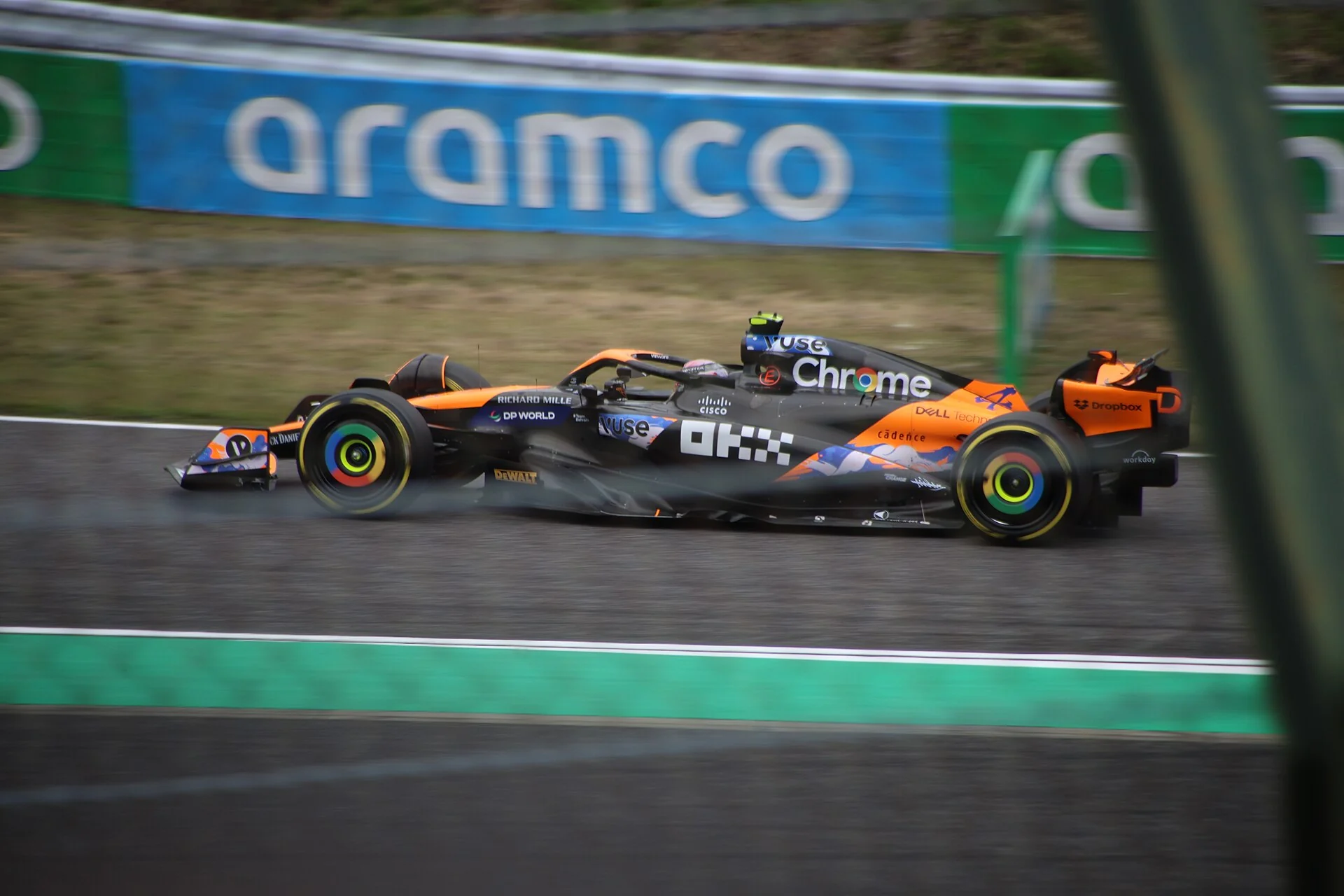
The modern examples are especially familiar to current fans. Verstappen won the 2021 Drivers' title, but Mercedes finished first among constructors. Three years later, Verstappen retained the driver's crown while McLaren won the 2024 team championship. In 2024, the difference was not a clerical oddity: McLaren's two drivers helped it outscore Red Bull over the complete season. The title that a rival driver earned remains entirely valid; it answers a different question.
Do not force every split into one explanation. A second car's points, reliability, penalties, changing form during the year and the distribution of race wins can all matter. The official final tables establish what happened. To establish exactly why a particular year's team won, one must inspect that season's races and rule context. What this all-time guide can establish decisively is that the driver champion's team should never automatically be copied into the constructor-champion column.
The same driver can win with different teams
An all-time driver table follows a person across every car and contract in a career. A constructor table follows an entry from season to season. The two records can therefore move in different directions even for the same star. Fangio, Schumacher and Hamilton offer three useful ways to see the distinction without turning a driver award into a team award.
Fangio won five titles in the 1950s while racing for four different manufacturers, according to Formula 1's Hall of Fame. His 1954 campaign even involved a midseason change of machinery. Because the Constructors' Championship did not yet exist, none of Fangio's five personal titles can be entered in an official 1950s constructor-title column. Calling one manufacturer's car “the champion's car” in a particular race is a legitimate description; awarding it a team world championship from that fact is not.
Schumacher's seven titles are easier to divide by employer: two with Benetton in 1994 and 1995, followed by five with Ferrari from 2000 through 2004. But even here, a driver's win does not imply a matching constructor trophy every time. Williams won the team title in 1994; Benetton did so in 1995. Ferrari then built its sustained team-winning sequence around the Schumacher era. The driver table says “Schumacher: seven”; the constructor table must be built from each year's separate team classification, not from a count of his winning seasons.
Hamilton's record makes a modern version of the same point. He took his first Drivers' Championship with McLaren in 2008 and six more with Mercedes in 2014, 2015 and 2017–2020. Ferrari, however, won the Constructors' Championship in 2008. One could accurately say Hamilton became a world champion as a McLaren driver that year, but adding a 2008 constructor crown to McLaren would be a factual error. Likewise, Mercedes' eight team titles reflect its team classifications from 2014 to 2021, including 2021, when Red Bull's Verstappen won the individual championship.
This distinction also prevents distorted “most successful team” claims. A team can be counted by constructors' titles, by the number of Drivers' Championships won in its cars, by Grand Prix victories, or by other measures. Those are related but different statistics. Before comparing Ferrari with McLaren or Mercedes, specify which measure is being used; then use the corresponding record book consistently.
Why titles travel better across eras than all-time points
A world championship is a season award under the rules that applied in that season. That makes title count a useful historical starting point: Fangio's five, Schumacher's seven and Hamilton's seven are unambiguous entries in the record book. Career points are much less stable as an all-time yardstick. Formula 1 notes that a 1950 Grand Prix victory earned eight points and the top five scored 8–6–4–3–2; only a driver's four best results counted toward that championship. A modern full-points race win earns 25, with the top ten scoring. Adding raw career points from those eras as if they came from one scale tells us little about who drove better.
Calendar length adds another distortion. A driver in a long season has more chances to score than one in a short season even before the points allocation changes. Modern Sprint weekends create additional championship points opportunities. Bonus rules have changed too: a fastest-lap point was available under conditions from 2019 through 2024, then was removed for 2025. Those details can matter at the margins of a season and accumulate in career totals. They should be considered before proclaiming one generation superior simply because its drivers amassed more numerical points.
Titles are clearer, but they are not an error-free ranking of talent. They depend on a competitive car, teammate, team execution, reliability and the strength of rivals. A one-title champion may have come close several other years; a seven-title champion may have had long stretches with the best-supported entry. A good historical comparison therefore starts with the confirmed number of championships, checks the season context, then asks how the driver or team converted its opportunities. It does not produce a universal “best ever” verdict from one cell in a table.
For a current-year question, keep the archive separate. The lists above end with Norris and McLaren's completed 2025 titles. The 2026 championship tables show a live contest, not another entry in the all-time winners list yet. Once a season ends, its official final driver and constructor classifications can be added in the appropriate places. Until then, the honest answer to “who is the all-time champion?” depends first on which championship and which completed seasons are being counted.
Loading comments…