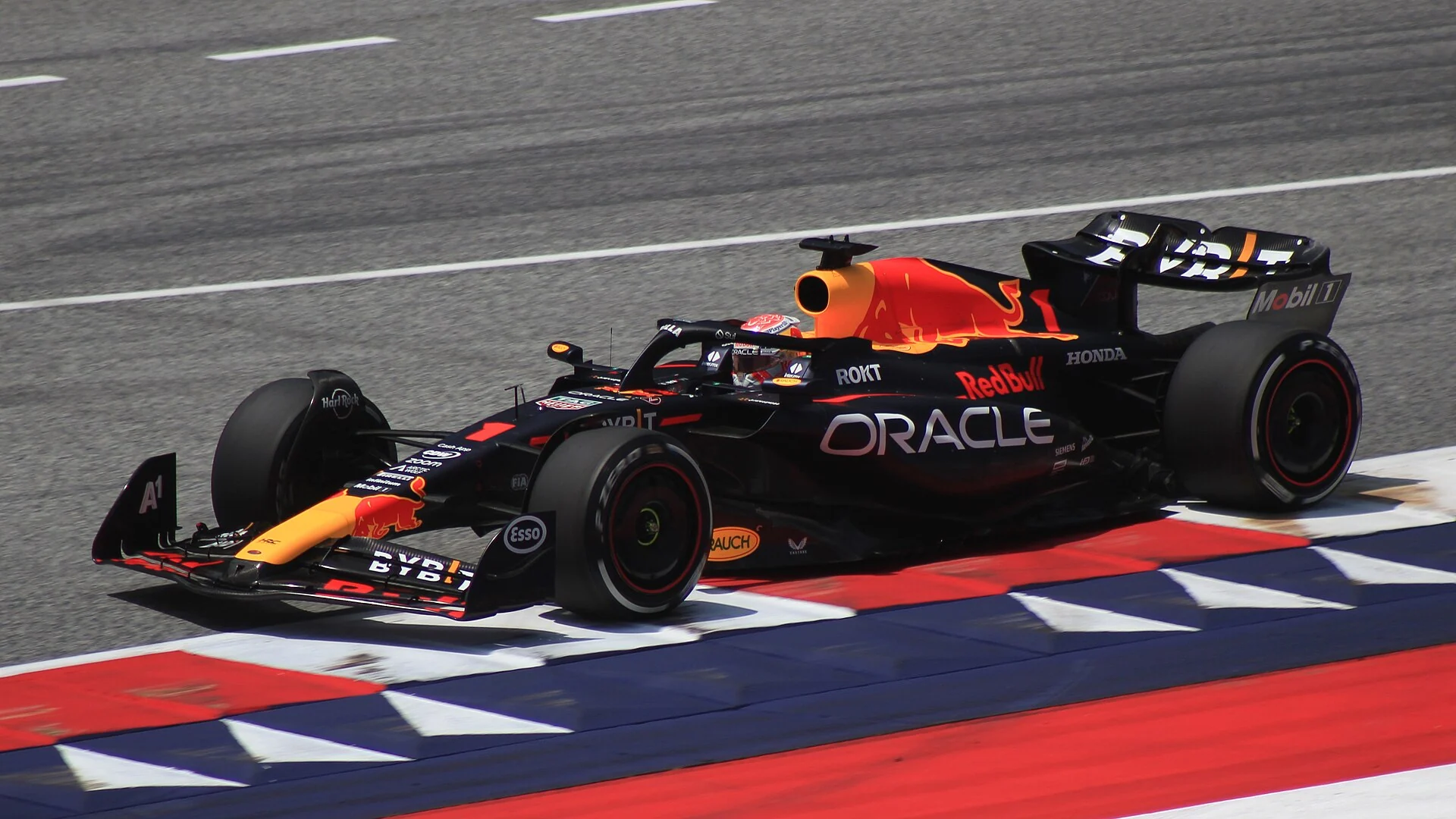
The Constructors’ Championship tells a different story from the drivers’ title. A brilliant lead car can keep a team visible on Sunday, but the final team order also exposes what its second car delivered across an entire season. Looking back over ten completed campaigns makes the changes in Formula 1’s competitive order especially clear: Mercedes’ long run at the top, Red Bull’s emphatic rebound, and McLaren’s return to the front.
This is a reference for the 2016 through 2025 final standings, using Formula 1’s published year-end teams tables. It includes every classified entry, not just the champions, plus a guide to reading the figures fairly. The ongoing 2026 season belongs on our current championship standings page; its points should not be mixed into a completed-season comparison.
The decade at a glance: champions, runners-up and title gaps
Ten complete seasons produced three different champion teams, but their wins came in distinct waves. Mercedes took six consecutive Constructors’ Championships from 2016 through 2021, Red Bull claimed the next two, and McLaren finished on top in 2024 and 2025. The table below is the fastest way to see the shift. “Gap” means the champion’s final points minus the runner-up’s final points within that same year; it does not attempt to normalize one season against another.
| Year | Champion | Pts | Runner-up | Pts | Gap |
|---|---|---|---|---|---|
| 2016 | Mercedes | 765 | Red Bull | 468 | 297 |
| 2017 | Mercedes | 668 | Ferrari | 522 | 146 |
| 2018 | Mercedes | 655 | Ferrari | 571 | 84 |
| 2019 | Mercedes | 739 | Ferrari | 504 | 235 |
| 2020 | Mercedes | 573 | Red Bull | 319 | 254 |
| 2021 | Mercedes | 613.5 | Red Bull | 585.5 | 28 |
| 2022 | Red Bull | 759 | Ferrari | 554 | 205 |
| 2023 | Red Bull | 860 | Mercedes | 409 | 451 |
| 2024 | McLaren | 666 | Ferrari | 652 | 14 |
| 2025 | McLaren | 833 | Mercedes | 469 | 364 |
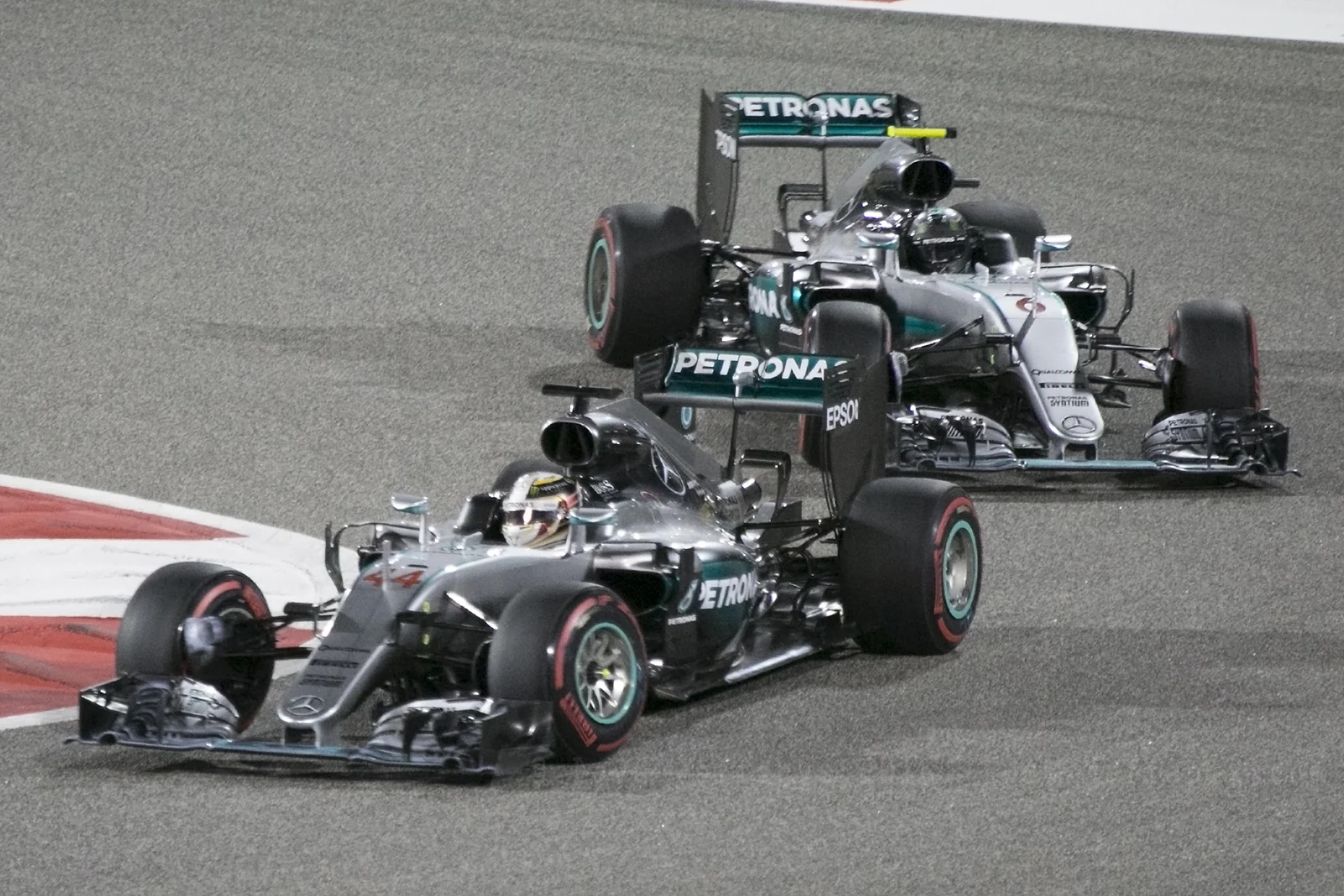
The 14-point margin in 2024 is the outlier at the close end: Ferrari remained a credible challenger to McLaren until the final accounting. Mercedes’ 28-point edge in 2021 was also narrow, particularly beside its earlier cushions of 297 points in 2016 and 254 in 2020. Those margins make the 2021 and 2024 campaigns more useful examples of sustained head-to-head pressure than a simple champions list would reveal.
At the opposite extreme, Red Bull finished 451 points clear of Mercedes in 2023. McLaren’s 364-point lead over Mercedes in 2025 was similarly substantial. A large points gap is a championship outcome, however, not a direct lap-time measurement: race count, Sprint opportunities, classification, reliability and the contribution of each car all shape the total. The full tables below show how the rest of the field moved while those titles changed hands. For the live picture, use the 2026 standings separately from these completed seasons.
Complete constructors' standings, 2016–2020
Mercedes won every team title in this five-season block, but the finishing order behind it was far from static. Red Bull placed second in 2016, dropped behind Ferrari in 2017 and 2018, and returned to second for the shortened 2020 campaign. Ferrari's runner-up finishes from 2017 to 2019 can therefore be read as a period of sustained challenge, even though the championship trophy stayed with Mercedes. The tables retain Formula 1's archived entry names, including engine-partner suffixes; they are final classification records rather than a list of modern brand identities.
| Pos. | Team | Pts. |
|---|---|---|
| 1 | Mercedes | 765 |
| 2 | Red Bull Racing TAG Heuer | 468 |
| 3 | Ferrari | 398 |
| 4 | Force India Mercedes | 173 |
| 5 | Williams Mercedes | 138 |
| 6 | McLaren Honda | 76 |
| 7 | Toro Rosso Ferrari | 63 |
| 8 | Haas Ferrari | 29 |
| 9 | Renault | 8 |
| 10 | Sauber Ferrari | 2 |
| 11 | MRT Mercedes | 1 |
| Pos. | Team | Pts. |
|---|---|---|
| 1 | Mercedes | 668 |
| 2 | Ferrari | 522 |
| 3 | Red Bull Racing TAG Heuer | 368 |
| 4 | Force India Mercedes | 187 |
| 5 | Williams Mercedes | 83 |
| 6 | Renault | 57 |
| 7 | Toro Rosso | 53 |
| 8 | Haas Ferrari | 47 |
| 9 | McLaren Honda | 30 |
| 10 | Sauber Ferrari | 5 |
| Pos. | Team | Pts. |
|---|---|---|
| 1 | Mercedes | 655 |
| 2 | Ferrari | 571 |
| 3 | Red Bull Racing TAG Heuer | 419 |
| 4 | Renault | 122 |
| 5 | Haas Ferrari | 93 |
| 6 | McLaren Renault | 62 |
| 7 | Force India Mercedes | 52 |
| 8 | Sauber Ferrari | 48 |
| 9 | Scuderia Toro Rosso Honda | 33 |
| 10 | Williams Mercedes | 7 |
| EX | Force India Sahara | 0 |
| Pos. | Team | Pts. |
|---|---|---|
| 1 | Mercedes | 739 |
| 2 | Ferrari | 504 |
| 3 | Red Bull Racing Honda | 417 |
| 4 | McLaren Renault | 145 |
| 5 | Renault | 91 |
| 6 | Scuderia Toro Rosso Honda | 85 |
| 7 | Racing Point BWT Mercedes | 73 |
| 8 | Alfa Romeo Racing Ferrari | 57 |
| 9 | Haas Ferrari | 28 |
| 10 | Williams Mercedes | 1 |
| Pos. | Team | Pts. |
|---|---|---|
| 1 | Mercedes | 573 |
| 2 | Red Bull Racing Honda | 319 |
| 3 | McLaren Renault | 202 |
| 4 | Racing Point BWT Mercedes | 195 |
| 5 | Renault | 181 |
| 6 | Ferrari | 131 |
| 7 | AlphaTauri Honda | 107 |
| 8 | Alfa Romeo Racing Ferrari | 8 |
| 9 | Haas Ferrari | 3 |
| 10 | Williams Mercedes | 0 |
The 2018 table deserves particular care. Formula 1's archive records Force India Mercedes on 52 points and EX Force India Sahara on zero as separate classified entries. Joining their totals or silently erasing one row would produce a cleaner-looking table but a different one from the official season record. It also obscures the unusual midseason change in that entry. The team order here follows the archive exactly, including its eleventh line.
Beyond the title fight, McLaren's movement is revealing: ninth with 30 points in 2017, sixth with 62 in 2018, fourth with 145 in 2019, then third with 202 in 2020. That progression does not prove one single technical cause; driver lineups, car development, reliability and competitors' problems all influence championship points. It does show a sustained change in final competitive position. Ferrari's sixth place with 131 points in 2020, after three straight runner-up finishes, shows the other side of the same principle: historical reputation cannot substitute for a season's classified results.
Look also at the narrow middle order. Racing Point's 195 points in 2020 left it only seven behind third-place McLaren and 14 ahead of Renault. Those margins are small enough that a single high-scoring weekend, retirement, or penalty could have changed the final ranking. Mercedes' championship was decisive, but the years should not be described as a uniformly predictable grid from first to last.
Complete constructors' standings, 2021–2025
The second half of the decade begins with one last Mercedes team championship. In 2021, its 613.5 points narrowly defeated Red Bull's 585.5. The fractional scores are deliberate: the official season table includes half points, so rounding them to whole numbers would distort both the totals and the 28-point final margin. From 2022 the lead changed to Red Bull for two seasons, then to McLaren for the next two. The final tables below include every classified team and retain Formula 1's archived names.
| Pos. | Team | Pts. |
|---|---|---|
| 1 | Mercedes | 613.5 |
| 2 | Red Bull Racing Honda | 585.5 |
| 3 | Ferrari | 323.5 |
| 4 | McLaren Mercedes | 275 |
| 5 | Alpine Renault | 155 |
| 6 | AlphaTauri Honda | 142 |
| 7 | Aston Martin Mercedes | 77 |
| 8 | Williams Mercedes | 23 |
| 9 | Alfa Romeo Racing Ferrari | 13 |
| 10 | Haas Ferrari | 0 |
| Pos. | Team | Pts. |
|---|---|---|
| 1 | Red Bull Racing RBPT | 759 |
| 2 | Ferrari | 554 |
| 3 | Mercedes | 515 |
| 4 | Alpine Renault | 173 |
| 5 | McLaren Mercedes | 159 |
| 6 | Alfa Romeo Ferrari | 55 |
| 7 | Aston Martin Aramco Mercedes | 55 |
| 8 | Haas Ferrari | 37 |
| 9 | AlphaTauri RBPT | 35 |
| 10 | Williams Mercedes | 8 |
| Pos. | Team | Pts. |
|---|---|---|
| 1 | Red Bull Racing Honda RBPT | 860 |
| 2 | Mercedes | 409 |
| 3 | Ferrari | 406 |
| 4 | McLaren Mercedes | 302 |
| 5 | Aston Martin Aramco Mercedes | 280 |
| 6 | Alpine Renault | 120 |
| 7 | Williams Mercedes | 28 |
| 8 | AlphaTauri Honda RBPT | 25 |
| 9 | Alfa Romeo Ferrari | 16 |
| 10 | Haas Ferrari | 12 |
| Pos. | Team | Pts. |
|---|---|---|
| 1 | McLaren Mercedes | 666 |
| 2 | Ferrari | 652 |
| 3 | Red Bull Racing Honda RBPT | 589 |
| 4 | Mercedes | 468 |
| 5 | Aston Martin Aramco Mercedes | 94 |
| 6 | Alpine Renault | 65 |
| 7 | Haas Ferrari | 58 |
| 8 | RB Honda RBPT | 46 |
| 9 | Williams Mercedes | 17 |
| 10 | Kick Sauber Ferrari | 4 |
| Pos. | Team | Pts. |
|---|---|---|
| 1 | McLaren | 833 |
| 2 | Mercedes | 469 |
| 3 | Red Bull Racing | 451 |
| 4 | Ferrari | 398 |
| 5 | Williams | 137 |
| 6 | Racing Bulls | 92 |
| 7 | Aston Martin | 89 |
| 8 | Haas F1 Team | 79 |
| 9 | Kick Sauber | 70 |
| 10 | Alpine | 22 |
The 2022 and 2023 classifications show a pronounced Red Bull peak. It led Ferrari by 205 points in 2022, then Mercedes by 451 in 2023. A points margin of that size across a full season suggests a package and operation that produced high-scoring results repeatedly, though the table alone cannot identify which share came from car pace, strategy, reliability or the points scored by each driver. The result also made the contest behind Red Bull consequential: Mercedes edged Ferrari by only three points for second in 2023.
McLaren's 2024 title was a very different sort of win. Ferrari ended just 14 points behind, while Red Bull was third. By 2025, McLaren's 833 points stood 364 ahead of Mercedes; Red Bull followed Mercedes by 18 points, and Ferrari fell to fourth. That is a rapid change in the order of the challengers, not merely a new name at the top. Williams' rise to fifth with 137 points in 2025 is also worth noticing after ninth with 17 the year before. A reader tracking team trajectory gains more from that midfield movement than from a champions-only timeline.
These tables should be read as classifications, not a linear speed chart. A team can score heavily on weekends where it is not fastest over one lap, and a strong car can surrender points to retirements or incidents. The decade's three title phases are clear, but the many changes immediately behind the champion show why a second car's finish and a team's ability to convert opportunities across different circuit types matter so much.
How the balance of power moved from Mercedes to Red Bull to McLaren
Mercedes' six consecutive victories inside this ten-year sample were part of a longer run that began in 2014. That distinction matters: 2016 is the starting point of this comparison, not the birth of Mercedes' dominance. Its totals from 2016 to 2020 were often separated from the runner-up by well over 100 points, indicating a repeatable advantage in harvesting results over full campaigns. By 2021 the lead had shrunk to 28 points. Red Bull could win the Drivers' Championship with Max Verstappen while Mercedes still accumulated the larger team total. It is a sharp reminder that the constructors' trophy rewards the combined output of the entry.
The 2022 rule era opened with Red Bull moving ahead of Ferrari and Mercedes. Its 2023 season was more emphatic still: Formula 1's retrospective records 19 Grand Prix wins for Verstappen and two for Sergio Perez across 22 races. That is 21 Red Bull wins, with the 860-point team total more than double Mercedes' 409. The dominance was not simply one driver's championship gap transposed to another table. Perez's points and wins added directly to the constructor score, even as Verstappen supplied the overwhelming share of victories. The result is useful evidence about how comprehensively the team converted race weekends, rather than proof of any one unseen setup or aerodynamic cause.
McLaren's route was less linear. Formula 1's team history describes a slow start to 2023 before it became a regular podium challenger and finished fourth. In 2024, it took its first Constructors' Championship since 1998, beating Ferrari by only 14 points. That final margin says the turnaround had become real without implying that the team controlled every race. The title required both Lando Norris and Oscar Piastri to turn competitive weekends into points, while Ferrari kept the contest close enough to punish a poor result.
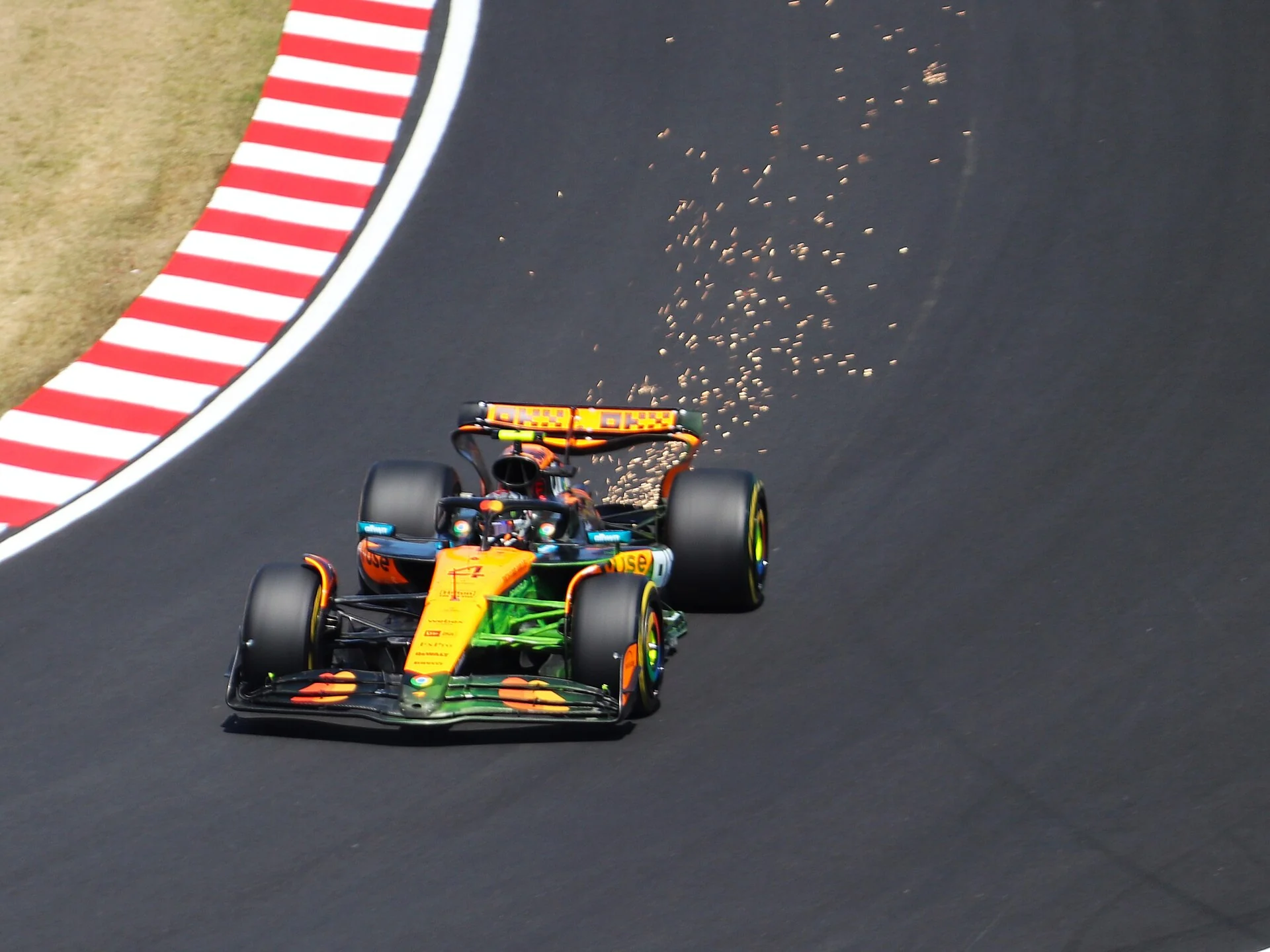
The following year brought a different shape of championship. Formula 1's McLaren season account says Norris and Piastri each won seven Grands Prix in 2025 and that the team secured the Constructors' title with six rounds still to run. Its final 833 points were 364 clear of second-place Mercedes. That pairing of early clinch and large final gap distinguishes 2025 from the late 2024 fight. It also illustrates how valuable two scoring cars can be when the car is competitive at a broad range of venues.
The lesson from these three phases is about conversion over a season. The quickest-looking car on a particular Saturday may not be the most reliable Sunday points machine. Strategy calls, pit execution, classification changes, attrition and the result of the second entry all affect where a constructor finishes. The official tables tell us who collected the points; they cannot on their own isolate how much credit belongs to any one technical idea. That caution makes the decade more interesting, because it invites a fan to connect the standings to actual race weekends rather than invent a single explanation for each swing.
How to compare seasons without misreading the points
The safest cross-year comparison starts with finishing position and the gap within each season, then checks the context behind the score. Red Bull's 860 points in 2023 exceeded Mercedes' 765 in 2016, but that does not make a 2023 point the same unit of team performance as a 2016 point. The calendars offered different numbers of scoring opportunities, and the 2023 season included Sprint points. Even when the Grand Prix points scale looks familiar, more weekends and additional sessions increase the attainable total. A straight subtraction across years answers a bookkeeping question, not which car would have been faster head to head.
The points rules also changed inside this decade. Formula 1 awarded a fastest-lap bonus to eligible top-ten Grand Prix finishers from 2019, then removed that bonus for 2025. A team could therefore collect small extra increments under one year's scheme that were unavailable in another. These are usually much less important than race finishes, but they matter when a championship or midfield position is close. The clean comparison is to keep each year's official total intact, state its finishing order, and avoid pretending the scoring opportunity was identical in every season.
The 2021 half points are especially easy to misread in a copied table. Formula 1's Belgian Grand Prix classification notes that half points were awarded because less than 75 percent of the scheduled race distance was completed under the rules then in force. That helped produce season totals such as Mercedes' 613.5 and Red Bull's 585.5. A decimal in a final Constructors' table is not a data-entry error, and rounding it away would change the official record. This episode is also a warning against applying today's shortened-race rule wording retrospectively to a 2021 event.
The 2018 Force India lines require a different kind of caution. Formula 1's archive explains that the original Sahara Force India entry was excluded from that year's Constructors' Championship before Belgium and lost its constructor points. A newly entered Racing Point Force India then began accumulating points from the Belgian Grand Prix; the final team table shows that later entry with 52 and the former entry marked “EX” on zero. The drivers retained their individual points, which is why adding driver-season totals will not recreate that particular constructor story. Preserving the split keeps the table historically honest.
Finally, manufacturer names, team names and engine labels do not always refer to an unchanged legal entry or unchanged operation. The annual official wording is useful evidence of how an entry was classified at the time. For decade trends, it is reasonable to discuss broad team lineages, but the full yearly standings should remain tied to the contemporary names and numbers. That separates a useful narrative about Mercedes, Red Bull and McLaren from a fabricated uniform dataset.
What the last ten seasons say about the next title fight
An archive table becomes more useful when it changes how you watch the current championship. First, follow the points produced by both cars. The 2021 season showed that a driver's title and a constructor's title can go to different teams; a star driver does not by himself settle the team contest. Second, read the deficit against the opportunities left on the calendar. McLaren's 14-point winning margin in 2024 and Mercedes' 28-point margin in 2021 were fragile by the standards of a Grand Prix weekend. A 451-point difference like Red Bull's in 2023 described a very different championship environment.
For 2026, the live driver and constructor standings are the appropriate place to check the latest position. The ten years above are settled history; the active season is a moving total. When a contender loses ground, ask whether the deficit came from a lack of pace at one track, a retirement, a penalty, an underperforming second car, or simply a rival scoring heavily with both entries. Those causes imply different chances of recovery, and a final points row alone cannot distinguish them.
The decade offers no automatic forecast. Mercedes held a long streak, Red Bull reached an extraordinary peak, and McLaren rebuilt from the midfield to consecutive titles. None of those patterns guarantees what will happen next. Their practical lesson is that the Constructors' Championship is an accumulation test: speed creates chances, but reliable conversion across the full team and the full calendar decides the table. That is the lens to carry into the next race, rather than treating yesterday's champion as tomorrow's certainty.
Loading comments…