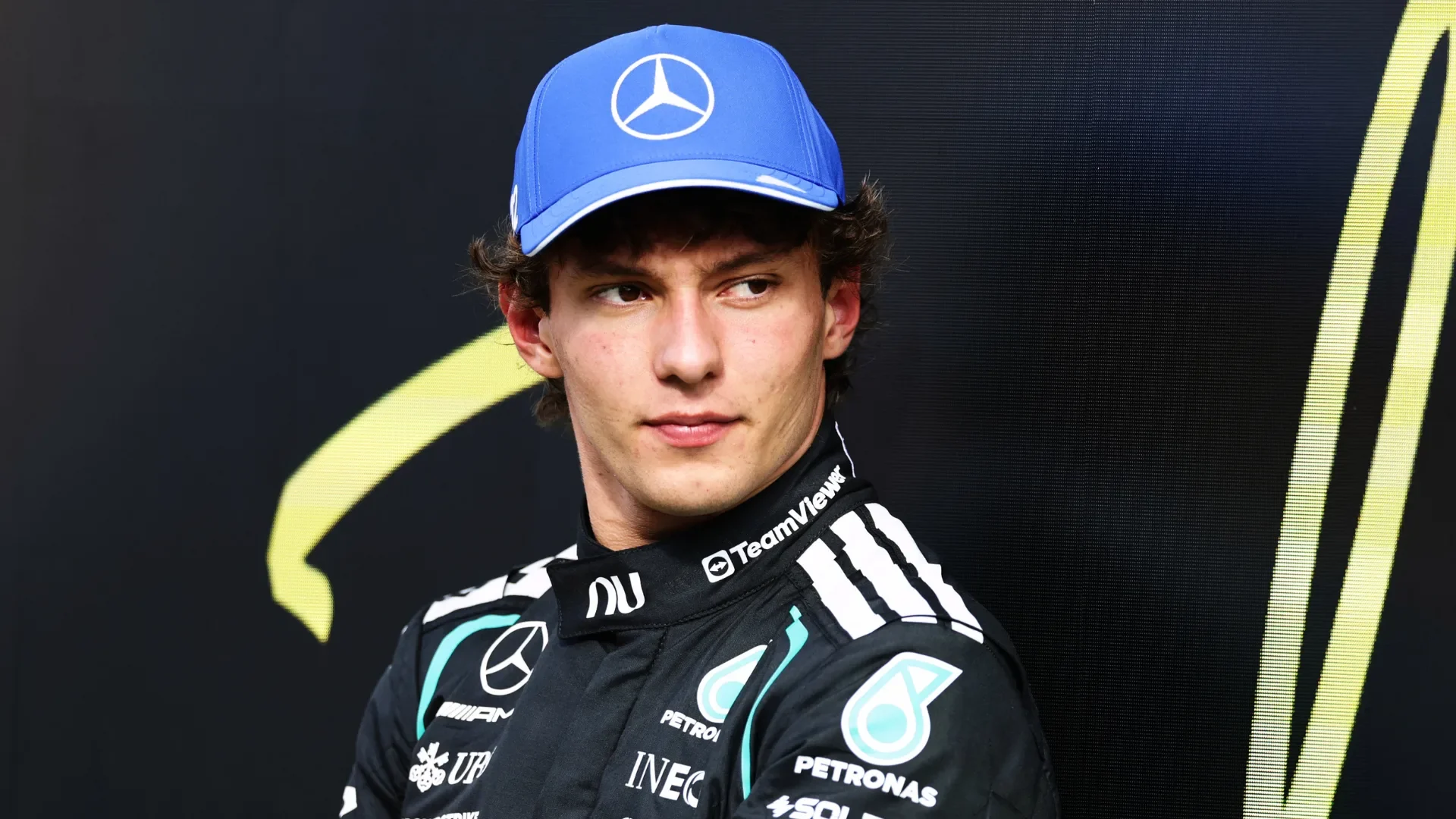
Editorial prediction — August 31, 2026
Kimi Antonelli is our pick for the Drivers' Championship, and Mercedes is our pick for the Constructors' Championship.
Those are forecasts, not official outcomes. After the Dutch Grand Prix, Antonelli leads George Russell and Lewis Hamilton by 59 points, while Mercedes holds an 87-point advantage over Ferrari. Eleven Grands Prix remain from Monza to Abu Dhabi, and Singapore supplies the final Sprint. There is enough scoring opportunity for the title fights to move sharply.
The case for Antonelli starts with points already banked, five Grand Prix wins and a Mercedes package that has placed both drivers near the front. The warning is reliability: one retirement can erase much of a race weekend's advantage, and Lando Norris arrives on consecutive wins. The constructors' call is firmer because Mercedes can score through two drivers, but Ferrari's recent development and McLaren's recovery keep pressure on the leader.
These F1 2026 standings predictions freeze the facts as of August 31 and label every forward-looking judgment. The analysis weighs the current gap, recent form, two-car contribution, reliability exposure, development direction and the character of the remaining calendar. It then produces a predicted drivers' top 10 and complete 11-team order.
For the changing official picture, use the live 2026 F1 standings. This article explains what the current numbers suggest; it never replaces the classification.
Actual standings — August 31, 2026
The actual 2026 standings before the prediction
A forecast needs a fixed starting point. These are the official totals after Round 12 at Zandvoort, not projected final positions. The gaps explain why Antonelli and Mercedes are favored; the remaining points explain why neither championship is settled.
Drivers' standings on August 31
| Pos. | Driver | Points | Gap |
|---|---|---|---|
| 1 | Kimi Antonelli | 242 | — |
| 2 | George Russell | 183 | −59 |
| 3 | Lewis Hamilton | 183 | −59 |
| 4 | Lando Norris | 159 | −83 |
| 5 | Charles Leclerc | 155 | −87 |
| 6 | Max Verstappen | 112 | −130 |
| 7 | Oscar Piastri | 104 | −138 |
Constructors' standings on August 31
| Pos. | Team | Points | Gap |
|---|---|---|---|
| 1 | Mercedes | 425 | — |
| 2 | Ferrari | 338 | −87 |
| 3 | McLaren | 263 | −162 |
| 4 | Red Bull | 186 | −239 |
| 5 | Racing Bulls | 66 | −359 |
| 6 | Alpine | 63 | −362 |
| 7 | Haas | 21 | −404 |
| 8 | Audi | 16 | −409 |
| 9 | Williams | 11 | −414 |
| 10 | Aston Martin | 3 | −422 |
| 11 | Cadillac | 0 | −425 |
What the driver gaps say now
Russell and Hamilton are tied on points but remain 59 behind Antonelli, so the first challenge is not simply to beat the leader once. They need to outscore him repeatedly or capitalize on a low-scoring Mercedes weekend. Norris and Leclerc require an even larger average swing. Verstappen and Piastri remain mathematically eligible, but a 130-point-plus deficit makes their route dependent on several major reversals rather than ordinary race-to-race variance.
Why the constructor gaps behave differently
A team can score with both cars, so a single weekend can move the constructors' table faster—but the leader can also protect itself with two finishes. Ferrari is the only challenger within 100 points of Mercedes. Lower down, the margins are genuinely fragile: three points separate Racing Bulls and Alpine for fifth, while five separate Haas and Audi for seventh. Those are closer forecasts than the title call.
How many points are still available?
283
maximum for one driver: 11 Grand Prix wins plus the Singapore Sprint win
488
maximum for one constructor: 1–2 in all 11 Grands Prix and the Sprint
Those are theoretical full-distance ceilings, not realistic projections. They prove that the leaders cannot clinch the titles yet; they do not turn every driver or team into a credible contender. The useful forecast begins by combining the gap with performance and reliability evidence.
These tables will age after Monza. Check the current F1 standings for the live classification.
How this F1 2026 prediction is built
This is an evidence-weighted editorial forecast, not a simulation pretending to know the future. Banked points receive the most weight. Full-season performance matters next, followed by recent form, reliability and the development/calendar risks that can change the run-in.
Signal
Gap and recent form
Norris won Hungary and the Netherlands, the clearest late-summer momentum in the field. Yet Antonelli finished third and second in those Grands Prix, banking 33 race points while the challenger surged. Two results can reveal direction, but they do not erase the 12-round sample or an 83-point gap. The model therefore rewards the McLaren improvement without extrapolating two wins into 11 more.
Risk
Reliability and component exposure
Mercedes has lost major results to failures: Russell stopped while leading in Canada, and Antonelli retired while running second in Barcelona. That evidence deserves more weight than vague claims that a car “looks fragile.” Future failures or grid penalties are not assumed. Instead, the forecast has a clear condition: another zero for Antonelli would materially reopen the drivers' fight.
Structure
The two-car constructor effect
The FIA counts results from both cars toward the Constructors' Championship. Mercedes' 425 points are Antonelli's 242 plus Russell's 183; Ferrari's 338 split 183–155; McLaren's 263 split 159–104. A team prediction must judge the second contributor. One driver can recover a personal deficit faster than a team can erase 162 points with an uneven pairing.
What the model deliberately does not do: it does not assign secret pace values, assume every remaining Grand Prix awards full points, or declare a circuit winner before practice. Track fit and upgrades are scenario modifiers because teams do not publish complete aerodynamic or energy-deployment data. A confirmed result changes the evidence immediately; a paddock expectation changes only the range of plausible outcomes.
The same discipline prevents a common prediction error: double-counting momentum. Norris's two wins are reflected once in his current points and again, more lightly, as a recent-form signal. They are not treated as proof that McLaren will dominate every different layout ahead.
Five-factor order
- 1. PointsWhat is already banked
- 2. Season baseTwelve-round performance
- 3. Recent formDirection, not destiny
- 4. ReliabilityObserved losses only
- 5. Run-inTracks and development
The inputs update after every weekend. Use the latest F1 results rather than treating the August 31 model as permanent.
2026 Drivers' Championship prediction
Our August 31 editorial prediction is Antonelli first, Hamilton second, Russell third, Norris fourth, Leclerc fifth and Verstappen sixth. That is not the official classification: it is a forecast built from the current points, the season sample and the evidence available after the Dutch Grand Prix.
Predicted P1
Kimi Antonelli
242 points now · clear favorite
Predicted P2
Lewis Hamilton
183 · narrow challenger call
Predicted P3
George Russell
183 · effectively level with P2
Predicted P4
Lando Norris
159 · fastest-rising outsider
Predicted P5
Charles Leclerc
155 · Ferrari win threat
Predicted P6
Max Verstappen
112 · recovery route is narrow
Antonelli's case for the title
Antonelli owns the most valuable asset in any projection: a 59-point lead that rivals must actually recover. His six victories include a five-race winning sequence from China through Monaco. More revealingly, a Zandvoort weekend in which he lacked confidence still produced second place. That floor, combined with Mercedes' season-long strength, makes him the clear favorite rather than a lock.
Hamilton and Russell are the closest challengers
Hamilton and Russell are tied on 183, so separating them is the forecast's finest margin. Hamilton gets the slight P2 lean because he scored in every round through Hungary and Ferrari has won with both drivers. Russell counters with two victories, a Dutch podium and the same Mercedes package as the leader. One retirement, win or strategy swing could reverse this order immediately; no future team instruction is assumed.
Norris, Leclerc and Verstappen need outsider paths
Norris is the most credible mover after consecutive wins in Hungary and the Netherlands, but he remains 83 points behind. He needs that McLaren step to travel across very different circuits while Antonelli has low-scoring races. Leclerc is 87 back and requires a sustained Ferrari run, not an isolated victory. Verstappen trails by 130 after his Zandvoort retirement, while Red Bull sits fourth among teams; his path now depends on an exceptional sequence plus substantial trouble ahead. Piastri, 138 down, is not eliminated mathematically but falls outside this predicted top six.
This ordering should always be read beside the current F1 standings. The points table is the fact; positions two through six above are our interpretation of how the remaining events may convert pace, reliability and opportunities into the final classification.
2026 Constructors' Championship prediction
The August 31 editorial forecast keeps Mercedes first, Ferrari second, McLaren third and Red Bull fourth. Mercedes leads Ferrari by 87 points, with McLaren another 75 behind and Red Bull 77 behind McLaren. Eleven Grands Prix and one Sprint leave enough points for movement, but the two-car scoring structure makes each comeback harder than a single driver's charge.
Mercedes' two-car advantage
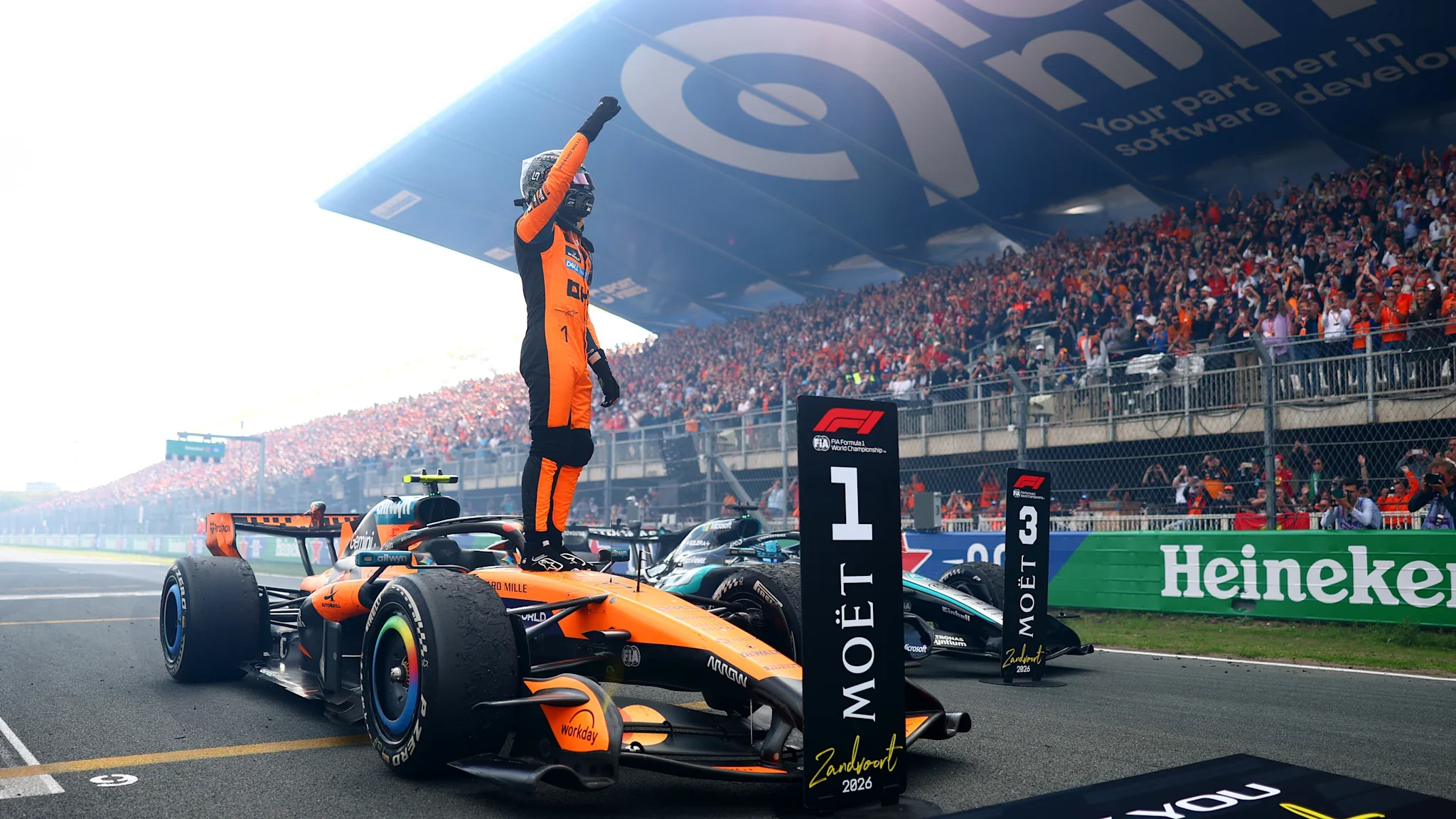
Antonelli's 242 and Russell's 183 add to 425, a balanced return that protects Mercedes when one driver misses the win. Zandvoort demonstrated it: Norris beat both cars, yet Mercedes took P2 and P3, finished ahead of both Ferraris and extended its team lead. That depth plus the banked 87-point margin makes Mercedes favorite. Reliability losses and McLaren's winning pace prevent an “uncatchable” label.
Ferrari is the primary challenger
Hamilton and Leclerc have one victory each and are separated by only 28 points, giving Ferrari two credible scoring routes. The team also continued developing the car at Zandvoort. However, upgrades are inputs rather than guaranteed lap time, and finishing fourth and fifth behind a Mercedes double podium increased the deficit. Ferrari needs repeated double podiums or wins while Mercedes drops major points; respectable P4/P5 afternoons do not close 87.
McLaren needs a two-car surge
Norris's Hungary and Netherlands wins prove that McLaren can lead races now. The constructors problem is the second column: Norris has 159 points to Piastri's 104, and Piastri followed his Hungary retirement with sixth at Zandvoort. McLaren must place both cars near the front repeatedly to erase 162 points from Mercedes. That requirement holds it third in this forecast, while Red Bull's 186 and 77-point deficit to McLaren support a fourth-place pick.
Forecast condition: Ferrari becomes the favorite only if its two-car scoring begins beating Mercedes by roughly a major podium swing across several weekends. McLaren needs an even larger, sustained double-car advantage. One headline win changes momentum; it does not erase the table.
The practical checkpoint is the combined finishing order, not whichever badge wins Sunday. A Mercedes P2/P3 can outscore a rival victory paired with a low second-car finish. Watch both team-mate results after every race before declaring the constructors trend reversed.
Predicted final 2026 F1 standings
These are ordinal predictions, not invented final point totals. Eleven Grands Prix, one Sprint, reliability and changing car performance create too much uncertainty for a precise December score. The “points now” column is factual as of August 31; every predicted finish is editorial.
Read adjacent places as ranges rather than certainties. Hamilton and Russell are effectively one prediction band, while Lawson and Gasly are separated by only five points. The tables answer who we would choose today; the notes identify which choices have enough evidence to survive a volatile weekend.
Predicted drivers' top ten
- 1Andrea Kimi Antonelli242
- 2Lewis Hamilton183
- 3George Russell183
- 4Lando Norris159
- 5Charles Leclerc155
- 6Max Verstappen112
- 7Oscar Piastri104
- 8Isack Hadjar68
- 9Liam Lawson49
- 10Pierre Gasly44
The top-seven order follows the title analysis above. Hadjar remains the P8 pick after seven consecutive scoring rounds before a wrist injury ruled him out at Zandvoort. His recovery timetable matters. Lawson's P7 as the Dutch substitute reinforces P9, but this forecast does not assume where he races next. Gasly starts only five points behind Lawson, making tenth highly movable.
Predicted constructors' order
- 1Mercedes425
- 2Ferrari338
- 3McLaren263
- 4Red Bull186
- 5Racing Bulls66
- 6Alpine63
- 7Haas21
- 8Audi16
- 9Williams11
- 10Aston Martin3
- 11Cadillac0
Seventh against eighth and ninth against tenth can change with one unusually productive weekend. Those lower positions are listed because a complete standings prediction should not pretend the midfield ends at P6, but confidence decreases as point totals become smaller and a single result carries more weight.
Haas holds only five points over Audi, and Williams is eight ahead of Aston Martin. A double-points result can move either contest sharply. Cadillac remains eleventh because it has yet to score, but that is a current-evidence judgment rather than a claim that a debut point is impossible.
Closest midfield call: Racing Bulls over Alpine
Only three points separate fifth and sixth. Racing Bulls gets the lean because its Canada-era upgrade preceded a long double-points run and it reached the summer break ahead. Alpine's response is real: its Zandvoort package put Gasly into SQ3 and the team scored two Grand Prix points. That evidence makes this a low-confidence call, not a dismissal. Whichever team converts both cars more consistently should take P5.
Remaining races that can swing the forecast
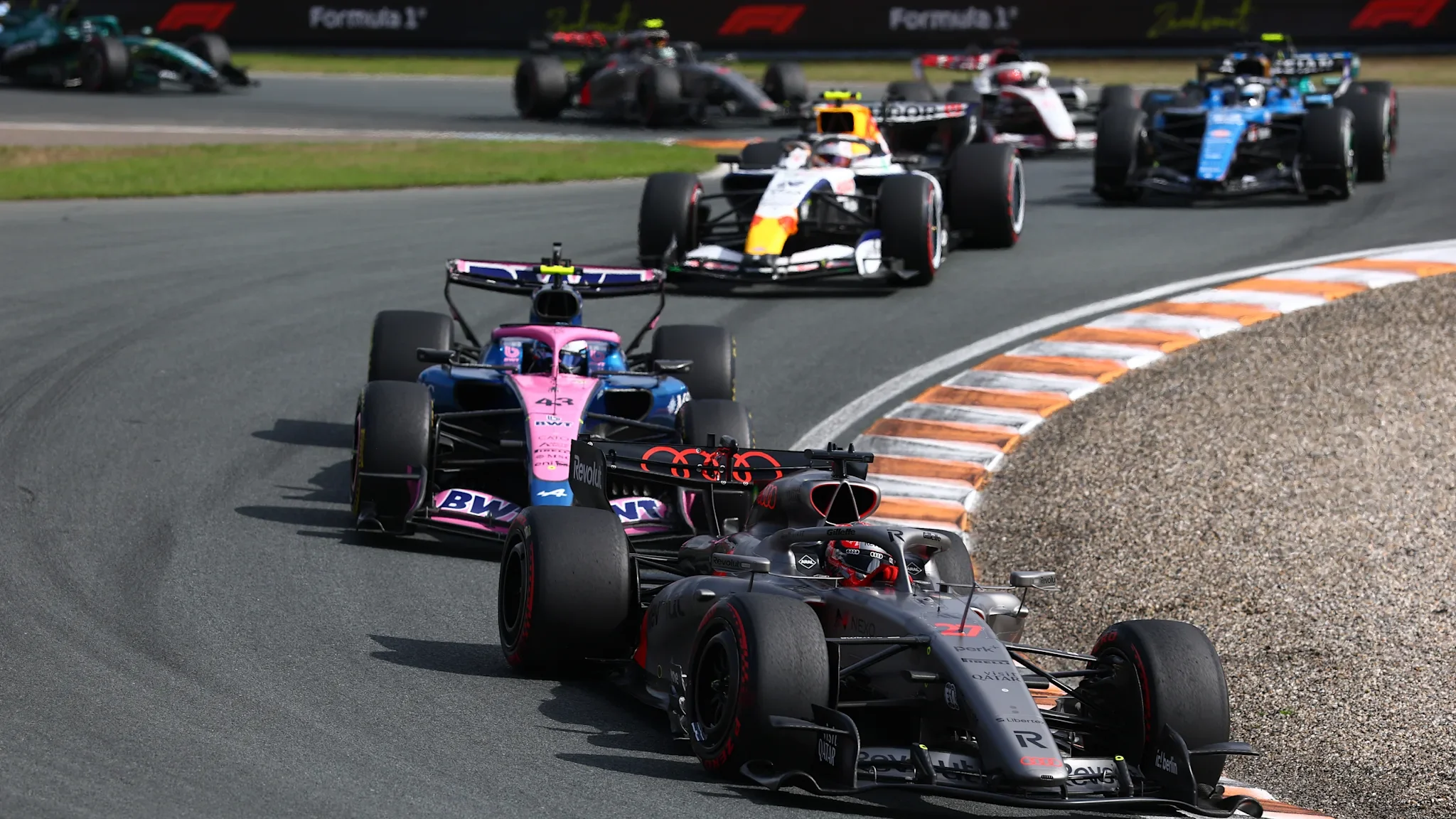
The remaining calendar is not a list of pre-assigned winners. It is a sequence of evidence checks. Eleven Grands Prix run from Monza on September 6 to Abu Dhabi on December 6, with the season's final Sprint in Singapore. The useful question is which team repeats its performance as layout, temperature, altitude and operating demands change.
September checkpoint
Monza · Madrid · BakuMonza and Baku test straight-line performance
Monza has cars at full throttle for about 80% of a lap, while Baku includes a roughly 2.2-kilometre flat-out run before Turn 1 and a tight old-town section. Together they expose energy deployment, drag, braking confidence and setup compromise. Madrid's new layout sits between them and adds uncertainty. If one contender is strong across all three rather than at one specialist track, that is a more durable championship signal.
October checkpoint
Sepang · Singapore SprintSepang and Singapore compress the test
The live calendar places the Bahrain Grand Prix hosted at Sepang on October 2–4, followed immediately by Singapore on October 9–11. Warm, humid conditions are an expected operational challenge, but event-week forecasts must decide the actual weather. Singapore matters mathematically too: it is the only Sprint left, offering up to eight additional driver points and 15 constructor points. Limited practice makes adaptation and clean execution more valuable.
Closing checkpoint
Austin to Abu DhabiThe six-race run-in rewards repeatability
Austin, Mexico City and São Paulo form a three-week run, followed after one weekend off by Las Vegas, Qatar and Abu Dhabi. COTA mixes an uphill Turn 1 with high-speed direction changes; Las Vegas is a long night street circuit; the final Middle East pair completes another back-to-back. That variety can confirm a genuine all-round improvement. It also makes a late zero costly because there are fewer weekends left to recover it.
Check the live 2026 F1 calendar before every round. Dates and event status are schedule facts; track-fit expectations remain scenarios until practice provides current evidence.
For the forecast, the strongest update is not a fastest practice lap. It is a clean weekend in which qualifying position, race pace, tyre life and both-car reliability point in the same direction. That evidence earns more weight than circuit reputation.
What would change this F1 2026 prediction?
A useful prediction needs a visible revision rule. This one changes when banked points, repeatable pace and reliability move together—not because a driver tops one practice session or because a dramatic result feels important. The first scheduled test is already known: Antonelli will take a grid penalty for a planned engine change at Monza.
Antonelli warning signs
The Monza penalty is both risk and mitigation. Starting lower creates an immediate scoring threat, while Mercedes chose the full engine change to reduce exposure to another technical loss. A recovery podium would strengthen the favorite case. A low score paired with a Hamilton, Russell or Norris win would compress the gap. Another mechanical non-score after the Barcelona retirement and Silverstone issue would force a larger downgrade.
Constructor momentum signals
Track both cars across two or three weekends. Ferrari's case becomes substantially stronger if Hamilton and Leclerc repeatedly deliver double podiums while Mercedes leaves one car outside the major points. McLaren needs Norris's winning pace and Piastri near the same group; one win plus sixth is not enough. The forecast will respond to sustained combined out-scoring, not a badge on the top step alone.
Where to check live updates
Use the F1 calendar before the weekend, then the race results after the chequered flag and the updated standings after classification. Results answer what happened; the forecast changes only after those points are combined with reliability and repeatable performance.
Three triggers that reopen the forecast
- Points compressionAntonelli's lead falls rapidly across consecutive rounds.
- Repeatable rival paceA challenger wins on unlike circuits without relying on leader trouble.
- Two-car reversalFerrari or McLaren repeatedly outscores both Mercedes entries.
Bottom line: Antonelli and Mercedes remain the evidence-based picks on August 31, 2026. The lead is meaningful, the calendar is long enough to challenge it, and the confirmed Monza penalty ensures the next update will be informative. Favorite is the correct word; certain is not.
The sensible revision point is after the official classification, not during a red flag or before a penalty decision. That prevents provisional positions from being treated as banked points and keeps every update comparable with the same August 31 baseline used throughout this guide.
Loading comments…