Formula 1's approved 2027 calendar packs nine Grands Prix into three triple headers: Australia–Japan–China in April, Azerbaijan–Türkiye–Singapore across September and October, and Austin–Mexico City–São Paulo across October and November. A triple header means three races on three consecutive weekends. That sounds simple on a calendar. The practical effect changes dramatically between an intercontinental spring run, a switch from two city circuits to Istanbul Park, and a late-season sequence where championship points can swing quickly.
Here are the exact dates, the gaps around them, and the questions each sequence raises for teams and fans. The race dates are confirmed by Formula 1 and the FIA; any claim about freight routing, fatigue or competitive advantage is identified as analysis unless an organizer has published it. Individual session times remain a separate check closer to each event.
All three 2027 F1 triple headers at a glance
A triple header is a sequence of three Grands Prix on consecutive weekends. By that definition, Formula 1's 2027 schedule contains exactly the three runs below. The dates are the published weekend dates, not individual session start times. All nine races are part of the 24-round calendar approved in September 2026.
| Run | Round | Grand Prix | 2027 weekend |
|---|---|---|---|
| April | 3 | Australia, Melbourne | April 2–4 |
| April | 4 | Japan, Suzuka | April 9–11 |
| April | 5 | China, Shanghai | April 16–18 |
| Autumn | 16 | Azerbaijan, Baku | September 24–26 |
| Autumn | 17 | Türkiye, Istanbul | October 1–3 |
| Autumn | 18 | Singapore | October 8–10 |
| Americas | 19 | United States, Austin | October 22–24 |
| Americas | 20 | Mexico City | October 29–31 |
| Americas | 21 | São Paulo | November 5–7 |
The distinction between the second and third runs is easy to miss. Singapore finishes on October 10; Austin begins two weekends later on October 22, leaving October 15–17 without a race. That gap breaks the chain. Likewise, Las Vegas on November 18–20 follows São Paulo after an empty weekend, so it is not a fourth race in the American triple header. Calling every crowded stretch a “triple header” blurs the decisions fans actually make about flights, leave from work and streaming times.
This table also exposes the sporting pattern. Nine of 24 races—more than one-third of the season—sit in these compressed windows. The April run can shape an early championship narrative; the late September–early November runs can put several points swings close together. Those are reasons to watch, not predictions of who will gain. For a date change or newly published timetable, use the live official 2027 calendar as the source of record.
Australia, Japan and China: the April run
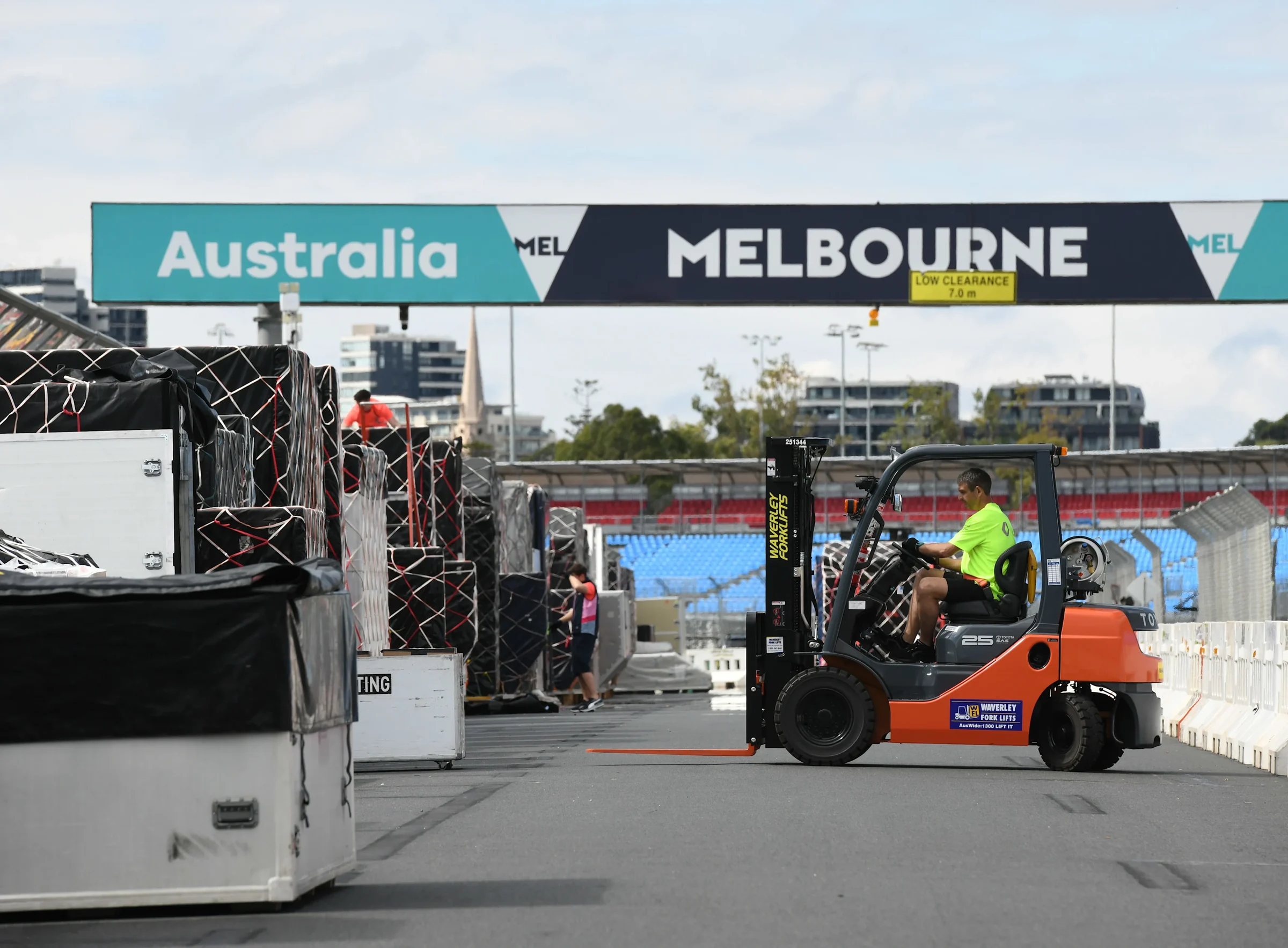
The first sequence begins at Melbourne's Albert Park on April 2–4, moves to Suzuka on April 9–11 and ends at Shanghai International Circuit on April 16–18. Formula 1 has deliberately grouped this stretch in the Asia-Pacific part of its calendar, but the grouping should not be confused with a short bus journey. It still means moving cars, equipment and personnel between three countries on successive weeks. Published race dates confirm that pattern; the exact cargo flights and staffing arrangements belong to the teams and logistics partners, not to a public calendar.
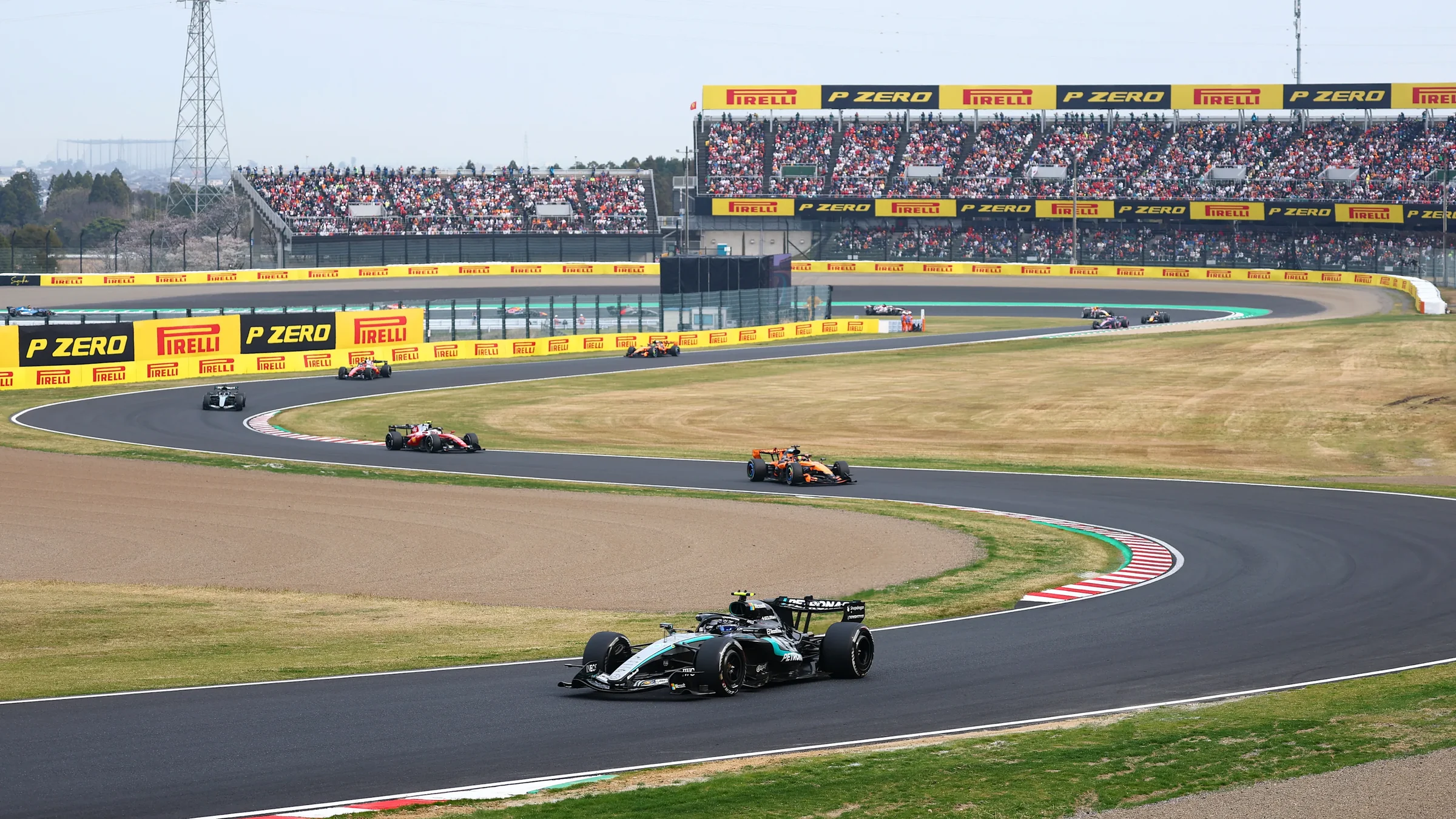
The sporting tests also change quickly. Albert Park is a park-road circuit where the weekend evolves as cars run and grip builds. Suzuka's figure-eight layout asks for sustained commitment through linked high-speed corners. Shanghai has long-radius turns and significant braking points that can reward a different balance. A car that looks settled in Melbourne is not guaranteed to reproduce that result in Japan or China. The short interval leaves little opportunity for a full factory rethink; a team may instead prioritize efficient setup changes and parts it can reliably move from one event to the next. That is a plausible operational response, not inside knowledge about any 2027 team's upgrade plan.
Why the middle weekend at Suzuka matters
Suzuka is one of Formula 1's five first-time Sprint venues for 2027, and Australia is another. A Sprint weekend gives teams a much smaller practice window before competitive sessions than a conventional three-practice weekend. That makes the middle stop particularly revealing: teams arrive after Melbourne, must make quick decisions for Suzuka, then depart for Shanghai without a spare race-free weekend. Setup errors have less time to be corrected on track, while a strong baseline can pay off twice in the same weekend through the Sprint and Grand Prix.
For viewers, the format changes which day is worth following. Friday can contain Sprint Qualifying rather than a second conventional practice; Saturday combines a Sprint with Grand Prix qualifying. Check the official session timetable before converting to your time zone, since precise 2027 start times can be published later. For attendees, the difference is even more concrete: a Friday ticket at Suzuka may buy competitive running rather than only practice. Our official 2027 Japan event page covers that event in detail. Here the wider point is the run's rhythm: three race weekends, two Sprint formats and three very different tracks before the championship reaches its sixth round in Miami.
Azerbaijan, Türkiye and Singapore: the September–October run
The second run begins in Baku on September 24–26, continues at Istanbul Park on October 1–3, and ends in Singapore on October 8–10. Formula 1's calendar explainer calls Türkiye the middle race of this triple header. The three stops are not interchangeable “Asian street races”: Baku is a city circuit with long full-throttle sections and tight urban corners; Istanbul Park is a permanent venue with elevation and high-speed, sustained corners; Singapore is a street circuit raced under lights. The calendar forces teams to change both geographic setting and technical emphasis each week.
A result in Baku may therefore be a weak guide to Istanbul form. A car that handles braking and traction on a street layout still has to support the loads of Istanbul's Turn 8. A good Istanbul balance may not answer the slow-corner and cooling questions posed by Singapore's city streets. These are circuit-characteristics comparisons, not claims about any team's 2027 pace. Weather and tire compounds can alter the emphasis further when each event arrives; they cannot be predicted from a September 2026 calendar announcement.
The return to Istanbul Park between two city races
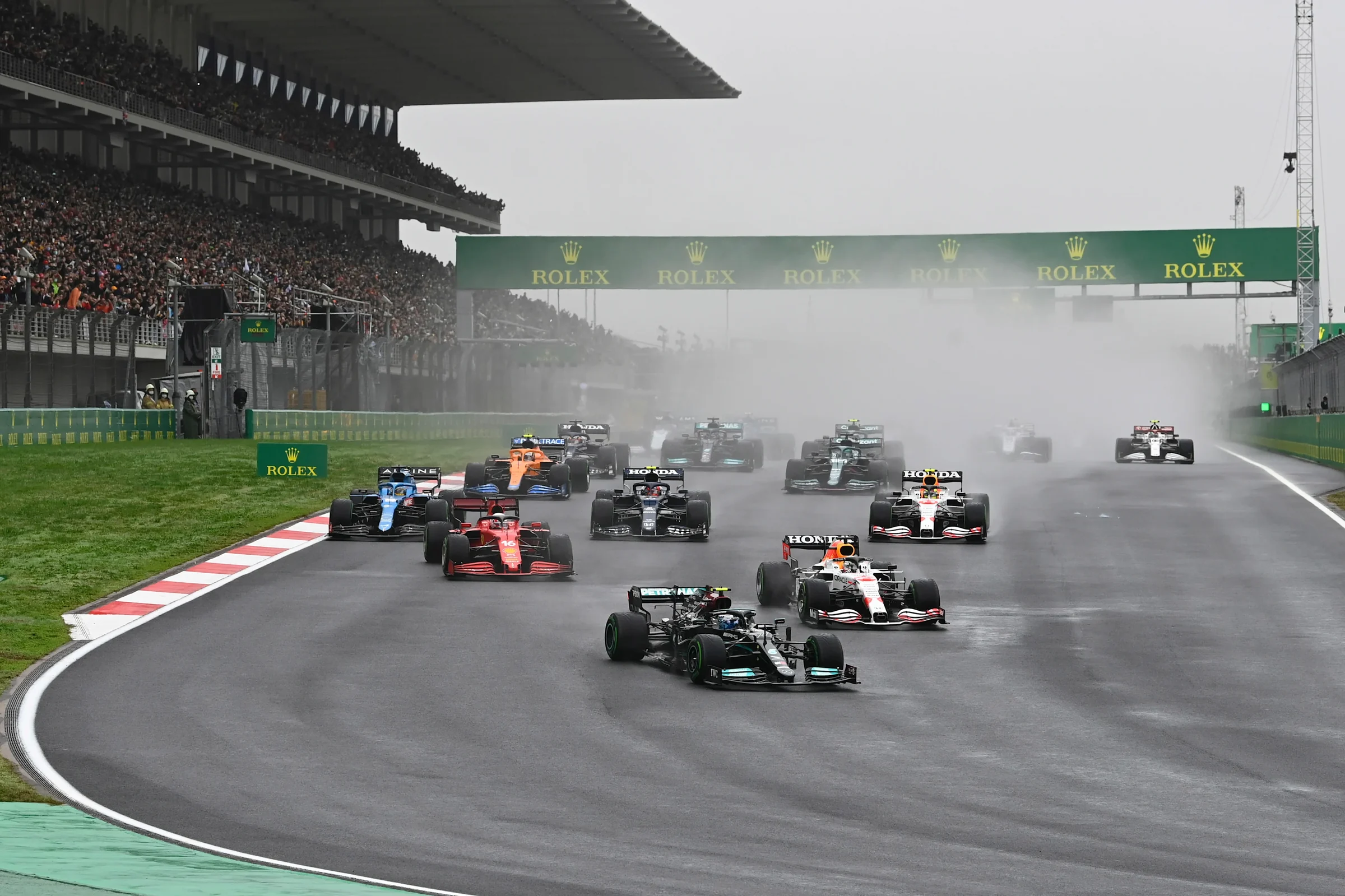
Türkiye is the distinctive middle stop because it is returning after its last Grand Prix in 2021. Formula 1 confirmed a new five-year agreement through 2031, and the official event page lists a 5.338 km circuit. The multi-apex Turn 8 has long made the venue a test of how a car carries speed while loaded sideways. On a triple-header timetable, teams will not have a race-free week after Baku to conduct a normal long reset before confronting that test. They can change setup and bring prepared parts, but the public calendar does not tell us what each garage will actually choose.
This middle-weekend placement also affects storytelling. If the championship is close after Baku, Istanbul becomes an immediate chance to answer a poor result rather than a distant rematch. If a team excels there, Singapore asks whether that gain is portable to a very different layout. The sequence can reveal versatility over three weeks; it does not guarantee a permanent shift in competitive order. There is an open weekend after Singapore before Austin, so the second run has a genuine stopping point.
What traveling fans should book separately
Following all three races is a substantial international trip, not a single ticket package implied by the calendar. Buy each race admission from that event's verified seller; compare each country's entry requirements for your own passport; and price the flight and ground transfer between cities independently. As of September 30, the official F1 Türkiye page is still taking waitlist registrations and says detailed 2027 circuit transport will follow. That makes Istanbul the leg where the last mile needs special attention before nonrefundable bookings.
For a realistic itinerary, reserve at least one travel day after each Sunday rather than treating the end of a race as an immediate airport departure. Track exit, bag collection, border formalities and changing time zones all consume time. If you are choosing just one race, ask what experience you want: an urban waterfront course, a fast permanent track, or a night street event. The calendar's compressed order is exciting for television viewers, but it does not require a fan to attempt the entire three-stop tour.
Austin, Mexico City and São Paulo: the late-season title run
The third run is the cleanest on a regional map: Circuit of The Americas hosts the United States Grand Prix on October 22–24, Mexico City follows on October 29–31, and São Paulo finishes the sequence on November 5–7. Teams still cross national borders and move a large operation each week, but fans can understand the time-zone progression more easily than the Australia-to-China or Baku-to-Singapore trips. If you want one three-race stretch to follow from the Americas, this is it.
The calendar positions these events at Rounds 19–21 of 24. That does not prove a title will be decided here. It does mean three results can accumulate over just 15 days from Austin's Friday opening to São Paulo's Sunday finish. A driver leading by a comfortable margin before Austin could protect it; a small gap could change quickly through qualifying, race starts, reliability or penalties. Rather than declare every late-season race a “decider,” check the actual points gap after Singapore and calculate what is mathematically available across these weekends.
The tracks complicate any simple momentum story. COTA mixes uphill braking at Turn 1 with quick direction changes and a long back straight. Mexico City's altitude makes cooling and aerodynamic performance different from a sea-level reference, according to the official F1 ticket description. Interlagos adds a compact lap with camber changes and a climb back toward the start-finish line. A setup that protects tires at Austin is not automatically ideal in Mexico, and a power-unit cooling compromise in Mexico may not matter in Brazil. The short gap between races favors disciplined adaptation, but only on-track data in 2027 will reveal who adapts best.
São Paulo is also an announced 2027 Sprint weekend. Its current event page lists Sprint Qualifying on Friday, a Sprint and Grand Prix qualifying on Saturday, and the Grand Prix on Sunday; start times are still TBC. That creates an extra competitive session at the end of a three-week run. For viewers, it is an additional reason to follow Friday rather than arriving only for Sunday. For teams, it means less routine practice time at the very race where everyone has just worked through Austin and Mexico. There is then an empty weekend before Las Vegas on November 18–20, which starts the season's final phase rather than extending this triple header.
Why three consecutive races strain a Formula 1 operation
A triple header is not just a sequence of Sunday television broadcasts. A team must finish the race, inspect and pack the cars, dismantle its garage, move equipment and staff, and rebuild a functioning workplace before practice begins at the next circuit. Formula 1's earlier behind-the-scenes account of a team's Australia shipment describes car chassis in specialized air-freight frames and separate shipments of garage and catering equipment. That example is from 2020; it shows the type of coordination involved, not a measured 2027 freight load.
The people who set up and strip garages can have a very different week from a driver who arrives closer to the first session. In a 2020 FIA press conference transcript, team leaders explicitly raised the toll of repeated three-race runs on mechanics and support staff, including the effect of overnight work after problems. Their comments cannot be treated as a direct assessment of the 2027 calendar or today's staffing models. They do establish that the workload issue is part of the sport's own operational debate, not merely an outside fan complaint.
Calendar efficiency and human workload can both be true
Formula 1 says the 2027 schedule groups races to improve geographical flow and support sustainability goals. There is a plausible logistics benefit to regional runs, particularly the Austin–Mexico City–São Paulo sequence, compared with repeatedly returning to Europe between flyaways. But a route that reduces some travel distance can still leave a mechanic, marshal support crew or broadcaster with very little recovery time between Sunday pack-down and Thursday preparation. The calendar alone does not quantify 2027 carbon savings, cumulative working hours or injury risk, so none should be stated as a measured outcome.
For racing, the compressed turnaround can sharpen the value of reliability and clear decision-making. Damage on Sunday may leave fewer hours to inspect a chassis and prepare a replacement for Friday. A new part that improves one circuit but complicates spares planning can be less attractive than a robust package usable across several tracks. Those are mechanisms a team might weigh; there is no basis in the public calendar to claim a named team will choose one path. Watch for verified team comments about freight, spares and staff rotation when the three runs approach, and separate those reports from speculation that a busy calendar automatically helps or hurts a particular constructor.
The same caution applies to fans' fatigue. Nine consecutive-event weekends are concentrated in three bursts, but not every viewer watches every practice session live. A fan in North America may find the Americas run easy to follow and the Melbourne–Suzuka–Shanghai run awkward, while an Asian viewer experiences the reverse. The useful complaint is specific: which session clashes with sleep or work, and whether the official timetable offers a replay. “Too many races” can reflect a real burden, yet the published calendar proves only the number and spacing of weekends.
For comparison with the preceding season, our 2026 calendar gaps and triple-header analysis explains how a different distribution of empty weekends changes the rhythm without claiming the same dates apply in 2027.
Where the 2027 calendar gives teams and fans breathing room
The triple headers are concentrated rather than continuous. After Shanghai's April 16–18 weekend, Formula 1 does not race again until Miami on April 30–May 2. Singapore's October 8–10 weekend is followed by Austin on October 22–24, and São Paulo's November 5–7 weekend is followed by Las Vegas on November 18–20. In each case, an empty race weekend breaks the chain. It can create time for travel, analysis or recovery, although a blank television Sunday is not automatically a holiday for the people shipping, repairing or developing the cars.
The biggest seasonal pause follows Hungary, scheduled July 30–August 1. Formula 1's own explainer calls the period before Monza on September 3–5 the summer break. That matters because the most compressed part of the calendar comes after the pause: Monza and Madrid on consecutive weekends, then one empty weekend, then the Baku–Istanbul–Singapore run. Fans tracking upgrades should look for what teams introduce after summer and how consistently that performance transfers across very different circuits. A headline from the first race back can be misleading if the next three weekends expose different weaknesses.
The season also does not end in a single unbroken block. Las Vegas sits after the American triple header; Qatar on December 3–5 and Abu Dhabi on December 10–12 form a final two-race run. Those two Middle Eastern events are a double header, not a fourth triple header. This distinction becomes practical if you are planning annual leave or a viewing calendar. Mark the nine triple-header weekends first, then the empty weekends that separate them, then the standalone or two-week stretches. It is easier to decide which races to attend or watch live when the calendar is grouped by actual consecutive weekends rather than by a vague “busy autumn.”
For every race you intend to follow, recheck the official event timetable when session hours are published. Race-weekend dates are already confirmed, but Friday and Saturday formats differ where a Sprint is scheduled, and broadcasts convert into different local days for international viewers. The best 2027 plan is therefore two-layered: lock in the sanctioned dates now, then update alarms, travel connections and ticket-day choices from the event pages later. The schedule tells us when the three intense runs occur; the eventual sessions and championship standings will tell us which moments within them matter most.
Loading comments…