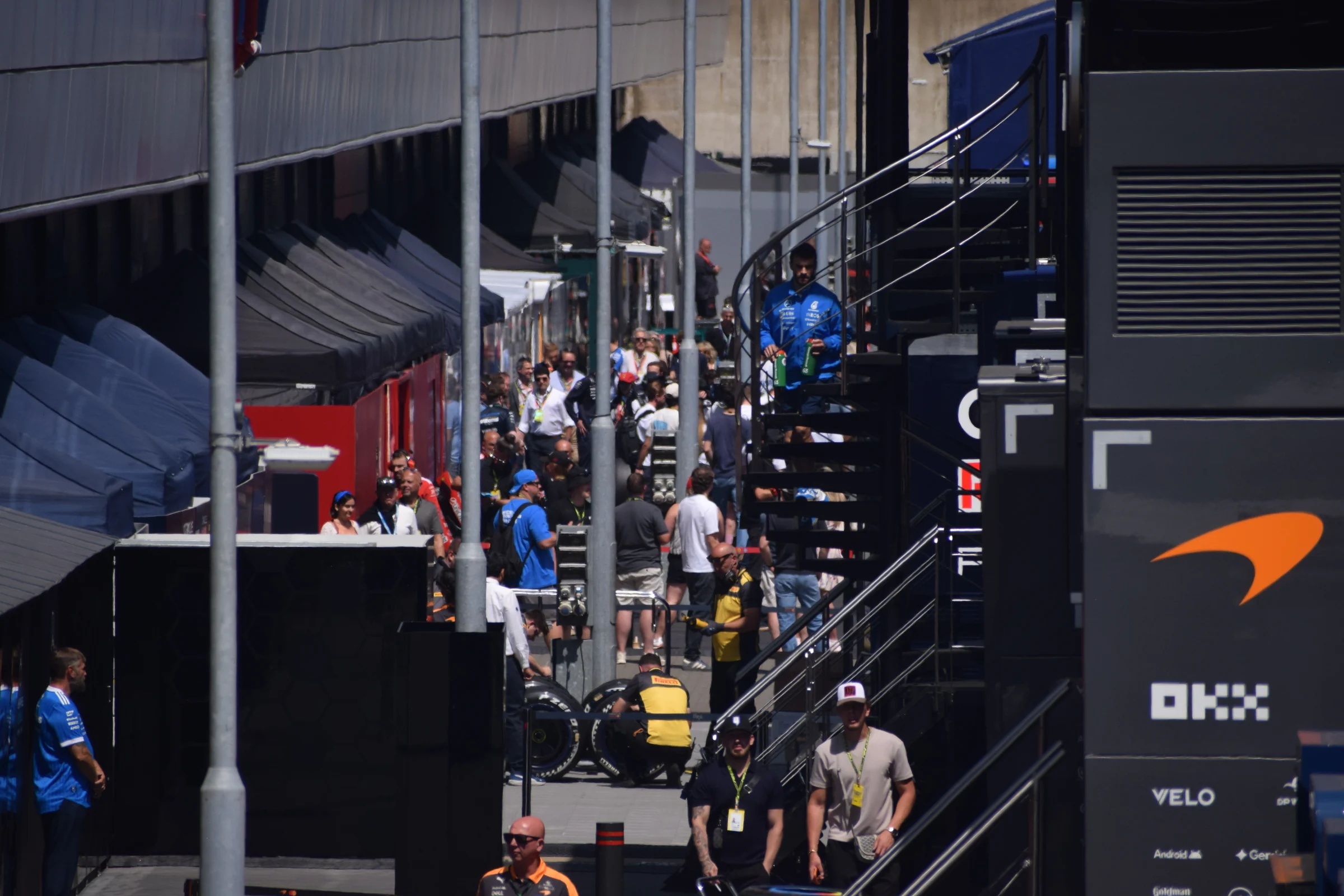
The 2026 Formula 1 season feels as if it cannot decide whether to stop or sprint. After Japan came a five-week wait for Miami. The familiar summer shutdown created another four-week race gap. Yet the revised autumn schedule compresses events into consecutive runs, including Azerbaijan–Sepang–Singapore and two further three-week blocks in the Americas and season finale.
That unevenness is partly designed and partly imposed. Formula 1 originally announced 24 rounds, but the Bahrain and Saudi Arabian Grands Prix did not take place in April amid the Middle East situation. Bahrain's event was later preserved at Malaysia's Sepang circuit in October; Saudi Arabia was not replaced. The live calendar therefore lists 23 rounds as of September 13, 2026.
This analysis maps the real gaps and triple-headers, separates the mandatory summer shutdown from an emergency cancellation window, and explains how freight, climate, promoter commitments and human recovery compete. It also shows why calendar fatigue matters to car reliability, upgrades and championship execution—not merely to how busy a fan's weekends feel.
The 2026 Calendar Changed After It Was Announced
The published calendar and the season actually raced are not identical. Formula 1 and the FIA originally announced 24 Grands Prix, beginning in Australia and ending in Abu Dhabi. That static announcement still ranks in search, but two April dates were removed and one event returned in an unprecedented-looking location later in the year.
Bahrain and Saudi Arabia left an April hole
Bahrain was scheduled for April 10–12 and Saudi Arabia for April 17–19. On March 14, Formula 1 confirmed that neither would take place in April because of the ongoing Middle East situation. The decision followed consultation with the FIA and promoters, and the official statement said no substitutions would be made in that month. Support-series rounds were affected too.
Removing a planned double-header did more than reduce race count. It erased the transition from Suzuka to two consecutive Middle Eastern weekends, leaving teams with freight, staffing and development plans built around events that no longer existed. For fans, the consequence was simple and dramatic: Japan ended March 29, while Miami did not begin until May 1.
Sepang brought one race back in October
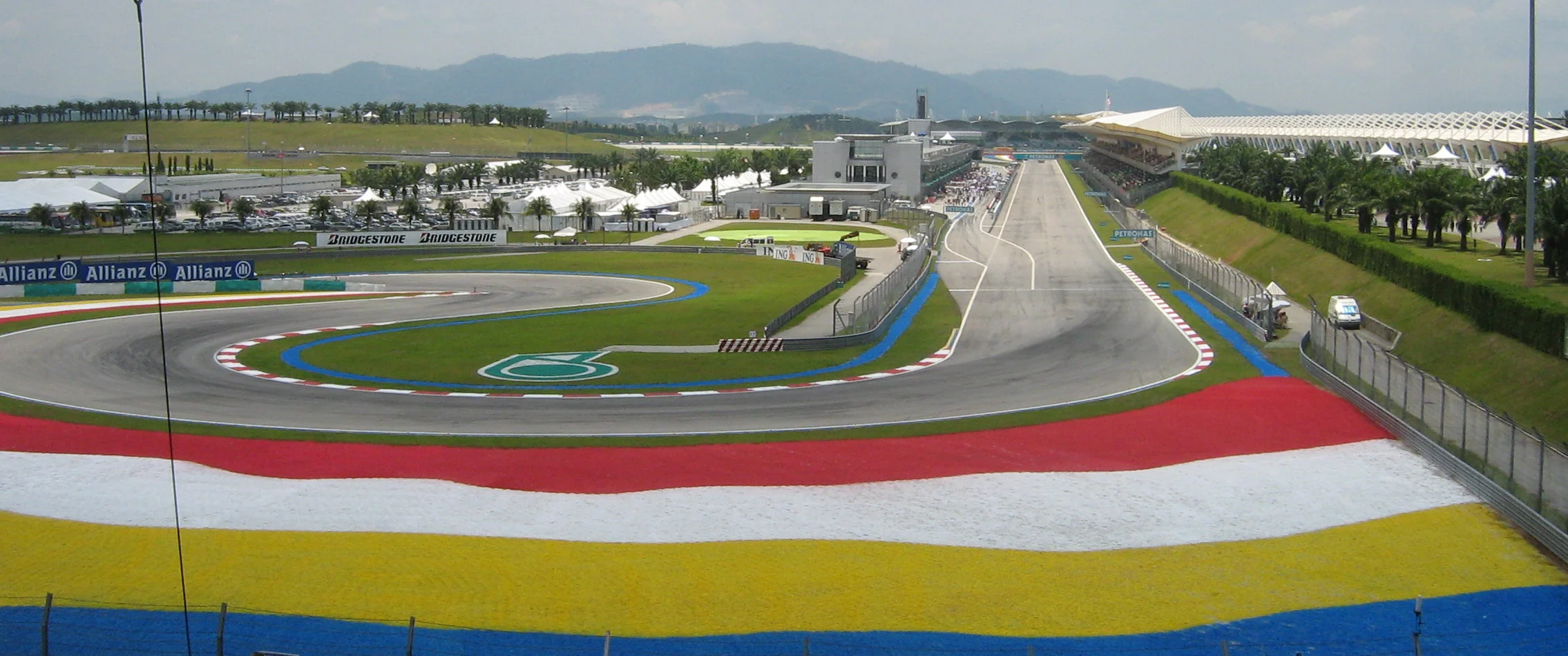
On July 26, F1 and the FIA announced that Malaysia would host the Formula 1 Gulf Air Bahrain Grand Prix at Sepang from October 2–4. The arrangement preserved one Grand Prix under its Bahrain title at a different host venue, positioning it between Azerbaijan and Singapore. The live calendar now includes Sepang as Round 16.
Saudi Arabia was not similarly restored, which is why the current total is 23 rather than the original 24. This also shifted workload instead of merely replacing it: an empty April became a tightly compressed late-September/early-October run. Always use the live 2026 F1 schedule rather than an old launch graphic when counting rounds or planning travel.
Where the Long Breaks Actually Fall
Two long gaps dominate the fan experience, but they have different causes and operational value. Japan-to-Miami was created by removed races. Hungary-to-Zandvoort was the planned summer recess. Counting both as generic “weeks off” hides what teams can realistically do.
Five weeks from Japan to Miami
The Japanese Grand Prix ran on March 29 and Miami on May 3: five weeks from race Sunday to race Sunday. Bahrain and Saudi Arabia were supposed to occupy two of those weekends. Once F1 decided there would be no April substitutions, the early championship went from three opening rounds to an extended pause before Round 4.
For new-regulation cars, the gap offered unusual analysis and manufacturing time. Teams could inspect three races of reliability, correlation and energy-management evidence without immediately preparing another race car. But competitive benefit depended on resources and upgrade lead time; a free weekend cannot instantly redesign a homologated component or create wind-tunnel allowance.
The summer shutdown is different
Hungary finished on July 26 and the Dutch Grand Prix followed on August 23, creating a four-week race interval. Unlike the April hole, this recess was built into the European season. It allows a structured reset after Belgium and Hungary, rather than requiring teams to improvise around suddenly canceled freight and staffing plans.
The shutdown is also not four uninterrupted weeks of development. Mandatory restrictions cover a designated part of the period, while preparation surrounds it. Drivers recover and train; factories schedule leave; logistics resets for Zandvoort. That enforced pause matters because without it, richer teams could turn the “break” into a continuous development sprint.
For viewers, the practical check is the next F1 weekend schedule. For analysis, ask why the gap exists: cancellation gaps redistribute work unpredictably; the summer break is an agreed recovery mechanism.
Where the Calendar Compresses Into Triple-Headers
After the long pauses, the revised calendar changes character. A triple-header means three Grands Prix on three consecutive weekends. It does not mean three races at one circuit, and it is more demanding than a double-header because teams cannot fully reset after the second event.
The first compressed run is Azerbaijan on September 24–26, the Bahrain Grand Prix hosted at Sepang on October 2–4, and Singapore on October 9–11. This sequence was not in the calendar originally announced in June 2025. Sepang was inserted later, between Baku and Singapore, so the current schedule now creates three straight race weekends. It is sensible to describe the revised sequence as a triple-header in practical terms, while recognizing that Formula 1’s original announcement did not label it that way.
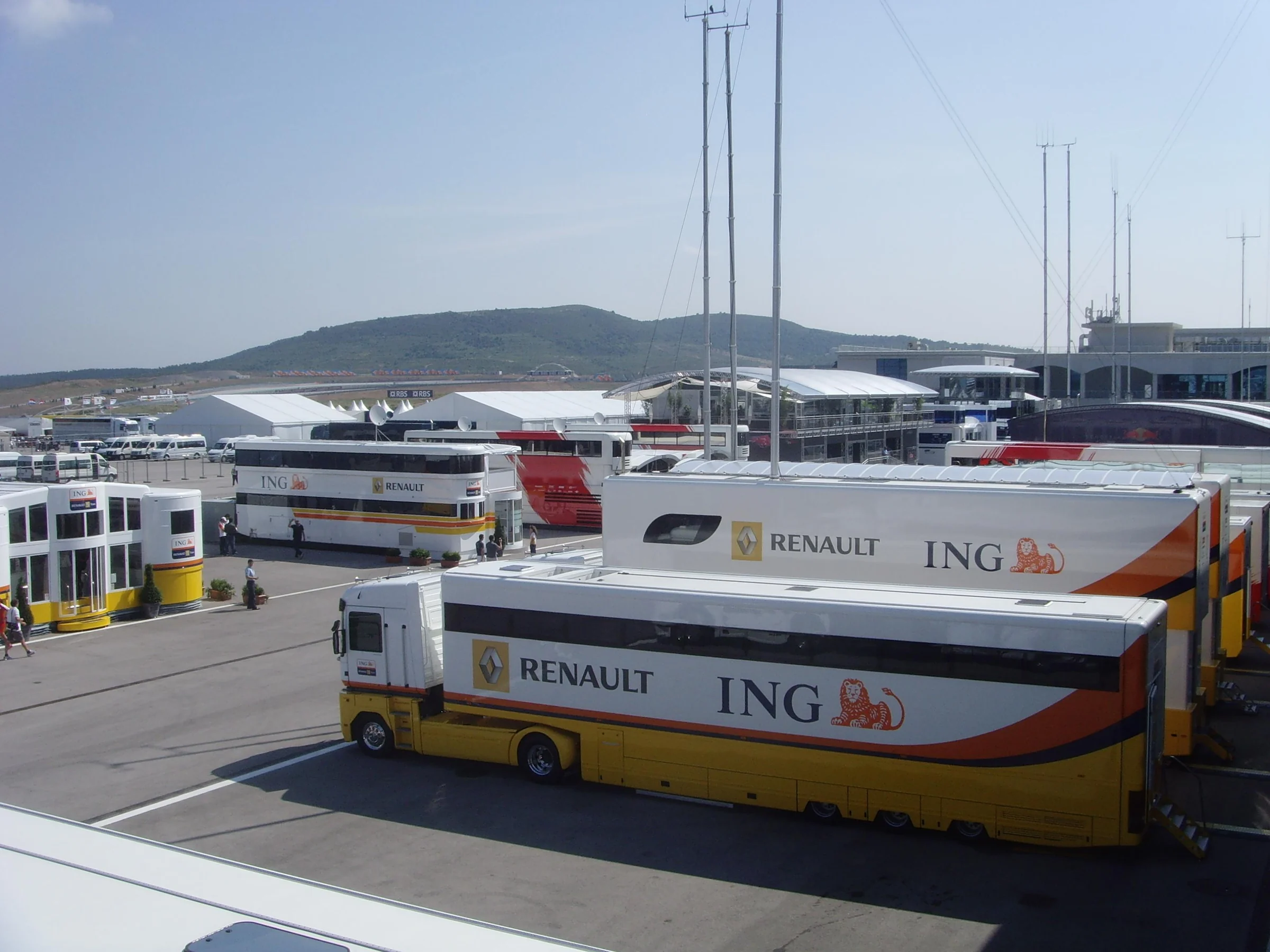
Two more clusters follow quickly. Austin on October 23–25, Mexico City on October 30–November 1 and Sao Paulo on November 6–8 form the Americas triple-header identified in F1’s original schedule release. After one free weekend, Las Vegas on November 19–21, Qatar on November 27–29 and Abu Dhabi on December 4–6 create the final triple-header. That means the last nine events are packed into eleven weekends, with only the weekends after Singapore and Sao Paulo left race-free.
The map matters as much as the count. Austin, Mexico City and Sao Paulo create a broadly southbound Americas route. Qatar and Abu Dhabi are close regional partners, although Las Vegas immediately before them still demands a major transatlantic move and a large time-zone change. The added Asian sequence follows a broadly west-to-east path from Azerbaijan through Malaysia to Singapore, but the late addition leaves teams adapting plans that were designed for a different calendar.
For a fan, the result is sustained championship momentum: qualifying, race and reaction repeat before the previous event has faded. For a team, the same rhythm means damaged parts, setup analysis and freight deadlines overlap. The calendar’s uneven feeling comes from placing these three intense blocks after unusually visible gaps, not simply from the total number of races.
Why Formula 1 Builds the Calendar This Way
A world championship cannot be arranged by drawing the shortest line between 23 circuits. Formula 1 is balancing freight, seasons, contracts, temporary-event construction, local restrictions and commercial demand. The 2026 schedule reflects all of them, which is why some sections look efficient while others look awkward.
Geography and freight efficiency
Regionalisation is a stated goal. In announcing the original calendar, F1 highlighted moving Canada directly after Miami as a way to create a consolidated North American leg and improve freight efficiency. The long European stretch also lets teams move much of their equipment by road from bases concentrated in Britain and Italy.
But “regional” does not mean every car component follows a single continuous route. Teams use multiple sets of garage and hospitality equipment, sea freight departs well in advance, and urgent performance parts often fly from factories. A sequence can reduce one category of travel while leaving personnel or newly manufactured spares on a different path. Monaco following Canada, before the rest of the European run, is a useful reminder that geography is optimized alongside other demands rather than solved perfectly.
Promoters, climate and global time windows
Every Grand Prix needs a workable date at its venue. Weather makes some circuits impractical in winter or summer. Street races require road closures and weeks of build work. Promoters have contracts, cities have event calendars, and television partners value certain local start times. The original 2026 plan also moved Bahrain and Saudi Arabia into April because Ramadan occupied February and March.
Those dependencies limit how freely F1 can shuffle cards. Australia remains a logical seasonal opener, Europe dominates the Northern Hemisphere summer, and Qatar plus Abu Dhabi fit the cooler end of the year. Yet a good climatic date may be a poor freight date, while the only contractual window for a major market may create an extra flight.
Finally, a calendar is exposed to events beyond its design. The Middle East security situation removed the planned April Bahrain and Saudi rounds. Adding Sepang later preserved one event but created a fresh consecutive-weekend run. The unevenness is therefore partly designed compromise and partly mid-season repair. Judging it fairly means comparing the live calendar with the assumptions behind the original one.
What Calendar Fatigue Changes on Track
Calendar fatigue is not a lap-time number, and it should not be used as a convenient explanation for every mistake. Its influence is subtler: compressed travel and turnaround reduce the margin available to prepare cars, recover people and solve problems before the next competitive session.
For mechanics, the chequered flag starts another deadline. Cars must be inspected, stripped where necessary, repaired and packed while equipment moves to the next circuit. If a driver damages a floor, wing or suspension at the first race of a triple-header, the team may need to consume spares intended for all three. Factories can manufacture replacements, but flight schedules and customs deadlines do not pause for the championship fight.
That pressure can influence development choices. A new floor is not just bolted on; engineers must compare data, understand whether it behaves as predicted, and decide which specification to carry. During a long gap, those stages can happen in sequence. During three consecutive events, analysis, production and race preparation overlap. A team may reasonably favor a proven package over a potentially faster but poorly understood update.
People also cross climates and time zones while fulfilling engineering meetings, media duties and sponsor work. Drivers have specialists helping them manage sleep, hydration and training, but recovery cannot be stockpiled. Traveling crew face longer physical workdays, and factory groups absorb the urgent requests sent home from the circuit. Teams rotate some staff, yet many specialist roles are difficult to duplicate completely.
On track, the possible effects appear at the margins: slower setup convergence, a delayed repair, conservative component use or less time to interrogate an anomaly. Fatigue may increase error risk, but attributing a particular pit-stop problem, crash or strategy call to tiredness requires evidence from the team. The responsible conclusion is that triple-headers narrow operational buffers; they do not predetermine who performs badly.
The uneven 2026 rhythm magnifies this contrast. April offered an unexpected block for analysis after three rounds. The autumn asks teams to execute nine events in eleven weekends. Championship momentum can therefore shift not only with raw car pace, but with reliability, spare-part depth and the ability to learn while moving.
How Fans Should Read the Rest of 2026
As of September 13, the simplest way to understand the remaining season is in three bursts. Azerbaijan, Sepang and Singapore run on consecutive weekends. A free weekend then leads into Austin, Mexico City and Sao Paulo. One more free weekend separates that block from Las Vegas, Qatar and Abu Dhabi.
Use the F1 schedule this weekend page for the immediate session order and local timing. The date printed for a Grand Prix usually identifies its race weekend, but practice, Sprint activity and qualifying may fall on different local days—and Las Vegas has its own Saturday-night race pattern. Recheck close to each event because a calendar date does not guarantee that every session detail will remain unchanged.
After the chequered flag, separate outcome from championship impact. The latest F1 results show the classification, while the F1 standings reveal how that result changes the points picture. This matters in a triple-header: a retirement can look catastrophic on Sunday, yet the driver has two immediate opportunities to respond before the calendar pauses.
The uneven rhythm also changes how to interpret form. A breakthrough after a long break may reflect an upgrade produced during extra factory time. Repeated strength across three consecutive venues is stronger evidence of adaptability, because teams have little opportunity for a fundamental redesign. Conversely, one weak result amid travel and unusual circuit demands should not automatically be treated as a lasting decline.
For the latest event status, return to the F1 Schedule home page rather than relying on the original June 2025 announcement. That first version explains the calendar’s design; the live schedule is the authority for what is actually next.
Loading comments…