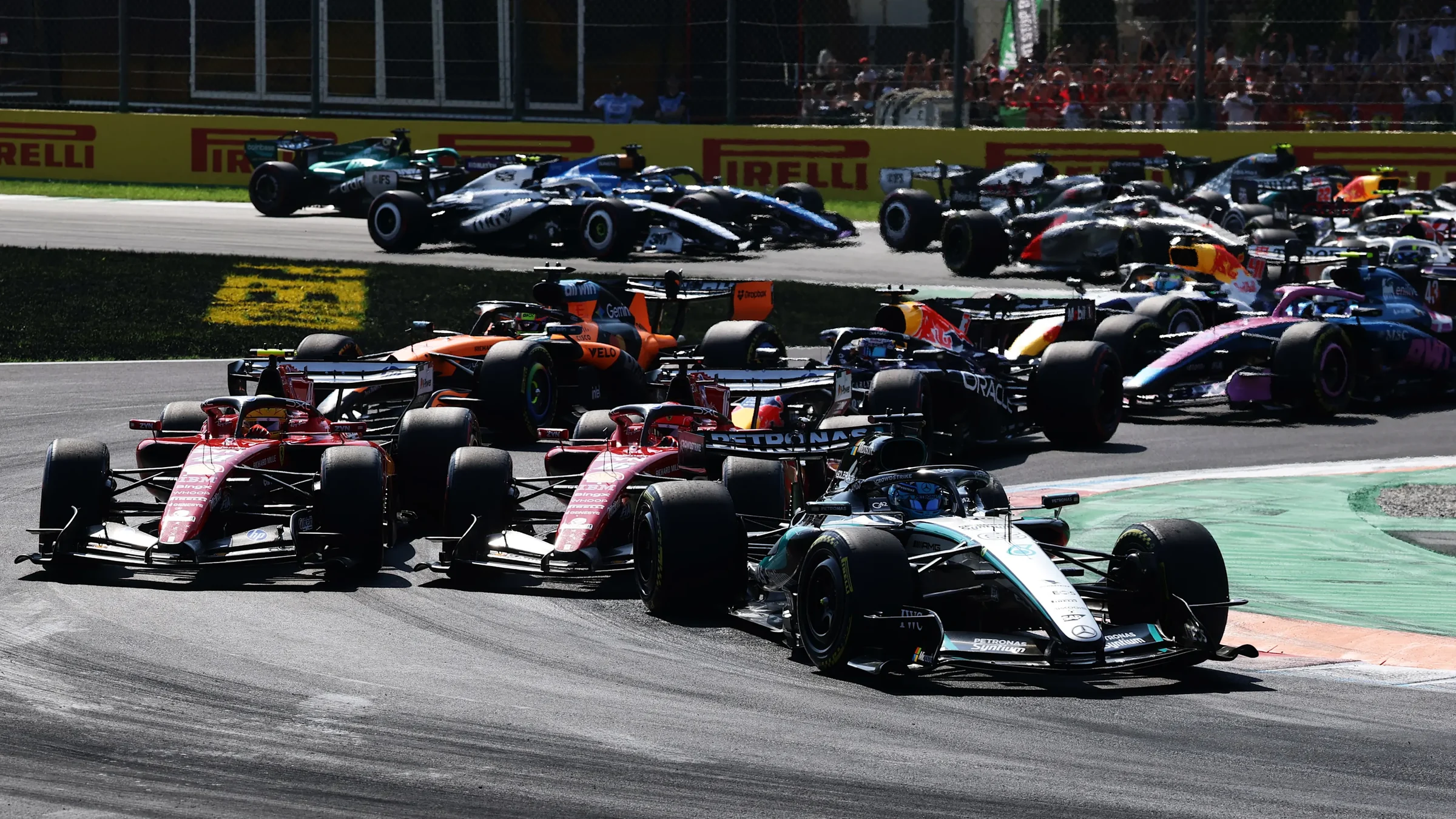
The 2027 Formula 1 season has 10 confirmed Sprint weekends, four more than 2026. Bahrain, Australia, Japan, Monaco and Abu Dhabi will stage the format for the first time. Canada, Great Britain, Italy, Brazil and Qatar complete the list. The calendar matters as much for its placement as its size: three of the opening four Grands Prix include a Sprint, and the season ends with two Sprint weekends in succession.
Below are the official Grand Prix weekend dates for all ten events, followed by the Friday-to-Sunday format, the points available, and the scheduling details a fan should check before buying a ticket or setting a viewing reminder. These are weekend dates, not guaranteed session start times. Formula 1 has announced the 2027 race calendar and Sprint hosts, while detailed local session schedules may still be finalized or revised closer to each event.
The complete 2027 F1 Sprint calendar
Formula 1 has confirmed the ten Sprint venues, and its approved 2027 race calendar provides the dates below. Each range covers the whole Grand Prix weekend, normally Friday through Sunday. It does not mean the Sprint itself runs on every listed day. The short race is scheduled for Saturday under the current format, with Sprint Qualifying on Friday and the Grand Prix on Sunday.
| Round | Grand Prix | 2027 weekend | Sprint history |
|---|---|---|---|
| 1 | Bahrain | March 12–14 | First Sprint |
| 3 | Australia | April 2–4 | First Sprint |
| 4 | Japan | April 9–11 | First Sprint |
| 7 | Canada | May 21–23 | Returning |
| 8 | Monaco | June 4–6 | First Sprint |
| 10 | Great Britain | July 2–4 | Returning |
| 14 | Italy | September 3–5 | Returning |
| 21 | Brazil / São Paulo | November 5–7 | Returning |
| 23 | Qatar | December 3–5 | Returning |
| 24 | Abu Dhabi | December 10–12 | First Sprint |
Five venues are new to the format. The opener in Bahrain and finale in Abu Dhabi are the most conspicuous additions, because they put Sprint points at opposite ends of the championship. Australia and Japan give teams consecutive Sprint weekends in April, while Monaco brings the format to a circuit where Saturday qualifying has long mattered heavily to track position. Canada, Silverstone, Monza, São Paulo and Qatar have already hosted Sprints, though their return should not be mistaken for an unchanged competitive picture: the cars, rules and championship order in 2027 can make familiar circuits play very differently.
Notice the breaks as well as the clusters. Saudi Arabia, round two, has no Sprint on the announced list. Neither does China, round five. After Silverstone in July, the next Sprint is Monza in September; after that, São Paulo in November precedes the two-event December finish. This irregular rhythm is why a calendar alert labeled merely “F1 weekend” is inadequate. A fan who wants both qualifying sessions and the short race should check each event's detailed schedule rather than assume the same three-day program every week.
Three of the first four weekends have Sprints
The opening sequence is unusually concentrated: Bahrain, Australia and Japan each have a Sprint, with only the Saudi Arabian Grand Prix separating Bahrain from the two April events. That means three chances to score the short-race points before round five in China. It also means teams face three weekends with only one free-practice hour rather than the three practice sessions of a conventional Grand Prix. The sporting consequence is a reasonable inference, not a forecast of which team will be fastest: a car that arrives with a workable baseline and a crew that can diagnose it quickly may waste less time before competitive running begins.
Bahrain opens with an extra points race
Bahrain hosts the season opener on March 12–14 and its first F1 Sprint. Formula 1's event page already gives the session order: practice and Sprint Qualifying on Friday, the Sprint and Grand Prix qualifying on Saturday, and the Grand Prix on Sunday. The clock times are marked TBC. For a team, Friday is therefore more compressed than a normal opening weekend. A decision made after one practice session has to hold up in a qualifying session the same day, although teams still have later opportunities under the regulations to prepare the Grand Prix portion of the weekend.
The venue also hosts the scheduled four-day pre-season test on February 24–27. That creates useful recent running at the same circuit, but it is not a substitute for treating test lap times as a clean form guide. Fuel loads, run plans, track conditions and the difference between test and race-weekend objectives can all distort a simple ranking. What the schedule does establish is that teams have about two weeks between the end of that test and the first competitive Friday. A fan should watch how efficiently each operation converts its winter program into an actual Sprint Qualifying result, rather than declare a title favorite from testing headlines.
Australia and Japan follow on consecutive weekends
Melbourne's Australian Grand Prix runs April 2–4; Suzuka follows immediately on April 9–11. Both are first-time Sprint hosts. The two circuits ask different questions of a car, so a single strong Friday result in Melbourne does not guarantee the same result at Suzuka. With only FP1 at each event, teams will have to arrive with useful simulation and setup work already done, then decide which issues deserve their scarce track time. This is about preparation pressure, not a claim that any particular team has solved or failed the 2027 cars.
Japan sits inside an Australia–Japan–China three-race run, but China is not on the announced Sprint list. That distinction matters when booking flights or setting alerts: Australia and Japan offer two Saturday short races; China follows with the ordinary event structure unless the official calendar changes. Fans making the Suzuka trip can use our 2027 Japanese GP Sprint and ticket guide for the separate on-site planning details.
Monaco and the established Sprint stops
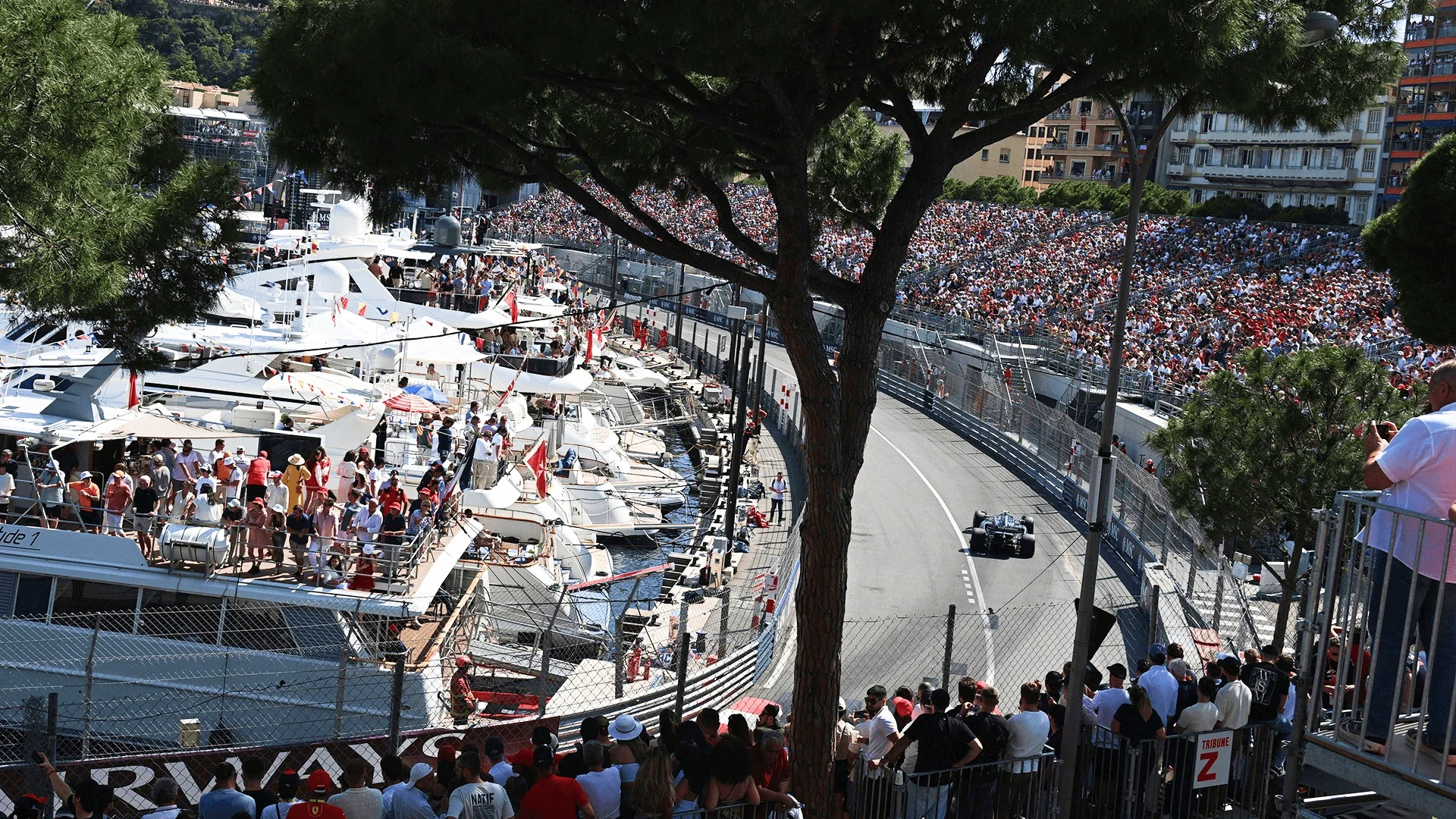
Monaco is the headline newcomer because its street layout makes the value of a qualifying lap unusually easy to understand. A Sprint adds another timed session on Friday, yet it does not remove the Grand Prix qualifying session on Saturday. For fans who prize the sight of a driver threading a car through Monaco's barriers on a low-fuel lap, that is a meaningful schedule change. Whether the Saturday short race itself will provide much passing is a separate and unresolved question. The official circuit description openly acknowledges that overtaking is difficult on these narrow streets.
Why Monaco's Friday qualifying matters
The Automobile Club de Monaco's provisional program and Formula 1's event page agree on the F1 order for June 4–6: FP1 and Sprint Qualifying on Friday; Sprint and Grand Prix qualifying on Saturday; Grand Prix on Sunday. Formula 1 still displays TBC for individual start times. Friday therefore becomes a day with a competitive classification, not just setup runs. That is especially interesting at Monaco, where a clean flying lap requires traffic management and precision through a circuit with very little runoff. A mistake in Sprint Qualifying affects Saturday's Sprint starting order, but it does not automatically assign the starting grid for Sunday's Grand Prix.
The central fan disagreement is understandable. One side sees another race at a venue with limited overtaking as an awkward fit; the other sees two qualifying contests as a stronger three-day ticket. Neither position predicts what a 2027 Sprint will actually look like. Weather, incidents, safety cars and the competitive spread will only be known at the event. The grounded takeaway is narrower: qualifying and track position should remain worth close attention, while fans should judge the new format after seeing the actual racing rather than equate an extra Sprint with guaranteed passing.
Canada, Silverstone, Monza and São Paulo return
Four returning Sprint venues form the middle and late-season spine of the program. Canada is scheduled for May 21–23, Silverstone for July 2–4, Monza for September 3–5 and São Paulo for November 5–7. Formula 1 describes Canada as a second consecutive Sprint host, Silverstone as a third-time host, Monza as a second-time host and São Paulo as the most experienced Sprint venue. The Monza circuit has separately confirmed its 2027 dates and Sprint return.
Their distribution matters more than any generic claim that a Sprint always creates the same race. Canada's May event arrives before the Monaco debut. Silverstone is the last Sprint before the summer stretch, Monza restarts the Sprint program in September, and São Paulo comes before the decisive December pair. Each may reward a different balance of straight-line speed, cornering and tire management, but the 2027 pecking order cannot be assigned a year in advance. Qatar, the fifth returning venue, belongs to the title-fight discussion because it directly precedes Abu Dhabi.
What actually happens on a Sprint weekend
A Sprint weekend still leads to a Sunday Grand Prix. The extra race replaces one of the normal practice sessions, while Sprint Qualifying replaces another. The key distinction is that Friday's Sprint Qualifying sets Saturday's Sprint grid, whereas Saturday's regular qualifying sets Sunday's Grand Prix grid. A fan who watches only the short race and assumes its finishing order is Sunday's starting order will misunderstand the weekend.
Friday: one practice and Sprint Qualifying
Formula 1's published 2027 explainer describes a single 60-minute practice before Sprint Qualifying. Its three knockout segments are SQ1 for 12 minutes, SQ2 for 10 and SQ3 for eight. This is an aggressive transition from gathering data to setting a grid. Teams have less track time to compare setup options than on an ordinary weekend, and drivers have fewer laps to learn changing grip or traffic patterns before a competitive timed session. The result establishes the Sprint starting order only.
The reduced practice volume can make a poor initial choice more visible, but it does not prove that the quickest FP1 car will win the Sprint. Qualifying demands a short, clean lap; the race adds starts, tire behavior and traffic. Monaco makes the contrast particularly sharp: a driver can deliver a superb Friday qualifying lap and still face a different challenge over Saturday's short race. Since the formal 2027 sporting regulations may be refined, specific tire and setup restrictions should be checked again near the event rather than assumed from an older season.
Saturday: Sprint race and Grand Prix qualifying
The Sprint covers roughly 100 kilometers and, in Formula 1's description, typically lasts around half an hour. There is no mandatory pit stop. That brevity usually reduces the room for a planned tire-change strategy, making the launch and first-lap position more consequential. It does not ban a pit stop if a driver has a problem or conditions demand one. After the Sprint, the usual Grand Prix qualifying session gives everyone a separate route to Sunday's grid.
“Separate” needs a small qualification. The Sprint finishing order is not automatically carried into the Grand Prix, but an unserved penalty or significant crash damage can still affect the following race under the applicable rules. A driver who gains places in the short race has earned Sprint points, not an automatic Sunday advantage. This is why Saturday has two distinct stories: a race for immediate points and a qualifying session for the main event.
Sunday: the Grand Prix remains the main event
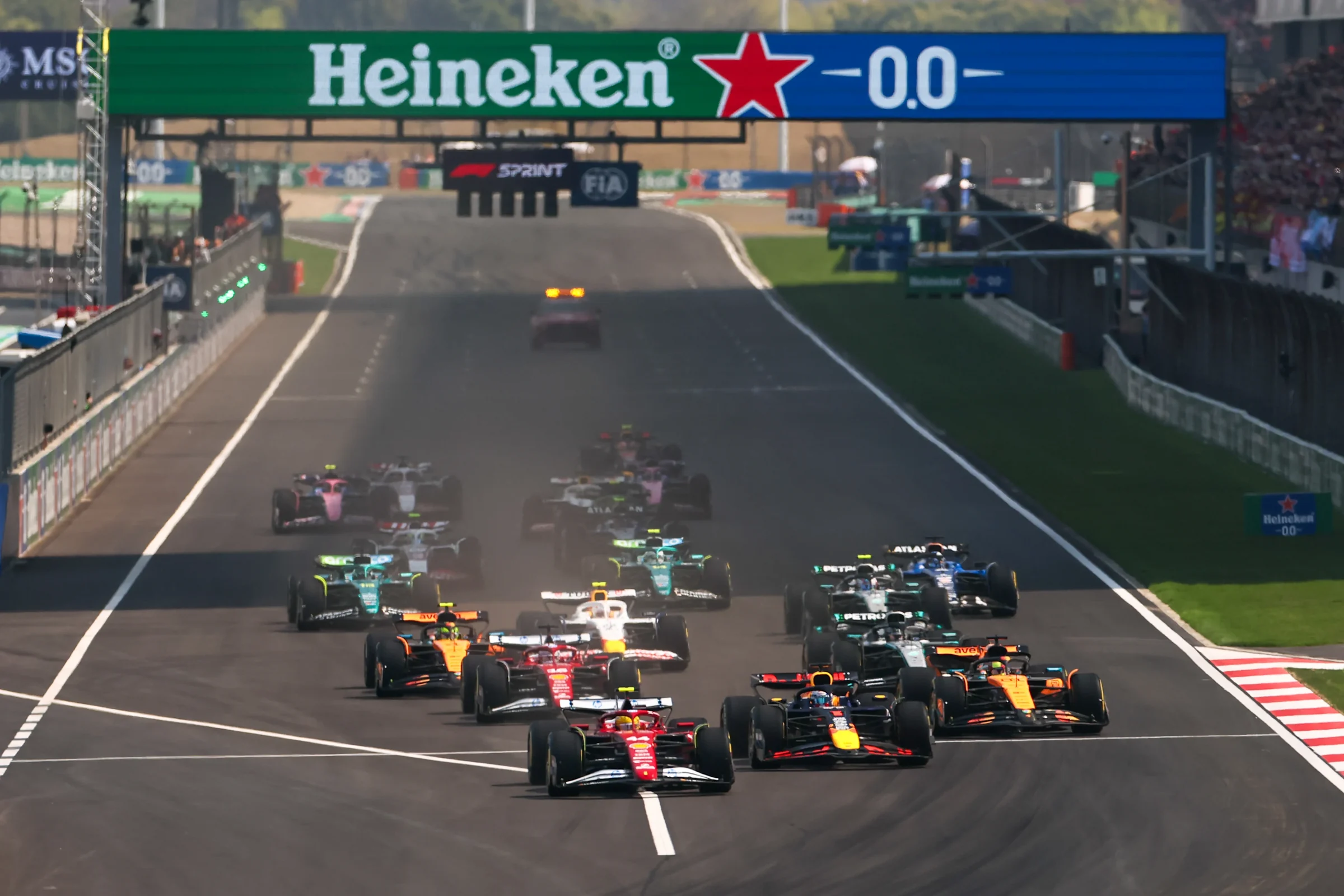
Sunday is the full Grand Prix, with a longer strategic horizon than Saturday's dash. Tire degradation, pit-stop timing, traffic after a stop and safety-car timing can all matter in ways that a roughly 30-minute Sprint rarely permits. A Sprint can offer clues about pace or tire behavior, but the distance, grid and conditions differ enough that it is not a reliable rehearsal of the Grand Prix result. The clean viewing plan is to treat all three days as separate competitive sessions, then verify local start times on the relevant official event page when those times are published.
How ten Sprints can affect the title fight
Adding four Sprints does not create four extra Grands Prix; the 2027 championship still has 24 scheduled main races. It does create four additional opportunities for short-race points relative to 2026. Where those points land matters. An early advantage can change the standings before the European season; late points can keep a title contest alive or help close it. None of that tells us who will be in contention in December. It only identifies the leverage built into the confirmed calendar and the scoring scheme Formula 1 currently describes.
Eight points for the winner, one for eighth
The current Sprint scale pays the first eight finishers 8, 7, 6, 5, 4, 3, 2 and 1 point. Ninth scores nothing. Across ten Sprints, a driver who won every one could collect 80 Sprint points if that scale remains in force. That is a mathematical ceiling, not a credible season prediction. The more useful comparison is the swing between rivals on a particular Saturday: first versus second is one point; first versus ninth is eight. Over a tight championship, a string of small Saturday gains can add up, but the much larger Sunday races continue to dominate the points picture.
A Sprint can also sharpen the Constructors' Championship because two cars can score in the same short race. A team with both drivers inside the top eight may gain ground even when neither wins. Conversely, a single-car result can leave points on the table compared with a rival that brings both home. Those are examples of scoring exposure, not claims about which constructor will execute best in 2027. For real results and the evolving table, check the site's F1 standings once the season is under way.
Qatar and Abu Dhabi create a points-heavy finale
The last two Grands Prix are scheduled a week apart: Qatar on December 3–5 and Abu Dhabi on December 10–12. Both include Sprints. Formula 1 itself calls attention to that back-to-back finish, because a contender could score in four separate races across the two weekends: two short Sprints and two Grands Prix. The final Saturday in Abu Dhabi may therefore carry championship points before the last Sunday even begins. It is easy to imagine a mathematically open title fight lasting longer than it otherwise would, but whether that actually happens depends on the standings at the time.
Fans should watch the points gap, not just the number of events left. Under the current Sprint scale, an eight-point gap can disappear in one Saturday if one rival wins and the other finishes outside the top eight. A one-point gap can change hands with a first-versus-second finish. Those examples ignore the following Grand Prix and any future rule changes; they simply show why the sequence matters. Before calculating a 2027 clinching scenario, verify the then-current FIA scoring rules and the official classified results, including any penalties.
How to plan tickets and viewing without guessing session times
The announced Grand Prix dates are useful for booking time away, but a Friday-to-Sunday range is not a broadcast schedule. Formula 1's Bahrain and Monaco event pages currently identify the sessions and mark the exact clock times TBC. A Saturday ticket should therefore be evaluated for its actual admission terms and seating, not against a made-up Sprint start time copied from a previous year. Likewise, a streaming reminder should be created only after the official session schedule is posted.
Start by deciding which session you really want. A fan interested in Monaco's low-fuel qualifying laps should look for access on both Friday, when Sprint Qualifying is planned, and Saturday, when Grand Prix qualifying follows the Sprint. A fan prioritizing actual race action might focus on Saturday and Sunday instead. A three-day pass, a Saturday-only pass and a Sunday-only pass are different products; read the event promoter's inclusions, grandstand location, transfer rules and refund terms before paying. The Sprint label alone does not tell you which days a particular ticket covers.
If you will watch from another time zone, use the event page's track-time and my-time display once exact start times appear. The same Saturday local session can be early Sunday for a viewer across the Pacific; daylight-saving rules can also change the offset between now and race week. Add the sessions to a calendar using the official event calendar function, then recheck shortly before the weekend. That small second check matters because weather, support-series timetables or operational changes can move session times after an early reminder was created.
For television or streaming, the site's F1 TV schedule can help identify current viewing routes, but verify 2027 rights and listings when the new season approaches. Broadcast agreements can change. For travel, our Japan 2027 Sprint ticket guide covers the Suzuka-specific questions. Above all, keep the distinction visible: the ten venues and weekend dates are confirmed on the calendar; exact start times, ticket inventory and broadcaster listings require later event-specific checks.
Loading comments…