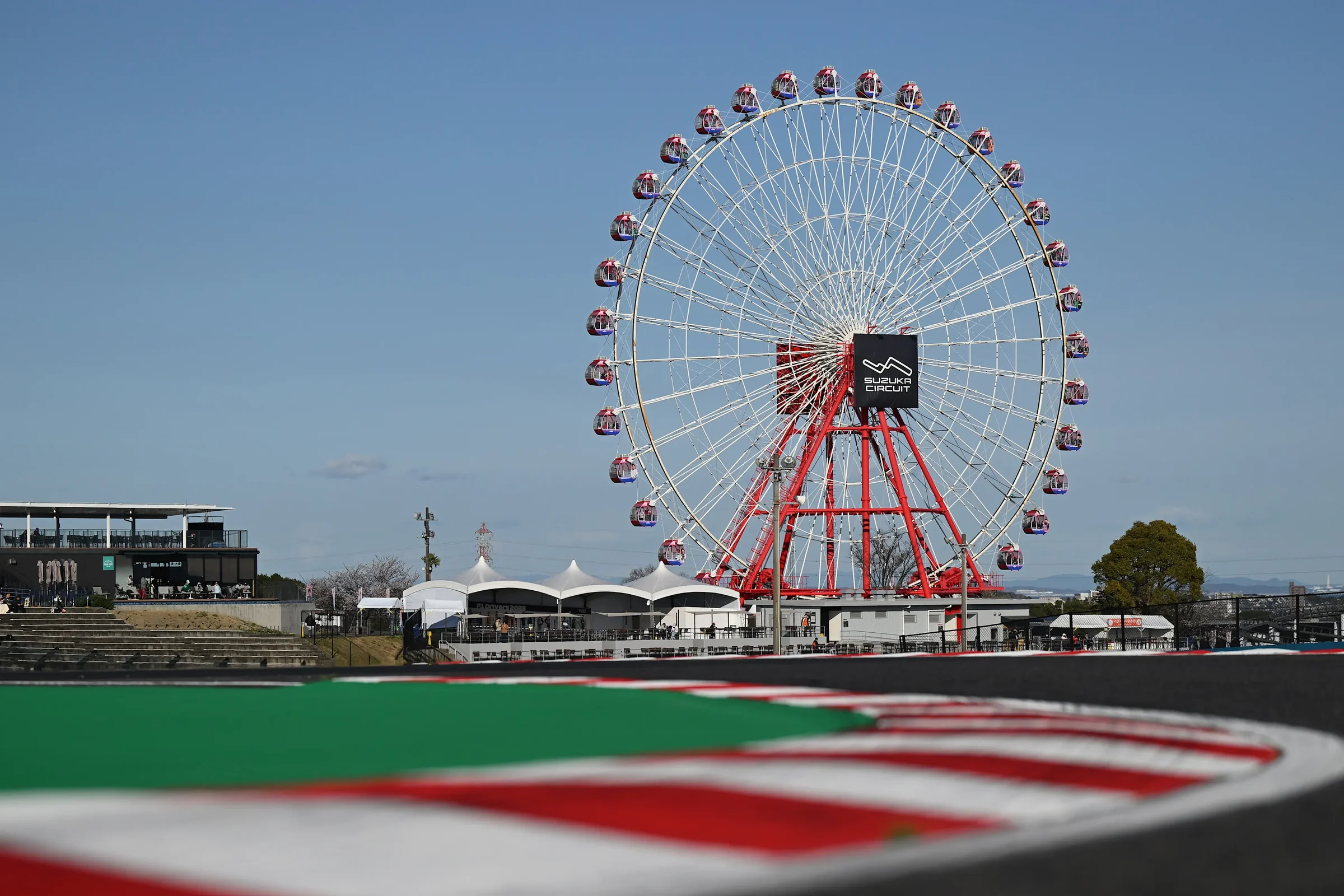
The 2027 Japanese Grand Prix runs April 9–11 at Suzuka, and this edition adds something the circuit has never hosted before: an F1 Sprint. Friday now has Sprint Qualifying, Saturday pairs the short race with Grand Prix Qualifying, and Sunday remains the main event. For a spectator choosing a ticket, that changes the value of every day. A Friday admission is no longer just a chance to hear the cars and watch teams gather data.
Suzuka says its own ticket sale opens November 15, 2026 at 11:00 a.m. Japan time. The venue has published seat categories and starting prices, although availability and exact inclusions depend on the product. Formula 1 has confirmed the race dates and Sprint designation; specific session start times should be checked again closer to the event. This guide separates those confirmed details from choices you can make now: where to buy, which part of the figure-eight circuit suits your interests, and how to arrange a three-day visit around the new format.
When is the 2027 Japanese Grand Prix?
Formula 1's approved calendar places Suzuka on Friday, April 9 through Sunday, April 11, 2027. Japan is the fourth Grand Prix of the year, after Bahrain, Saudi Arabia and Australia, with China following one week later. That sequence matters if you are traveling internationally: the teams arrive after a race in Melbourne and face another race immediately afterward, so the Japanese weekend is part of an unusually dense opening stretch rather than a stand-alone spring exhibition.
The three published race dates describe the event window, not every session's local start time. Suzuka's event explanation names Free Practice 1 and Sprint Qualifying on Friday, the Sprint and Grand Prix Qualifying on Saturday, and the Grand Prix on Sunday. The circuit also advertises a Thursday and Friday admission product, but Thursday access should not be confused with a fourth day of F1 competition. Check the product's access terms before paying for it, especially if your arrival flight lands late on Thursday.
As of September 30, 2026, the official material checked for this guide does not provide a complete session timetable with clock times. Hotels, trains and flights can be planned against the confirmed dates; an hour-by-hour viewing itinerary should wait for the promoter's timetable. If your trip can absorb a delay, arriving before Friday morning and departing after Sunday night gives more room for travel disruption than flights that touch down just before Sprint Qualifying or leave immediately after the checkered flag. Japan's rail network is efficient, but race-day crowds can still turn a tight connection into a gamble.
F1's full 2027 calendar contains 24 Grands Prix and ten Sprint weekends. Suzuka is one of the newly added Sprint venues, which explains why older Japanese Grand Prix guides may describe three practice sessions and a conventional Saturday-only qualifying day. Use the current weekend format when weighing ticket dates. For the current championship and race information, the site's F1 schedule remains a useful starting point; for this 2027 trip, the organizer's event page is the decisive timetable source.
What changes when Suzuka hosts its first F1 Sprint?
The Japanese Grand Prix has hosted unforgettable Sunday races, but 2027 is its first Sprint edition. A Sprint is roughly 100 kilometers, about one-third of a normal Grand Prix, and it awards championship points to the first eight finishers: eight for first down to one for eighth. There is no mandatory pit stop in the short race. It stands apart from Sunday's Grand Prix; a driver can score on Saturday and still face an entirely separate qualifying test for Sunday's starting position later that day.
The change is bigger than adding half an hour of racing. A standard weekend gives teams three practice sessions before qualifying. The Sprint format reduces that to one practice session and puts a competitive qualifying session on Friday. For people in the stands, there are consequential sessions on all three days. For teams, decisions about balance, tyre behavior and track evolution have to be made with less rehearsal. That does not automatically mean more overtaking, but it does create more opportunities for a poor initial setup or a small driver error to affect the weekend.
Friday and Saturday carry real stakes
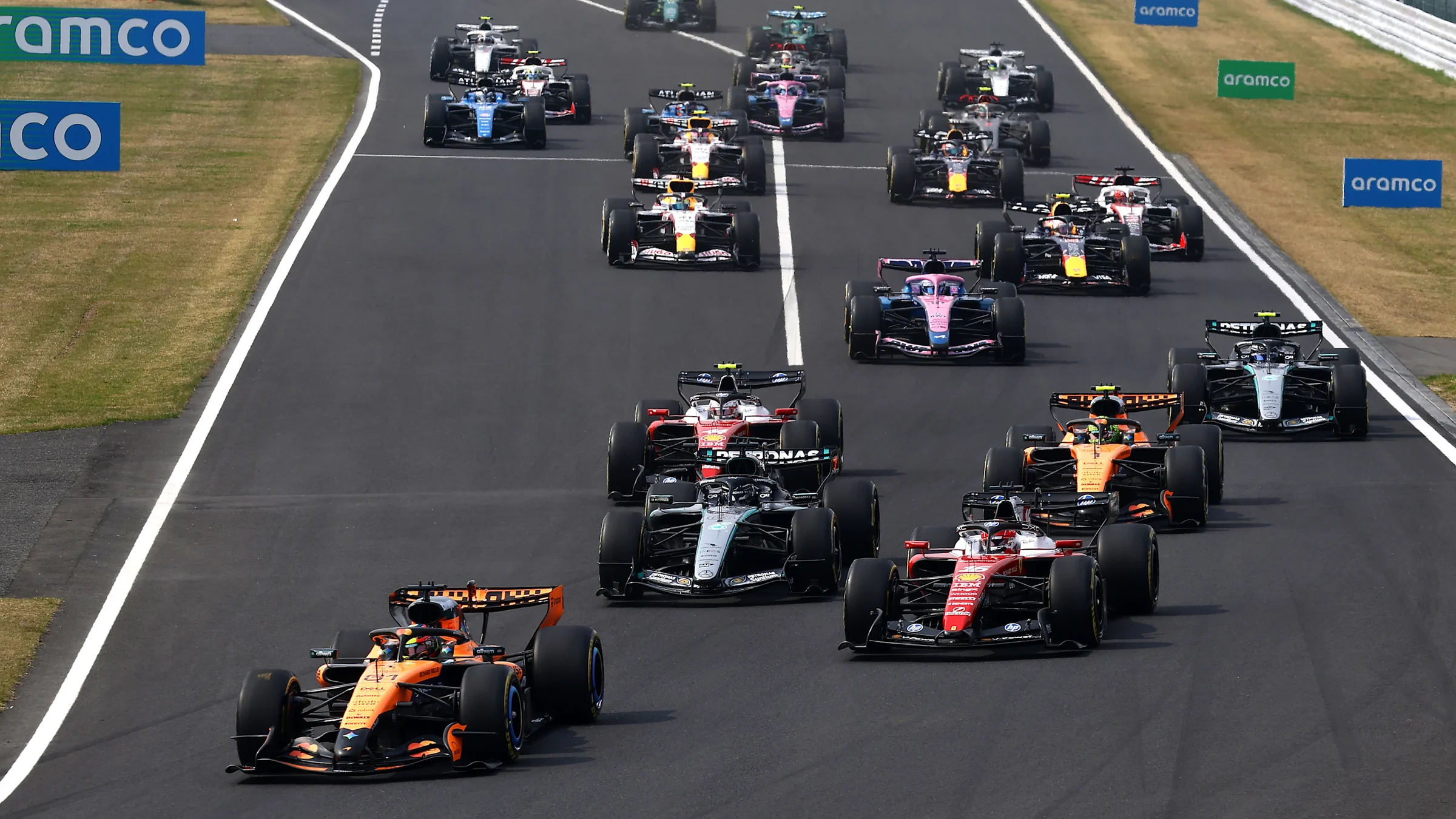
Suzuka describes Friday as Free Practice 1 followed by Sprint Qualifying. That qualifying contest has three short parts—12, 10 and eight minutes under the current F1 Sprint explanation—and determines the Sprint grid. Saturday then opens with the Sprint and closes with normal Grand Prix Qualifying, which determines the Sunday grid. A fan who can attend only one day should choose by the session they most want to witness: Friday for the first qualifying pressure, Saturday for a race plus the fight for Grand Prix pole, or Sunday for the full-distance result.
The Saturday Sprint's points also matter in both championships. Eight points for a win may seem modest beside a Grand Prix victory, but an eight-point swing can change a close title race, and team points aggregate across both cars. The Sprint does not award a substitute Sunday grid; the separate qualifying session remains crucial. If a driver sacrifices Sprint track position to protect a car or recover from contact, the team still has to prepare for another high-pressure qualifying run the same day. That compressed rhythm is the heart of the new spectator experience.
Why one practice session matters at Suzuka
Suzuka's 5.807-kilometer, 18-turn figure-eight layout makes the shorter preparation window especially interesting. The opening Esses reward rhythm and a car that changes direction cleanly. Degner punishes a messy entry; Spoon asks a driver to preserve exit speed before the run toward 130R. Those are different demands on tyres, braking confidence and aerodynamic balance. A team may be comfortable on one sector and still have work to do elsewhere. With only one practice session, it has fewer on-track chances to test a compromise before the lap times start to count.
That is an analytical expectation, not a prediction that any particular constructor will stumble. Weather, track temperature and an evolving surface can all change the value of practice data. The useful question to watch on Friday is whether a team quickly finds a stable car across the fast changes of direction and the slower corners. The answer will become clearer in Sprint Qualifying and then in Saturday's race, before the independent battle for Sunday pole. Follow how those sessions feed into the championship standings rather than treating the Sprint as a detached exhibition.
When do 2027 Suzuka tickets go on sale?
Suzuka Circuit lists its 2027 Japanese Grand Prix ticket launch for Sunday, November 15, 2026 at 11:00 a.m. Japan Standard Time. The organizer says all seat types are scheduled to go on sale then, and buyers can select a reserved seat from the opening of sales. This is a specific venue sale date, not a vague “coming soon” notice. If you live outside Japan, convert 11:00 JST to your local date before setting a reminder; in some time zones the sale will begin on the previous calendar day.
There is a separate detail for the West Area: Suzuka says those tickets will also be sold through Asoview from November 16 at 11:00 a.m. JST. That later channel does not mean every West Area ticket is reserved until the second day. The venue warns that planned allotments of spectator and parking tickets may be exhausted during the sale period and that same-day tickets may be unavailable when a category sells out. The sale date is therefore a useful action point, while stock remains a live question at checkout.
Official sale timing and waiting room
The organizer directs buyers to MobilityStation and advises first-time users to register as members before the sale. Its guide also describes a virtual waiting room. Browser cookies must be enabled for the queue and purchase details to persist. That is a practical detail worth checking before the countdown: a browser privacy setting that blocks the waiting-room session can derail a purchase even if you arrive on time. Registration is preparation, not a reservation, and entering a queue does not guarantee a ticket.
MobilityStation lists American Express, Visa, Mastercard, JCB and Diners Club for electronic-ticket card payment, but it cautions that cards issued outside Japan, along with some debit and prepaid cards, may fail its payment-agency check. Seven-Eleven in-store payment and pickup has separate conditions and fees. Overseas visitors should review the full payment page, confirm that their intended ticket can be bought from their country, and keep a legitimate alternative channel in mind before the sale opens. It is easier to compare options calmly now than while a desired grandstand is disappearing from a live inventory screen.
A short checklist is enough: decide on two or three acceptable viewing areas, make the MobilityStation account, read the venue's rules for the ticket type, check the card you intend to use, and note the JST opening time. Then use the organizer's live inventory page to make the final choice. Save the purchase confirmation and understand whether you have an e-ticket, a store-issued ticket or a package voucher; those products can have different transfer and resale rules.
Where should fans buy Japanese Grand Prix tickets?
Start with the race promoter's own ticket pages at Suzuka Circuit. They identify MobilityStation as the official venue online shop, publish the 2027 sale schedule and explain which products allow seat choice, upgrades or resale. That makes the promoter's page the clearest reference for comparing a quoted seat with its location and conditions. Suzuka also links outward to F1 Tickets. The official Formula 1 ticket storefront is currently showing a waitlist for its Japanese Grand Prix offer, so a waitlist registration there should not be mistaken for a completed purchase or a promise that a particular grandstand will be available.
F1 Experiences is another legitimate route for buyers who specifically want a package. Its 2027 Suzuka page describes products that may combine a grandstand seat with a pit-lane walk, guided track tour, trophy photo or hospitality access. Those are different purchases from a standard venue seat, and the headline package price cannot fairly be compared with a single ticket without listing every included day and benefit. The right question is whether you actually value the add-ons, not whether one storefront has a more prestigious name.
Independent resellers also appear prominently in search results. One page with an “official tickets” title states in its own text that it is an independent fan guide and reseller. That distinction is easy to miss when scanning results. If you consider an independent seller, identify the legal seller, delivery method, refund terms and exact ticket category before payment. Do not assume that a search title or a domain containing the host country makes a company the race promoter. F1's own ticket storefront advises buyers to be alert to fraudulent sites, messages and social-media offers.
For an overseas fan, the best channel can also depend on whether MobilityStation accepts purchases from the buyer's country and whether the payment card passes its checks. Compare the full checkout amount, currency, fees, seat allocation, e-ticket or collection method, and what happens if plans change. Suzuka's own resale system has eligibility rules; a third-party resale promise is not automatically equivalent. The site's broader F1 ticket buying guide can help frame the common questions, but the 2027 Suzuka promoter rules govern this specific event.
Which Suzuka ticket and grandstand offers the best fit?
Suzuka's published 2027 catalog offers a useful price ladder, but a higher price does not automatically buy a better day for every fan. The venue lists an adult West Area ticket at ¥22,000, while many reserved grandstands have starting prices that climb through the five- and six-figure yen range. Your choice should begin with the part of a lap you want to study. Suzuka's front section shows fast direction changes and driver commitment; its western section gives a different view of braking, traction and speed toward 130R; the main straight delivers starts, finishes and pit-lane atmosphere.
The new Sprint complicates that choice in a good way. A multi-day ticket can put you in the same viewing area for two qualifying contests, the short race and the Grand Prix. That gives you repeated chances to compare how cars behave there as fuel load, tyre choice and track conditions change. If your interest is the fight into Turn 1, a seat near the opening complex may be worth more to you than a cheaper long-straight view. If you prefer to watch a driver link corners with precision, the Esses or Spoon can be more revealing even when passes are rare.
Low-cost access and technical corners
For a budget-oriented adult, the West Area ticket is the catalog's obvious first comparison at ¥22,000. It does not promise the same fixed, reserved sightline as a named grandstand, so read the access map and arrival rules carefully. The organizer lists G seats around 130R and the overpass from ¥24,000, O at the West Straight from ¥29,000, and D around the S Curves and reverse bank from ¥36,400. These are published starting amounts, not a prediction of what will remain available after the opening sale.
M at Spoon begins at ¥40,000, while I around the hairpin begins at ¥54,000. Each offers a different kind of motorsport education. The Esses reveal whether a car stays composed through several direction changes; Spoon shows the compromise between corner entry and exit speed; the hairpin concentrates braking and rotation into a slower moment you can follow without a television replay. A dramatic overtake is never guaranteed at any one bend. Choose the corner whose recurring action interests you for every lap, not a seat sold solely on footage from one historic pass.
Main straight and premium views
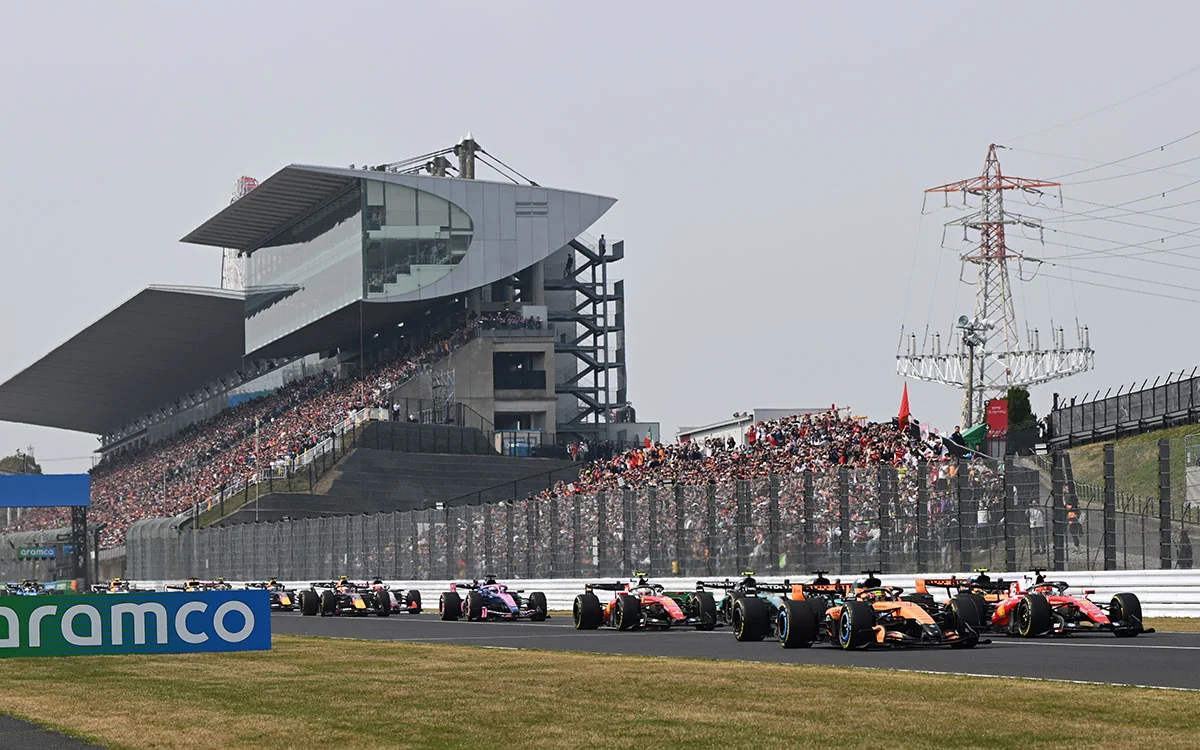
If you want to feel two race starts and watch the finish, seats on or near the main straight have a different appeal. Suzuka lists A1 from ¥75,600, A2 at ¥103,200, V1 from ¥112,000 and V2 from ¥120,000. Check each product's age rules and what the ticket includes; the catalog does not use the same pricing convention for every seat. These positions can make the build-up, grid procedure, pit activity and post-race ceremony easier to follow. They give less direct access to the circuit's long chain of technical corners, so they are not the default choice for a fan mainly interested in observing car balance through the Esses.
Hospitality and paddock products sit far above standard grandstand pricing. Buy them for the services and access stated in the package, not on the assumption that the most expensive purchase guarantees the closest racing. The practical comparison is total cost per person, the number of days covered, seat location, protection from weather, visibility of a screen, and the rules for children or transfers. Use Suzuka's current seat map before checkout and make a second-choice section. A great view at a price you can sustain is more useful than a premium label that crowds out the rest of your trip.
How should visitors plan the Sprint weekend?
Plan backward from the session you most want to see. If Friday Sprint Qualifying matters to you, a Friday afternoon arrival in the Nagoya area is too fragile even though the session's exact clock time has not yet been published. If your priority is the Sprint start and the second qualifying session on Saturday, allow time to enter the circuit, reach a seat and handle a large queue. Sunday deserves the same margin for the Grand Prix. A ticket is only as useful as the transport plan that gets you through the gate before the cars run.
The promoter has already posted a reserved direct shuttle program. Its page lists routes from Shiroko Station on Friday and from major hubs including Nagoya, Shin-Osaka and Kyoto across Friday through Sunday; some other origins operate only on Saturday and Sunday or only on Sunday. The advertised benefits include a reserved seat and a direct trip from a major station. That can simplify a first Suzuka visit, but compare the actual departure, return point and price for each date. A bus that runs on Sunday may not solve your Friday Sprint Qualifying journey.
Rail plus a local connection is another route, and the official F1 ticket page places Suzuka roughly 50 kilometers from Nagoya with Shiroko as a key rail station. The page's travel durations are approximate, not race-day guarantees. When hotel shopping, compare door-to-door travel rather than distance on a map. A less expensive room far from your intended station can cost you time each morning and leave you with a longer return after the Grand Prix crowd exits together.
A practical booking order is ticket category, lodging with a workable station connection, then daily transport. Keep a separate note of which vendor issued each reservation. Once Suzuka posts the detailed session timetable, check it against every transfer and any timed activity in your ticket or package. Allow extra time for weather, security and walking to the viewing area. The new Sprint format creates more sessions worth seeing, but it also makes an overpacked schedule more expensive in missed on-track action.
Finally, watch the promoter's updates after booking. The confirmed April dates and November ticket launch are strong planning anchors; bus schedules, entry procedures and exact session start times are operational details that can change. Bring the correct ticket format, confirm the gate and permitted items, and follow the live F1 schedule as the season approaches. That leaves the weekend focused on the racing instead of a preventable ticket or transit problem.
Loading comments…