There is no Dutch Grand Prix on Formula 1’s published 2027 calendar because the Zandvoort event’s promoter chose to finish its F1 run after the 2026 race. Formula 1 and the organizer announced that decision in December 2024, giving the event a final one-year extension. The 2026 farewell has since taken place; the Netherlands does not appear among the 24 rounds listed for 2027.
That distinction matters. The departure was not announced as a punishment for weak racing or as a last-minute cancellation of a 2027 date. The organizer described a successful, popular event whose privately operated business still had to weigh the risks of continuing. Full grandstands and an unmistakable orange atmosphere were real, but neither alone answers whether another long-term contract made sense to the people carrying the financial exposure.
Here is the decision in its own timeline, what the final weekend actually delivered, and what Dutch fans can—and cannot—conclude about a future return.
The short answer: the promoter chose to end after 2026
The key document is the joint announcement published on December 4, 2024. Formula 1 and the Dutch Grand Prix promoter extended the Zandvoort agreement by one year, through the end of the 2026 season. In the same announcement, F1 identified the promoter as the party that decided not to stay on the calendar after that extension. The exit was therefore announced nearly two seasons before the last race, giving fans a known final edition instead of a suddenly vanished weekend.
This was a genuine choice made after discussion. F1 president Stefano Domenicali said the parties considered several ways to continue, including an annual race and an arrangement in which Zandvoort would alternate with another event. He said F1 respected the promoter's decision to finish in 2026. Those details are relevant because a rotation idea did exist; it simply did not become an announced 2027 Dutch round. There is no published agreement in these primary statements that would justify treating a future alternating date as settled.
The organizing partnership was also more specific than the circuit alone. Promoter director Robert van Overdijk described the event as a collaboration among SportVibes, TIG Sports and Circuit Zandvoort. The circuit provided the stage, but staging a Grand Prix is a separate commercial undertaking involving the organizer, Formula 1, local services and many suppliers. When readers hear that “Zandvoort ended,” the precise point is that this F1 event agreement ended after the 2026 edition. A race track can continue operating without hosting a championship Grand Prix.
That distinction also explains why sporting quality is a weak answer to the calendar question. The revived Dutch Grand Prix had raced at Zandvoort since 2021 and was recognized by F1 for its banked corners and fan experience. The organizer even added the event's first Sprint to the farewell weekend. Those features made the finale more substantial; they did not reverse the already announced business decision. To understand that decision, the next question is what a packed event can tell us about the risk of putting another one on.
A sellout race can still carry private financial risk
The question fans keep returning to is reasonable: if Zandvoort could fill its grandstands, why would its organizer stop? The short answer is that popularity describes one part of the event's commercial picture. A promoter commits to delivering an expensive, complex race weekend before it knows every future revenue and cost. A sold-out Sunday is powerful evidence of interest; it is not, by itself, a balance sheet or a guarantee that a new multi-year commitment has acceptable risk.
What the promoter actually said
In the organizer's original statement, director Robert van Overdijk called the event a success and described strong support from visitors, drivers and the F1 community. He also identified the Dutch Grand Prix as a privately owned and operated business. The organizer, he explained, had to balance the opportunity to keep hosting against its other risks and responsibilities. It chose to end while the event was still thriving. That wording is narrower and more useful than saying the race was “unprofitable” or “too expensive”: neither a profit figure nor an agreed renewal price was disclosed in that statement.
The same announcement reported healthy ticket demand and business interest at the time. That makes the decision more nuanced, not more mysterious. A promoter can value the success already achieved yet decline another term if the size or duration of future exposure does not fit its business. Costs that any Grand Prix organizer has to plan for include event operations, temporary facilities, staffing, crowd movement and commitments to partners. Those are examples of how an event works, not a claim that any one undisclosed line item caused Zandvoort's exit. The public primary documents do not identify a single numerical tipping point.
What attendance figures do and do not prove
The farewell weekend supplied strong demand evidence. According to the organizer's post-event report, the 2026 edition counted 325,000 visits across Thursday through Sunday: 15,000 on Thursday, 100,000 on Friday, and 105,000 on each of Saturday and Sunday. Both weekend days sold out. Those four figures add up to the headline total, which describes attendance across multiple days. A person attending on more than one day can contribute more than one visit; the figure should not be read as 325,000 different ticket holders.
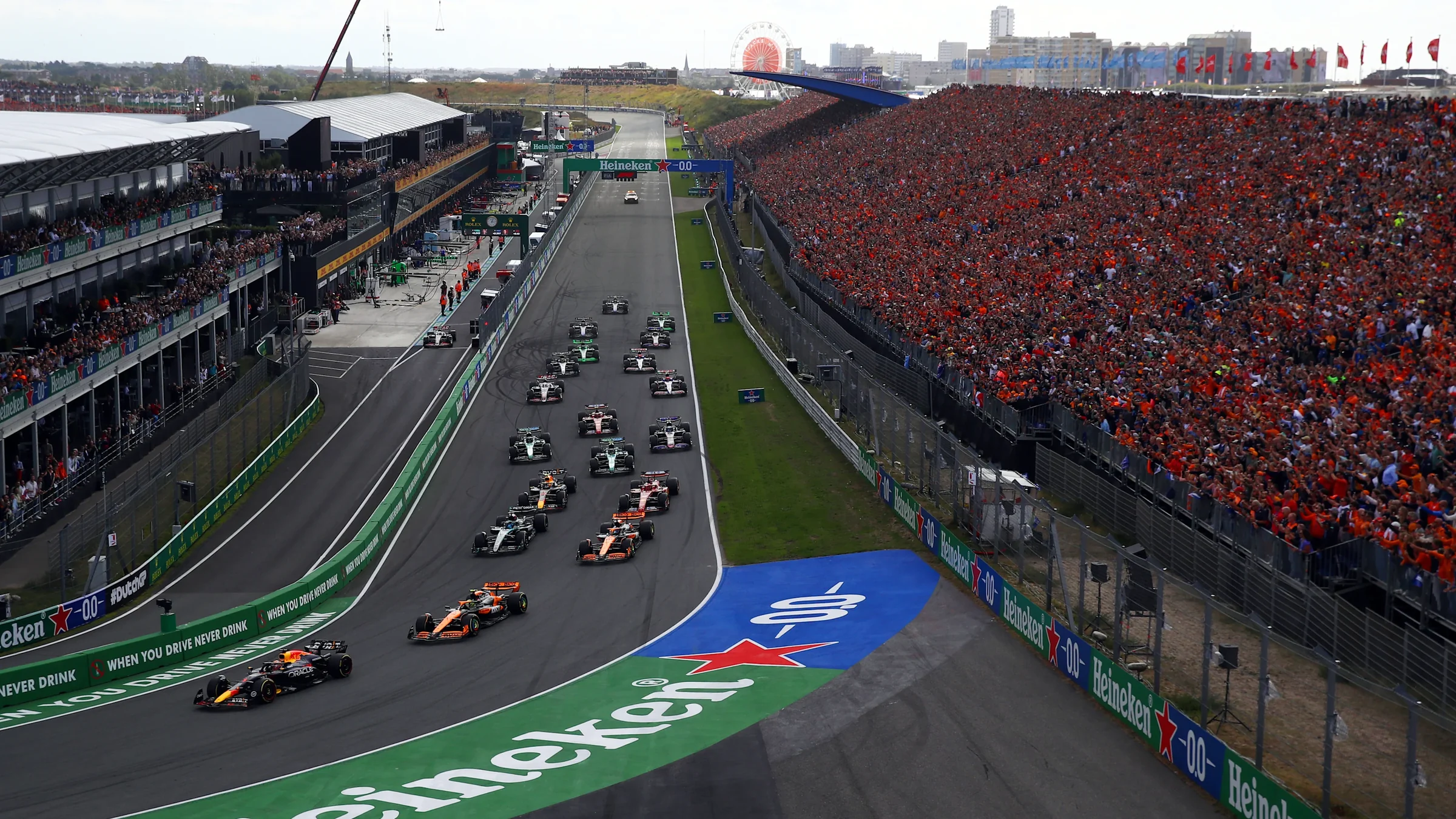
The organizer also described nearly two million visits across the six editions held after F1's 2021 return. That run says the event worked as a spectator attraction. It does not tell outsiders the promoter's net return, the cost of a proposed next contract, or how much downside a private operator was willing to carry. Fan frustration about losing a full-house race is understandable, but the attendance-versus-risk distinction is the evidence-based answer. We know the crowd was there; we do not have a published set of accounts that lets us second-guess the commercial threshold with precision.
How Zandvoort's final Formula 1 weekend ended
The final Dutch Grand Prix ran on August 21–23, 2026, with a Sprint added to the program for the first time at Zandvoort. That mattered to the farewell: fans received two competitive F1 sessions that paid points, rather than a ceremonial final Sunday alone. In the 24-lap Sprint, George Russell won for Mercedes ahead of Charles Leclerc and Lando Norris. Max Verstappen finished sixth, giving his home crowd one more classified race-day result before the Grand Prix itself.
Sunday's race produced a much harsher home-driver ending. Norris started from pole and led initially, but Verstappen lost control on the opening lap and hit the barrier. The race was red-flagged; the official classification shows Verstappen as a non-finisher with zero completed laps. It is an unusually abrupt result for a driver whose victories in 2021, 2022 and 2023 had helped define the modern Dutch GP. It also underscores why the farewell could be both a large fan event and a disappointing race for its most anticipated local competitor.
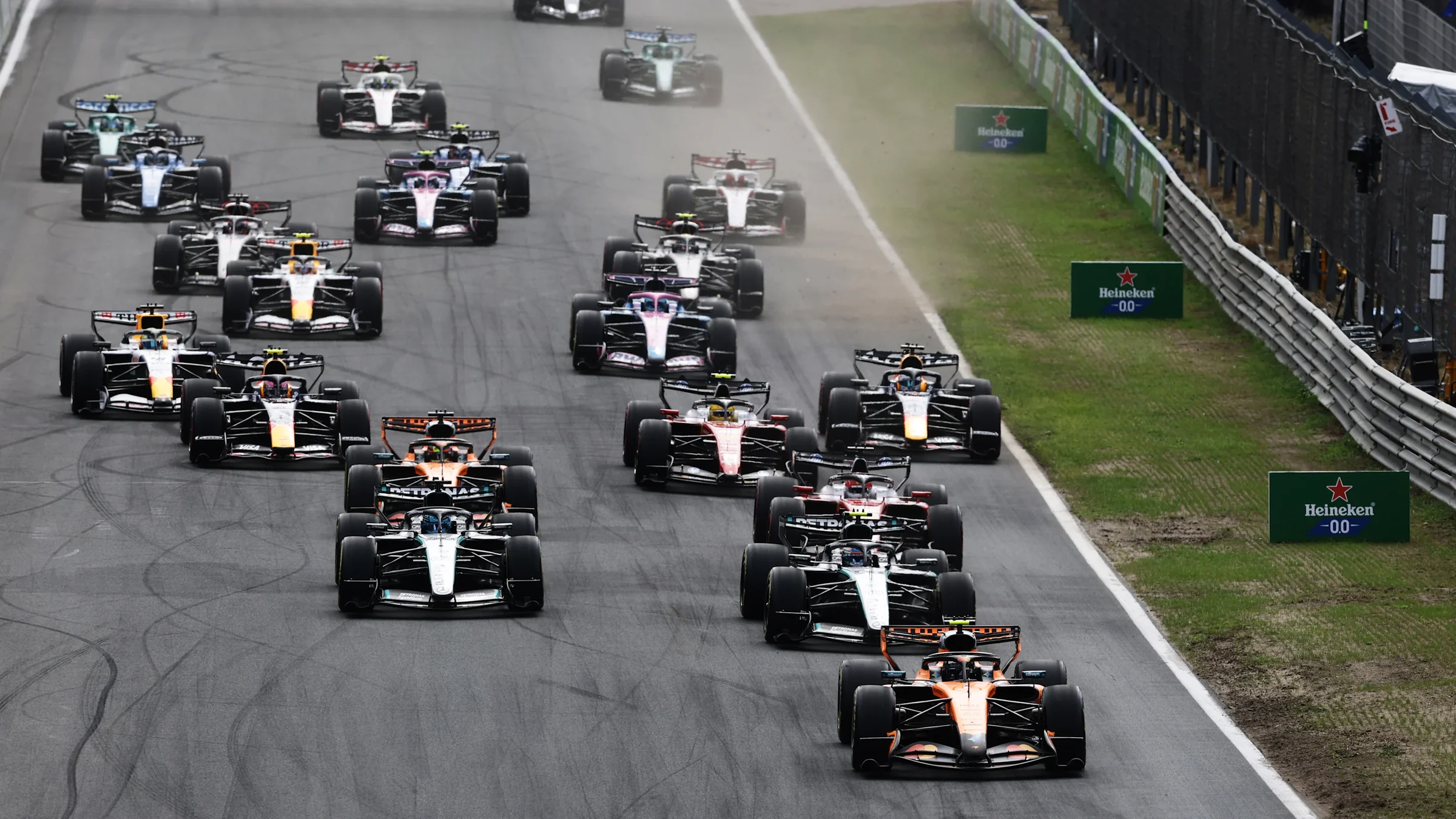
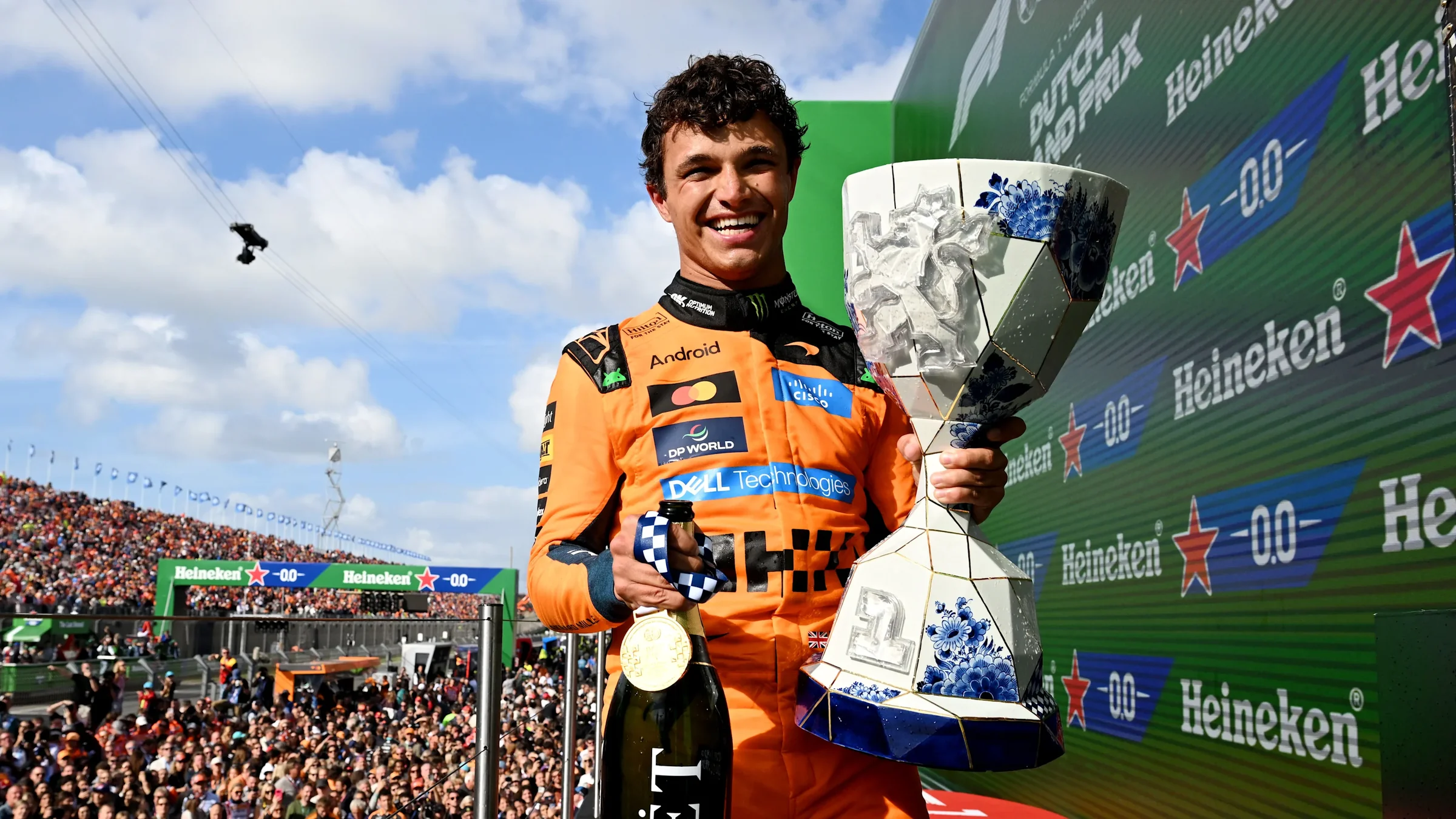
The lead fight still delivered a real contest. Kimi Antonelli took the lead after the restart, but Norris recovered it in the race's final third. A late Virtual Safety Car, called after Esteban Ocon stopped on track, affected the closing phase. Norris completed all 72 laps and beat Antonelli by 11.536 seconds; Russell finished third, 15.906 seconds behind the winner. The podium therefore combined a second Zandvoort victory for Norris with two Mercedes cars, while Verstappen's final home appearance ended in the opening-lap retirement.
The last race's drama can easily dominate memory, but it cannot explain the calendar decision: the promoter had made that public in December 2024. Nor did one driver's result determine the viability of the event. The Sprint, the sold-out weekend days and the racing story all show what fans lost when the contract expired; they do not change which party made the choice. Readers following the rest of the season can check our F1 results page; looking back at this finale is useful because it separates the spectacle on track from the decision about staging another championship weekend.
Why the Dutch Grand Prix mattered beyond Max Verstappen
Verstappen's rise made a modern home race enormously attractive. The promoter itself credits him as a driving force behind F1's return, and his three straight Zandvoort wins from 2021 to 2023 cemented the connection. Yet the Dutch Grand Prix also became a recognizable type of event: a compact seaside circuit, a crowd that turned the dunes orange, and a mobility plan shaped by the town's limited road access. Losing that combination changes the calendar's character more than simply removing another country name from a list.
The circuit and the orange atmosphere
Circuit Zandvoort's lap runs through sand dunes and has the elevation changes and narrow visual frame of a traditional circuit. Its modernized banked turns give a car a distinctive line through Hugenholtzbocht and the final Arie Luyendijkbocht; the opening Tarzan corner remains another focal point for spectators. The official F1 circuit guide specifically recommends those viewing areas. They made the event legible to television viewers as well: even without a championship context, a shot of cars leaning around a banking with grandstands above the dunes was unmistakably Zandvoort.
The setting also helps explain why the race's absence stings. F1 had been away from the Netherlands after 1985. A return was announced for 2020 but delayed by the pandemic, making 2021 the actual comeback. Six editions later, the promoter's farewell report described a celebration involving fans, local partners, volunteers and visiting spectators—not solely the fate of one driver's season. Verstappen's 2026 opening-lap retirement did not empty the stands. That is a useful reminder that the weekend had built an audience and atmosphere capable of existing alongside sporting disappointment.
The transport and event model
Getting those crowds into a seaside town was part of the event's identity. The organizer's travel plan restricted ordinary cars and motorcycles from Zandvoort and surrounding areas during race weekend. Fans were directed toward trains, buses, shuttles, Park + Ride and Park + Bike routes instead. The organizer's 2026 farewell report says tens of thousands arrived by bicycle and train. For many visitors, the shared journey through the town and dunes was part of the memory, as much as entering the grandstand.
That approach carried friction too. The organizer warned that stations could become extremely crowded even with additional train services. A tight access plan can make the event feel distinctive and reduce road traffic, while also demanding careful coordination and leaving less room for a careless arrival. It would be wrong to claim the transport system caused the promoter to stop; no primary statement says that. It is better understood as one example of how a successful race weekend is a major operational promise. The Dutch GP leaves behind a model of crowd movement and fan experience that other events can study even without Zandvoort holding a 2027 slot.
What changes on the 2027 F1 calendar
The published 2027 schedule is a completed calendar, not a blank page waiting for a Dutch date. The FIA and Formula 1 announced 24 Grands Prix across 22 countries on September 16, 2026, and the official race-by-race calendar contains no Netherlands round. It also lists ten Sprint weekends across the season. There is no scheduled 2027 F1 race at Zandvoort to attach a start time, ticket sale or travel package to.
For fans accustomed to treating the Dutch GP as a late-summer marker, the shape of the European run changes. The 2027 calendar places Hungary on July 30–August 1, then the Italian Grand Prix at Monza on September 3–5 and the Spanish Grand Prix in Madrid on September 10–12. The gap is visible where a Zandvoort weekend once helped define the return from F1's summer pause. That does not mean Formula 1 lost a race overall: the published schedule still has 24 rounds. Portugal is back in June, and Türkiye returns in October, but neither official announcement describes either event as a simple one-for-one replacement for the Dutch Grand Prix.
This matters for practical planning. A fan who wanted a nearby European race can look at the confirmed Monza, Madrid, Austria, Belgium or Hungary weekends, each with its own ticket and travel terms. A fan who specifically wanted Zandvoort should not buy a “2027 Dutch GP” listing on the assumption that a date will appear later. There is no such round on the authorized list as checked on September 30, 2026. A track can host other motorsport events, but those are separate from a Formula 1 World Championship Grand Prix.
For the championship, the absence removes the particular circuit demands of Zandvoort from the 2027 points season: its banked corners, narrow dune setting and home-race pressure no longer form a scheduled test for the field. It would be overreach to predict which team benefits, because 2027 car development, weather and race outcomes remain unknown. The grounded conclusion is simpler: teams and fans plan around the races that have been published, and the Netherlands is not among them.
Could Zandvoort return, and what should fans watch?
Formula 1 has returned to circuits after long absences before, including Zandvoort itself. It is therefore possible in a general sense that a future organizer and F1 could make a new agreement. But that possibility is not a forecast, and it does not turn the old discussions about alternating races into a contract. The 2024 announcement said annual and alternating formats had been considered before the promoter chose the 2026 ending. It did not reserve a year after 2026 for a Dutch GP.
A genuine return would have several visible steps: an organizer willing to stage the championship event, a deal with Formula 1, a place on an FIA-approved calendar, and an official event and ticket announcement. The first two could be negotiated privately; fans should wait for the public steps before making travel plans. The promoter's current website calls the 2026 race its final lap and asks readers to follow future motorsport events at Circuit Zandvoort. That invitation keeps the venue's racing life in view, but it does not promise another F1 Grand Prix.
A future Dutch race is unconfirmed
As of September 30, 2026, the official 2027 F1 calendar contains no Dutch round, and the public promoter materials reviewed for this article announce no replacement date or fresh F1 deal. Claims about a 2028 return, a rotating slot or a 2027 ticket launch should therefore be treated as speculation unless Formula 1, the FIA or a confirmed event organizer announces them. A waiting list for other Zandvoort activity is not the same thing as a Formula 1 ticket sale.
The most reliable watchlist is short: check the next FIA and Formula 1 calendar announcements, watch the Dutch organizer and Circuit Zandvoort for any formal contract news, and use an official ticket channel only after a race has been confirmed. Meanwhile, the 2021–26 run stands on its own: six editions, three different winners, a distinctive circuit and a crowd that repeatedly filled the venue. Its absence in 2027 is a real loss for fans who loved that combination. The reason remains the promoter's decision to conclude the event after 2026, not a hidden 2027 race still waiting to be added.
Loading comments…