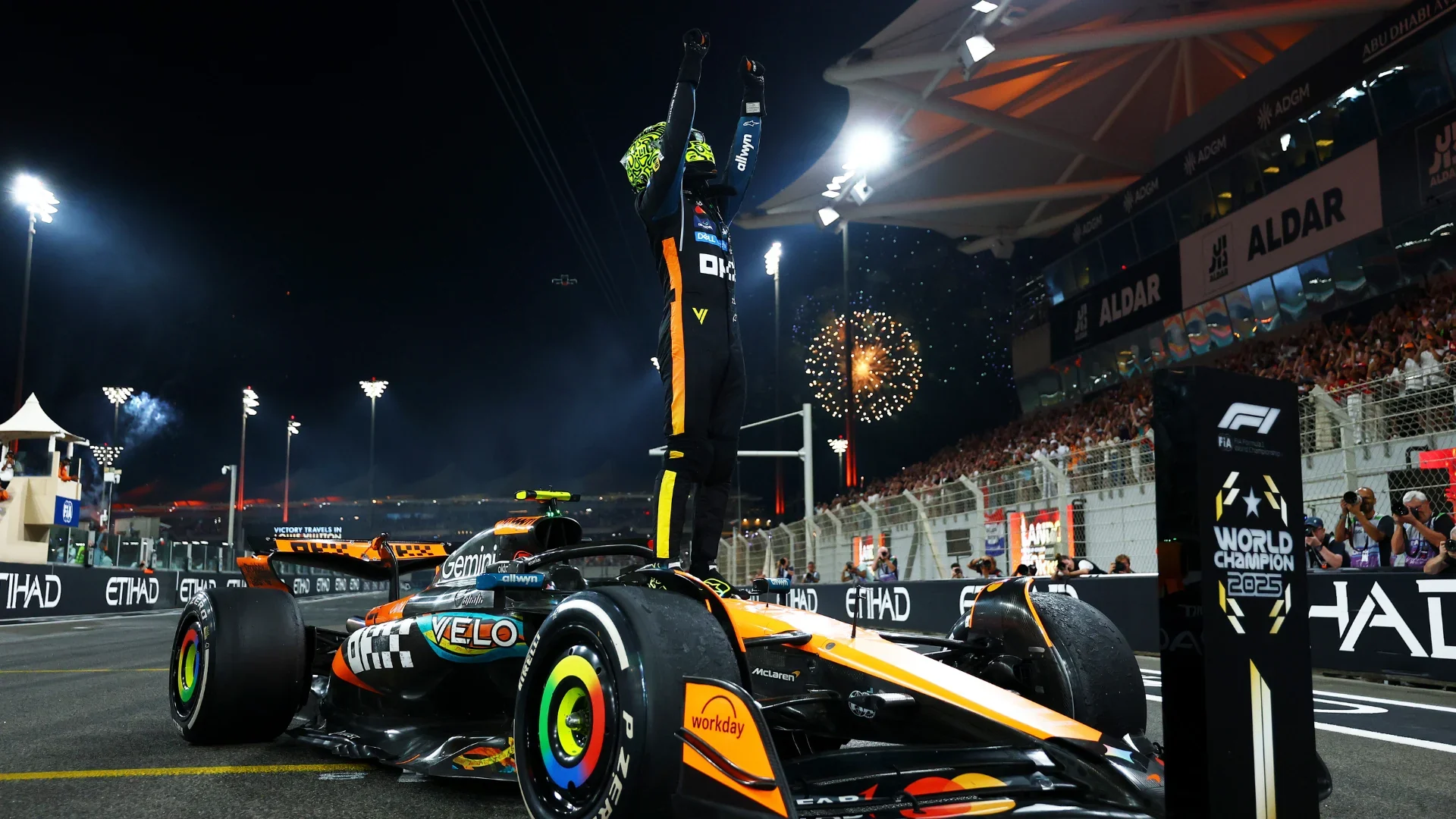
As of September 14, 2026, the Qatar and Abu Dhabi Grands Prix are still on Formula 1’s official calendar. Qatar remains listed for November 27–29 and Abu Dhabi for December 4–6. There has been no FIA announcement cancelling either race and no formal calendar amendment adding Imola.
That is the confirmed position, but it is not a guarantee that both events will happen. Formula 1 is monitoring the regional security situation and has prepared alternatives. Reuters reported on September 11 that a decision originally targeted for mid-September could slip into October, while paddock expectations increasingly pointed toward Imola as a European season finale if the Middle East rounds cannot be staged safely.
This distinction matters. “Still scheduled” describes the published calendar. “Expected to be replaced” describes informed reporting. “Imola confirmed” would require an official announcement that had not arrived by this article’s cutoff. The decision also involves more than whether Lusail and Yas Marina can open their gates: F1 must assess personnel safety, air routes, freight, insurance, contracts and the time needed for teams and broadcasters to redirect an international operation.
This guide separates those evidence levels, explains why the call may be delayed, and maps what an Imola fallback could mean for the championship and for fans holding Qatar or Abu Dhabi bookings.
The Short Answer as of September 14
The only defensible answer today is conditional: Qatar and Abu Dhabi remain scheduled, but their staging is still under review. The official Formula 1 calendar shows Lusail as Round 22 and Yas Marina as Round 23. Imola does not appear as a 2026 round. Until Formula 1 and the FIA publish a change, those listings are the operative calendar.
| Event | Official status | What remains uncertain |
|---|---|---|
| Qatar GP, Nov. 27–29 | Still listed | Final safety and operational clearance |
| Abu Dhabi GP, Dec. 4–6 | Still listed as finale | Final safety and operational clearance |
| Imola | Not on the official calendar | Reported leading fallback for a European finale |
The strongest new reporting comes from Reuters. On September 11, it said multiple paddock sources believed a decision might be pushed into October to preserve the possibility of racing in Qatar and the United Arab Emirates. The same report described Imola as widely expected inside the paddock to host the finale if that trip is abandoned. “Widely expected” is significant, but it is not the same evidentiary category as an FIA calendar bulletin.
The table can therefore look contradictory without actually being so. Organizers continue preparing against the contracted dates while championship management evaluates whether conditions will be acceptable weeks later. Keeping an event listed does not certify that the risk assessment is complete; developing an alternative does not prove cancellation has been chosen. Both processes can run in parallel until the decision point.
For now, use the published 2026 F1 schedule as the baseline and treat news about Imola as contingency reporting. A formal answer will arrive through an F1/FIA announcement, revised calendar, or event-promoter notice—not through hotel availability, social posts or a headline that drops the word “could.”
Why the Final Two Races Are Still in Doubt
The question is not whether Lusail and Yas Marina can physically stage Formula 1. Both are established Grade 1 venues with promoters preparing for their contracted weekends. The unresolved issue is whether the championship can responsibly move thousands of people and tonnes of equipment into the region, operate for two weeks, and retain dependable routes out if security conditions deteriorate.
Regional Security Is the Controlling Risk
Reuters reported that Qatar and the United Arab Emirates had been struck by missiles and drones after U.S. and Israeli airstrikes on Iran. Both states also host U.S. air bases. That makes F1’s assessment wider than conditions around a circuit on one inspection day. It must consider regional escalation, airspace warnings, the exposure of traveling personnel and the ability to react during a double-header.
The FIA’s World Endurance Championship provides relevant context. On July 28, the FIA said continuing regional uncertainty and its effect on freight and travel had obliged WEC to replace its planned Qatar and Bahrain rounds with Barcelona and Monza. That is not an automatic precedent for Formula 1: the championships have different dates, contracts and supply chains. It does show that another FIA-sanctioned world series already judged the same broad risk environment too uncertain for its late-season operation.
Air Freight Helps, but It Does Not Remove the Safety Test
The usual ocean-shipping deadline is less decisive than it would be in a normal season. Reuters said the near closure of the Strait of Hormuz meant the traveling freight would need to be flown to Doha and Abu Dhabi. Both airports were open to international flights at the time of its September 11 report. Qatar Motor and Motorcycle Federation president Abdul Rahman bin Abdullatif Al Mannai also argued that Qatar had been safe for months, its airport was fully operational and daily life had normalized.
Those are material points in favor of keeping Qatar alive. Airlift can shorten the lead time and avoid a constrained sea route. But a working inbound plan does not settle the complete duty-of-care question. F1 and the FIA must be satisfied about crews, media, sponsors, officials and spectators, along with insurance and contingency routes if circumstances change between arrival and departure.
How the Decision Timeline Moved
Two statements can both be true: Formula 1 originally aimed to decide around mid-September, and a final call had not been announced by September 14. The apparent contradiction comes from a deadline that was presented as an operational target, not a regulation that automatically deletes races on a fixed day.
What Formula 1 and the FIA Have Said Publicly
July 29
F1 CEO Stefano Domenicali said the two races were confirmed at that point, that the sport would take the maximum available time, and that an unclear situation would send the finale to Europe.
September 7
FIA president Mohammed Ben Sulayem said drivers and teams would not be put at risk, while warning against “jumping the gun” and cancelling before the evidence required it.
September 11
Reuters reported that multiple paddock sources believed the decision could slip beyond September, potentially into October.
The official message has therefore remained consistent on principle: safety controls the outcome, while the scheduled calendar remains active until it is changed. What moved was the expected timing. An October call was a Reuters report from paddock sources, not a new deadline publicly issued by F1 or the FIA.
Why Waiting Longer Has Commercial and Operational Value
Waiting gives diplomacy and regional conditions more time to stabilize. It also preserves two sold-out, contractually valuable events. Reuters identified hosting fees worth many tens of millions of dollars, insurance questions and broader commercial relationships among the issues around a cancellation. Those factors explain why nobody benefits from making an irreversible call earlier than necessary; they do not override the safety test.
The cost of delay runs in the opposite direction. An alternate promoter needs marshals, medical plans, vendors, ticketing, local permits and a broadcast compound. Teams must redirect freight and personnel after Las Vegas, while partners and fans need certainty about travel. Air freight creates flexibility, but every additional week of uncertainty compresses the backup’s preparation window.
That tension explains the rolling timeline better than a simple story of indecision. F1 is trying to avoid cancelling viable races while keeping a European event executable. The point at which the backup becomes harder to deliver will ultimately matter as much as any previously advertised date.
What the Imola Backup Plan Really Means
Imola is more than an internet suggestion. Formula 1 has acknowledged it as one of the European options, and Reuters now reports that teams widely expect it to stage the finale if Qatar and Abu Dhabi fall away. Even so, the plan’s exact shape remains unpublished. The distinction between “leading contingency” and “confirmed race” is essential.
Imola Is Reported as the Leading Season-Finale Option
Stefano Domenicali named Imola among the possible European venues in July. By September 11, Reuters said the expectation across teams was that the Italian circuit would be the replacement, with December 6 viewed by some sources as effectively the target. Italian media had reported preparations, and unusual hotel scarcity around Imola for that weekend added a visible—but circumstantial—signal.
There are practical reasons for its position. Imola hosted Formula 1 through 2025, remains familiar to teams and broadcasters, and already has modern race-control, paddock and safety infrastructure. It dropped from the normal 2026 calendar after its previous F1 agreement ended, leaving the circuit available without displacing another scheduled Grand Prix. Its location in Italy also places the event near Ferrari’s base and much of F1’s European supply network.
None of those signals is the legal or sporting act that adds a round. Hotel pricing can reflect expectation; local preparation can keep an option alive. Confirmation requires Formula 1 and FIA approval plus an amended calendar and promoter details.
One European Finale Is Not the Same as Replacing Both Races
The language reported so far points most strongly to one European season finale, not two new European races. Domenicali promised that the season would end in Europe if the Gulf trip became impossible. Reuters’s latest account speaks of Imola as “the replacement” and focuses on a December 6 race. It does not report a confirmed second substitute for Qatar’s November 29 slot.
That leaves several details open. F1 could lose both Gulf rounds and add one Imola race, keep one Middle East event and replace the other, or adopt a different structure if conditions and contracts allow. The eventual bulletin must specify which event is removed, whether Imola inherits a date, how many championship rounds remain, and what the replacement is officially called. Until then, saying Imola will “replace Qatar and Abu Dhabi” compresses multiple decisions into one unsupported claim.
A December Race Would Create Its Own Compromises
A December 6 Grand Prix in Emilia-Romagna would be unlike Imola’s usual spring slot. Reuters identified rain, fog and even snow as seasonal concerns. An FIA press-conference answer described the possible weather as “interesting” while emphasizing that Imola was not confirmed. The responsible interpretation is variability, not a forecast: nobody can credibly predict race-weekend conditions in September.
Cold asphalt could make tyre warm-up and grip evolution more prominent, while short daylight and poor visibility would influence session planning. Away from the track, a promoter would need to mobilize marshals, medical services, transport, ticketing, hospitality and broadcast facilities at short notice. Those are solvable tasks at an experienced venue, but they prevent the fallback from being a simple matter of sending the cars to an empty circuit.
Imola is therefore credible precisely because it reduces—not eliminates—the complexity. Its readiness makes it the reported favorite; the absence of an announcement means it remains Plan B.
How Each Scenario Would Change the Championship Run-In
A calendar change would alter more than the location of the trophy presentation. It could change the number of remaining points opportunities, the rhythm after Las Vegas and the circuit characteristics that decide the final races. Because the championship picture will move before late November, the analysis below avoids locking in a title calculation that could be obsolete within a week.
Qatar and Abu Dhabi Both Proceed
The published plan produces a three-weekend closing run: Las Vegas on November 19–21, Qatar on November 27–29, and Abu Dhabi on December 4–6. That retains two full scoring rounds after Las Vegas. Qatar is not a Sprint event in 2026, so neither Gulf weekend carries a separate Saturday Sprint points allocation.
Sportingly, the route asks teams to move from Las Vegas’s cool night street race to Lusail’s fast, loaded corners and then Yas Marina’s traction and braking demands. That variety leaves more scope for form to change with tyre behavior and setup. Operationally, it is the hardest outcome: cars, freight and personnel cross continents and then complete back-to-back Gulf weekends at the end of a long season.
Imola Hosts the Finale
The leading reported fallback puts a single Imola finale on December 6. If that replaced a two-race Qatar–Abu Dhabi leg, one race opportunity would disappear. The break after Las Vegas would be longer than in the current schedule, while the championship would end on a narrow, old-school circuit where qualifying position, traffic and strategy can carry unusual weight.
Reuters noted Imola’s proximity to Ferrari and to Bologna, hometown of 2026 championship leader Kimi Antonelli. That would give the event a powerful local story. It should not be converted into a forecast of a Ferrari or Mercedes advantage: December temperatures and the 2026 cars would create a setup problem no team has raced there under this year’s competitive conditions.
The Calendar Ends Early or Loses a Round
F1 could also finish with fewer rounds than currently listed, whether through one replacement rather than two or no workable substitute. Championship points are awarded from the final classification of each competition. A race that is removed and never held creates no classification and therefore no points opportunity.
That makes every earlier result more valuable and can bring the mathematical clinching point forward. It does not rewrite points already earned. Fans should use the live F1 standings and latest race results once the calendar decision lands; the number of available rounds, rather than a hypothetical points total written now, will define the real permutations.
What Ticket Holders and Traveling Fans Should Do Now
Uncertainty is most expensive for supporters who already have tickets, flights and hotels. The safest response is to separate each purchase instead of assuming one cancellation policy covers the whole trip. A Grand Prix ticket, airline fare, hotel reservation, package and travel-insurance policy are different contracts with different triggers.
Treat the Published Calendar as Current, Not Guaranteed
Do not treat a reported Imola plan as authority to discard a valid Qatar or Abu Dhabi ticket. As of the cutoff, both events remain scheduled. Voluntarily deciding not to attend is generally different from the organizer cancelling an event, and it may not activate a refund right.
Lusail’s published 2026 terms say tickets are normally non-refundable, while providing for a ticket-price refund if the event itself is cancelled. The terms exclude booking or delivery fees and additional costs such as transport and accommodation, except where law requires otherwise. They also allow schedule changes for unforeseen circumstances including security concerns. Buyers should read the version attached to their order, because sales channels and packages can add separate terms.
Use Official Notices Before Changing Bookings
Abu Dhabi’s official terms distinguish postponement from cancellation. A ticket can carry over to a rescheduled event, with a refund-request route if the buyer cannot attend; a cancellation before the event provides a refund procedure. The original seller matters. Direct promoter purchases go through the promoter’s channel, while authorized-reseller customers are directed back to that reseller. The F1 Ticket Store similarly says it contacts affected customers with options after receiving information from the organizer.
Practical checklist
- Save the order confirmation, ticket terms, card receipt and name of the seller.
- Follow Formula 1, the FIA, Lusail/Yas Marina and the original ticket seller—not screenshot-only accounts.
- Check the last free-cancellation dates for hotels and the change rules on flights now.
- Ask an insurer in writing what event cancellation, security disruption or government advice would trigger.
- Wait for seller instructions before filing duplicate disputes or buying an unannounced Imola ticket.
This is planning guidance, not a promise that every purchaser receives the same remedy. Hospitality, reseller and bundled travel products may follow different provisions. The official cancellation notice—if one comes—and the terms governing the specific transaction will decide the next step.
Conclusion: Scheduled, but Not Settled
The latest answer has three levels. Confirmed: Qatar and Abu Dhabi remain on the 2026 Formula 1 calendar for November 27–29 and December 4–6. Credibly reported: the final decision may move into October, and Imola is widely expected to host a European season finale if the Gulf trip is abandoned. Not confirmed: neither cancellation, an Imola race, the number of replacement rounds nor a new ticket sale has been officially announced.
That evidence hierarchy is more useful than forcing a yes-or-no prediction. F1 has reasons to wait: conditions could improve, airports remain open, and the events carry major contractual and commercial value. It also has a firm constraint: a global championship cannot improvise personnel safety, freight routes and a replacement promoter after the viable planning window closes.
The next meaningful update will be an FIA or Formula 1 calendar notice, followed by communication from the affected promoters and ticket sellers. Until that appears, Qatar and Abu Dhabi should be treated as the current plan and Imola as a serious Plan B. Fans can prepare by preserving flexible travel options and their purchase records, but should not act as though a reported contingency has already become the calendar.
Loading comments…