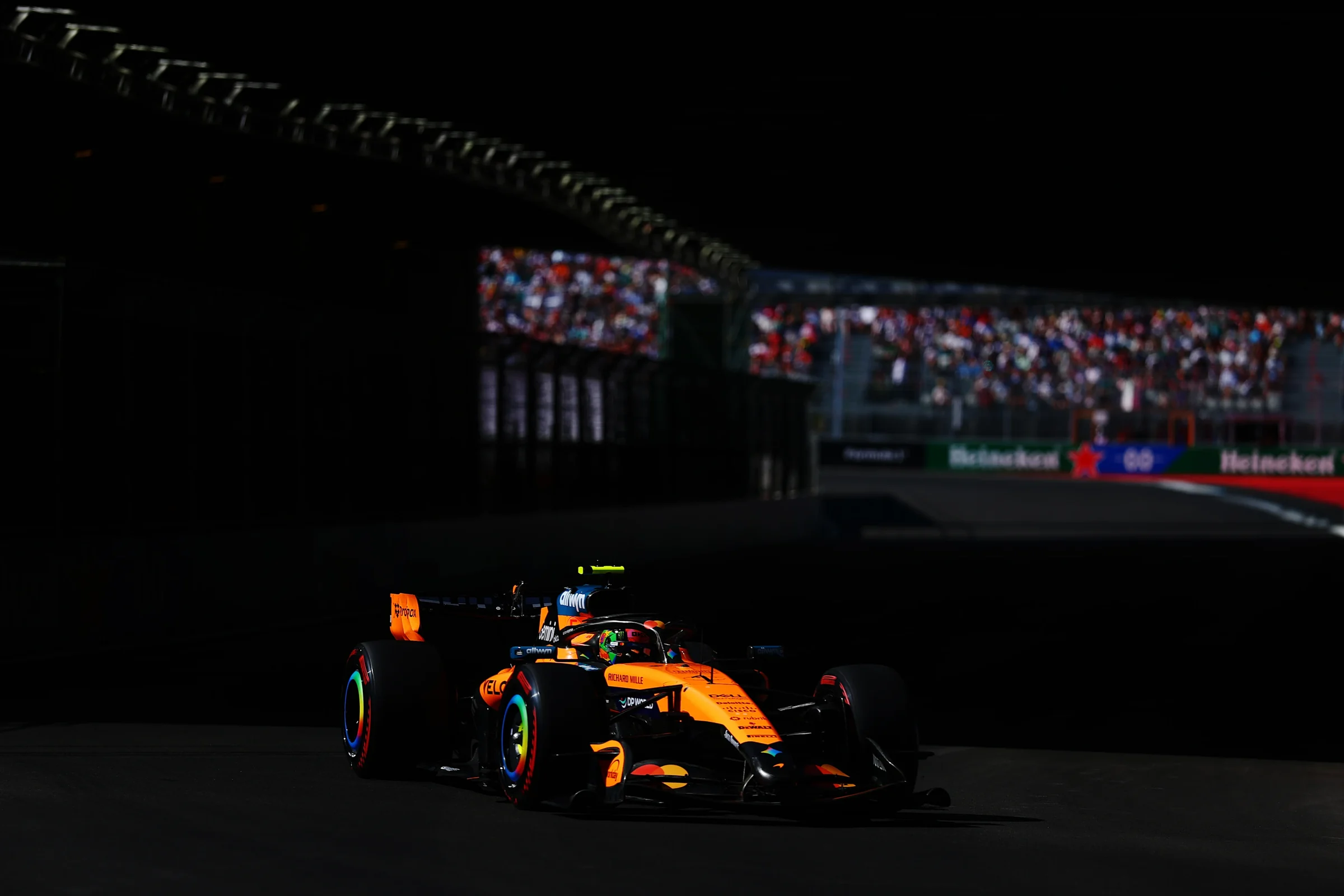
Madring has already delivered one clear verdict before its first Formula 1 race: it is a serious driving challenge. The new Madrid venue combines public-road sections, purpose-built asphalt, aggressive kerbs, blind commitment and the long banked La Monumental corner. Through practice and qualifying, drivers repeatedly described a lap that feels fast, physical and unusually unforgiving.
That does not settle the questions fans care about most. A circuit can be thrilling from the cockpit yet difficult for two cars to race side by side. It can pass FIA approval while still prompting useful criticism about walls, visibility or recovery procedures. And a spectacular qualifying lap cannot tell us whether tires will permit sustained attacks over a Grand Prix distance.
This review is deliberately frozen on September 13, 2026, after qualifying and before the inaugural race. It examines what real running has established about Madring’s layout, driver appeal and safety demands; what the grid and Friday long runs suggest about overtaking; and what remains speculation until the lights go out. The right judgment is not “good” or “bad” after two days. It is a more precise one: Madring already looks distinctive and demanding, while its quality as a racing circuit still has to be earned on Sunday.
What Madring Actually Is
Madring is a 5.414-kilometre, 22-turn circuit around IFEMA Madrid and Valdebebas. The inaugural Grand Prix is scheduled for 57 laps and 308.399 kilometres. Those numbers describe the distance, but the venue’s identity comes from how abruptly its character changes around one lap.
A hybrid circuit rather than a conventional street track
Calling Madring a street circuit is only partly accurate. It uses public roads, including the Ribera del Sena section, then moves onto purpose-built track. That combination explains why it can feel confined and visually busy near walls while also offering engineered elevation, banking and wider spectator areas that would be difficult to insert into an existing city grid.
The distinction matters for car behavior. Public-road geometry tends to impose cambers, surface changes and fixed boundaries; a permanent section can be shaped around the intended speed profile. Madring mixes both in one setup problem. Teams cannot optimize only for a stop-start street race or only for a smooth permanent circuit.
The lap’s contrasting sectors
Only about 200 metres separate the grid from Turn 1, so the opening braking zone arrives quickly. Turn 3 then launches cars toward the longest straight, which the promoter lists at 837 metres. The public-road climb through Turns 6 and 7 gains roughly 10 metres before a blind high point, followed by a descent toward Turn 8.
Turns 10 and 11 slow the car before the long banked Turn 12, La Monumental. The lap accelerates again through the linked Turns 14–16, then compresses toward a slow, wall-lined conclusion at Turns 20–22. That creates an engineering conflict: the car needs compliance over kerbs and traction from slow corners, yet also needs a predictable aerodynamic platform through fast direction changes and sustained load.
This is why a lap guide should not reduce Madring to its banking. The 2026 Spanish Grand Prix weekend guide supplies the schedule context; the circuit itself asks drivers to solve several different tracks stitched together.
Why Drivers Find It So Exhilarating
The strongest praise after Friday was not about convenience or easy lap time. It was about consequence. Pierre Gasly highlighted the adrenaline of high-speed corners with walls arriving quickly in the driver’s vision. Oscar Piastri described sections where the car is pointed toward a barrier before the driver changes direction to avoid it. A clean lap therefore feels earned.
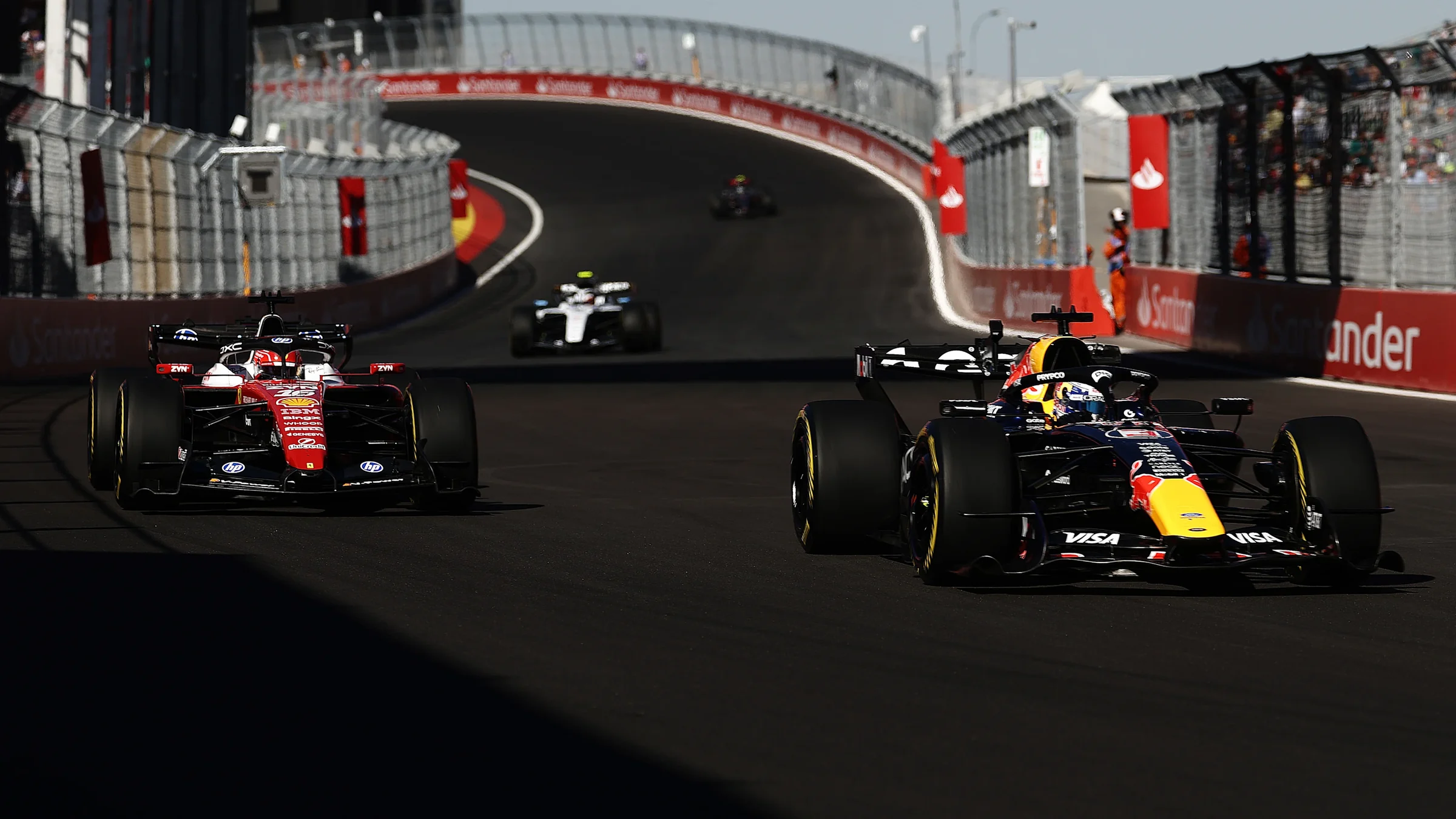
That sensation differs from simply brushing a wall on exit. At Madring, blind approaches and linked corners can place the barrier in the sight line before the trajectory opens. The driver must commit to an apex partly on reference and memory, trust the grip, and leave exactly enough margin. Add bumps and aggressive kerbs, and confidence builds in increments rather than arriving with one setup change.
Fresh asphalt added another variable. Charles Leclerc reported being impressed by the available grip, yet teams also observed rapid track evolution and tire graining. High grip can make a circuit feel spectacular over one lap while still punishing a slide: the car carries more speed into the next wall-lined sequence, and a small loss of surface performance can appear suddenly.
The enthusiasm was not unanimous. Max Verstappen praised the job done around the venue but maintained his preference for traditional circuits. George Russell’s “high risk” description captured the other side of the appeal. For some drivers, a narrow margin creates precisely the intensity they want; for others, it is not a substitute for natural terrain and open-circuit flow.
Most importantly, cockpit enjoyment and race quality measure different things. A qualifying driver values precision, commitment and the satisfaction of joining difficult sequences. A following driver needs stable tires, usable energy and a line that survives turbulent air. Madring has already demonstrated the first kind of challenge. Sunday must reveal whether it provides the second.
La Monumental Is the Signature—but Not the Whole Test
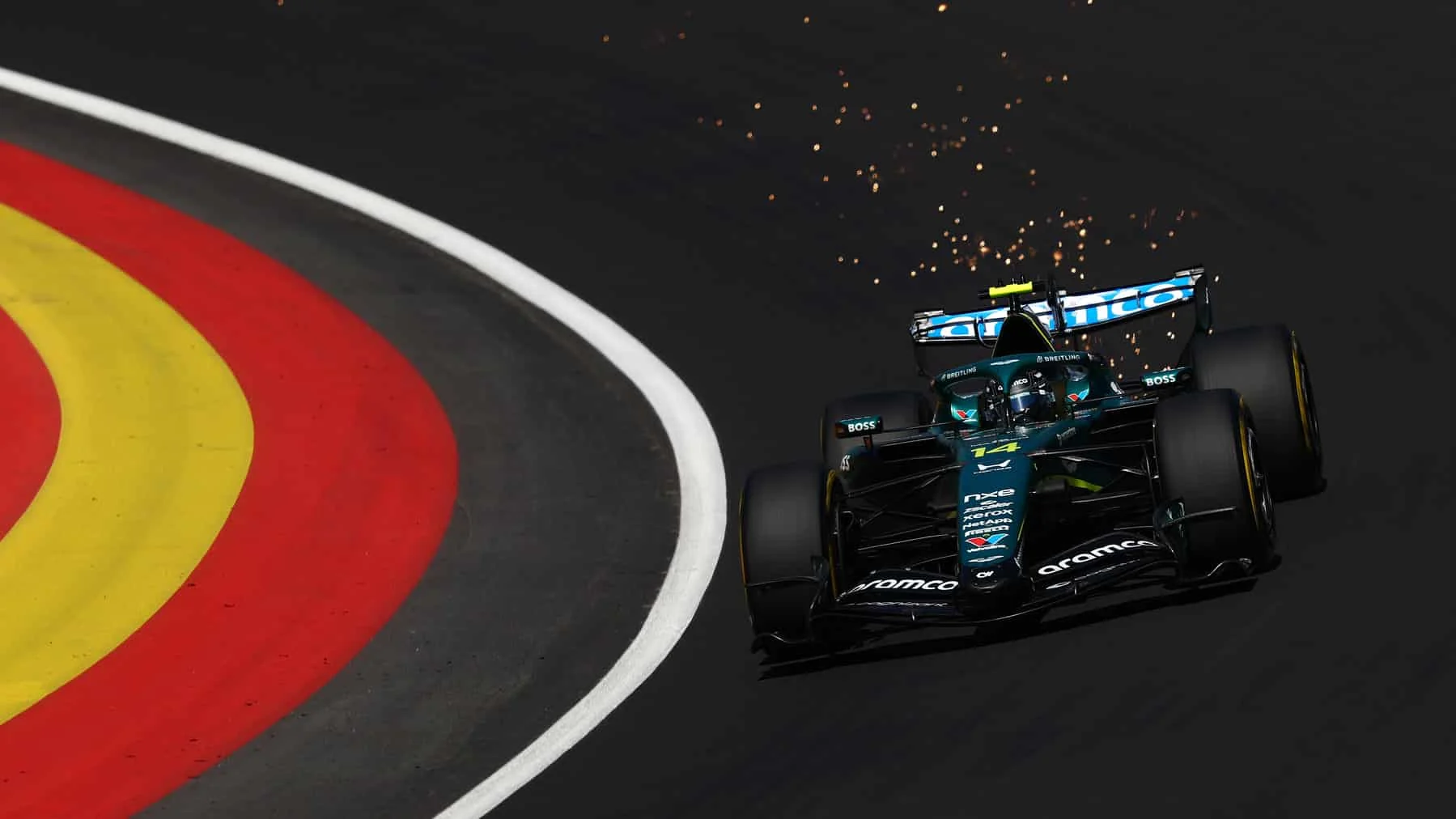
Turn 12 was designed to be the image people remember. La Monumental stretches for roughly 550 metres in a semicircle, with banking that reaches a 24% gradient—about 13.5 degrees—and spectator accommodation wrapped around it. An F1 car remains in the corner for around six seconds, giving Madrid a television shot no other venue reproduces exactly.
The geometry is less simple than a constant-radius bowl. The corner changes elevation as it descends and rises, while Turns 10 and 11 regulate entry speed. Teams that expected an effortless flat-out sweep were too optimistic. Friday evidence showed drivers lifting in the first phase before committing fully later, with differences in when and how much they released the throttle.
Banking, line choice and sustained load
Pirelli’s concern was duration rather than an unprecedented instantaneous peak. Chief engineer Simone Berra explained that the tires spend roughly 5.5 seconds under sustained load there, around twice the duty time of a more typical two- or three-second loaded corner. Initial inspections matched the supplier’s simulations, and no special stint limit was being proposed at that stage, although checks were continuing.
Banking supports the car and opens geometric line choice, but it does not make every line equally fast. A qualifying lap on fresh tires may prioritize the shortest path and commitment. A heavy race car may need a slightly different entry to protect the loaded outside tires. A driver following another car also has to consider turbulent air and whether moving higher increases distance without producing enough extra grip.
That makes La Monumental a valuable test of judgment rather than merely a branding exercise. A lift that looks cautious may protect the front axle and improve the launch toward Turn 13; an aggressive entry may gain time until the tire begins to slide. The useful race evidence will be whether drivers can vary their line while staying close, not whether two cars can briefly occupy different strips of asphalt.
Still, the corner should not swallow the circuit review. The blind public-road climb, the fast Valdebebas links and the final walled sequence may create larger lap-time differences and more consequential mistakes. La Monumental is Madring’s signature. The quality of the whole lap depends on what happens before and after it.
The Safety Debate Needs More Precision
“Safe” and “unsafe” are too blunt for a useful circuit review. Madring was authorized to host official Formula 1 sessions, with modern barriers, cars and procedures. Drivers can still identify a sight line, wall position or recovery problem worth changing. Approval is a threshold; feedback after real running is part of continuous circuit safety.
Walls, sight lines and recovery space
The track’s defining risk is not simply narrowness. Several approaches direct the driver’s vision toward a wall before the racing line turns away, and elevation can hide the next reference. At high speed, the driver commits before every part of the exit is visible. The consequence of locking a wheel or losing rear grip is also immediate because paved escape space cannot be created freely beside public roads and exhibition buildings.
That changes race control’s operational problem. A stopped car on a broad runoff may be cleared locally; a damaged car or debris in a confined corridor can obstruct the racing surface or place marshals close to traffic. Safety Car or red-flag probability therefore depends not only on crash severity, but on where the car stops, whether barriers need repair and whether recovery vehicles can work behind protection.
What incidents through qualifying actually prove
The first two days supplied concrete examples. Arvid Lindblad’s Friday accident required a chassis change. In FP3, Lewis Hamilton locked up at the final corner, struck the Tecpro barrier and later stopped with a puncture. Oliver Bearman then hit the wall hard exiting Turns 10–11, ending the session early; Haas could not repair his car in time for qualifying. Alex Albon’s comparatively light touch still broke a rear track rod.
Qualifying demonstrated the other side. Drivers explored the margin—George Russell brushed a wall, while Franco Colapinto caught a major rear-end moment in La Monumental—and the session still produced a complete contest among the available cars. Bearman’s absence was a consequence of earlier damage, while Lance Stroll did not set a time because of a separate car issue.
These events prove that mistakes can be expensive in parts, track time and session continuity. They do not prove that Madring is inherently unacceptable, just as a clean hour would not prove it harmless. The race adds traffic, heavy fuel and strategic pressure, so the correct pre-race conclusion is conditional: the barriers have already contained several impacts, but confined recovery and repeated wall contact remain important tests.
Will Madring Produce Overtaking?
Madring has several places where a pass looks plausible on a map. It also has respected drivers warning that racing may be difficult. Both can be true: a circuit needs braking zones, but the quality of the approach decides whether an attacker can use them.
The obvious braking zones
Turn 5 is the headline candidate. Cars accelerate from Turn 3 along the circuit’s longest run and, according to promoter estimates, brake from around 340 km/h toward 80 km/h. Turn 1 follows the 589-metre main straight, while Turns 13, 17 and 20 also convert fast approaches into materially slower corners. On paper, that is more than one route into combat.
The 2026 systems add another layer. Madring has two designated Straight Mode zones: the start/finish straight and the run between Turns 3 and 4. Overtake Mode eligibility is measured just before Turn 22, with activation after the final corner. A close final-sector exit can therefore create an electrical speed advantage on the main straight, but the driver still has to position the car and complete the braking phase.
Why a long straight does not guarantee a pass
Max Verstappen’s criticism focused on braking geometry. If the approach bends while the car is shedding speed, attacker and defender have fewer stable line choices than they would on a straight approach to a wide hairpin. Turn 5 may produce a large speed reduction, yet steering input under braking can make a late lunge less controllable and an outside line less rewarding.
The attacker must first stay close through the preceding sequence. Fast corners heat and load the tires, while turbulent air can reduce front grip. Lose the final metres of the previous corner and the long straight becomes recovery distance rather than passing distance. Electrical deployment is finite as well: spending energy to close one gap can leave less assistance later in the lap.
Tire behavior could push the race in opposite directions. Friday produced unexpectedly severe graining on heavier-fuel running. If degradation creates large pace offsets, fresher tires may make overtakes possible or force undercuts and multiple stops. If drivers manage aggressively to avoid graining, they may circulate below the pace needed to attack. Lando Norris and Kimi Antonelli both treated track position as valuable, while admitting that Sunday remained uncertain.
The pre-race rating is therefore opportunity present, proof absent. Turn 5 and the main straight deserve attention, but the decisive test is whether a car can remain within striking distance before them. Counting straights is not the same as counting passes.
What Qualifying Revealed—and What Sunday Still Has to Answer
Lando Norris set Madring’s first F1 pole time at 1:31.824, beating Kimi Antonelli by 0.011 seconds and Max Verstappen by 0.140. Lewis Hamilton and Charles Leclerc occupied the second row in the session classification, followed by George Russell and Oscar Piastri. Only 0.470 seconds covered the top seven.
That compression says more about one-lap execution than the circuit’s eventual racing quality. Norris delivered his decisive improvement at the end of Q3 and called it one of his best laps. Hamilton had held provisional pole after the first runs despite his FP3 crash. Colapinto recovered from a major moment at La Monumental to reach Q3. At a track with evolving grip and severe consequences, confidence could be rebuilt quickly enough to matter.
Qualifying also reinforced the cost of lost preparation. Bearman never participated because Haas could not repair his FP3 damage in time, while Stroll remained without a lap because of a separate technical problem. Carlos Sainz’s raw P17 was followed by a three-place grid penalty for impeding Valtteri Bottas, another reminder that the final starting order is not always identical to the timing sheet. Check the latest F1 qualifying results for the classification context.
Sunday watchlist
- Whether the short launch to Turn 1 creates contact or rewards the front row.
- Whether cars can stay close through Turns 20–22 before Overtake Mode becomes useful.
- Whether Friday graining survives track evolution and heavy-fuel management.
- Whether La Monumental supports alternate race lines or funnels everyone onto one efficient path.
- How quickly damaged or stopped cars can be recovered from confined sections.
The biggest variable is the relationship between tire life and track position. High degradation can create pace differences and multiple strategic windows; heavy management can create a queue in which nobody wants to spend grip attacking. Norris also lost much of FP2 and lacked representative long-running data, so pole does not remove his preparation question.
Use this weekend’s F1 schedule for current session timing. After the race, the F1 results will finally provide evidence about finishes and overtakes, while the championship standings show the points consequence. Until then, Madring’s fairest verdict remains deliberately incomplete: excellent qualifying challenge, meaningful safety questions, and racecraft still awaiting its first full examination.
Loading comments…