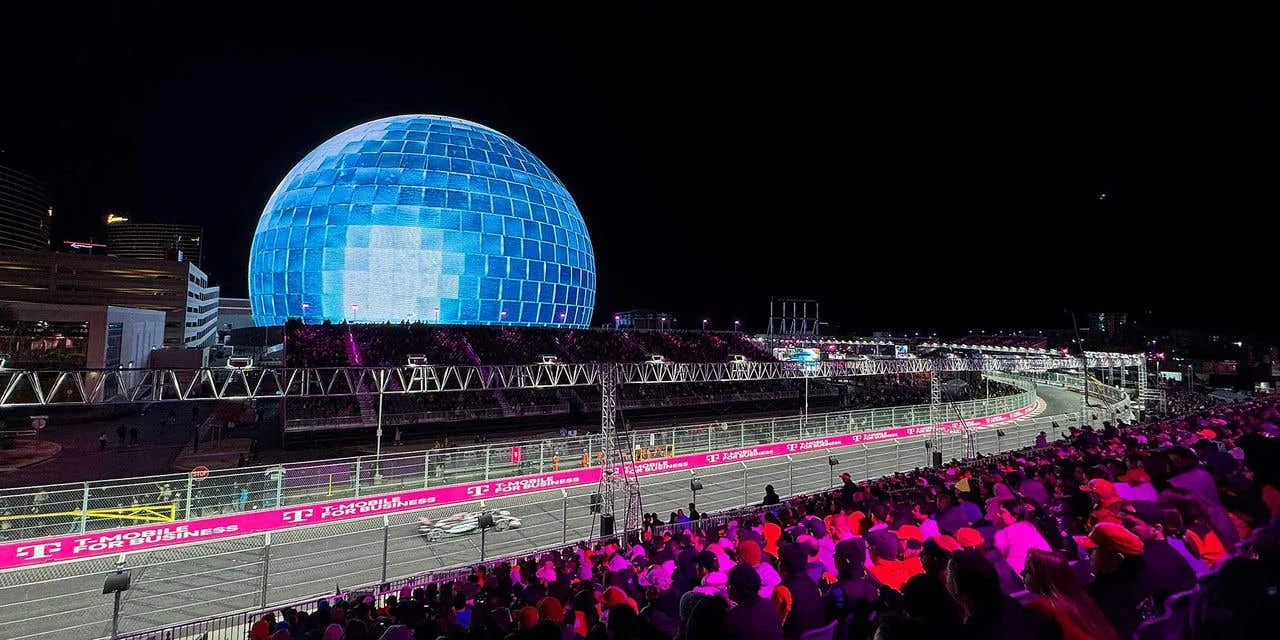
The Las Vegas F1 road-closures map is a transport document, not a racing souvenir. During the November 19–21, 2026 Grand Prix weekend, the streets around your hotel can have a different operating condition from the route you normally use. A circuit drawing tells you where the cars race; a dated transport map tells you whether your planned journey is workable.
This guide was checked October 14, 2026. It explains where to find current closure information, how to read the operating phases, and how walking, the Monorail and designated vehicle pickups fit together. Exact road openings should come from the current official operations update. A previous-year table or a “typical” afternoon closure time is not a confirmed 2026 instruction.
Start with your actual destination: hotel arrival, public activity, ticket entrance or airport transfer. Each is a different trip. If you still need admission, our Las Vegas 2026 ticket guide helps establish the product and zone. Once you know that zone, plan the permitted approach and the journey home with the same care.
Find the current 2026 closure map before planning a route
Use the official Las Vegas Grand Prix transportation portal as your starting point. Its current landing page identifies the 2026 circuit preparations and directs users to date-specific updates, interactive maps and printable resources. Select the date you are traveling, not just the Grand Prix date. Installation, race operations and dismantling can create different restrictions on the same street.
Then match the map to your mode. A vehicle-access diagram does not necessarily describe a pedestrian approach, and a public-road closure does not establish your ticket-gate permission. If you need to reach a hotel with luggage, check the property’s arrival instructions alongside the road map. If you need a grandstand, check the entrance instructions attached to your ticket as well. The destination defines which layer you need.
Check the year as well as the official domain
There is a specific trap in current search results. The Clark County page titled “Circuit Impacts” still describes the 2025 Grand Prix when checked October 14. Its November 17–23 timeline is historical material. It sits on an authoritative government website, but those hours should not be transplanted into a 2026 itinerary. An official source can still be the wrong edition of the event.
Before relying on a downloaded map, inspect its year, date range and operating condition. Save the link that produced it so you can check for a replacement. A screenshot with no legend or publication context is especially weak evidence: it may hide the date that determines whether the route applies. Likewise, a travel guide’s “typical” reopening time is a planning example, not clearance to drive onto a controlled road.
The current organizer portal also offers weekly traffic text updates by sending F1LV to 31996. Use updates to supplement the map, especially around a change in operating conditions. Do not interpret a session’s finish as an automatic road reopening. Your useful answer is the current traffic instruction for the road and time you need, rather than a neat table that promises the same routine every day.
Understand what the track’s operating phase means for traffic
The organizer describes the circuit with operating phases because a street course has to move between ordinary city use and controlled racing conditions. Those labels tell you more than a simple “open” or “closed” headline. A road can remain usable while its normal turns, lanes or property approaches have changed. Read the map’s legend and phase before deciding that your familiar route still works.
Construction restrictions and race closures are different
The current portal identifies Week 7 Flamingo Bridge installation as in progress. Its property-access notice gives different approaches for different destinations: for example, the Westin’s westernmost Flamingo Road entrance and access to Tuscany via Flamingo Road. These are construction-stage examples checked October 14, rather than instructions for approaching a race gate in November. A nearby property can require a different approach even before race-week operations begin.
This distinction matters for check-in, restaurant visits and local journeys as much as for ticket holders. A fan arriving several days before the race should select that arrival date on the preparation portal. Someone returning after the race should select the dismantling date. Do not assume that the end of racing means all temporary structures disappear overnight. The event’s physical footprint changes in stages, and your journey belongs to one particular stage.
Cold, warm, transition and hot track are operating conditions
In the organizer’s transport glossary, cold track means public traffic patterns are adjusted around installed barriers and lighting. Warm track is a race-week condition with substantial public use still possible, but extra restrictions prepare the circuit for closure. Transition is the process of moving barriers, fencing and other race equipment into operating position. Hot track means the circuit is closed for track activity, including testing and practice as well as qualifying and the Grand Prix.
These terms describe access conditions, not tire temperature, grip or the weather forecast. Do not use the first F1 session’s start time to calculate when a road will close. Infrastructure has to be in place before the cars run, and transition itself is a distinct operational period. The map or notice for the current phase is the relevant instruction for road users.
Likewise, distinguish permission from destination. Being able to reach a property during a warm condition does not authorize travel through the same approach during hot track. If your route crosses the circuit footprint, save an alternative that stays on a permitted public path. The practical value of understanding the phases is recognizing when an earlier successful journey no longer proves the next one will work.
Walk to the entrance your ticket actually uses
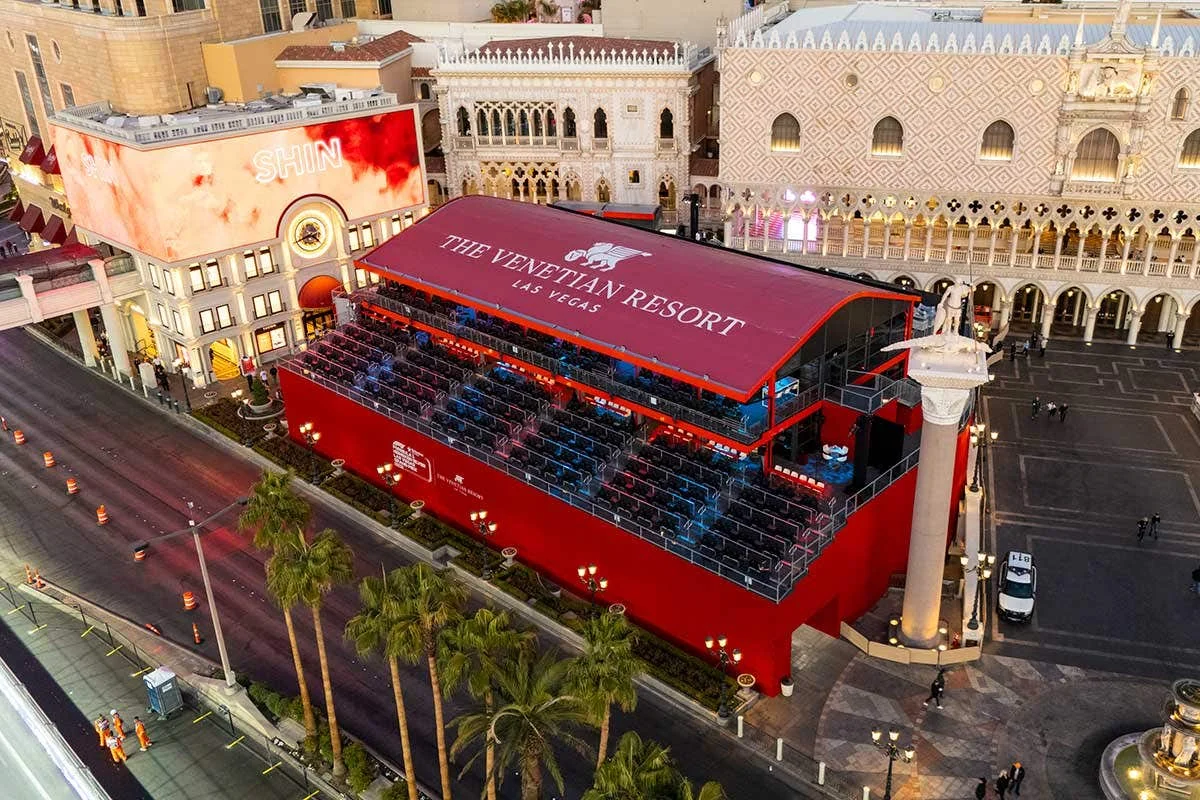
The promoter encourages walking from nearby hotels where practical, but the useful destination is your assigned entrance, not the closest point on the track. Read the mobile-ticket instructions and use the official event app’s route to that destination. A hotel opposite your seat on a circuit diagram may still be separated from the permitted approach by an event-controlled area. Short geometric distance does not establish access.
Public pedestrian circulation and ticketed pedestrian circulation are separate categories in the organizer’s resources. Keep that distinction when planning with friends who do not all hold the same admission. A ticketed route may be appropriate for one member of the group while another needs to remain on a public approach. Do not assume that an F1 ticket permits every crossing, or that a public walkway leads directly into every spectator zone.
Map the complete walking journey: hotel exit, permitted approach, security entrance and final seat or viewing area. Each leg has a different destination. Large resorts add distance before you even reach the sidewalk; after admission, you still have to find the stand or general-admission position. Budget time for that whole sequence rather than treating the arrival at a nearby street corner as the finish of your trip.
For mobility needs, use the designated accessible path and check the route with the event team if any part remains unclear. The 2026 A-Z guide directs visitors to wheelchair-accessible paths through the official map and describes accessibility services. A pedestrian crossing involving stairs is not equivalent to a usable step-free route, and a hotel’s accessible lobby does not answer the circuit-access question.
A sensible walking plan also limits unnecessary changes of destination. If you want a meal before the session, choose a location that fits the permitted approach to your zone. If your party splits up, agree on a specific meeting point everyone can legally reach. These choices do not guarantee an empty sidewalk, but they remove avoidable detours. The reward is arriving ready to watch the first competitive lap rather than spending it finding the correct fence entrance.
Use the Monorail for the right part of the journey
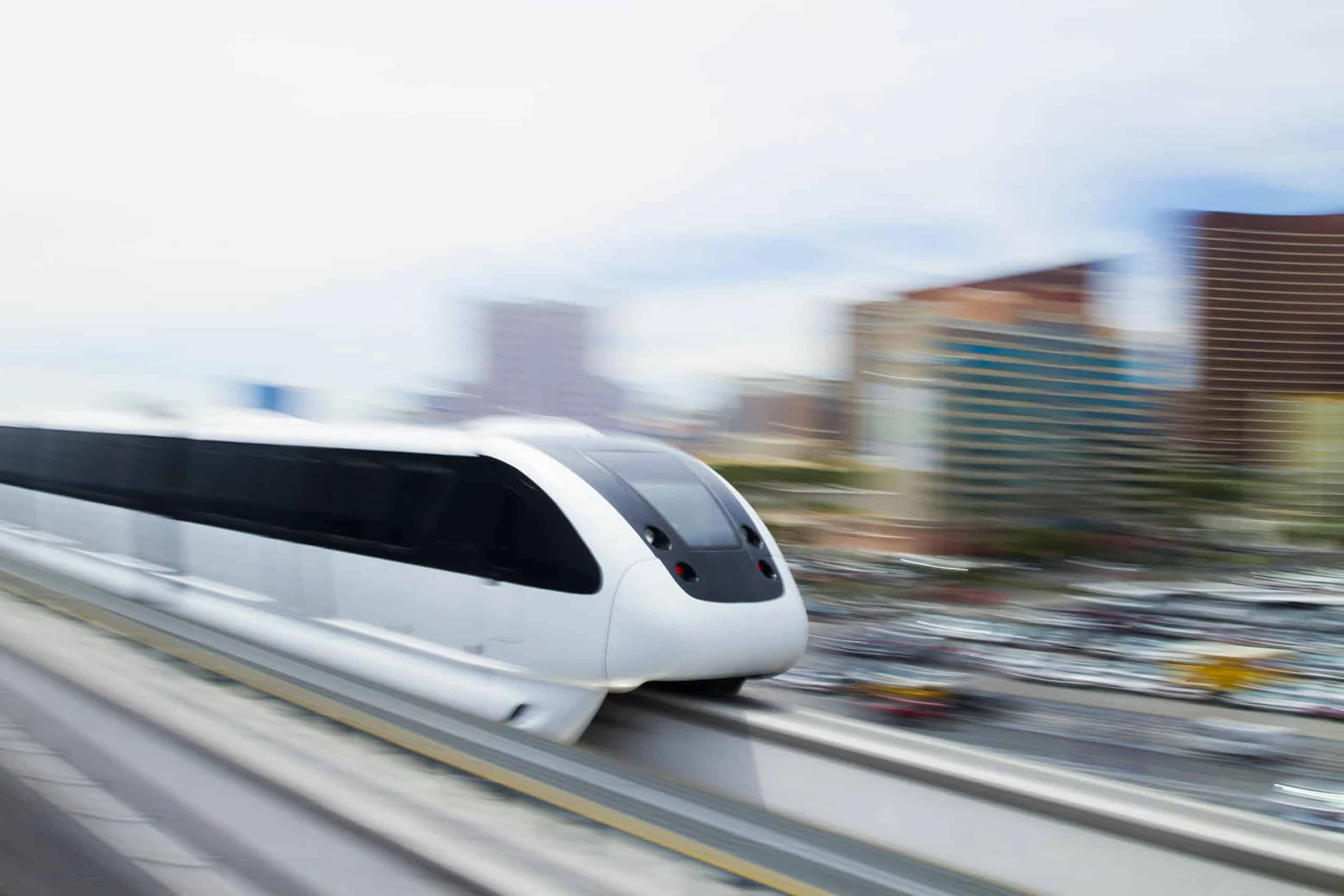
The Las Vegas Monorail is worth comparing when your journey fits its resort corridor. It moves the middle part of the trip onto a rail route instead of relying entirely on road traffic. That can be particularly useful for a visitor traveling between its stations. It does not make every hotel, circuit zone or airport destination a direct rail journey, so compare the complete trip rather than only the time spent aboard.
The 2026 extended-service window
The organizer’s current 2026 A-Z guide lists scheduled nonstop Monorail service from 7:00 a.m. Tuesday, November 17, through 3:00 a.m. Monday, November 23. Those are Las Vegas local times. This event-specific window is more useful for race planning than the operator’s ordinary weekly opening hours. Recheck the event notice and operator updates before travel, particularly if you are using service near the beginning or end of that window.
Extended operating hours answer whether service is scheduled, not how long every passenger will wait or how crowded a station will be. Buy the fare product that fits your actual journeys and follow current ticket instructions. A multi-day visit with several rail trips has a different calculation from a single race-night ride. There is no reason to invent a precise travel-time advantage over a taxi when the decisive variables include your hotel and entrance.
A station is not your circuit entrance
Use the operator’s official route map to identify your departure and arrival stations. The system links SAHARA and MGM Grand, with resort-corridor stops between them. Station names describe surrounding destinations, but the entrance may be within a particular property: Horseshoe/Paris is accessed at Horseshoe, while Flamingo/Caesars Palace is accessed at Flamingo. The name does not promise a platform at both hotels’ front doors.
From your arrival station, you still need the current permitted route to the ticket entrance. This last walking leg can be the deciding part of the comparison. For a west-side hotel, reaching the rail system may itself require a crossing that needs checking. For an accessible journey, include station access and the onward path in the same plan rather than evaluating the train in isolation.
The Monorail also does not run directly to Harry Reid International Airport. Treat an airport journey as a separate transfer, even if rail helps with another leg. The strongest use of the system is a trip that aligns naturally with its stations and a verified onward route. It is a transport option with defined geography, not a universal replacement for every movement around Las Vegas.
Plan hotel arrivals, rideshare and airport transfers separately
The circuit uses sections of Las Vegas Boulevard, Harmon Avenue, Koval Lane and Sands Avenue. That identifies the footprint to study, not a claim that every part of each street closes for the same period. If you are arriving by car, send the hotel your arrival date and approximate time and ask for its current permitted vehicle approach. A room reservation does not by itself answer which driveway, garage or check-in route is available during the event’s changing conditions.
Keep luggage arrival separate from your trip to the circuit. A route you are comfortable walking without bags may be unsuitable immediately after a flight. Equally, a hotel transfer arranged for check-in does not establish a convenient pickup after qualifying. Make each booking match its actual destination, passengers and luggage. This prevents a vehicle plan for one leg being reused without checking the conditions on another.
Choose a permitted pickup point before the session ends
The current event guide lists designated rideshare pickup and drop-off locations at Virgin Hotels Las Vegas, Tuscany Hotel, Park MGM and the Hughes Center. Choose among the approved locations using your assigned zone and the current pedestrian route. Do not simply request a car at the nearest piece of racetrack or assume your hotel’s usual front-door pickup is operating in the same way.
Check the precise pin, the permitted approach and the meeting instructions before leaving your viewing area. A driver and passenger can both be close to a property while standing on incompatible sides of a closure. In a group, agree on the pickup location before people begin walking. The objective is a location the vehicle can reach and the entire party can reach on foot, rather than the shortest line between two map pins.
| Journey | Check first |
|---|---|
| Hotel check-in | Property vehicle approach and luggage arrival instructions |
| Circuit pickup | Designated rideshare location and permitted walking route |
| Airport departure | Terminal, flight requirements and current ground-transport route |
At the airport, follow Harry Reid’s own taxi and rideshare instructions. Taxi loading and app-based pickup are different locations; the airport directs rideshare passengers to designated garage areas. For the return trip, confirm the terminal and allow for the complete process, including the hotel pickup and any vehicle detour. A short straight-line distance between the Strip and the airport is not a travel-time guarantee during a major event.
Set a departure plan that survives a late finish
Choose the return route before you enter the circuit. The racing session and the city’s reopening process are different events, so avoid a plan that depends on a road opening immediately when the checkered flag appears. If you intend to stay for entertainment, repeat the route check for that later departure. The correct outward journey can be useful background without proving the same path is available on the way home.
If you use a bus as part of your plan, check the RTC’s live alerts and detours for the route and stop you need. A familiar bus-stop name does not guarantee normal service during event restrictions. Do not apply a 2025 detour notice to your 2026 trip. The relevant update should match your travel date and direction, just as the circuit operations map should.
- Save a meeting point everyone in the party can reach after leaving their zone.
- Confirm the permitted walk to your station, hotel or designated vehicle pickup.
- Choose an alternative route that remains within the current public access rules.
- Keep enough phone power for your mobile ticket, route update and pickup communication.
- Check the hotel-to-airport journey separately if you are leaving the following day.
Build the racing timetable around our weekend session schedule, then let current transport information determine the journey. An early hotel arrival, a verified entrance route and a realistic return plan make it easier to enjoy a late-night Grand Prix. The objective is not to predict every queue. It is to remove the avoidable mistakes: the wrong year’s map, the wrong gate, an unreachable pickup and a road-opening assumption that the official operations notice never made.
Loading comments…