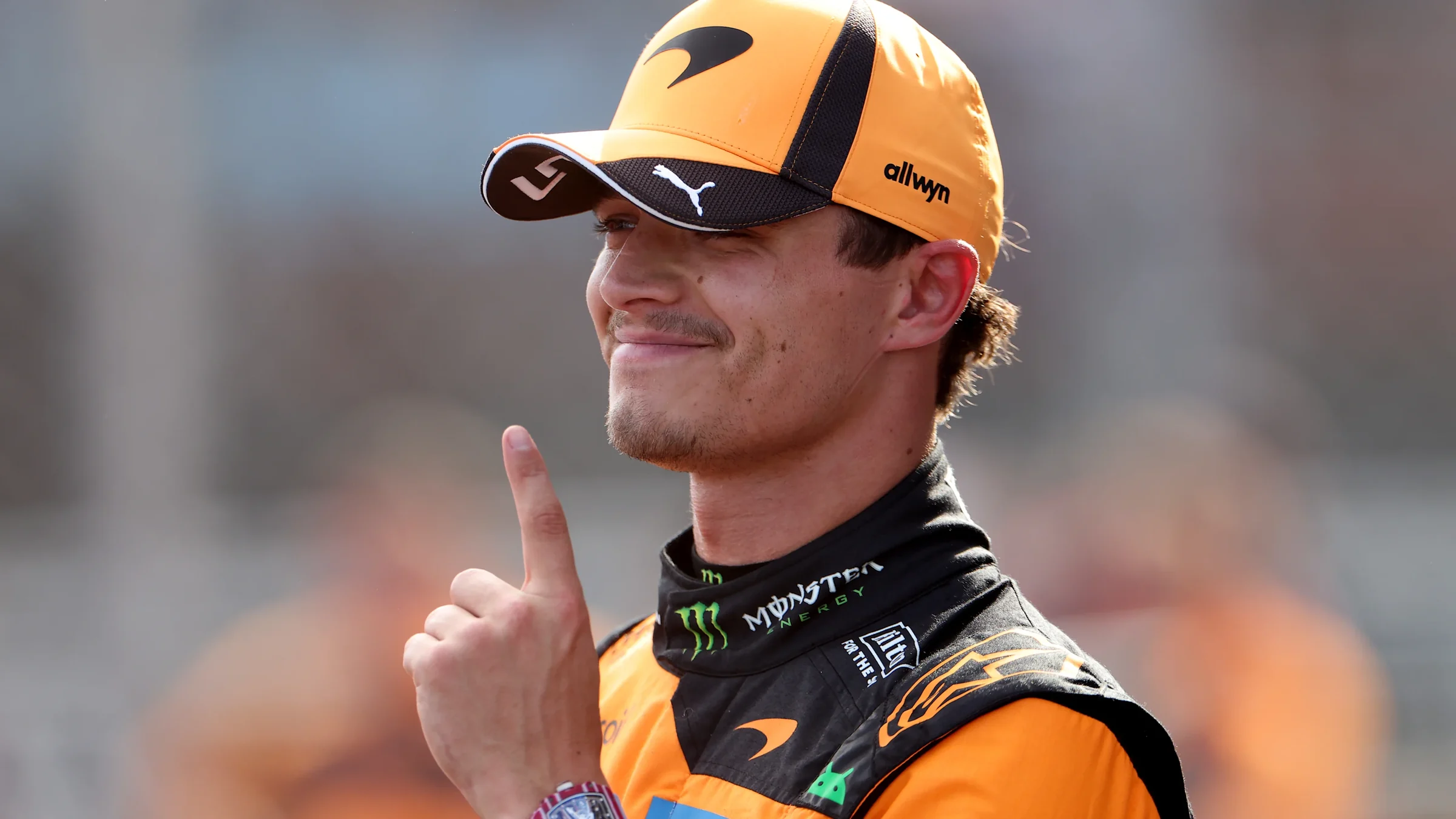
Lando Norris took pole for the 2026 Hungarian Grand Prix with a 1:17.207, beating Lewis Hamilton by just 0.012 seconds in one of the season’s tightest qualifying finishes. Charles Leclerc qualified third, ahead of Andrea Kimi Antonelli, Oscar Piastri and Max Verstappen. That is the clean answer to the qualifying-results question—but it is not quite the order in which the leading cars were due to start.
Hamilton kept second place in the official qualifying classification, yet received a three-place grid penalty for impeding Piastri near Turn 1 during Q3. Antonelli, originally fourth, also received a three-place grid penalty after the stewards ruled that he had not slowed sufficiently for yellow flags. The resulting front four on the official grid were Norris, Leclerc, Piastri and Verstappen, with Hamilton fifth and Antonelli seventh.
The key distinction
Qualifying classification records the timed session; the starting grid applies subsequent penalties. This guide preserves both, then explains how Q1, Q2 and Q3 produced the result and why equal three-place penalties did not create identical movements. The Hungarian Grand Prix weekend page keeps every session in one event context.
The Result at a Glance: Norris by 0.012 Seconds
The headline number is the margin: 0.012 seconds separated Norris and Hamilton after their fastest Q3 laps. Norris’s 1:17.207 was enough for pole, while Hamilton’s 1:17.219 left Ferrari painfully close to taking the top spot. Leclerc finished another 0.226 seconds behind Hamilton in third, and Antonelli was only 0.034 behind Leclerc in fourth. Piastri, Verstappen and Russell were all within 0.553 seconds of pole.
Pole lap
1:17.207
Lando Norris, McLaren
Winning margin
0.012s
over Lewis Hamilton
Top-seven spread
0.553s
Norris to Russell
This was not a straightforward McLaren lockout. Hamilton held provisional pole after the first Q3 runs, and Ferrari placed both cars in the timed top three. Norris then delivered the crucial improvement on the last runs as several rivals struggled to find more grip. The closing phase was also untidy: Verstappen spun and Russell stopped near Turn 1, producing yellow flags that complicated the final attempts.
The result therefore says two things at once. McLaren still had the fastest single lap when it mattered, but Ferrari was close enough for Hamilton to miss pole by almost nothing. Piastri’s fifth place also shows why reading only the constructor names is misleading: one McLaren was first, the other sat behind two Ferraris and Antonelli’s Mercedes. Grid penalties later reshuffled that order, yet they did not alter the evidence recorded by the stopwatch.
Full 2026 Hungarian GP Qualifying Classification
The table keeps the official qualifying classification intact. “Best time” means the driver’s fastest recorded time in the last segment they completed: Q3 for the top 10, Q2 for most drivers ranked 11th through 16th, and Q1 for those eliminated at the opening cut. The final column separately records where a grid sanction or pit-lane requirement changed the starting position.
| Qual. | Driver | Team | Best time | Final grid |
|---|---|---|---|---|
| 1 | Lando Norris | McLaren | 1:17.207 | 1 |
| 2 | Lewis Hamilton | Ferrari | 1:17.219 | 5 (penalty) |
| 3 | Charles Leclerc | Ferrari | 1:17.445 | 2 |
| 4 | Kimi Antonelli | Mercedes | 1:17.479 | 7 (penalty) |
| 5 | Oscar Piastri | McLaren | 1:17.684 | 3 |
| 6 | Max Verstappen | Red Bull Racing | 1:17.725 | 4 |
| 7 | George Russell | Mercedes | 1:17.760 | 6 |
| 8 | Isack Hadjar | Red Bull Racing | 1:17.856 | 8 |
| 9 | Arvid Lindblad | Racing Bulls | 1:18.281 | 9 |
| 10 | Nico Hülkenberg | Audi | 1:18.686 | 10 |
| 11 | Liam Lawson | Racing Bulls | 1:18.765 | 11 |
| 12 | Pierre Gasly | Alpine | 1:18.844 | 12 |
| 13 | Franco Colapinto | Alpine | 1:19.027 | 13 |
| 14 | Gabriel Bortoleto | Audi | 1:19.105 | 14 |
| 15 | Esteban Ocon | Haas | 1:19.734 | 15 |
| 16 | Fernando Alonso | Aston Martin | 1:19.808 | 16 |
| 17 | Oliver Bearman | Haas | 1:20.233 | 17 |
| 18 | Carlos Sainz | Williams | 1:20.621 | 18 |
| 19 | Alexander Albon | Williams | 1:20.658 | 19 |
| 20 | Lance Stroll | Aston Martin | 1:20.659 | 20 |
| 21 | Valtteri Bottas | Cadillac | 1:20.886 | 21 |
| 22 | Sergio Pérez | Cadillac | 1:21.322 | Pit lane |
Two rows require care. Hamilton’s qualifying result remains second even though he was placed fifth on the grid, and Antonelli remains fourth in the session classification even though he was placed seventh. Leclerc, Piastri and Verstappen each moved forward one place once Hamilton’s penalty was applied. Russell remained sixth: Hamilton dropped behind him, but Antonelli also dropped from ahead of him to behind him.
Pérez’s “pit lane” entry is different again. He had qualified 22nd, but the official grid recorded a pit-lane start following changes made under parc fermé conditions. None of those administrative changes should be used to recalculate the lap-time table. They answer the separate question of where each car was permitted to begin Sunday’s race. For completed Sunday classifications, use the site’s latest F1 results.
How Q1, Q2 and Q3 Changed the Picture
The final order was built through three very different phases. Q1 rewarded drivers who read the improving surface, Q2 compressed the midfield around a narrow cut line, and Q3 became a contest over when to release the car as much as how quickly to drive it. With 22 cars in the 2026 field, six drivers were eliminated in each of the first two segments rather than the familiar five.
Q1 punished six drivers as the circuit evolved
Bottas, Sainz and Albon were among the early runners, while Alonso initially established a 1:20.685 on soft tyres. Hamilton quickly moved the reference into the 1:18s despite using the medium compound. That choice mattered because it demonstrated that the leading cars had enough pace to progress without spending another set of softs, but it also left the order vulnerable to rapid changes as more rubber went down.
Track limits added another layer. Leclerc’s first effort was deleted at Turn 3, and Bortoleto also lost his opening time. Both recovered, but the deleted laps increased the pressure on their remaining runs. Norris ultimately finished the phase fastest, with Antonelli unable to dislodge him at the top.
The six eliminated drivers were Bearman, Sainz, Albon, Stroll, Bottas and Pérez. Bearman missed Q2 by a little over a tenth, while both Williams drivers remained trapped near the bottom after struggling through the high-downforce weekend. Alonso’s P16 was the final transfer position and marked his first Q2 appearance of the season with Aston Martin’s updated car.
Q2 made every tenth matter in the midfield
Q2 began with Verstappen setting an early 1:18.249, but Hadjar then dipped a wheel into the gravel and spun onto the grass. The yellow flag interrupted the rhythm and forced Hadjar to reset. Hamilton briefly produced the fastest lap of the weekend at that point, while Antonelli reported that he had almost no grip and then had a lap deleted.
Those problems did not end either driver’s session. Hadjar returned with the clean lap he needed, and Antonelli climbed to sixth. Leclerc also improved late after sitting close to danger. Norris reclaimed first with a 1:17.456, confirming that McLaren could access more pace when the circuit allowed it.
The Q2 cut line
Hülkenberg advanced in P10 with a 1:18.639. Lawson’s 1:18.765 left him 0.126 seconds short, followed by Gasly, Colapinto, Bortoleto, Ocon and Alonso. In a session with six eliminations, P16 was no longer safe: Alonso’s run ended even though it had been enough to survive Q1.
Q3 turned into a final-lap pole fight
Verstappen recorded the first Q3 benchmark at 1:17.725. Norris then went faster, although a mistake late in his opening lap left an opportunity for Hamilton. The Ferrari driver took it and held provisional pole after the first runs, ahead of Norris, Leclerc and Antonelli. Russell was seventh and already roughly half a second away from the lead fight.
Hamilton and Norris approached the last attempts differently. Hamilton went early, giving himself clear track but less of the anticipated late evolution. Norris waited and arranged to be the final driver to take the chequered flag. Hamilton could not improve his first-run time. Norris did improve, stopping the clock at 1:17.207 and taking pole by 0.012 seconds.
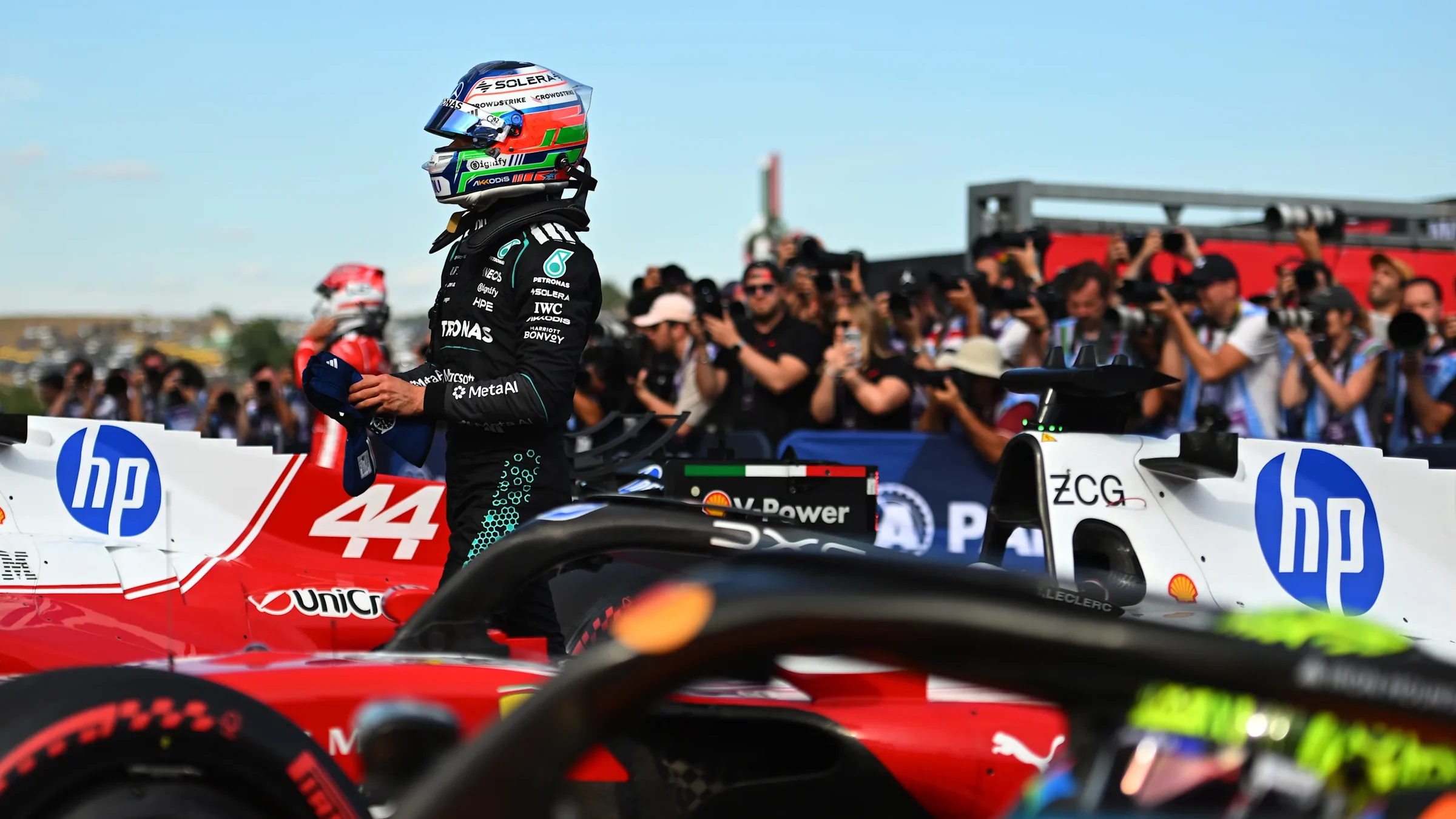
The window closed abruptly behind him. Verstappen spun on his final attempt, and Russell was told to stop near Turn 1 after Mercedes detected a water leak. Norris had already threaded through before the two late yellow-flag disruptions prevented the closing seconds from becoming a clean, equal final shootout. Piastri’s lap was compromised for a different reason: he encountered Hamilton moving slowly on the racing line approaching Turn 1 and aborted. That moment did not change the stopwatch order immediately, but it triggered the post-session investigation that later changed the grid.
How Norris Found the Winning Margin
A gap of 0.012 seconds invites a search for one decisive corner, but the public evidence supports a broader explanation. The pole changed hands across two Q3 run cycles while wind, grip and tyre preparation shifted. Norris did not dominate every moment; he converted the last useful opportunity better than the other contenders.
Hamilton set the benchmark on the first Q3 runs
Verstappen opened with a 1:17.725. Norris beat that mark, but an error toward the end of his lap left room for Hamilton. The Ferrari driver moved into provisional pole and remained there when the first runs were complete. His 1:17.219 would ultimately become his official best, which means his opening representative attempt was already only twelve thousandths slower than the lap that won pole.
That matters because the second runs did not offer every driver an automatic improvement. Hamilton reported that he lacked the grip he needed on the final attempt. Leclerc separately described changing wind and difficulty finding grip in parts of the circuit. Those comments do not prove that every corner or every car became slower; they show that the working window was moving and that the first-run time retained real value.
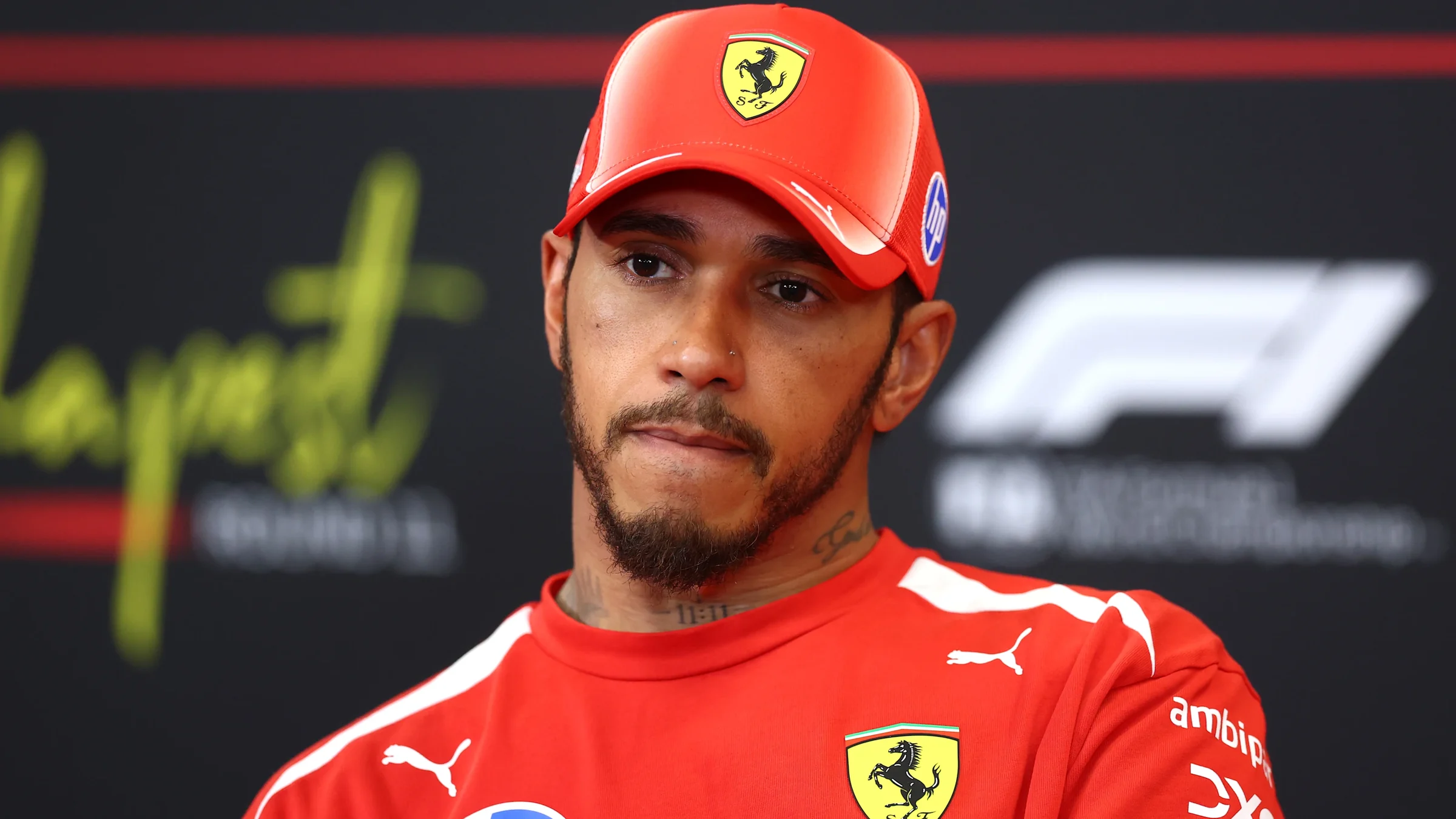
Hamilton’s choice to go early for the final run offered clear track but less time for further surface evolution. It also placed him on a cooldown lap when Piastri arrived on a flying lap, creating the incident that later brought a penalty. The lap that nearly secured pole was still valid. The operational problem happened afterward.
Norris improved when almost nobody else could
Norris took the opposite timing approach and arranged to finish late. Formula 1’s team-reaction report described him as the only driver to make a proper improvement as the conditions changed. He crossed the line in 1:17.207, then the incidents behind him effectively closed the session: Verstappen spun and Russell stopped his Mercedes, bringing out yellow flags.
McLaren’s upgrade package forms part of the performance story, but it should not be turned into a made-up lap-time number. Norris said the car had felt competitive and that the upgrades helped; team principal Andrea Stella said they behaved as expected. Both also kept the conclusion in proportion. Norris acknowledged that his Q3 laps were not perfect, while Stella described pole as somewhat surprising given Ferrari’s speed.
Why 0.012 seconds went Norris’s way
The supported explanation is a combination of competitive upgrades, driver confidence, final-run positioning, tyre preparation and execution as grip changed. Without public corner-by-corner telemetry, attributing the margin to one corner or assigning an exact gain to one component would go beyond the available evidence.
The Penalties That Rewrote the Grid
Hamilton and Antonelli both received three-place grid penalties, but for different infringements supported by different evidence. Reading the FIA reasoning matters: “three places” is the sanction, not a complete description of what happened or how the final rows should be moved.
Hamilton impeded Piastri approaching Turn 1
Hamilton had finished his own fast lap and was travelling at significantly reduced speed on the racing line approaching Turn 1. Piastri arrived on a push lap, took avoiding action, ran beyond the track edge and abandoned the attempt. The stewards reviewed video, telemetry, team radio and in-car footage, and they heard from both drivers and their team representatives.
Hamilton explained that Ferrari’s message about the approaching McLaren did not reach him until Piastri was already close. He also said that the relative positioning meant the car was not visible in his mirrors. Those details explain why the obstruction occurred, but the stewards still determined that Car 44 had unnecessarily impeded Car 81. The established guideline for that qualifying infringement produced a three-place grid penalty.
The sanction did not delete Hamilton’s 1:17.219 or move him to fifth in the qualifying classification. It changed his race start from the position earned by that lap. This is why an official results page can correctly show Hamilton second while the official grid correctly shows him fifth.
Antonelli did not slow sufficiently for yellow flags
Antonelli’s case concerned the yellow flags displayed after Verstappen spun. The applicable decision cited Appendix H, Article 2.5.5 b of the International Sporting Code and B1.8.4a of the FIA Formula 1 Regulations. Telemetry confirmed that Antonelli lifted 16 metres earlier than on his comparison lap and entered the yellow-flag sector 14 km/h slower.
That was not the whole measurement. At the incident location, Antonelli was 3 km/h faster than on the previous push lap because he had applied less braking into the corner. His mini-sector was only 0.03 seconds slower, and FIA representatives calculated a speed reduction of less than one percent through it. The stewards therefore decided that the reduction was insufficient and not sustained.
The guideline penalty was five grid positions. The stewards reduced it to three because Antonelli had made some speed reduction and had limited time and distance to react. That mitigation is an important part of the reasoning: the decision did not say that he ignored the signal entirely, only that his response failed to meet the required standard. A separate warning for driving unnecessarily slowly on an in-lap was a different matter and did not add places to this sanction.
Equal penalties do not mean simple three-place arithmetic
Applying both penalties by manually dragging names down a list can produce mistakes, especially if the decisions are processed in the order they were announced. Hamilton had qualified second and Antonelli fourth, so the sets of cars affected by their drops overlapped.
| Driver | Qualified | Final grid | Net change |
|---|---|---|---|
| Norris | 1 | 1 | — |
| Hamilton | 2 | 5 | −3 |
| Leclerc | 3 | 2 | +1 |
| Antonelli | 4 | 7 | −3 |
| Piastri | 5 | 3 | +2 |
| Verstappen | 6 | 4 | +2 |
| Russell | 7 | 6 | +1 |
The definitive front seven were Norris, Leclerc, Piastri, Verstappen, Hamilton, Russell and Antonelli. After both sanctions—not merely the provisional Hamilton-only reshuffle—Piastri and Verstappen gained two places relative to the timed order, while Leclerc and Russell gained one. The safest approach is always to retain the qualifying classification as one record and verify the race order against the FIA-published grid as a second record.
What the Final Starting Order Meant in Budapest
Qualifying position carries extra weight at the Hungaroring because overtaking is difficult and the corners arrive in a linked sequence that can punish a following car. That does not make passing impossible, and it does not allow the grid to predict the race. It does make the difference between a front-row start and the third or fourth row strategically meaningful.
Track position magnified the cost of both penalties
Norris retained the most valuable asset earned on Saturday: control of the start from pole. Leclerc’s promotion placed Ferrari on the front row, while Piastri and Verstappen moved into the second row. Those drivers gained a clearer route through the opening corners and a better chance to run in clean air without first spending laps attacking slower traffic.
Hamilton’s change was especially costly because second place had offered a direct launch alongside Norris. Fifth put him behind four potential rivals and exposed Ferrari to more first-lap congestion. Antonelli’s drop from fourth to seventh similarly moved him from the second row to the fourth. Driver and team comments before the race repeatedly acknowledged that making progress at this circuit would be hard.
The consequence is broader than the run to Turn 1. A leading car can influence pace, protect tyre life and choose when to respond to a pit stop. A car in traffic has fewer clean options and may be vulnerable to an undercut or to time lost while attempting a pass. These are strategic pressures, not guaranteed outcomes: starts, tyre degradation, pit execution and incidents can still overturn the order.
Administrative gains did not change anyone’s qualifying pace
Leclerc’s front-row start did not mean that he had suddenly become the second-fastest qualifier. His 1:17.445 remained third in the timed classification. Piastri started third after qualifying fifth, and Verstappen started fourth after qualifying sixth. Russell’s move from seventh to sixth was also an administrative gain rather than evidence of a faster Saturday lap.
The same logic protects Hamilton and Antonelli’s performance records. Hamilton was second-fastest and missed pole by 0.012 seconds even though he started fifth. Antonelli was fourth-fastest even though he started seventh. Those timed ranks are the useful evidence when comparing the underlying one-lap pace of Ferrari, Mercedes, McLaren and Red Bull.
How to read the two official lists
If the question is “Who qualified where?”, use the official timed classification: Norris, Hamilton, Leclerc, Antonelli, Piastri and Verstappen led it. If the question is “Who started where?”, use the post-penalty grid: Norris, Leclerc, Piastri, Verstappen, Hamilton, Russell and Antonelli formed the front seven. Both lists are correct because they answer different questions. The live F1 standings then show how classified race points affect the season.
Loading comments…