
Nine Grands Prix remain on Formula 1's live 2026 calendar after Madrid, and their race starts range from a midnight Pacific alarm for Sepang to a comfortable Saturday evening for Las Vegas. The hard part is not reading a local start time. It is converting every race on the correct date while three different daylight-saving changes alter the answer during the run-in.
This guide converts the currently published race starts for Azerbaijan, Sepang, Singapore, Austin, Mexico City, São Paulo, Las Vegas, Qatar and Abu Dhabi into Eastern, Central and Pacific time, UK time, and the Sydney/Melbourne clock. Every U.S. entry says whether it is daylight or standard time; every UK entry says BST or GMT; and the Australian column uses AEST or AEDT instead of the misleading phrase “Australia time.” Where a race lands on the next calendar day, the table says so.
The Remaining 2026 F1 Race Start Times
The table starts from the race instant shown on Formula 1's current event pages, then converts that single instant into five viewer clocks. It covers the nine rounds displayed after Madrid on the 2026 F1 schedule. “Venue” is useful for people at the circuit; UTC is the audit column; the other cells are ready to use for alarms and viewing plans.
| Grand Prix | Venue start | UTC | ET | CT | PT | UK | Sydney/Melbourne |
|---|---|---|---|---|---|---|---|
| Azerbaijan | Sat Sep 26, 15:00 AZT | Sat 11:00 | Sat 07:00 EDT | Sat 06:00 CDT | Sat 04:00 PDT | Sat 12:00 BST | Sat 21:00 AEST |
| Bahrain GP at Sepang | Sun Oct 4, 15:00 MYT | Sun 07:00 | Sun 03:00 EDT | Sun 02:00 CDT | Sun 00:00 PDT | Sun 08:00 BST | Sun 18:00 AEDT |
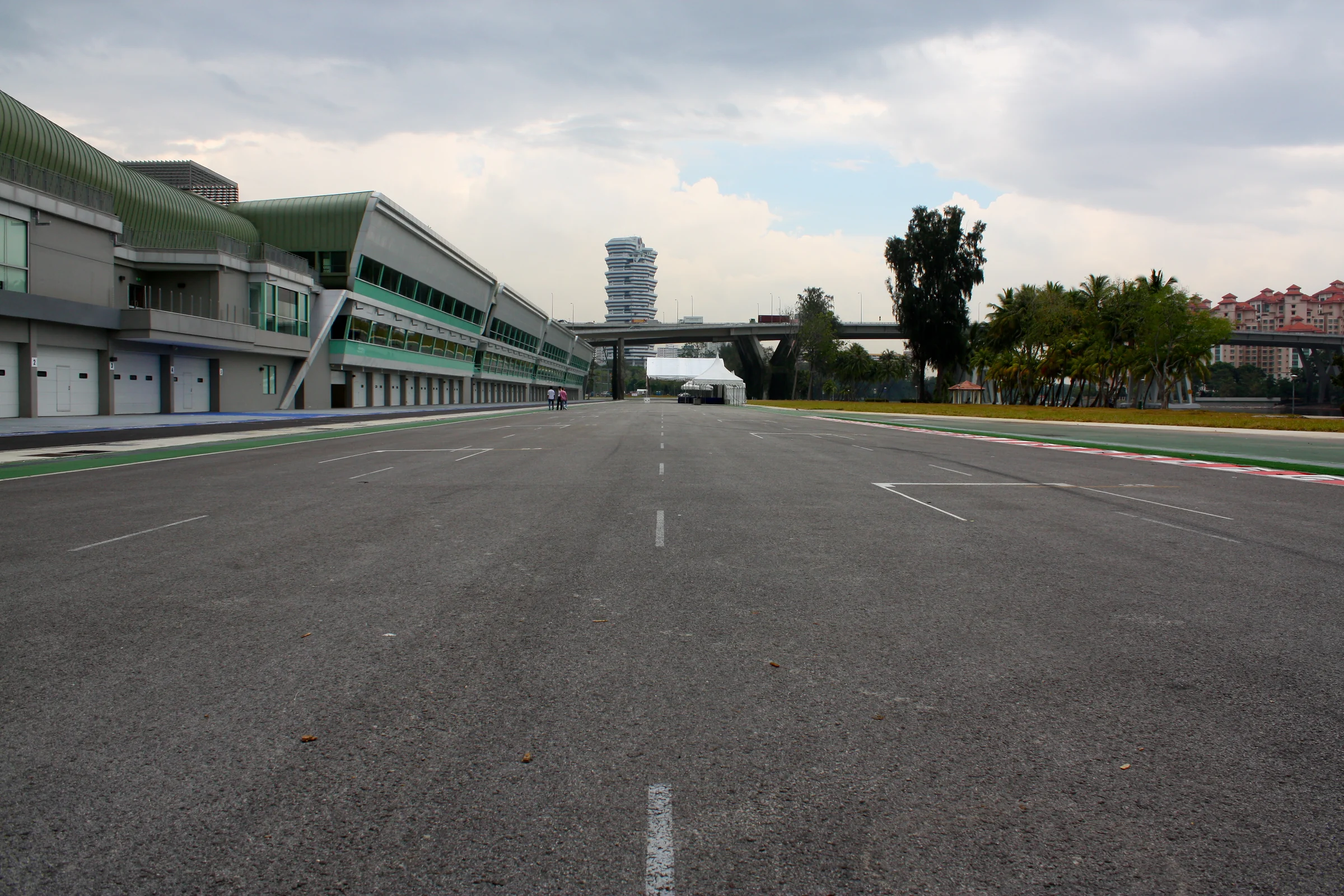
| Singapore | Sun Oct 11, 20:00 SGT | Sun 12:00 | Sun 08:00 EDT | Sun 07:00 CDT | Sun 05:00 PDT | Sun 13:00 BST | Sun 23:00 AEDT |
| United States | Sun Oct 25, 15:00 CDT | Sun 20:00 | Sun 16:00 EDT | Sun 15:00 CDT | Sun 13:00 PDT | Sun 20:00 GMT | Mon Oct 26, 07:00 AEDT |
| Mexico City | Sun Nov 1, 14:00 CST | Sun 20:00 | Sun 15:00 EST | Sun 14:00 CST | Sun 12:00 PST | Sun 20:00 GMT | Mon Nov 2, 07:00 AEDT |
| São Paulo | Sun Nov 8, 14:00 BRT | Sun 17:00 | Sun 12:00 EST | Sun 11:00 CST | Sun 09:00 PST | Sun 17:00 GMT | Mon Nov 9, 04:00 AEDT |
| Las Vegas | Sat Nov 21, 20:00 PST | Sun Nov 22, 04:00 | Sat 23:00 EST | Sat 22:00 CST | Sat 20:00 PST | Sun Nov 22, 04:00 GMT | Sun Nov 22, 15:00 AEDT |
| Qatar (currently listed) | Sun Nov 29, 19:00 AST | Sun 16:00 | Sun 11:00 EST | Sun 10:00 CST | Sun 08:00 PST | Sun 16:00 GMT | Mon Nov 30, 03:00 AEDT |
| Abu Dhabi (currently listed) | Sun Dec 6, 17:00 GST | Sun 13:00 | Sun 08:00 EST | Sun 07:00 CST | Sun 05:00 PST | Sun 13:00 GMT | Mon Dec 7, 00:00 AEDT |
Three rows deserve a second look. Baku runs on Saturday, September 26, not the usual Sunday. The Sepang race begins at exactly midnight on the U.S. West Coast, so “Saturday night” and “Sunday morning” describe the same alarm depending on how a viewer thinks about midnight. Las Vegas reverses the date problem: it is a Saturday-night start in Nevada and across the continental United States, but already Sunday in UTC, Britain and eastern Australia.
The abbreviations matter as much as the numbers. EDT, CDT and PDT mean U.S. daylight time; EST, CST and PST mean standard time. BST is British Summer Time and GMT is the post-change UK clock. AEST and AEDT are the pre- and post-change clocks for Sydney and Melbourne. Those labels make the table reproducible: a reader can see which offset applies without assuming that “Eastern” or “UK time” stays fixed throughout autumn.
Why the U.S. Time Labels Change on November 1
ET, CT and PT are convenient umbrella terms, but they do not identify an offset by themselves. For most viewers in the three continental zones, the offset changes during the final run of races. That means a conversion copied from Singapore or Austin cannot simply be carried into São Paulo or Qatar, even when two races share the same UTC start.
Before November 1: EDT, CDT and PDT
Azerbaijan, Sepang, Singapore and Austin all take place while the relevant U.S. regions observe daylight time. Eastern Daylight Time is UTC-4, Central Daylight Time is UTC-5 and Pacific Daylight Time is UTC-7. That is why Singapore's 12:00 UTC start becomes 08:00 EDT, 07:00 CDT and 05:00 PDT. Austin's 20:00 UTC race becomes 16:00 EDT, 15:00 CDT and 13:00 PDT.
Those labels also explain why the Austin row can show CDT at the circuit and EDT for an East Coast viewer without inconsistency. Both locations are still observing daylight time, but Central runs one hour behind Eastern. The columns target the prevailing clocks in New York, Chicago and Los Angeles. They are not a substitute for a location-specific check in places that do not observe daylight saving time, notably most of Arizona and Hawaii.
From November 1: EST, CST and PST
NIST's 2026 guidance says daylight saving time ends at 2:00 a.m. local time on Sunday, November 1. The clock repeats the 1:00 hour and then continues on standard time. By the time the Mexico City Grand Prix starts at 20:00 UTC that afternoon, Eastern, Central and Pacific viewers are firmly on EST, CST and PST. The correct conversions are therefore 15:00 EST, 14:00 CST and 12:00 PST—not the one-hour-later values a summer offset would produce.
Every later row keeps the standard-time suffixes: São Paulo on November 8, Las Vegas on November 21 locally, Qatar on November 29 and Abu Dhabi on December 6. There is one naming wrinkle: Mexico City itself also uses CST at its 14:00 local start. In this instance the circuit clock and the U.S. Central column happen to agree because both are UTC-6, but they belong to different national time systems. The safe workflow is to convert from the official UTC instant, then let a zone-aware calendar attach the viewer's local rules.
Why the UK Column Switches at Austin
The United States Grand Prix falls on the UK's clock-change Sunday. GOV.UK lists October 25, 2026 as the day British Summer Time ends: at 2:00 a.m. BST, the clock goes back to 1:00 a.m. and the country returns to Greenwich Mean Time. Austin does not start until 20:00 UTC, so the transition is long finished. For a UK viewer, 20:00 UTC is therefore 20:00 GMT—not 21:00 BST.
Across the Atlantic, the U.S. change is still a week away. The same race instant is 16:00 EDT in New York, 15:00 CDT at the Circuit of The Americas and 13:00 PDT in Los Angeles. That produces a short, easily missed period in which Britain is on winter time while most U.S. viewers remain on summer time. London is only four hours ahead of New York for Austin, compared with the five-hour gap viewers often expect.
Official instant
20:00 UTC
Austin
15:00 CDT
United Kingdom
20:00 GMT
This is why writing “8 p.m. UK time” is less useful than writing “8 p.m. GMT.” The number alone happens to be correct, but the suffix proves that the conversion used the race date rather than a generic October rule. Singapore two weeks earlier is 13:00 BST from a 12:00 UTC start; Austin is 20:00 GMT from a 20:00 UTC start. The clocks have moved, even though both events appear in October.
For calendar setup, save Austin as an event tied to its UTC instant or to America/Chicago, not as a floating 3:00 p.m. appointment. A zone-aware device will then show the right British time after the October 25 change. A screenshot or handwritten reminder made before the final timing notice cannot adapt if Formula 1 later adjusts a session, so the abbreviation is a check—not a replacement for a fresh official look.
What “Australia Time” Means in This Guide
Australia does not have one national clock, so a column headed only “AUS” creates false confidence. This guide uses Sydney and Melbourne, the two largest eastern-market reference cities, and prints AEST or AEDT in every row. Brisbane stays on AEST, Perth uses AWST, Darwin uses ACST and Adelaide has its own half-hour eastern relationship. Viewers outside New South Wales and Victoria should treat the Australian column as a clearly defined reference, not their automatic local answer.

Sydney and Melbourne Move to AEDT on October 4
New South Wales and Victoria begin daylight saving on Sunday, October 4, 2026. At 2:00 a.m. AEST, clocks jump to 3:00 a.m. AEDT. The Sepang race starts several hours after that switch, at 07:00 UTC, so Sydney and Melbourne see a 6:00 p.m. AEDT start. Applying the previous week's UTC+10 offset would produce 5:00 p.m. and miss the race by an hour.
That timing makes Azerbaijan the final remaining race in this table shown on AEST for Sydney and Melbourne: its September 26 start is 9:00 p.m. AEST. Sepang and every subsequent row use AEDT, or UTC+11. The switch is especially easy to overlook because it happens on Sepang race morning in Australia. A phone set to Australia/Sydney or Australia/Melbourne will change automatically; an alarm saved as a floating local time may not.
The Races That Move to Monday in Australia
Five currently listed Sunday races cross midnight for Sydney and Melbourne. Austin and Mexico City both become 7:00 a.m. Monday AEDT. São Paulo becomes 4:00 a.m. Monday, Qatar 3:00 a.m. Monday, and Abu Dhabi lands exactly at midnight at the start of Monday. Those are not cosmetic date labels: they determine whether a live viewer needs a Sunday-night plan or a pre-work Monday alarm.
Las Vegas behaves differently. Its race is on Saturday night at the circuit—8:00 p.m. PST on November 21—but the same instant is 3:00 p.m. AEDT on Sunday, November 22. It is a next-day conversion from Nevada, yet still a weekend-afternoon start in Sydney and Melbourne. Singapore is friendlier than many night races at 11:00 p.m. AEDT on Sunday, although a long or interrupted Grand Prix could push the viewing session beyond midnight.
Qatar and Abu Dhabi Are Listed, but Recheck Their Status
The final two rows need a different level of confidence from Baku or Singapore. There is a real, current official timetable to convert, but there is also credible, newer reporting that Formula 1 is reviewing whether the Gulf events can proceed safely. The honest answer is to retain the published times while labeling the decision risk—not to delete official entries early or present a contingency as settled.
What Is Officially Listed as of September 14
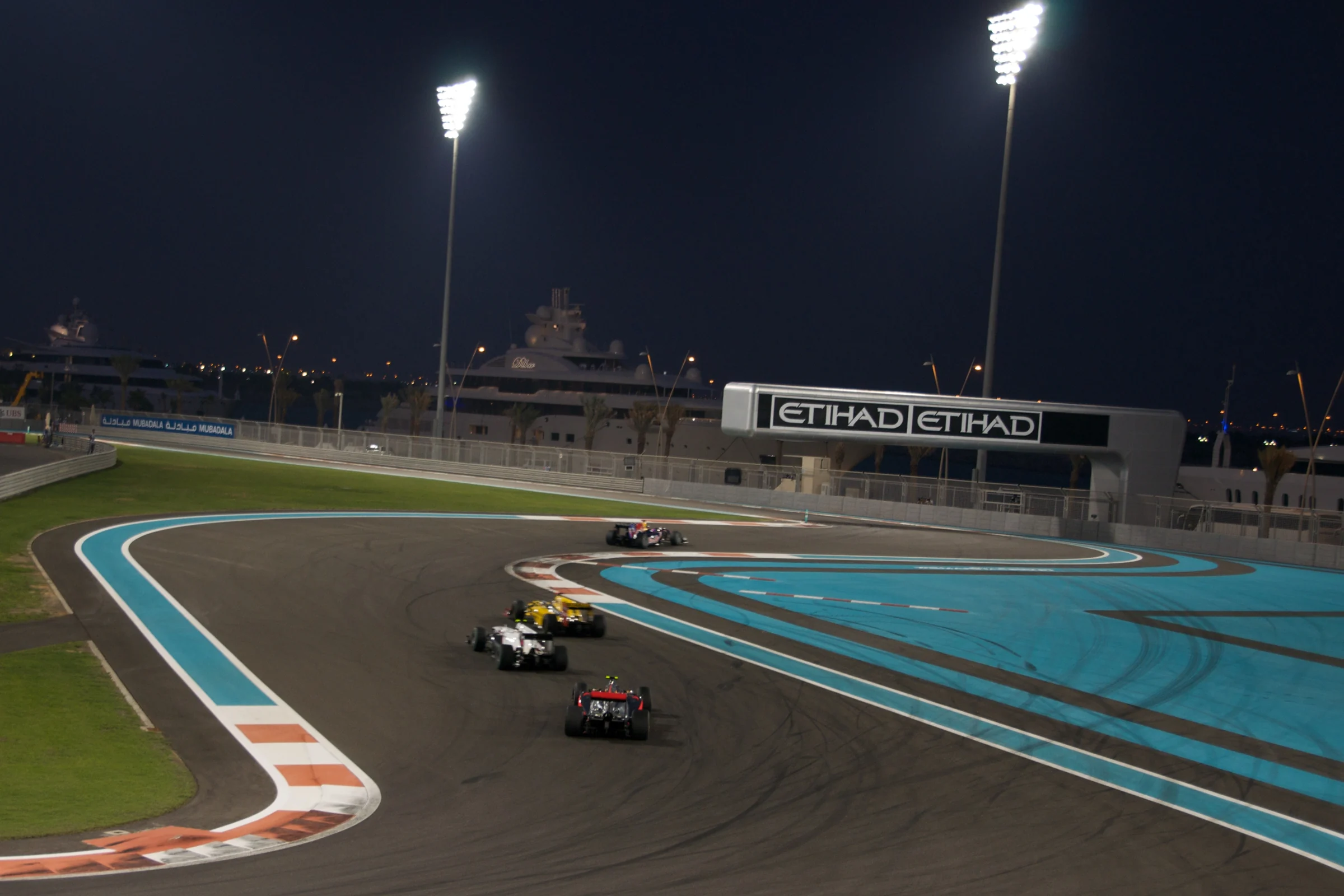
Formula 1's live 2026 calendar still displays the Qatar Grand Prix on November 27–29 and the Abu Dhabi Grand Prix on December 4–6. Their individual event pages also remain active. Qatar's listed race instant is Sunday, November 29 at 16:00 UTC, corresponding to 19:00 at Lusail. Abu Dhabi's is Sunday, December 6 at 13:00 UTC, corresponding to 17:00 at Yas Marina.
Those are the instants converted in the master table: Qatar is 11:00 EST, 10:00 CST, 08:00 PST, 16:00 GMT and 03:00 AEDT on Monday. Abu Dhabi is 08:00 EST, 07:00 CST, 05:00 PST, 13:00 GMT and midnight AEDT at the start of Monday. These figures answer what the official pages currently say. They do not, by themselves, settle whether travel and operations will receive final clearance.
What Remains a Decision or Contingency
Reuters reported on September 10 that there was still no final decision on Qatar and Abu Dhabi. Motorsport.com separately reported that Formula 1 was working toward a decision around September 15 and that Imola was being considered as a European fallback. That is meaningful reporting, but it remains reporting about a plan. Formula 1 and the FIA had not, by the cutoff for this guide, announced that either Gulf Grand Prix was cancelled or that Imola had replaced one of them.
The distinction matters for time conversion. If the venues or dates change, the Qatar and Abu Dhabi rows do not migrate automatically to a replacement. Imola would use a different local zone, a different daylight window and potentially a different session timetable. There is no responsible way to publish an “Imola converted start time” until an official notice supplies an event date and start instant. Provisional hotel bookings or paddock expectations are not a timing bulletin.
This article intentionally does not link to a separate “latest decision” story because the relevant companion piece is still an unpublished local draft. A dead or premature internal URL would look authoritative while giving readers no live source. Until publication status changes, the official calendar is the appropriate public reference, paired with the clearly dated reporting caveat above.
How to Use the Table Without Missing an Update
A conversion table is best treated as a planning layer over the live schedule, not as a frozen promise. Start with the full 2026 F1 schedule to confirm that the round and date are still current. During race week, open this weekend's F1 schedule for the complete session sequence. Then use the F1 TV schedule to check the broadcaster available in your country. A race can have the right time in your calendar and still be on a different channel or service than the previous round.
- 1
Save the official instant. Use Formula 1's calendar function or create an event tied to UTC or the circuit's named city zone. Do not store only “3 p.m.” as a floating appointment.
- 2
Put the viewer date in the title. For Sydney and Melbourne, write “Monday 7:00 a.m. — Austin,” not merely “Austin Sunday.” For Las Vegas in Britain, write “Sunday 4:00 a.m.” even though the venue races Saturday night.
- 3
Set two reminders. One earlier reminder protects setup time; another close to lights out limits confusion after a schedule update. For predawn races, test volume and charging before bed.
- 4
Recheck on the Thursday of race week. Compare the event page, weekend page and broadcaster listing. For Qatar and Abu Dhabi, also confirm that the venue itself remains on the official calendar before making travel assumptions.
Qualifying and practice deserve separate reminders rather than a guessed subtraction from race time. Promoters can schedule each session differently, and Las Vegas or Baku may use a non-standard day pattern. The master table deliberately covers race starts; it does not imply that every supporting session occupies the same slot on Friday or Saturday.
Finally, keep the time-zone suffix visible in anything shared. “8:00” can mean 8:00 BST, 8:00 GMT, 8:00 EDT or 8:00 EST, four different instants across this calendar. “Sunday 20:00 GMT” or “Monday 07:00 AEDT” survives forwarding, screenshots and travel better because it carries the assumption alongside the number. When Formula 1 publishes an update, convert again from the new official instant rather than adjusting an already converted local hour.
Loading comments…