An F1 Paddock Club ticket buys a particular hospitality experience at a particular Grand Prix. The price does not describe a universal backstage pass. Two offers carrying the same Paddock Club name can cover different days, different suites and different access activities, so a cheaper headline figure can be a poor comparison.
For 2026, the useful buying question is what the final amount secures: the view, the hospitality hours, the meals, and any separately defined pit-lane or paddock experience. This guide explains those differences, shows how to compare a written quote and helps you decide whether the premium improves the weekend you actually want. Prices and availability are a snapshot checked on October 14, 2026; an old listing is not an offer for the next season.
How much does F1 Paddock Club cost?
There is no single published 2026 Paddock Club price that applies to every race. The official Las Vegas promoter currently lists its private Paddock Club Suites as price available upon request, rather than a public individual tariff. That product is a customizable suite for 100 guests, so dividing an unrelated individual hospitality ticket by its number of days would not produce a meaningful suite price.
For dated market examples, ZK Sports, listed in F1 Experiences' authorized-agent directory, displays the following 2026 Paddock Club starting amounts. They are distributor headlines checked on October 14, not final all-in quotes. The cards do not establish the exact suite, contracted admission days or tax treatment; request those details before comparing.
| 2026 event window | Displayed starting amount | What still needs a quote |
|---|---|---|
| United States: October 23–25 | USD 8,930 | Suite, ticket days, guest basis, taxes and fees |
| Las Vegas: November 19–21 | USD 15,000 | Suite, ticket days, guest basis, taxes and fees |
| Abu Dhabi: December 4–6 | USD 9,189 | Suite, ticket days, guest basis, taxes and fees |
These examples show why the circuit matters, without creating a global average. They are not prices for 2027 and do not price the promoter's 100-guest Las Vegas private suite. Compare a named individual product with another named individual product, and a private suite with a comparable written suite proposal.
Compare the same race and the same number of days
Start your comparison with two quotes for the same event and season. Record the exact suite name, access days, number of guests, currency and total payable. An entry-level Thursday ticket at one event cannot establish the cost of a three-day weekend at another. Nor does a hospitality package necessarily include a hotel simply because the seller also sells accommodation.
Use a separate travel ledger: ticket total, room total, flights, transfers and any meals outside the venue. For a couple sharing a room, compare the combined trip price before deriving a per-person figure. For a solo traveler, verify whether a displayed package assumes double occupancy. Otherwise the apparently lower quotation can rise when the room is repriced for one guest.
The honest answer to a missing public tariff is to request a dated quote with inclusions, not to infer a current price from last year's fan report. A written offer also reveals whether taxes and fees are included and whether a deposit secures inventory or merely registers interest. Our 2027 F1 ticket guide explains the broader difference between an on-sale product and a waitlist.
What the hospitality ticket actually includes
Treat the admission, the hospitality and the activities as three separate parts of the purchase. A lounge can serve excellent food without giving you an allocated outdoor seat. A guided experience can be included without allowing you to repeat it whenever you wish. The product's detailed inclusion list matters more than its headline adjective.
Viewing, food and the rhythm of the weekend
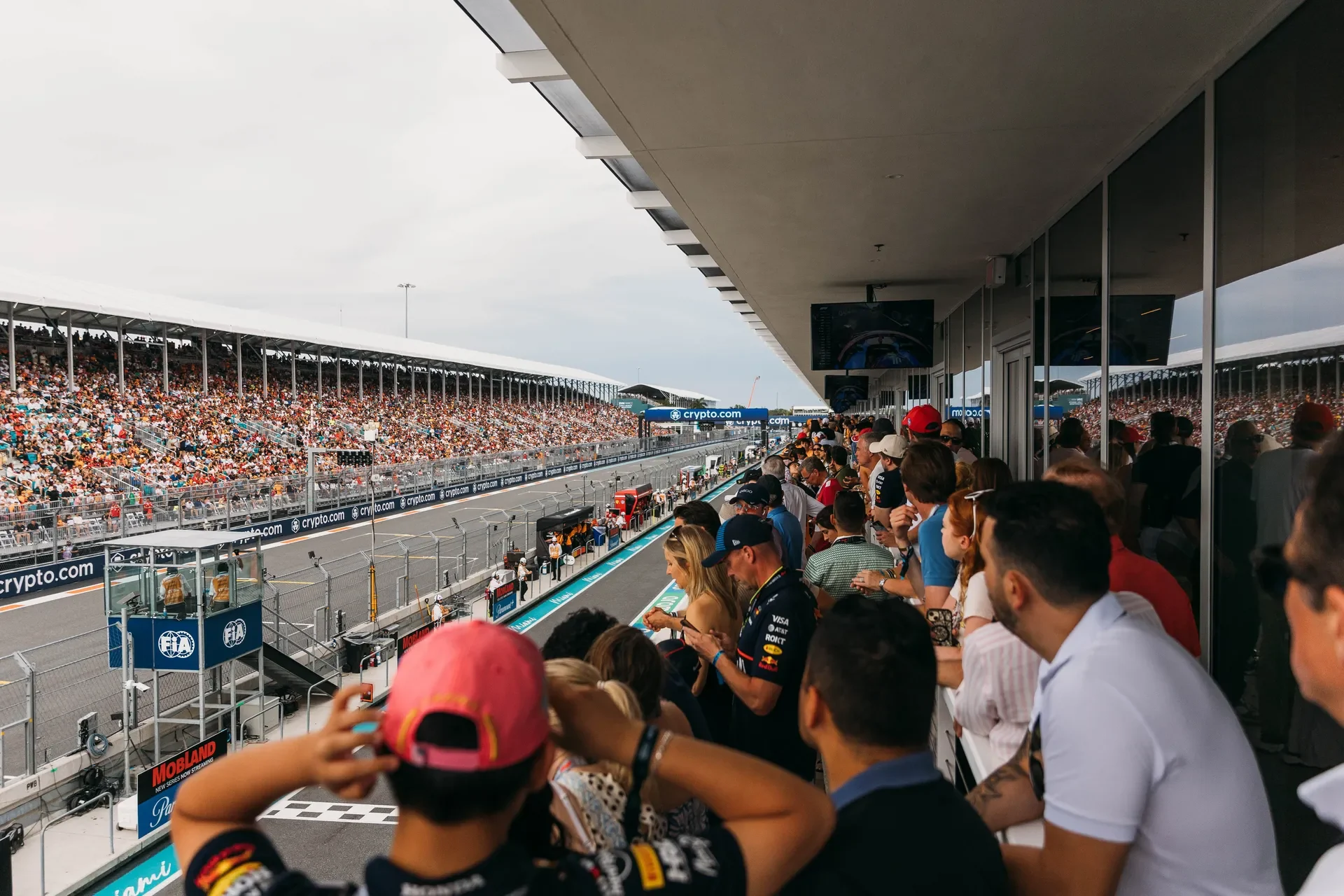
The 2026 Austin 300 Club listing provides a useful example: the covered venue is above the garages on the main straight, with food, drinks and televisions carrying the live feed. Its seat-back viewing area is allocated on a first-come basis. That distinction changes how you plan the start: finishing a leisurely meal before walking outside might leave fewer choices than arriving early.
A main-straight view helps you follow the start, pit activity and the finish, while television coverage supplies the wider race. During a pit-stop sequence, the cars outside your window show only part of the contest. Watching the timing and the feed makes it easier to understand whether a stop has cost track position or created an opportunity. Good hospitality should make switching between those perspectives comfortable.
Activities that depend on the selected package
The same Austin offer lists pit-lane walks, a one-day guided track tour and a photo safari. It also states different participation requirements: the truck tour has a minimum height, while the photo safari requires guests to be at least 18. A family should verify eligibility before assigning financial value to an activity that one member cannot attend.
A team suite can have another purpose. The 2026 Audi Mexico package specifically lists a team garage tour and appearances by team personnel. Those are benefits of that named product; they do not turn every Paddock Club booking into a garage visit. The package also advises guests against wearing another team's merchandise, with possible consequences for participation.
Ask which activities are daily, which occur once and which require advance assignment. Build your schedule around the sessions you most want to watch, then place the extra experiences in the gaps. If the sales representative cannot specify how an advertised benefit will be delivered, give it less weight in your comparison than confirmed admission and hospitality.
Paddock Club, pit lane and paddock passes are different
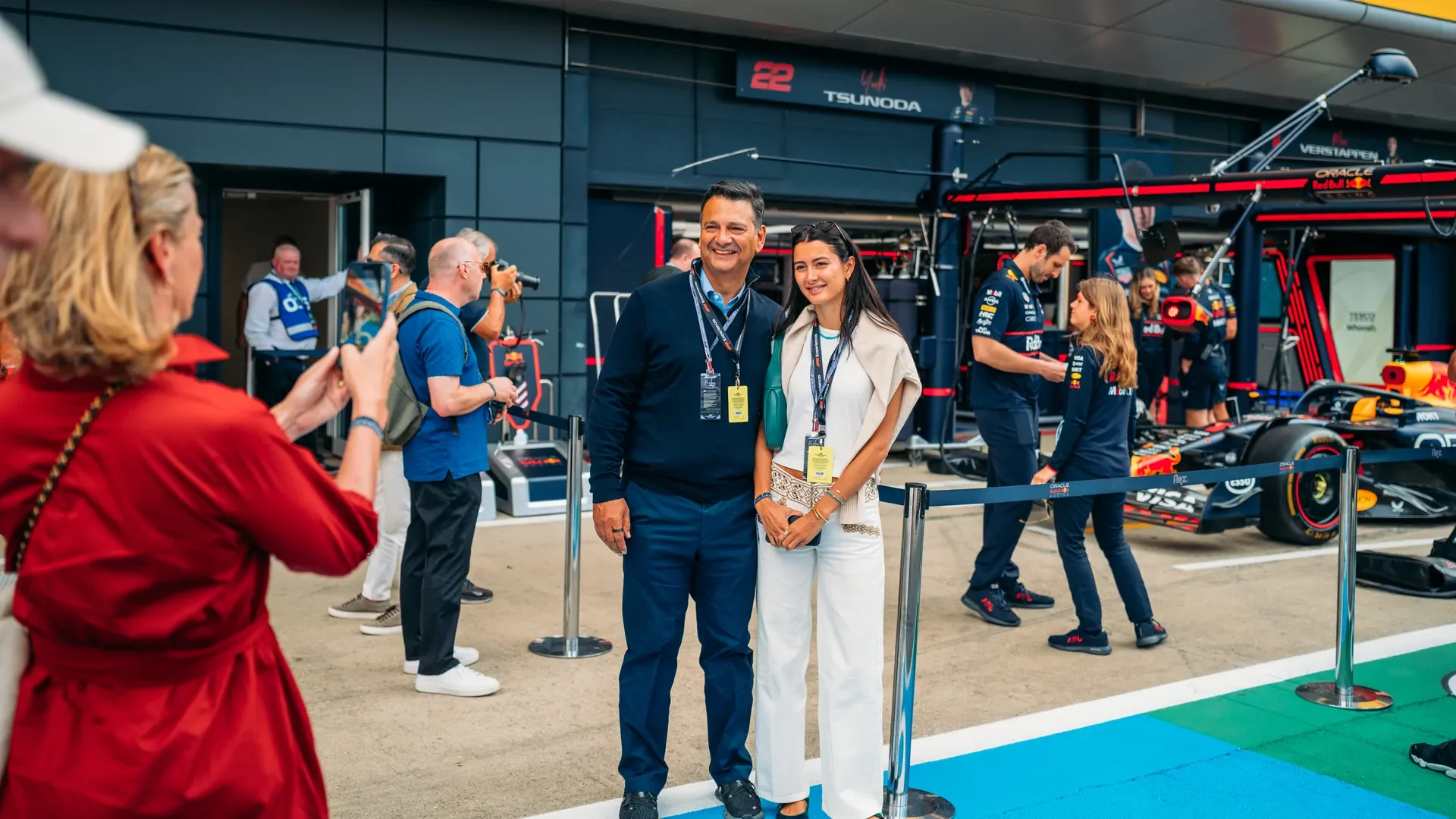
The Paddock Club is a hospitality venue. The pit lane is the operational lane in front of the garages. The paddock is the restricted working area behind them. Being admitted to one does not establish permission to enter the others. That is the single most consequential distinction when a buyer searches for a VIP paddock pass.
What a guided paddock tour allows
F1 Experiences describes guided access as an escorted half-hour visit, typically with 10–12 guests. Its explainer excludes team garages and team hospitality suites, and says tours are scheduled outside on-track sessions. It is a defined activity rather than an unrestricted day wandering through the teams' workplace.
Meeting a driver depends on who happens to be there. A tour can be valuable even without a selfie: you can observe the flow of media, staff and equipment around the working paddock. But if a particular driver's signature is the reason you are paying, a general tour is the wrong product to treat as a guaranteed meeting. Ask about a named appearance separately.
What changes with a Legend package
The 2026 Qatar Legend listing illustrates the upgrade. It specifies a full-day paddock pass on one selected day, with freedom to come and go during that day. It also requires personal information and a headshot after purchase. The listing was marked sold out when checked, so it serves here as an access example rather than an available recommendation.
Three-day hospitality plus one-day paddock admission still does not mean three unrestricted paddock days. Likewise, a full-day pass does not automatically include permission to walk into a garage, handle equipment or enter a team's private dining area. Those are separate rights and operational spaces, even when no physical barrier looks obvious.
Plan the access day around your priorities. An afternoon in the paddock may offer more atmosphere, while watching qualifying from the venue offers a clearer view of the competitive story. There is an opportunity cost to every movement. Read the issued instructions, respect staff directions and decide beforehand whether your priority is the racing, the backstage environment or a scheduled team experience. The best package is the one whose actual permissions match that priority.
How circuit and location change the value
A premium venue is not a view of the entire lap. At a main-straight hospitality location, you are choosing a particular set of race moments: grid activity, the launch, cars passing at speed, pit stops and the finish. If your favorite part of F1 is watching a driver manage the car through a braking zone, a carefully selected corner grandstand can be a better match even at a lower price.
Think in terms of geometry before prestige. Where is the balcony relative to the pit boxes? Can you see the entry or the exit? Are the garages directly beneath your position, potentially limiting the angle? A venue map can establish its general location, but it rarely establishes the sightline from every chair. Ask for a representative photograph from the exact suite and distinguish that from a photograph taken on a different terrace.
The Las Vegas F1 Experiences suite describes a climate-controlled interior and an outdoor terrace above the garages. The practical benefit is the option to move between the live view and a comfortable interior. That can matter during a long evening program, particularly if your group includes people who want to watch only some sessions. It does not establish that every balcony place is reserved or that every person can stand at the rail at once.
For the dedicated race follower, a screen with a clear live feed is part of the viewing equation. A driver may disappear down the straight while the decisive battle occurs elsewhere. You want to see both the physical speed outside and the timing of the wider contest. Ask where the screens sit in relation to your dining and viewing space, and whether your group will need to move to follow commentary.
Finally, assess the journey as well as the venue. A hotel's straight-line proximity does not establish an easy walk to your allocated entrance. A cheaper suite with awkward access can reduce the time you spend watching. Compare the arrival instructions, the distance from the actual guest drop-off and the post-session route back. Spending more on hospitality works best when the extra comfort is available at the moments you need it, rather than consumed by avoidable travel friction.
How to buy without paying for the wrong access
Begin with Formula1.com, the race promoter or a verified appointed agent. F1's official store explicitly identifies those channels and warns about fraudulent websites and unsolicited messages. An official-looking logo in a social profile does not establish that the account is selling an authorized product.
Read the quote as a contract
Ask the seller to put the event year, product name, guest count, access days and total payable in the same document. Then add the rights that distinguish your purchase: whether a viewing seat is reserved, whether a paddock tour is guided, and whether a full-day pass is attached to a particular day. A description copied from a general hospitality page is too broad to establish those details.
Check ticket delivery and the process for assigning guest identities. An expensive experience can still have strict deadlines for submitting details, accepting tickets or receiving credentials. If your group includes children, check age, height and guardian rules for every activity rather than just the admission ticket. If a friend may replace a guest, ask about permitted name changes before making payment.
Keep the cancellation terms alongside the quote. A refundable hotel and a nonrefundable ticket are two separate commitments, even when booked in a single conversation. Ask what happens if the hotel is changed, an activity is altered or the event timetable moves. Do not assume that an insurance policy or a credit-card benefit covers a cancellation simply because the trip is expensive.
Treat free paddock-pass claims cautiously
A legitimate competition or an invitation can have its own access terms. It does not create a general method for getting free paddock admission. Verify the organizer on its own website, read the official competition conditions and confirm exactly what the prize includes. A hospitality ticket, a pit-lane activity and an unrestricted paddock credential should never be treated as interchangeable prizes.
Avoid making payment for a supposed free prize through an unsolicited account, and do not treat a photograph of someone else's credential as proof that it can be transferred. The practical objective is simple: buy a right that the named seller can explain and issue to your party. If that explanation remains vague, pause the purchase and use a documented official route.
Is Paddock Club worth it for your race weekend?
Paddock Club makes the strongest case when your group values comfortable hospitality, a convenient base near the racing and specific experiences that you will actually use. It makes a weaker case when the purchase is driven mainly by a vague expectation of backstage freedom. The name on the ticket cannot substitute for the access list.
For a race-first fan, begin with your preferred viewing point. Compare the hospitality quote with an allocated grandstand at that part of the circuit plus a hotel you would willingly book anyway. The difference is the premium you are paying for meals, drinks, comfort and scheduled activities. You do not need to assign an artificial resale value to each benefit; ask whether the combined experience is worth that difference to you.
For a couple with different levels of interest, the lounge can be useful because both guests do not have to spend the entire evening in one viewing position. One can follow the sessions closely while the other uses the hospitality space. Verify that the actual venue offers that flexibility and that the included hours cover your intended arrival and departure, rather than assuming round-the-clock access.
For a team supporter, a named team package may be a more focused purchase. For someone seeking a short backstage visit, compare a package that expressly includes a guided paddock tour, including the appropriate Champions Club products. For someone wanting one full day in the paddock, compare the precise Legend offer. These are different buying decisions, even when they all sit within the hospitality market.
Before paying, write your three essential benefits in order. They might be a reserved race view, meals without leaving the venue and a confirmed guided tour. Reject any quote that leaves the top priority uncertain. Then use the F1 weekend schedule to understand the sporting program and plan travel around the actual event dates. A successful hospitality purchase improves how you experience that program; it does not require buying the most expensive badge available.
Loading comments…