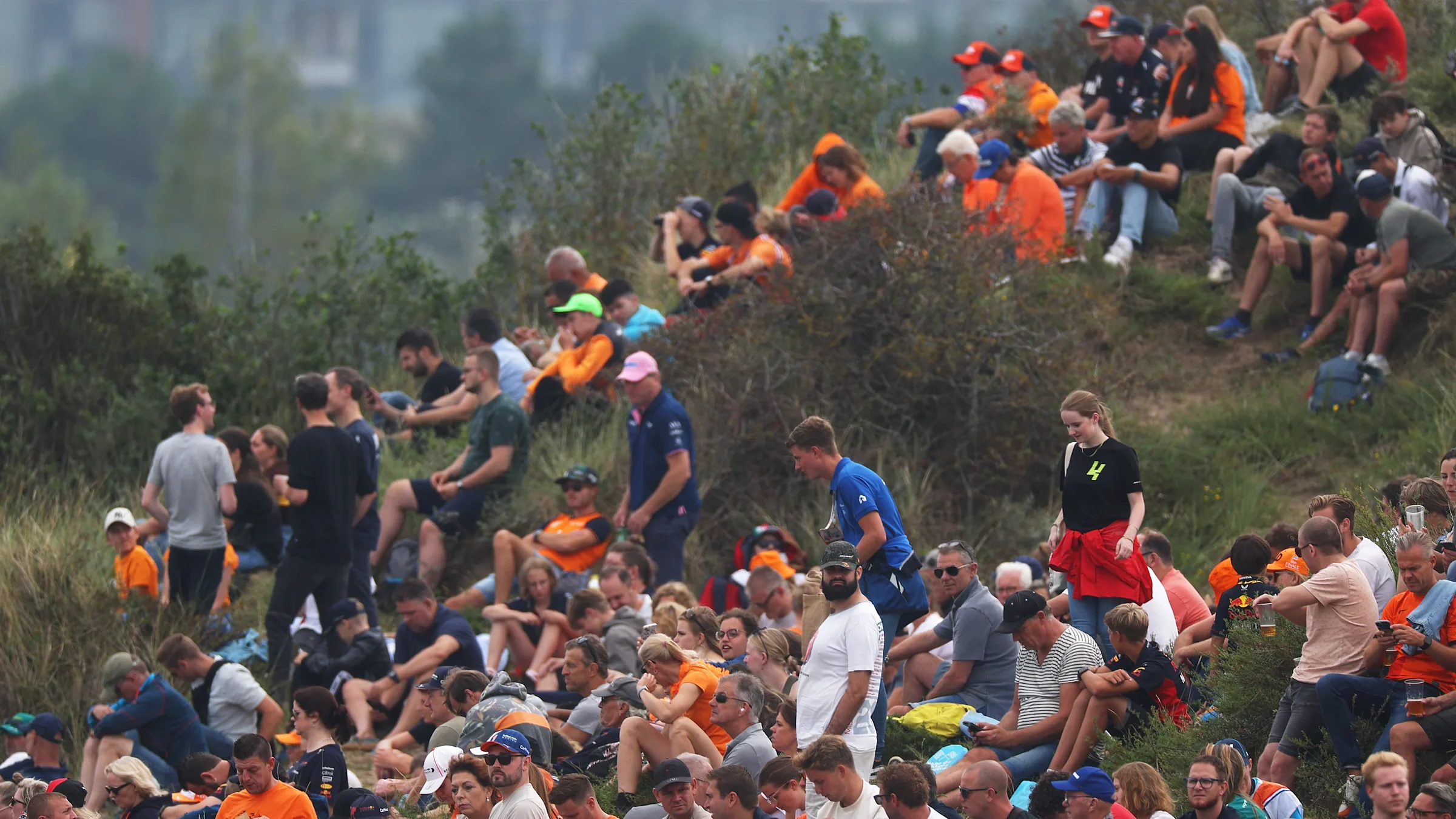
F1 general admission is still worth buying when the circuit gives unreserved spectators useful elevation, several legitimate viewing zones and a practical way to follow action elsewhere. It is a false bargain when “access” leads to a flat, crowded strip behind fencing that you must defend from dawn. The words on the ticket do not settle the value question; the current venue map does.
Even official products show why the label is slippery. Silverstone separates ordinary unreserved GA from GA+, which reserves a standing area, and from a grandstand with a reserved seat. Spa calls its roaming product Bronze and gives Silver and Gold buyers both Bronze access and an assigned stand. Other promoters package entertainment, concerts or food with entry. Comparing only GA and grandstand prices can therefore compare unlike products.
This guide uses five practical tests—sightline, screen coverage, time, physical exposure and total trip economics—then applies them to Spa, Austria, COTA, Silverstone, Monza and street-style events. It is not a promise that one bank or seat remains available. Confirm the race dates on the F1 schedule, then use the promoter's live map and terms before paying.
Start With What the Ticket Actually Guarantees
A useful comparison begins with contractual access, not promotional photographs. Find the exact zone on the event map and read whether the product guarantees a numbered chair, a named standing enclosure or merely entry to open viewing land. That distinction determines how early you must arrive and whether leaving for food costs the view.
General admission buys access and flexibility
Silverstone's 2026 guide described conventional GA as access to unreserved viewing areas without a grandstand, where spectators stand or bring a permitted chair. Spa's Bronze category similarly gives access to pedestrian viewing areas without an allocated seat. The attraction is movement: a weekend holder can watch practice from a fast corner, qualifying from a braking zone and a support race somewhere quieter.
Flexibility is not a reservation. The best bank can fill early, and a blanket or chair does not necessarily create a legally protected patch. Promoters may restrict chair size, umbrellas, food, re-entry or movement between colored zones. GA has high value when several acceptable alternatives exist; it becomes fragile when only one location would satisfy you.
A grandstand buys certainty, not automatically a better corner
A reserved grandstand gives the day a fixed base. Spa says its Silver and Gold products include Bronze access plus an allocated stand, and Silverstone reserved every grandstand seat on the covered days of its 2026 product. Groups can separate and return; spectators can arrive later without starting a search for space; height often clears nearby heads.
None of that proves the chosen corner is compelling. A start-line seat offers ceremony, pit-lane context and the launch, but may show little passing. A low uncovered stand can deliver less visibility than a steep natural bank. Even “grandstand” does not universally mean numbered or covered—Spa's own FAQ lists cover by stand and notes an open-seating exception. The premium should purchase the specific certainty you value, not the comforting sound of the category.
Use Five Tests Before Calling GA Good Value
Face value is only one part of value. Score the exact GA zone on five dimensions: how much track is visible, whether a screen or commentary fills the gaps, how much time it takes to secure the view, how hard the weather and terrain make the day, and how the upgrade price compares with the entire trip. A cheap ticket can fail four tests.
Sightline and screen coverage
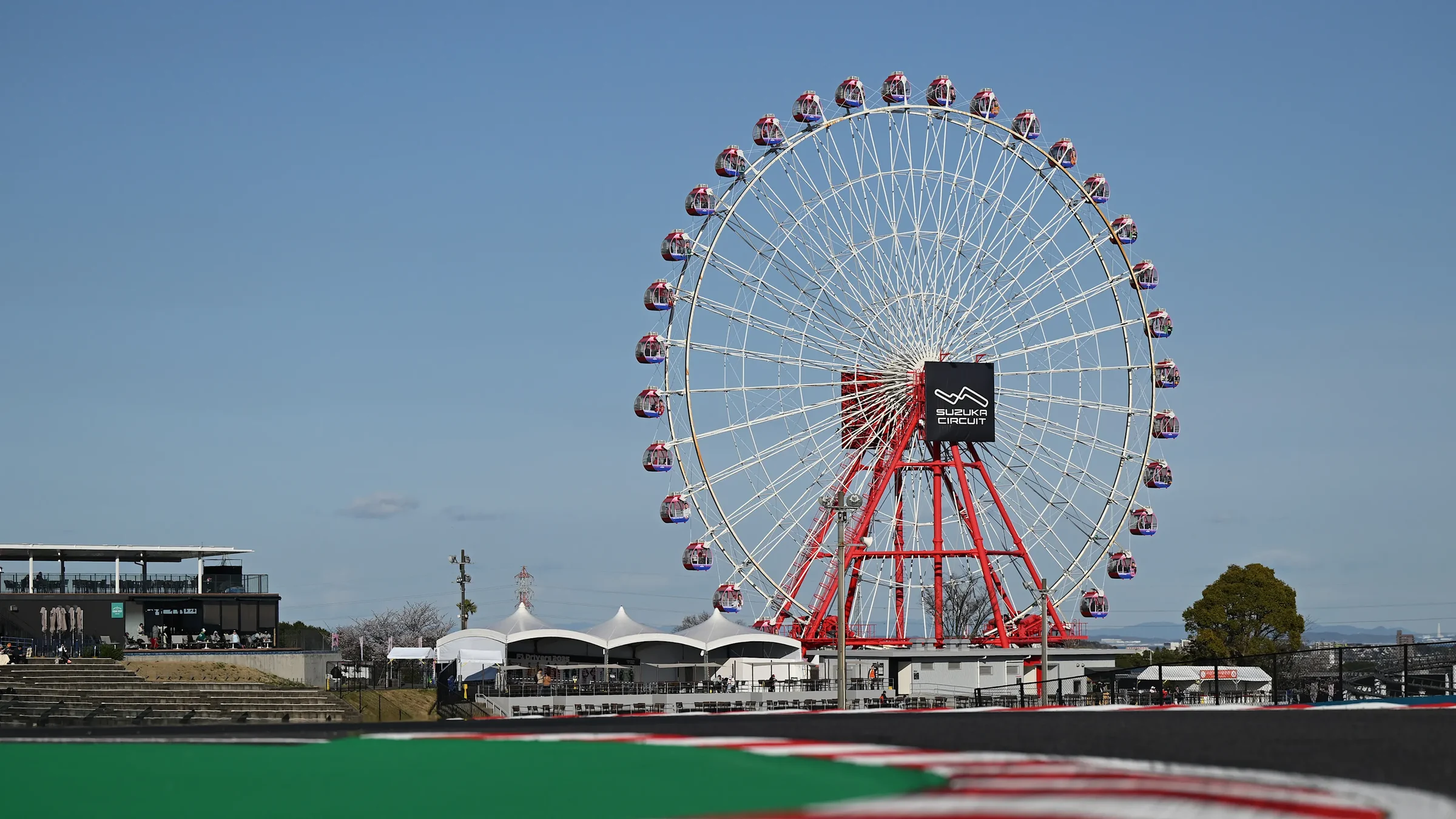
A useful sightline keeps a car visible long enough to understand braking, rotation and acceleration. Look for natural elevation, a view across multiple corners and enough height to clear heads and catch fencing. A position beside a straight may sound fast yet provide only a brief flash; an elevated bank overlooking linked corners can show a developing battle.
Screen placement decides whether that local experience remains connected to the race. Spa's promoter says Bronze holders can use zones at Kemmel, Blanchimont and the descent to Pouhon and follow the event on giant screens. Still examine the current map and sightline photographs. An icon somewhere in a large sector is not proof that timing will be readable from your chosen patch.
Arrival time, weather and physical effort
GA often exchanges money for effort. Securing a popular Sunday bank may require the earliest transport, a long walk and hours of occupation. Food and toilet trips become strategic if no one can safely save a place. The cost is not merely discomfort: time spent queueing or relocating can remove support races and fan-zone activities from the ticket's usable value.
COTA's own accessibility guidance makes the physical question concrete. Its 1,200-acre property contains fields, grass, stone paths and some paved surfaces, and the venue warns that weather can change ease of movement. Heat, mud and steep ground affect many spectators, not only people using mobility devices. A roof, defined seat and shorter route may justify a premium before the race view is considered.
The seat premium versus the total trip
Compare the upgrade with flights, hotel nights, local transport and the scarcity of your visit. COTA listed its 2026 three-day GA grounds pass at $450 including fees, demonstrating that GA itself can be a major purchase. If a reserved seat adds a modest fraction to an international trip and prevents a lost Sunday view, the upgrade can be economically rational.
The reverse is also true. A local fan attending Friday may gain more from roaming than from paying for an assigned place. Formula 1's ticket FAQ warns that allocations and adjacent seating can depend on promoter inventory, so certainty must be verified rather than assumed. Price the deliverable—exact zone, day, seat, cover and companions—not the category badge.
Where Natural Terrain Makes GA Work
The strongest GA circuits use landscape as spectator infrastructure. A hillside lifts people above one another and may reveal several parts of the lap without a built stand. Multiple open zones create fallback options if one bank is crowded. A compact circuit reduces the time penalty for moving; a long circuit increases variety but can make relocation a hike.
Spa, Austria and COTA reward elevation
Spa offers variety across its Ardennes terrain. Its official Bronze product identifies open viewing around Kemmel, Blanchimont and the descent to Pouhon. Those are meaningfully different experiences, but Spa's seven-kilometre scale means choosing the correct entrance and accepting travel time between zones. The scenery and roaming potential are strengths; distance and changeable weather are their price.
Austria's official 2026 ticket map marks GA grass areas and video screens around a far shorter, elevated circuit. The bowl-like terrain can reveal distant action, although the current location of permitted banks still controls the real view. COTA explicitly describes GA hills and berms, including an area near Turns 2-3 for the esses and another around Turn 18 for the final sector. These are strong starting points because the venue identifies what each perspective shows.
None should be purchased blindly. Trees, fencing, temporary structures and the people already standing ahead can alter a theoretical panorama. Use Friday to inspect at eye level and identify a second choice. A circuit belongs in the “good GA” group when several usable locations survive that test, not merely because one famous photograph exists.
Silverstone turns roaming into part of the product
Silverstone's 2026 event material promoted changing vantage points among viewing banks, which makes multi-day GA more than a discounted seat. Practice becomes a scouting session: compare the speed at Copse-style fast approaches with braking and traction elsewhere, then decide where the competitive sessions justify an early start.
GA+ illustrates a useful middle category. Silverstone sold access to a chosen reserved standing area rather than a numbered chair. That reduces competition across the entire circuit while preserving an informal bank experience. It is valuable for someone who wants location certainty but not necessarily seating; it does not satisfy a fan who needs a seat back, guaranteed cover or an individually allocated place.
The lesson travels beyond Britain: look for hybrid products before treating GA and grandstand as the only choices. Promoters may offer reserved lawns, terraces or enclosures whose practical benefit is capacity control. Read the deliverables closely and buy through a channel the promoter authorizes.
Where a Reserved Grandstand Usually Wins
A seat becomes the stronger purchase when natural viewing land is low, narrow or fragmented. Elevation can clear people and fencing, while a reserved block prevents a day-long competition for a scarce patch. The advantage is greatest for a one-day visitor who cannot scout alternatives and for a group that needs to leave and return.
Monza shows why cheap entry can still be poor value
Monza's official 2026 weekend price list put Circolare Prato general admission at €100, an unusually attractive route into the Italian Grand Prix atmosphere. The promoter defines it as grass-area access, while numbered grandstand buyers select seats on a map. Those are materially different viewing guarantees even though both enter the same historic park.
Forest, fencing and dense demand make the experience sensitive to spectator height and arrival. A committed local fan may happily trade a polished view for cost and tifosi energy. A shorter spectator, a family making regular facility trips or an international visitor protecting one Sunday should view the reserved-seat premium as risk control. The dated €100 figure demonstrates the decision, not a promise about future sales.
Flat and fenced street venues reward guaranteed height
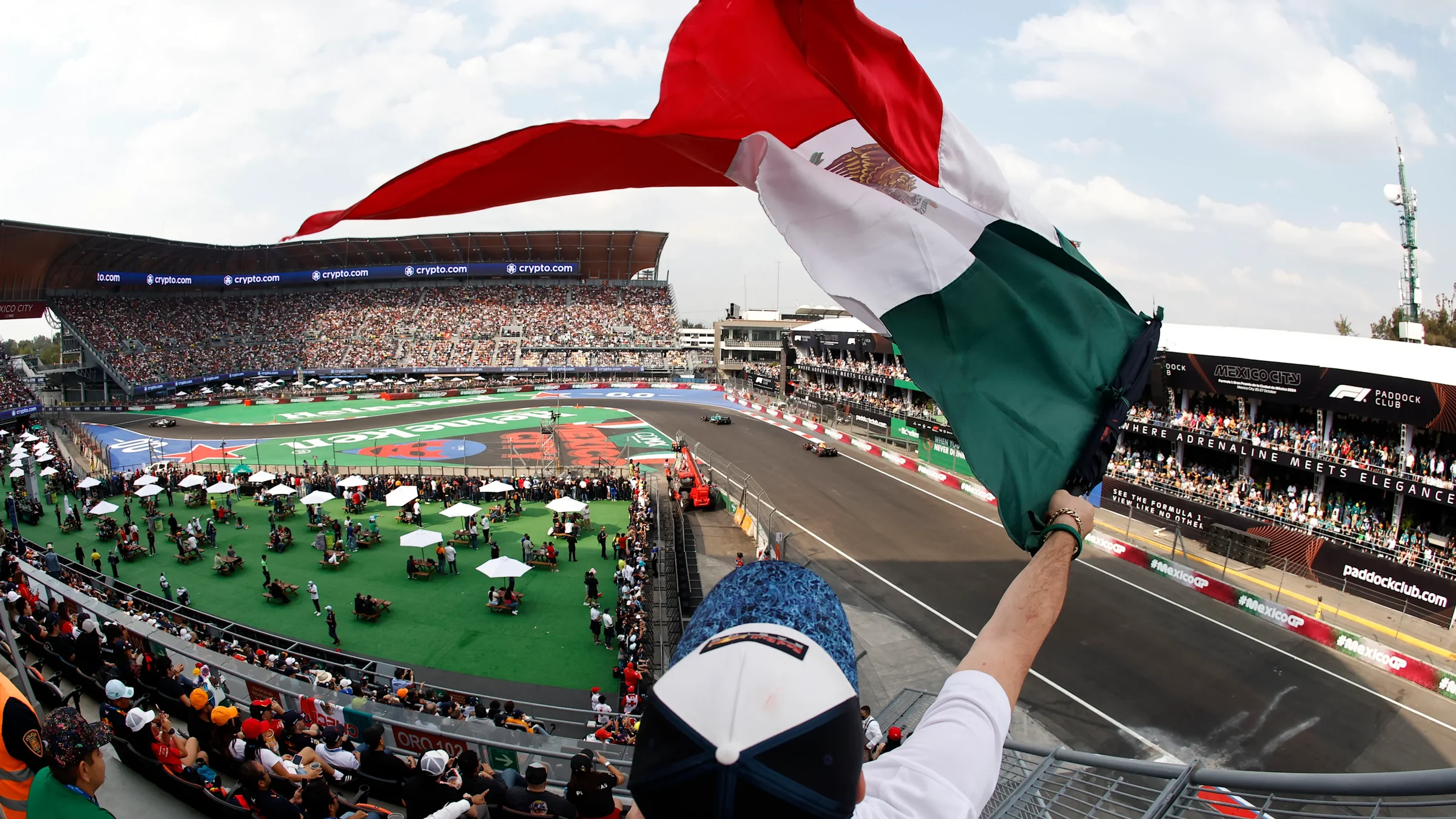
Urban courses frequently place the public behind service lanes, high safety fencing, hospitality structures and buildings. Unlike a rural circuit, the surrounding ground may supply no slope from which hundreds of people can see over one another. A purpose-built grandstand converts scarce horizontal frontage into a raised sightline and gives the promoter a defined capacity.
That does not make every urban stand good. Formula 1's Madrid ticket product for its main-straight G01 section advertised a reserved seat, pit and grid view, and cover—specific attributes that justify comparison. A different stand may be uncovered or face a high-speed section with little racing. Evaluate row, orientation, screen and roof icons individually.
Dedicated GA platforms and terraces can defeat the general rule. If the current map shows controlled capacity, real elevation and a screen, assess that named product on its own merits. When a listing supplies only crowd imagery and no diagram of the view, assign a risk premium to the missing information rather than assuming the atmosphere photograph represents what you will see.
Match the Ticket to the People Going
A ticket that suits one committed adult can fail a family or mixed-ability group. Build the choice around the person with the tightest constraint: the child who cannot see over a standing crowd, the companion who cannot manage a steep muddy bank, or the traveler who has only Sunday and no time to scout.
| Fan profile | GA is strongest when | Grandstand is strongest when |
|---|---|---|
| Family | Banks are elevated, facilities close and chair rules clear | Children need a reliable sightline and a group base |
| Reduced mobility | A confirmed accessible platform and route are included | Reserved accessible spaces reduce terrain and queue risk |
| Photographer | Movement and approved fence openings matter most | Height clears fencing and the subject returns predictably |
| One-day visitor | Several good zones remain usable without scouting | The trip cannot absorb a poor or lost view |
Accessibility must be confirmed through the promoter, not inferred from the word “admission.” COTA describes GA hills and hard-surface options but also tells guests to contact its accessibility operation; terrain and weather remain relevant. Dedicated platforms, companion places, parking and shuttles may have separate inventory or deadlines. A generic grandstand ticket is not automatically an accessible solution either.
Child rules also differ. COTA's 2026 policy allowed children aged three and under to enter without a ticket but required a ticket if the child needed a reserved seat. Other venues use different ages or require a zero-price child credential. Verify hearing protection, stroller and bag policies along with the ticket, because operational restrictions can reshape the day.
Photographers should check lens and removable-camera limits, not assume a spectator ticket grants professional access. Suzuka's 2026 terms even identified a photographer-area ticket separately. The broad principle is simple: GA rewards movement; a stand rewards repeatability. Choose the behavior your group will actually sustain for a long race day.
Buy Without Regret: A Circuit-Specific Checklist
The final choice should survive two audits: what is promised before payment and what is practical after entering the venue. Save the live product description, map and terms together. If a crucial feature—numbered seat, roof, screen or access to other zones—is absent from those documents, do not treat it as included.
Before payment: verify the map, terms and seller
- Locate the product: mark every permitted GA area or the exact grandstand block on the current-year map.
- Define the place: confirm numbered seat, open seating, reserved standing or unreserved ground.
- Check the view aids: verify screen and cover icons and look for an actual sightline image.
- Confirm validity: match single-day or weekend dates, age rules, companion products and re-entry conditions.
- Price logistics: add fees, transport, parking, equipment and any premium required for an accessible product.
- Verify the channel: cross-check the seller against the promoter rather than trusting a marketplace badge.
Silverstone publishes authorized third-party sellers and warns that unauthorized resale may lead to invalid tickets. Other events use different partners and transfer rules, so repeat the check at the promoter level. A screenshot of a ticket or a seller's promise is not a substitute for an allowed transfer in the event terms.
At the circuit: use Friday to protect Sunday
For weekend GA, make Friday a controlled reconnaissance day. Enter through the gate you expect to use on Sunday, time the walk, test the screen from normal eye level, locate water and toilets, and identify two acceptable alternatives. Photograph the venue map for offline use. Check this weekend's F1 schedule first so scouting does not cost a competitive session.
On Sunday, choose between location and flexibility consciously. Arrive early if the preferred bank is essential; arrive later only if you accept a fallback. A grandstand holder should still time the gate-to-seat route, learn which public zones the ticket permits and note the nearest screen. Use the F1 TV schedule and official timing on a charged phone when the local view cannot explain pit cycles.
GA remains worthwhile when you actively want movement and the venue supplies several credible views. A grandstand is worthwhile when a guaranteed base protects a high-cost trip or a group's limiting need. The winning choice is not the cheaper category; it is the one whose documented product still works after crowds, weather and human fatigue arrive.
Loading comments…