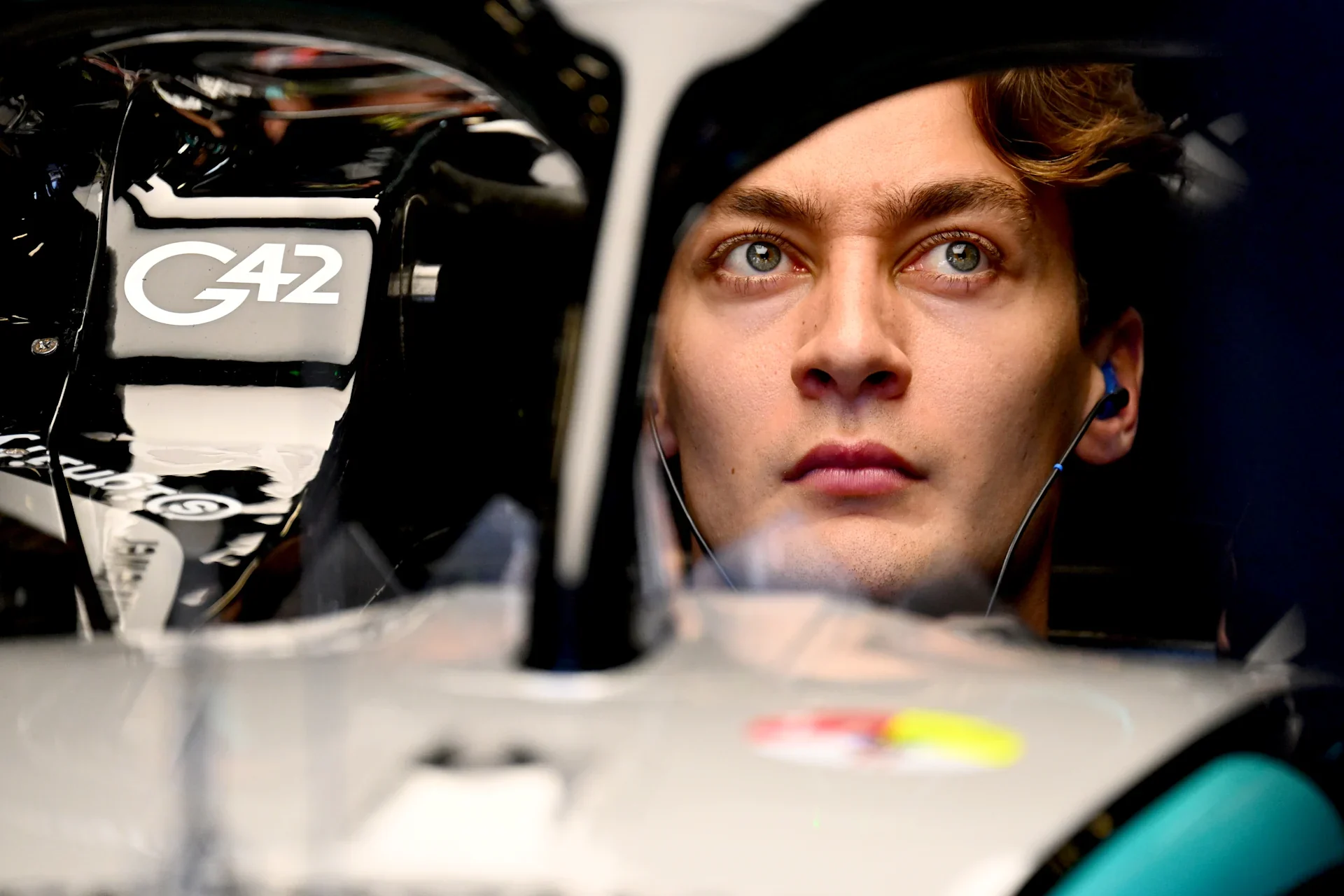
George Russell took pole for the 2026 Australian Grand Prix with a 1:18.518 lap, leading Mercedes team-mate Kimi Antonelli by 0.293 seconds. Isack Hadjar qualified third on his Red Bull debut, while team-mate Max Verstappen provided the season opener's greatest shock by crashing at Turn 1 in Q1.
The March 7 session at Albert Park was the first Grand Prix qualifying hour of the 2026 season and the first under the 22-car elimination numbers. Six drivers dropped out after Q1 and another six after Q2, leaving ten Q3 places. Yet the official qualifying table displayed only 19 names because Verstappen failed to set a representative time and Carlos Sainz and Lance Stroll did not participate. All three later received permission to start.
This recap separates the timed classification from the 22-car race grid, lists every position, and explains the most important incidents. The compact current feed remains available on our F1 qualifying results page, while the Australian GP page provides full weekend context.
Australian GP 2026 Qualifying Result at a Glance
Russell controlled the hour and ended it with the only Q3 lap below 1:18.8. His 1:18.518 secured pole by 0.293 seconds over Antonelli, giving Mercedes the entire front row. Hadjar's 1:19.303 earned third, only 0.024 ahead of Leclerc.
Home favorite Piastri was fifth for McLaren, ahead of team-mate Norris in sixth. Hamilton placed seventh in the second Ferrari, only 0.003 behind Norris. Lawson and Lindblad put both Racing Bulls cars into Q3, while Bortoleto occupied tenth after a technical issue prevented him from setting a final-segment lap.
Pole
George Russell
Time
1:18.518
Margin
0.293 seconds
The front-row lockout was the clearest competitive signal from the first Saturday of the new season. The rest of the order was far less predictable: Red Bull had one car third and the other 20th on the grid, Racing Bulls delivered two top-nine qualifiers, and the defending champion began his title defense from only sixth.
The Complete Melbourne Qualifying Classification
The official qualifying classification contained 19 drivers who recorded a recognized time. The official race grid later contained all 22 entries. The groups below preserve that distinction and use each driver's decisive segment time.
Q3: Positions 1–10
| Pos. | Driver | Team | Q3 |
|---|---|---|---|
| 1 | George Russell | Mercedes | 1:18.518 |
| 2 | Kimi Antonelli | Mercedes | 1:18.811 |
| 3 | Isack Hadjar | Red Bull | 1:19.303 |
| 4 | Charles Leclerc | Ferrari | 1:19.327 |
| 5 | Oscar Piastri | McLaren | 1:19.380 |
| 6 | Lando Norris | McLaren | 1:19.475 |
| 7 | Lewis Hamilton | Ferrari | 1:19.478 |
| 8 | Liam Lawson | Racing Bulls | 1:19.994 |
| 9 | Arvid Lindblad | Racing Bulls | 1:21.247 |
| 10 | Gabriel Bortoleto | Audi | No time |
Only Russell and Antonelli broke into the 1:18s in Q3. Hadjar through Hamilton formed a much tighter group, with 0.175 seconds covering third to seventh. Bortoleto remained tenth because reaching Q3 placed him ahead of every Q2 elimination despite his missing final time.
The pattern separated Mercedes from the chasing group more clearly than a simple one-two label. Antonelli was 0.293 behind Russell, then another 0.492 ahead of Hadjar. By contrast, Hadjar, Leclerc and Piastri fitted inside 0.077. A driver finding one tenth in that cluster could have moved from fifth to third, while the same improvement would not have threatened the front row.
Norris and Hamilton were almost inseparable in sixth and seventh. Their three-thousandth difference is smaller than the time lost through a tiny steering correction. Lawson led the Racing Bulls pair, and Lindblad's final time was not representative of his quicker Q2 effort. Because each cohort is determined by the final segment reached, his valid Q3 time still placed him ninth.
Q2 Eliminations: Positions 11–16
- 11. Nico Hülkenberg — 1:20.303
- 12. Oliver Bearman — 1:20.311
- 13. Esteban Ocon — 1:20.491
- 14. Pierre Gasly — 1:20.501
- 15. Alexander Albon — 1:20.941
- 16. Franco Colapinto — 1:21.270
Hülkenberg missed the final segment by only 0.082 seconds to Bortoleto, producing a split Audi outcome. Bearman followed just 0.008 behind Hülkenberg. Haas placed both cars consecutively in P12 and P13, while Gasly led Albon and Alpine team-mate Colapinto.
This middle cohort rewards careful reading. Bearman's Q1 lap was much slower than several rivals, but it only needed to clear the first cut. His improved Q2 time then fixed P12. Ocon and Gasly differed by 0.010, another near-tie with a full position at stake. Albon, the only Williams participant, could not recover from a late error and finished ahead of Colapinto.
Bortoleto's advancement also meant Hülkenberg's P11 was a direct intra-team defeat at the cut, not a consequence of the later Q3 technical problem. The Audi had already earned tenth through Q2; its inability to run afterward changed only its opportunity to improve within the top ten.
Q1 Eliminations and the Untimed Cars
The timed Q1 eliminations were Alonso in P17 on 1:21.969, Perez P18 on 1:22.605 and Bottas P19 on 1:23.244. Verstappen's crash prevented a representative time. Sainz and Stroll did not participate in qualifying, so they were absent from the 19-row classification.
The later grid placed Verstappen 20th, Sainz 21st and Stroll 22nd after all three were given permission to start. This was not a conventional last-three comparison on pace: one driver crashed at the start of a flying lap, while two never left their garages for a timed attempt.
Alonso's P17 came after Colapinto's late lap displaced him at the cut. Perez and Bottas then completed Cadillac's first qualifying session as a team in P18 and P19. Their times were recognized in the classification, unlike the three cars added only when the starting grid was issued.
This distinction prevents an apparent data error. A 19-row qualifying table answers who was classified with a time; a 22-position grid answers who was permitted to start and in what order. The first document is the proper source for segment analysis, while the second governs the race start. Combining them without labels would wrongly suggest Sainz and Stroll completed laps slower than Bottas.
Across all three groups, track interruptions matter as well. The Verstappen red flag changed the Q1 window, and Q3 stopped again for debris. The official order remains definitive, but the circumstances explain why lap counts and apparent pace vary sharply between neighboring rows.
How George Russell Took a Dominant Pole
Russell's pole was built across the entire afternoon. He set the benchmark in every knockout segment and improved each time the competition narrowed. The final margin—nearly three tenths—was unusually clear for a street-style circuit where confidence and track evolution can rapidly compress gaps.
Russell Led All Three Segments
After topping FP3, Russell began qualifying with a 1:19.507 best in Q1. He lowered the standard to 1:18.934 in Q2, more than half a second ahead of Antonelli. In Q3 he first established control and then delivered the 1:18.518 that settled pole.
The progression matters. Some poles come from a late reversal after a driver trails through earlier sessions; this one came from repeatedly confirming the same advantage. Russell adapted as track temperature cooled and the surface changed, while retaining enough margin to answer Antonelli's late move.
Antonelli Completed a Mercedes Front-Row Lockout
Antonelli's second place required a different kind of recovery. His car had sustained extensive FP3 damage, and Mercedes used the stoppage after Verstappen's crash to finish repairs. He progressed from Q1 in sixth and rose to second in Q2 before joining Russell on the front row.
His Q3 included a lock-up at Turn 3 and an unusual interruption when cooling devices remained in the sidepods as he left the pits. The devices fell onto the circuit, Norris struck one, and officials red-flagged the session to clear debris. Antonelli recovered to set 1:18.811, briefly taking provisional pole before Russell responded.
For Mercedes, the result combined outright speed with operational recovery. Russell supplied the weekend's fastest lap; the garage returned Antonelli's damaged car to a level capable of completing the front-row lockout.
The Session’s Biggest Surprises
The first 2026 qualifying session immediately disrupted preseason expectations. One established champion failed to complete Q1, a new Red Bull driver reached the second row, and an Audi earned a Q3 place it could not use.
Verstappen Crashed at Turn 1 in Q1
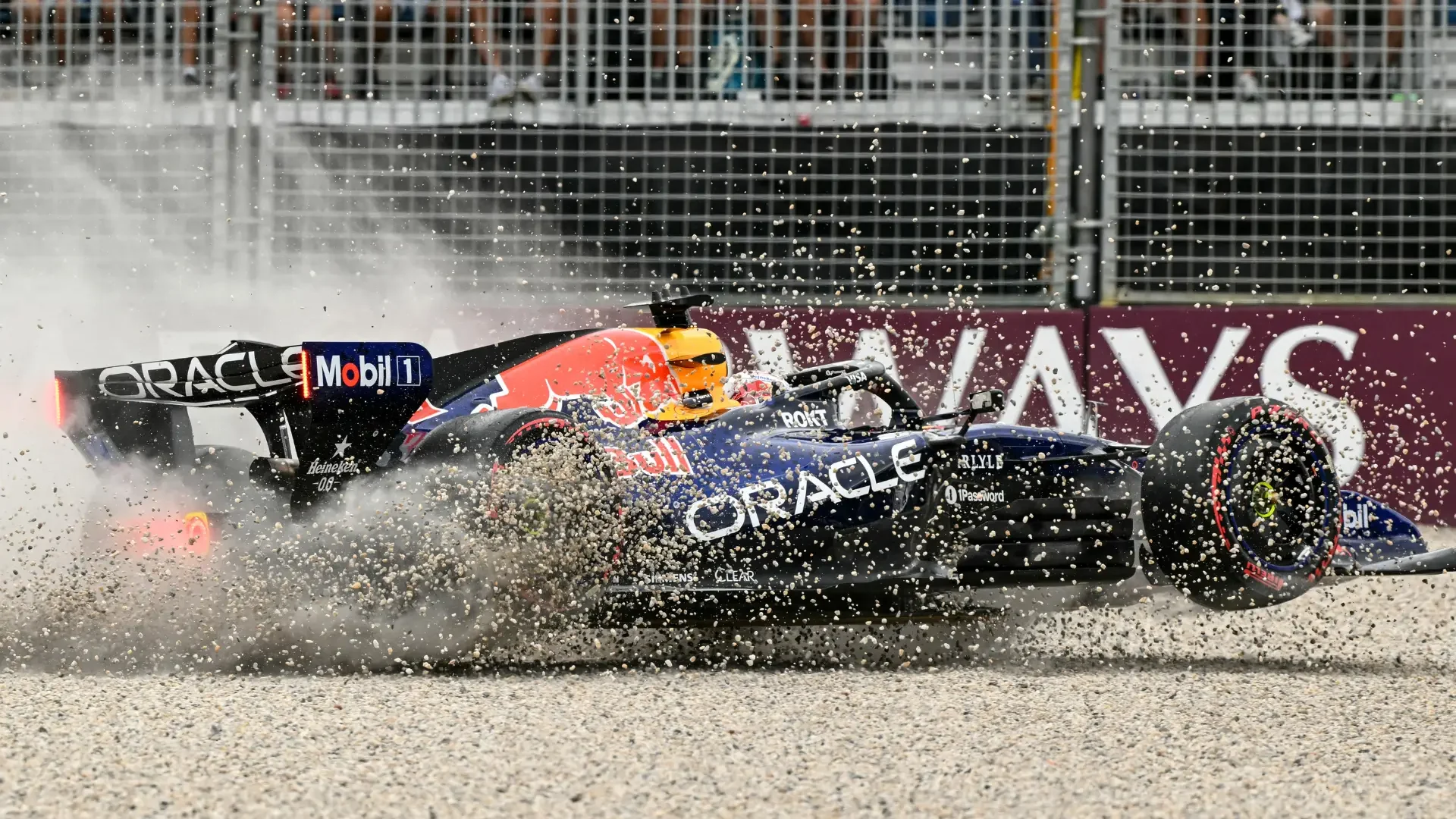
Verstappen braked for Turn 1 at the beginning of a flying lap when the rear axle locked. The Red Bull crossed the gravel and hit the barrier, causing significant damage and a red flag. Verstappen was unharmed but had no representative qualifying time.
The grid later listed him 20th after he received permission to start. That outcome was not evidence of a naturally slow Red Bull lap; it was the procedural consequence of an accident before the timed attempt had developed.
Hadjar Qualified Third on His Red Bull Debut
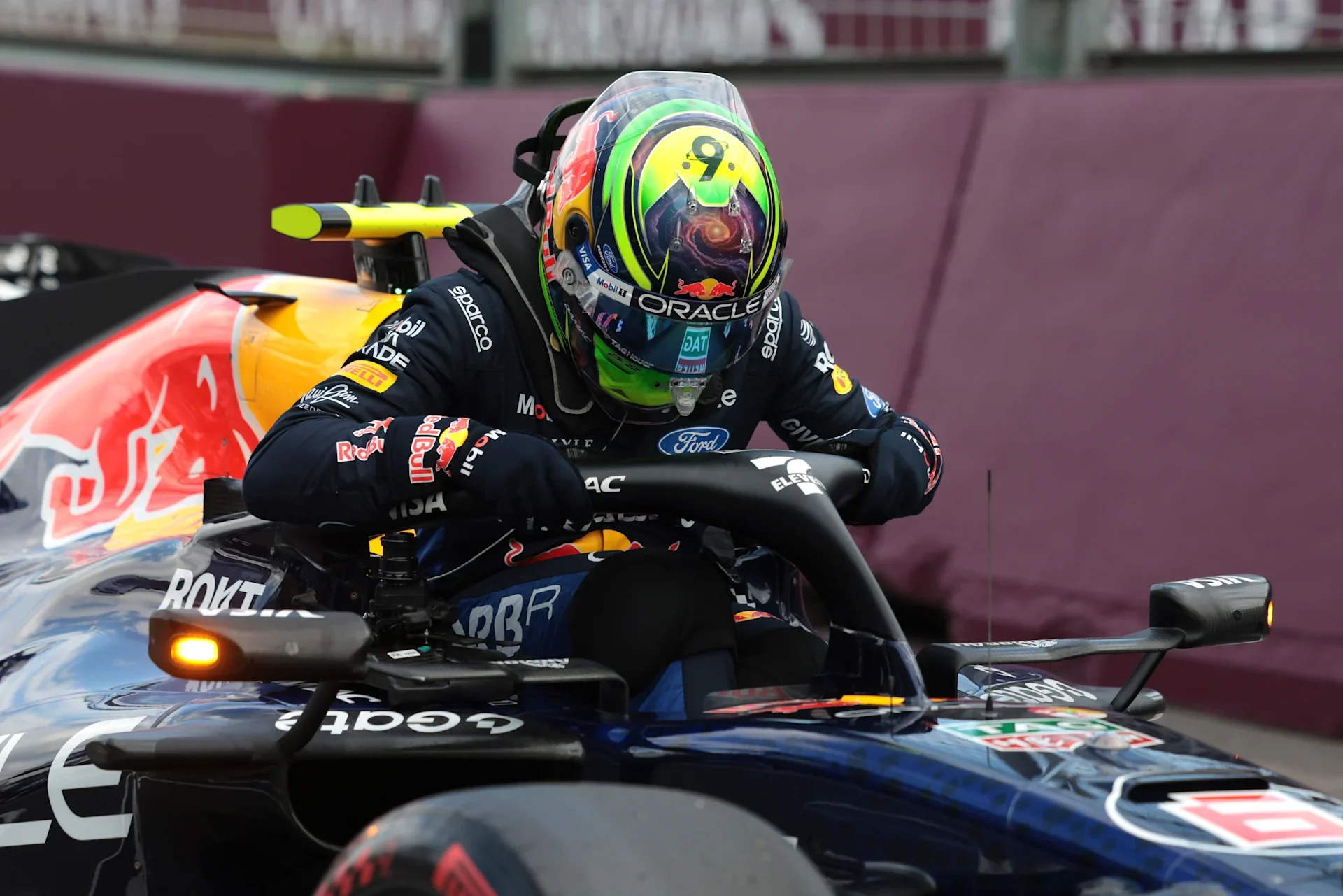
Hadjar delivered the counterpoint. His 1:19.303 took third, only 0.024 seconds ahead of Leclerc. Doing so on a Red Bull debut turned a potentially disastrous team session into a front-two-row start for one car.
Hadjar was still 0.785 behind Russell, so the result did not erase Mercedes' advantage. It did demonstrate clean progression and calm execution while incidents repeatedly interrupted the hour.
Bortoleto Reached Q3 but Could Not Run
Bortoleto beat Audi team-mate Hülkenberg in Q2 and captured the last Q3 place. A technical problem on his in-lap then forced the car back to the garage, and he could not record a Q3 time.
He was nevertheless classified tenth because he had legitimately advanced. The missing time does not cancel the Q2 achievement; it explains why the final segment effectively became a nine-car shootout.
How the Home Drivers and Leading Teams Compared
Mercedes' front-row sweep made the headline, but the placements behind it revealed how unevenly the other leading teams converted their potential. McLaren and Ferrari kept both cars in the top seven. Red Bull produced the widest possible internal contrast.
Piastri Led Norris but Mercedes Was Out of Reach
Piastri qualified fifth at his home Grand Prix on 1:19.380, beating Norris by 0.095 seconds. That gave the Australian the stronger internal result and a third-row starting position, but he remained 0.862 behind Russell.
Norris's sixth was a difficult opening qualifying result for the reigning champion. His Q3 was interrupted by the cooling device he struck on track, yet his final valid lap still placed him just ahead of Hamilton. The McLaren pair was closely matched; the larger problem was the distance to Mercedes.
Ferrari Took Fourth and Seventh
Leclerc's 1:19.327 secured fourth, 0.024 behind Hadjar and 0.053 ahead of Piastri. Ferrari therefore had a realistic second-row result but no answer to the Mercedes pair. Hamilton qualified seventh after an awkward Q2 sequence in which he abandoned an early attempt to let Leclerc through.
Hamilton recovered with limited time and eventually set 1:19.478 in Q3. He missed Norris by only three thousandths, another illustration of how closely packed the non-Mercedes group was. Ferrari's two cars were separated by three grid places, but less than two tenths on the stopwatch.
The team comparison suggested that Mercedes held the clearest qualifying platform, while McLaren and Ferrari were fighting inside a compact chasing group. Hadjar's Red Bull disrupted that expected order even as Verstappen's accident prevented a normal two-car comparison.
From Qualifying Result to the Official Australian GP Grid
A completed qualifying recap needs both official documents. The classification records the drivers who produced recognized results in the timed session. The starting grid adds eligibility decisions and assigns every permitted car a race-start position.
Why the Classification Listed Only 19 Drivers
Verstappen, Sainz and Stroll failed to set a lap within 107% of the fastest Q1 time. Verstappen's reason was the Turn 1 accident; Sainz and Stroll did not take part. The official qualifying table consequently ended with Bottas in position 19.
Officials granted all three permission to start. The grid then placed Verstappen 20th, Sainz 21st and Stroll 22nd. This is why a 19-row results table and a 22-car race were both correct. The extra entries were not hidden qualifiers; they were authorized starters arranged after the classified drivers.
What the Front Rows Meant for the Race Start
Russell and Antonelli gave Mercedes control of row one. Hadjar and Leclerc shared row two, placing Red Bull and Ferrari directly behind. Piastri and Norris formed an all-McLaren third row, while Hamilton started beside Lawson on row four.
Those pairings shaped the opening strategic choices. Mercedes could coordinate from the front, while the chasing teams had to balance attacking each other against protecting tyre life and position. Verstappen faced the opposite problem: recovery from P20 through a field of unfamiliar 2026 cars.
Qualifying did not predict every race event, but it created the competitive starting conditions. For a clean historical record, use the qualifying result to evaluate one-lap performance and the Australia event page to connect that performance to the grid and race.
Loading comments…